- Articles
- Weapons
- Armor
- Armor for horses
- Emperor Armor
- Chivalry
- Chivalry
- Knights castle
- Knights tournament
- The Crusades
- Knightly Orders
- Knightly saddle
- Knightly motto
- Great Knights
- Price of armor
- Children's armor
- Castles and fortresses
- Museums of armor and weapons
- Coats of arms and heraldry
- Routes and excursions
- Guides


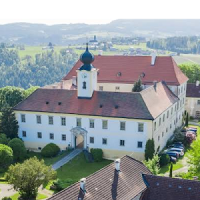
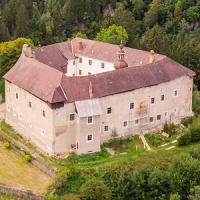



Radun Castle
Zámek Raduň
Information on the website. Weekend: Information on the website
Adult - 220CZK, Children's (0-5) - Free, Children's (6-17) - 70CZK, Students - 180CZK, Pensioners - 180CZK
https://www.zamek-radun.cz
Zámecká 67, 747 61 Raduň, Moravskoslezský kraj, Česká republika
49.891267, 17.944581 View map
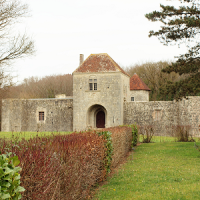
Radun Castle - Zámek Raduň, Radun, Moravian-Silesian Region, Czech Republic.
A medieval stronghold on the Raduň rise—documented as early as 1320—was rebuilt into a Renaissance château in the 16th century. Although it later underwent Baroque modifications, it did not acquire its present-day appearance until the 19th century.
The driving force behind the building's conversion to the Neoclassical style was the wealthy, ambitious, and influential Count Jan Josef Larisch-Mönnich. The Count died before the reconstruction could be carried out; the building works subsequently proceeded under the direction of his wife, Anna Marie Tekla. She initiated the gradual transformation of the entire château complex. Farm buildings were relocated away from the immediate vicinity of the château, thereby sparing the nobility from noise and unpleasant odors. The reorganization of the grounds served not only practical purposes but aesthetic ones as well. The aristocratic residence was enhanced by an orangery, which connected to ornamental, herb, and fig gardens—complete with a fig house, a pineapple house, and an orchard. A newly established English-style park invited leisurely walks and carriage rides.
In the early 1830s, Gebhard Blücher—grandson of the famous Prussian Field Marshal of the same name who had defeated Napoleon—married into the Larisch-Mönnich estates. The Blücher family held estates in Austrian Silesia and Prussia, and, from the second half of the 19th century, in England as well. However, they regarded their ancestral seat at Krobiełowice and the estate at Raduň as their primary residences. They therefore continued their efforts to enhance the Raduň residence, further adapting it to the requirements of comfortable, year-round living.
The addition of mansard levels above both the southern and northern wings in the early 20th century expanded the living space, while ingenious built-in wardrobes increased storage capacity. Modernization measures and improvements to technical facilities further enhanced the residents' comfort.
Traces of the construction and improvement work carried out by the Larisch-Mönnich and Blücher families remain visible to this day; they were not erased even by the era following 1948, when the building was put to a wide variety of uses. Despite the lamentable, fragmentary state of the original furnishings, the château offers a reconstruction of various aspects of daily life during the 19th and early 20th centuries.
7 okt 2026
0
0