

The mace is one of the most ancient and effective blunt weapons in human history. Simple in design yet terrifyingly effective, it became a true "armor killer" in the late Middle Ages. When swords and axes increasingly simply slid across polished plate or chainmail, the mace delivered a blow that bent plates, broke bones, and caused internal hemorrhaging—even if the armor remained outwardly intact.
Unlike cutting or thrusting weapons, the mace relied on pure kinetic energy: the heavy head concentrated the force in a single point, turning any blow into a crushing blow.
Mace Design and Types.
The classic mace consisted of a sturdy handle (wooden or metal) and a heavy head at the end. Length varied:
A one-handed mace (knightly or cavalry) had a handle 60–90 cm long and weighed 1–2.5 kg. Suitable for horsemen.
A two-handed mace was longer, up to 1.5 m, and was used by infantry.
The head was the most important part. It was made of stone (in early periods), bronze, iron, or steel. The main types were:
Ball mace—a simple, heavy sphere, effective for concussive blows.
Spiked mace (or morning star)—with sharp spikes or pyramidal protrusions. The spikes pierced chainmail or became lodged in plates.
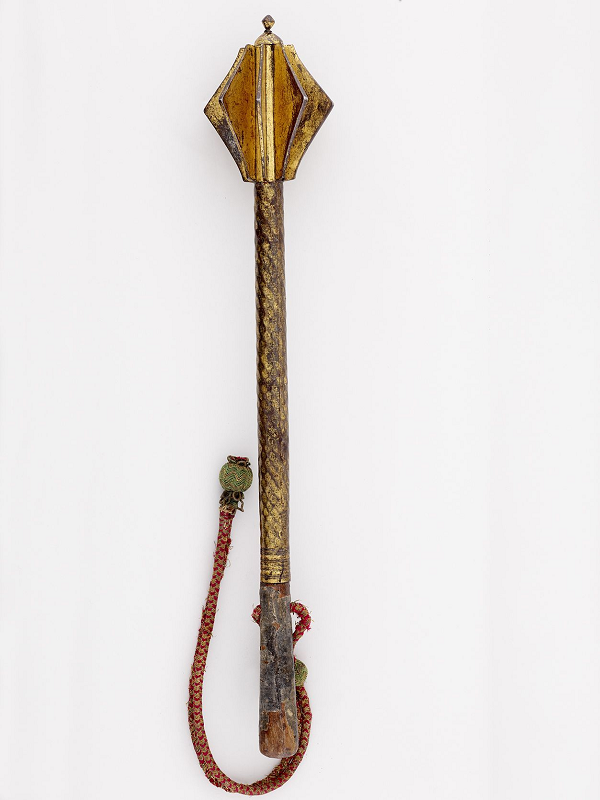
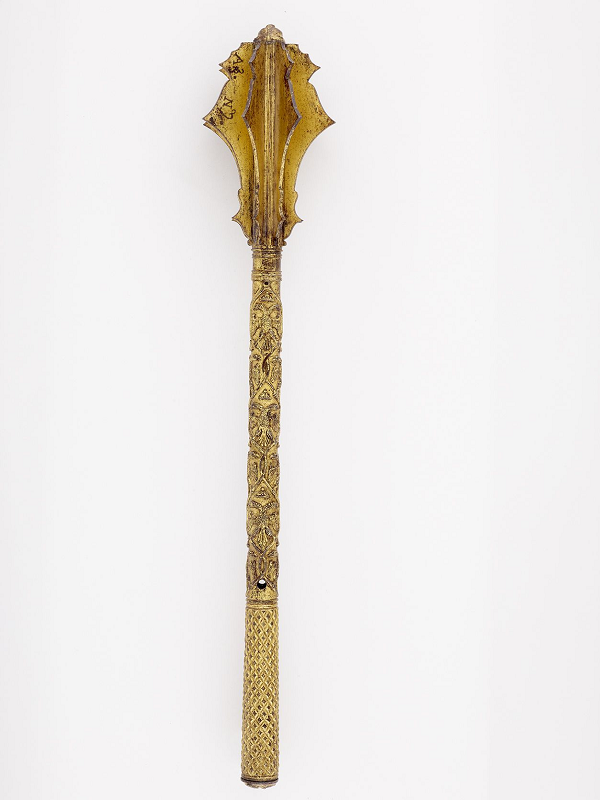
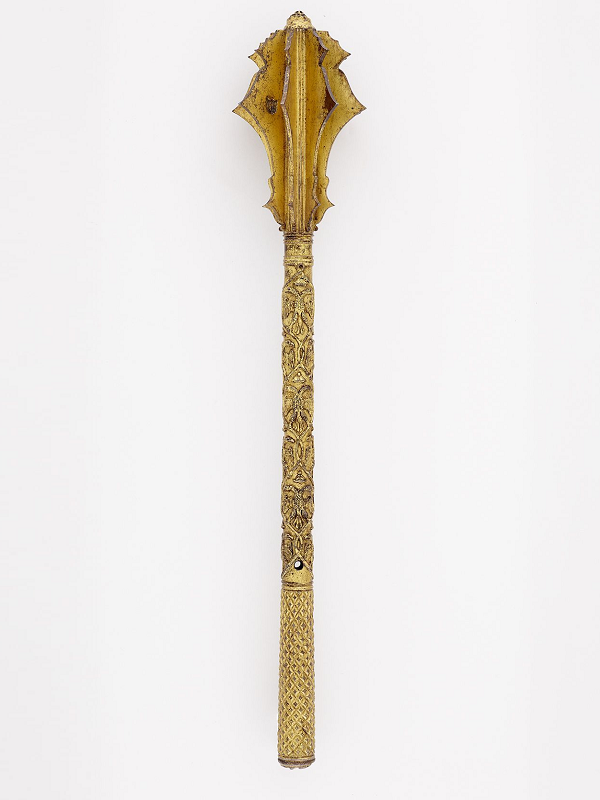
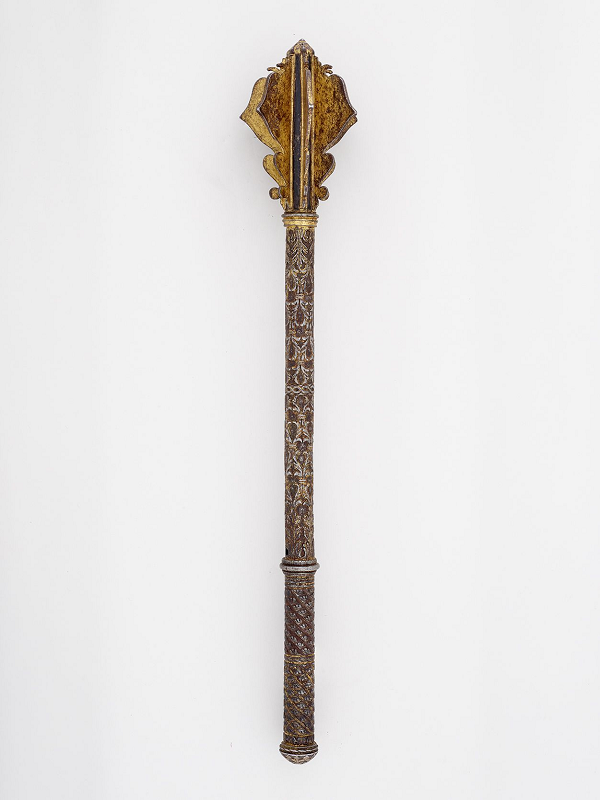
Flanged mace—with protruding ribs called flanges. These "blades" did not cut, but concentrated their force, easily deforming and piercing armor. It is considered one of the most effective options against plate armor from the 15th and 16th centuries.
The knobbed mace has rounded protrusions, similar to an Eastern-style mace.
The handle was often reinforced with metal, and the head was firmly attached to prevent it from flying off upon impact. Some maces had an additional spike or hook for gripping.
The classic flanged mace with its characteristic ribs is an ideal weapon against armored knights.
The spiked mace (morning star) is a formidable option with sharp protrusions.
History and distribution.
The mace has been known since ancient times (Mesopotamia, Egypt, circa 3000 BC). In Europe, it was actively used from the early Middle Ages. Its use reached a particular peak in the 12th to 16th centuries, when plate armor became the primary protection for knights. The mace was inexpensive and easy to make—almost any blacksmith could forge one. This made the weapon accessible not only to the nobility, but also to mercenaries, infantry, and even clergy (according to legend, clerics preferred the mace to "avoid spilling blood," although historical evidence for this is scant—the example of Bishop Odo in the Bayeux Tapestry is often exaggerated).
In the 14th and 15th centuries, the mace became popular among knights as a secondary weapon: when a lance was broken or a sword stuck in armor, the mace allowed powerful blows to be delivered to the helmet, shoulders, or joints. Infantrymen (Landsknechts, Swiss) used it in close combat after pikes and halberds had done their work.
Tactics of Use.
The mace is a close-combat weapon and "anti-armor" by nature:
Against armor, a blow would deform the plates, break the bones beneath, or cause a concussion even through a helmet.
From horseback, short maces allowed for powerful downward strikes.
In formation, infantrymen used maces for finishing blows or in melees, when longer weapons became useless.
Advantages:
Did not require a sharp edge.
Effective even against the highest-quality armor.
Simple and reliable.
Disadvantages:
Short striking range (required getting close).
Required considerable physical strength.
Could be awkward in very close combat.
The mace is often compared to a war hammer: a war hammer had a beak for piercing and a hammer for concussion, while a mace had a more "all-round" head, with each spike or flange working equally effectively.
Symbolism and Decline.
The mace was not only a weapon but also a symbol of power (ceremonial maces are still used in parliaments today). In mythology and culture, it was associated with brute force and inexorability.
By the late 16th and early 17th centuries, with the spread of firearms and light armor, the mace gradually fell out of widespread combat use. However, its elements survived in some ceremonial and ceremonial versions.
Today, the mace is one of the most recognizable symbols of medieval weaponry. Authentic examples are preserved in museums around the world, and reenactors prize it for its simplicity and destructive power.
The mace is a weapon that made no attempt to be elegant. It simply did its job: transforming human strength into a crushing blow, capable of breaking even the most sophisticated defenses of its era. In a world where armor was becoming increasingly complex, the mace was a reminder of a simple truth: sometimes a heavy piece of metal on a stick is enough to change the outcome of a battle. It was the weapon of knights, mercenaries, and common warriors—democratic, crude, and incredibly effective.