Introduction.
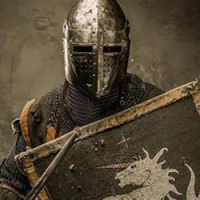
The image of the medieval knight is traditionally associated with the sword, coat of arms, castle, tournament and military service. Yet the history of knighthood cannot be properly understood without considering the Church and Christianity.
The medieval knight lived within a Christian society in which the Church played a central role in defining ideas of good and evil, sin and virtue, legitimate warfare, honour, duty and salvation.
In Western Europe between the eleventh and fifteenth centuries, religion was closely connected with social and political life. The Church participated in coronations, marriage arrangements, education, diplomacy and the formulation of moral norms.
For knights, Christianity was therefore not simply a matter of private belief. It was also an important part of social identity.
Within this environment, the idea of the Christian warrior gradually developed: a warrior who was expected to use his strength not merely for personal glory or material gain, but also to defend the Church, the Christian community and those considered unable to defend themselves.
At the same time, the relationship between knights and the Church was complex. Churchmen condemned uncontrolled violence while simultaneously attempting to direct the military power of the warrior aristocracy toward the defence of Christian society.
The Church in the Life of a Medieval Knight.
Christianity accompanied a medieval person throughout the major stages of life.
Baptism, marriage, death and burial were all connected with religious ceremonies. The Church calendar regulated festivals, fasts and important periods of the year.
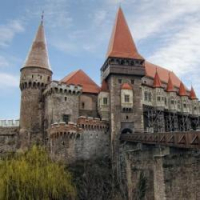
Castles belonging to wealthy nobles frequently contained private chapels. Large residences could have chaplains who celebrated Mass for the lord, his family and members of his household.
Before military campaigns, knights could confess, attend Mass and receive communion. Prayer was particularly important before battle.
Military life therefore existed within a religious environment in which faith and warfare constantly interacted.
The Idea of the Christian Warrior.
One of the major moral problems of medieval Christianity was the apparent contradiction between Christian teachings about peace and the reality of warfare.
The Gospel tradition emphasized mercy and condemned personal vengeance. Yet medieval Europe was frequently affected by dynastic conflicts, territorial wars and feuds.
Christian thinkers therefore developed concepts that attempted to establish when warfare could be considered morally legitimate.
The intellectual foundations of the Just War tradition can be traced back to Late Antiquity, especially to Augustine of Hippo. During the Middle Ages these ideas were developed further by theologians and canon lawyers.
A legitimate war was increasingly associated with such principles as:
lawful authority;
a just cause;
proper intention;
moral limitations on violence.
This did not mean that every war was automatically considered just. Rather, Christian thinkers attempted to establish boundaries for legitimate violence.
The Church and the Formation of the Chivalric Ideal.
During the eleventh and twelfth centuries, ideas about knighthood underwent important changes.
The warrior was increasingly expected to possess moral qualities in addition to military skill.
The ideal knight was expected to be: brave, loyal, generous, just, pious and willing to protect the vulnerable.
The concept of honour became particularly important.
However, it is essential to distinguish between the literary and moral ideal of knighthood and the behaviour of historical knights.
Medieval knights could be violent, participate in private wars, seize property, break oaths and commit acts of brutality.
The chivalric ideal was therefore not a precise description of every knight. It was a system of values that presented an image of how a knight ought to behave.
The Peace of God and the Truce of God.
One of the Church's important attempts to restrict violence was the development of the movements known as the Peace of God (Pax Dei) and the Truce of God (Treuga Dei).
These movements sought to limit uncontrolled warfare and protect particular groups of people.
The Church attempted to protect:
clergy;
peasants;
women;
children;
pilgrims;
merchants;
church property.
Restrictions were also placed on warfare during particular religious periods and days.
The movements demonstrate an important feature of medieval society: the Church did not merely bless warriors. It also attempted to regulate and restrict their violence.
The Knight as Protector of the Weak.
Later European culture strongly associated knighthood with the protection of women, children and the defenceless.
This idea had historical foundations, although reality was considerably more complicated.
Christian morality promoted the principle that the strong should protect the weak.
The ideal knight was therefore expected to defend:
the Church;
widows and orphans;
pilgrims;
the poor;
the defenceless;
members of the Christian community.
Historical evidence, however, shows that these ideals were not always respected.
Medieval chronicles describe raids, plundering, destruction and violence against civilians.
The idea of the knight as an automatic protector of the weak is therefore better understood as a moral ideal than as a universal historical reality.
Knighthood and Religious Symbolism.
The ceremony of becoming a knight gradually acquired religious elements.
Different regions and periods had different practices, so there was no single universal medieval knighting ceremony.
Nevertheless, later medieval traditions could include:
prayer;
confession;
vigil;
the presence of clergy;
blessing of weapons;
religious oaths.
The symbolic night vigil was particularly important.
A young man could spend the night in a church or chapel before his ceremony, preparing himself spiritually for his new status.
His weapons were no longer merely instruments of warfare. They could also be interpreted as symbols of responsibility.
The Sword as a Religious Symbol.
The sword occupied a special place in medieval culture.
It was above all a weapon, but it also possessed powerful symbolic associations.
The sword could represent:
justice;
authority;
protection;
punishment;
military duty.
Biblical imagery frequently associated the sword with judgement and authority.
This helps explain why medieval representations of knights so often emphasize the sword.
Cross-shaped sword guards could also acquire Christian symbolism.
However, it would be historically inaccurate to assume that every medieval sword was deliberately created as a religious object. For a warrior, it remained a practical weapon.
Confession and the Knight.
Military activity created difficult moral questions.
Killing an enemy in battle could be understood differently from killing a person in a private quarrel, but questions of sin and responsibility remained important.
Before a campaign or battle, a knight could seek spiritual guidance from a priest.
Confession provided an opportunity for repentance and preparation for the possibility of death.
This was especially significant during long military expeditions.
Religious preparation for war was therefore also, in a very real sense, preparation for death.
The Knight and the Fear of Death.
Medieval culture constantly reminded people of the temporary nature of earthly life.
Knights were no exception.
Military service made death particularly tangible.
A warrior could die from:
a sword blow;
a spear;
an arrow;
a crossbow bolt;
a fall from a horse;
injury;
disease;
infection.
The Christian concept of salvation therefore had profound significance for medieval warriors.
Religious culture taught people to prepare for death and judgement.
This is one reason why knightly tombs, funerary monuments, chapels and wills are valuable sources for understanding medieval aristocratic beliefs.
Knightly Burials.
The death of a noble knight could be accompanied by an elaborate religious ceremony.
It could include:
funeral services;
Masses for the dead;
processions;
prayers;
charitable donations;
a tomb monument.
Many medieval knightly tombs depicted the deceased wearing armour.
These sculpted monuments are commonly known as effigies.
A knight could be represented lying in armour, with sword, shield and heraldic symbols.
Such monuments served several purposes:
commemorating the deceased;
displaying social status;
preserving military identity;
encouraging prayers for the soul of the dead.
Knights and Monasteries.
Monasteries played an important role in the religious lives of medieval aristocratic families.
Knights and nobles could:
make donations to monasteries;
establish religious foundations;
finance churches and chapels;
donate land;
request prayers for deceased relatives.
Donations made pro anima, or "for the soul", were particularly significant.
A nobleman might give land or property to a monastery in return for prayers for his soul after death.
Relations between knights and monasteries were therefore religious, economic and social at the same time.
The Knight as Patron of the Church.
Wealthy knights and nobles frequently acted as patrons of religious institutions.
They could finance:
church construction;
chapels;
altars;
liturgical objects;
manuscripts;
clergy.
Such patronage expressed religious devotion, but it also demonstrated wealth, influence and social prestige.
A donation to a church could simultaneously proclaim:
faith, power, wealth and aristocratic status.
The Crusades.
The Crusades represented one of the most dramatic manifestations of the relationship between knighthood and the Church.
Following Pope Urban II's call at the Council of Clermont in 1095, thousands of Western European warriors travelled east.
For participants, a crusade could be understood not merely as a military expedition but also as a religious pilgrimage and act of service.
Crusaders wore the cross as a visible sign of their commitment.
The Church offered spiritual privileges associated with participation in the crusading movement.
Modern historians, however, emphasize the complexity of crusading motives.
Religious convictions could coexist with:
political ambitions;
dynastic interests;
economic considerations;
social aspirations;
the search for land;
personal motives.
The Crusades therefore cannot be explained solely by religion or solely by material interests.
Military Orders.
The closest institutional connection between knighthood and the Church was represented by the military orders.
Among the best known were:
the Knights Templar;
the Knights Hospitaller;
the Teutonic Order;
the military orders of the Iberian Peninsula.
Their members combined elements of monastic discipline with military service.
This represented a remarkable development in medieval European society.
A warrior could become a member of a religious institution, take religious vows and live according to an order's rule while participating in warfare.
Military orders therefore became one of the clearest expressions of the union between religious and military traditions.
The Church and Tournaments.
The Church had an ambivalent attitude toward tournaments.
Tournaments were central to aristocratic and knightly culture, but they could also result in serious injury and death.
Churchmen sometimes criticized tournaments as expressions of vanity, violence and unnecessary risk.
The death of a man in a tournament could be viewed differently from death in legitimate warfare.
Over time, however, tournaments became increasingly regulated and developed into complex social ceremonies.
Religious Festivals and Chivalric Culture.
Knightly life was closely connected with the Christian calendar.
Major religious festivals could become occasions for:
solemn services;
feasts;
diplomatic meetings;
oaths;
marriages;
tournaments.
Christmas, Easter, Pentecost and saints' feast days were particularly important.
The religious calendar was therefore also part of the social and political calendar of the aristocracy.
Patron Saints of Knights.
Medieval military culture developed strong associations between certain saints and warriors.
The most famous was Saint George.
His victory over the dragon gradually became one of the most powerful symbols of Christian warfare and the triumph of good over evil.
Another important figure was Saint Michael the Archangel, traditionally represented as a heavenly warrior defeating evil.
Different regions also had their own military saints and local patrons.
Their images could appear on:
shields;
banners;
seals;
jewellery;
frescoes;
stained glass.
Heraldry and Religion.
Heraldry also interacted with religious culture.
Medieval coats of arms could contain:
crosses;
religious symbols;
saints;
lambs;
stars;
lilies;
symbolic animals.
However, the presence of a cross on a coat of arms does not automatically prove that its owner participated in a crusade.
Heraldic symbols could have many meanings and were often inherited.
Education and the Church.
Although the popular image of the knight focuses almost entirely on warfare, some members of the aristocracy received significant education.
The Church controlled or influenced much of the medieval educational system.
Monastic and cathedral schools preserved and transmitted a large part of the intellectual heritage of Europe.
An aristocratic warrior might receive instruction in:
Latin;
Scripture;
history;
law;
literature;
diplomacy.
Levels of education varied considerably among individuals.
Chivalry and Courtly Culture.
Christian morality also interacted with the culture of courtly chivalry.
Medieval literature portrayed the ideal knight as someone who demonstrated:
respect for women;
self-control;
generosity;
loyalty;
courage;
noble behaviour.
Some of these ideals were connected with Christian morality, while others developed within aristocratic and literary culture.
Courtly culture should therefore not be regarded as identical to Church teaching.
It emerged from the interaction of religious, aristocratic and literary traditions.
The Knight Between Two Worlds.
The central paradox of medieval knighthood was that warriors were expected to embody qualities that could appear contradictory.
A knight was expected to be:
merciless toward the enemy — yet merciful toward the weak;
prepared to kill — yet obedient to Christian morality;
proud of his status — yet humble before God;
eager for glory — yet conscious of the transience of earthly life.
This contradiction never disappeared completely.
It is one of the reasons medieval chivalric culture became so complex.
How Religious Was the Historical Knight?
The historical reality was considerably more complicated than the ideal.
Some knights were deeply religious, attended church regularly and made substantial donations.
Others participated in private warfare, raiding, feuding and political violence.
A knight could therefore simultaneously be:
a Christian;
a warrior;
a feudal lord;
a political actor;
and a participant in violent conflicts.
Historians must distinguish between the normative ideal of the knight and the behaviour of individual historical people.
The Church as a Restraint on Violence.
One of the long-term consequences of the relationship between knighthood and Christianity was the development of ideas concerning the legitimate limits of warfare.
The Church could not eliminate war.
But it created a moral vocabulary through which warfare could be judged.
Concepts such as:
just war;
legitimate authority;
protection of non-combatants;
religious duty;
violation of oaths;
sinful violence.
became important components of medieval moral and legal thought.
Knights and Religious Architecture.
The relationship between knights and the Church can also be seen in architecture.
Castle chapels, monasteries, fortified religious houses and cathedrals created environments in which military and religious symbolism existed side by side.
Walls and monuments could display:
coats of arms;
knights;
battle scenes;
saints;
biblical narratives.
A knight might be depicted beside a patron saint, placing his military identity within a Christian framework.
Religion and the Knight's Will.
Medieval wills are among the most valuable sources for studying aristocratic religious beliefs.
They could include:
donations to churches;
gifts to monasteries;
provisions for burial;
charitable donations;
instructions concerning burial places;
requests for prayers.
Religion therefore appeared not only in churches and ceremonies but also in legal documents.
The Decline of the Medieval Knight and the Changing Role of the Church.
During the fourteenth and fifteenth centuries, European warfare changed rapidly.
The development of artillery, firearms, professional infantry and increasingly centralized states gradually reduced the military monopoly of heavily armoured cavalry.
The knight increasingly became part of a broader state and court system.
Yet the religious dimension of chivalry did not disappear.
It survived in:
ceremonies;
military orders;
heraldry;
funerary monuments;
literature;
court culture.
The military role of the knight changed, but his cultural and religious legacy remained.
Conclusion.
The history of the medieval knight cannot be understood without the Church.
The Church did more than bless warriors and crusades. It shaped moral ideals, attempted to restrict private violence, developed theories of legitimate warfare, participated in ceremonies, accompanied people from baptism to burial and provided the symbolic language through which military service could be understood.
At the same time, the relationship between knighthood and the Church was never simple.
The historical knight could differ greatly from the literary image of the noble Christian warrior.
The central tension between the sword and the cross, military honour and Christian humility, the pursuit of glory and the fear of divine judgement is one of the defining features of medieval chivalric culture.
The medieval knight was therefore not simply a soldier.
He was part of a society in which military power, religious belief, aristocratic status and ideas of honour were closely connected.
The history of European knighthood is consequently inseparable from the history of medieval Christianity.
- Articles
- Weapons
- Armor
- Armor for horses
- Emperor Armor
- Chivalry
- Chivalry
- Knights castle
- Knights tournament
- The Crusades
- Knightly Orders
- Knightly saddle
- Knightly motto
- Great Knights
- Price of armor
- Children's armor
- Castles and fortresses
- Museums of armor and weapons
- Coats of arms and heraldry
- Routes and excursions
- Guides