
Introduction.
The ceremony of becoming a knight was one of the most important social and cultural rituals of medieval European aristocratic society.
It marked the transition of a young warrior into a new social and military status and connected him with ideals of honour, loyalty, courage, duty and, particularly in the later Middle Ages, Christian morality.
Modern popular culture often presents knighting as a simple ceremony in which a nobleman touches the shoulders of a kneeling warrior with a sword.
Although this image has historical foundations, the actual process was considerably more complex.
The ceremony varied according to period, region and social circumstances. During the Middle Ages it gradually developed from relatively simple acts of weapon-giving and recognition into elaborate rituals involving prayer, vigil, confession, oaths, weapons and public ceremony.
There was therefore no single universal medieval knighting ceremony.
Who Could Become a Knight?
Knighthood was not originally a completely closed hereditary class.
During the early Middle Ages, the social position of mounted warriors could vary considerably.
Over time, however, knighthood became increasingly associated with the aristocratic elite of Western Europe.
A future knight often came from a noble family, although social mobility never disappeared completely.
Family connections, wealth, military ability and access to expensive equipment were all important.
By the fourteenth and fifteenth centuries, knighthood in many parts of Europe had become closely associated with hereditary aristocracy.
Nevertheless, being knighted did not automatically mean receiving land or becoming a feudal lord.
Knighthood was primarily a social and military status.
The Education of a Future Knight.
The path toward knighthood began many years before the ceremony itself.
A noble boy could be brought up as a page.
Later he might become a squire, serving an experienced knight and learning the practical aspects of aristocratic and military life.
This traditional model was not identical everywhere in Europe or in every period.
The future knight was expected to learn:
horsemanship;
swordsmanship;
lance fighting;
shield use;
hunting;
military discipline;
courtly manners;
aristocratic etiquette.
Religious education could also form part of his upbringing.
Military Training.
Military preparation was central to the education of a knight.
A young warrior had to learn to control a trained horse and use weapons effectively.
Mounted lance combat was particularly important.
A knight needed to know how to:
charge with a lance;
maintain balance;
control his horse;
use a sword;
fight on foot;
defend himself with a shield;
operate within a military formation.
Tournaments could provide opportunities to demonstrate and develop martial skills, although tournament combat should not be regarded as identical to battlefield warfare.
The Age of Knighthood.
There was no universal European age at which every young man became a knight.
The age depended on:
period;
region;
family circumstances;
military necessity;
financial resources;
the candidate's readiness;
the decision of a patron or lord.
In the later Middle Ages, young men were often knighted in their late teens or twenties, but individual cases varied considerably.
Some remained squires for many years.
Others received knighthood immediately before or after a military campaign.
Who Could Confer Knighthood?
The person performing the ceremony could vary.
Depending on the period and political context, knighthood could be conferred by:
kings;
princes;
dukes;
counts;
other high-ranking nobles;
knights themselves.
Knighthood could also be granted on the battlefield.
It is therefore historically inaccurate to claim that only a king could make someone a knight.
The authority to confer knighthood developed within changing military and social hierarchies.
Military Knighthood and Religious Ceremony.
Two traditions must be distinguished.
The first was the practical military act of arming or recognizing a warrior.
The second was the increasingly elaborate Christian interpretation of knighthood.
Early ceremonies could be relatively simple.
By the eleventh and twelfth centuries, however, Christian thinkers and aristocratic culture increasingly promoted the idea of the knight as a protector of Christian society.
The knight was expected, ideally, to defend the Church, the weak and legitimate social order.
The Night Vigil.
One of the best-known elements of later medieval tradition was the night vigil.
Before becoming a knight, the candidate could spend the night praying and reflecting on his new responsibilities.
The vigil represented a symbolic separation between his previous life and his new status.
Weapons could be placed nearby.
The candidate was expected to understand that carrying weapons was not merely a privilege but also a responsibility.
The vigil was not, however, a universal requirement for every medieval knight in every country and period.
Confession and Prayer.
In the Christian model of knighthood, spiritual preparation could be important.
The candidate might:
confess his sins;
attend Mass;
receive communion;
pray;
receive a blessing.
These practices reflected the growing concept of Christian knighthood.
The knight was expected to understand his military activity as a responsibility before God.
This produced a fundamental tension: Christianity emphasized mercy, while knighthood required the use of force.
Medieval religious thinkers attempted to address this contradiction through ideas concerning legitimate and just warfare.
The Weapons of the Knight.
Weapons occupied a central place in the ceremony.
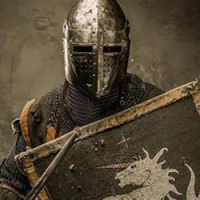
The sword was the principal symbol of knighthood.
Yet the equipment of a medieval knight included much more:
sword;
lance;
shield;
helmet;
armour;
spurs;
warhorse.
Each item possessed both practical and symbolic significance.
The Sword.
The sword became one of the most powerful symbols of medieval knighthood.
It could represent:
honour;
justice;
authority;
protection;
responsibility.
The cross-like shape of many European sword guards also made the weapon suitable for Christian symbolic interpretation.
Nevertheless, the sword remained a practical weapon above all.
Spurs.
Spurs were important equipment for mounted warriors.
They helped control the horse and also became a visible symbol of the mounted elite.
In later medieval culture, gilded or golden spurs could be associated with high status.
However, the exact rules concerning the colour and material of spurs varied between regions and periods.
The Ceremonial Blow of the Sword.
The most famous element of modern knighting is the symbolic touch of the sword.
The candidate kneels.
The person conferring knighthood touches the candidate with a sword, traditionally on the shoulder or shoulders.
This act is often associated with the French term adoubement.
However, historical terminology requires caution.
The medieval word adoubement had a broader meaning and could refer to the arming or formal elevation of a warrior rather than exclusively to the modern ritual of touching the shoulders with a sword.
The exact ceremony changed over time.
The Knightly Oath.
An oath was an important feature of medieval aristocratic society.
Depending on circumstances, a knight could swear loyalty to:
his lord;
a king;
a military order;
the Church;
his companions.
Loyalty was one of the fundamental values of chivalric culture.
Breaking an oath could be considered not only a political offence but also a serious moral violation.
The Virtues of a Knight.
The ideal knight was expected to possess a range of virtues.
Courage
A knight should not display cowardice in battle.
Loyalty
He was expected to keep his promises and serve his lord faithfully.
Generosity
Generosity was an important aristocratic virtue.
Honour
A knight was expected to protect his reputation.
Mercy
The ideal knight was expected to show mercy toward defeated opponents and the weak.
Piety
Christian knighthood required awareness of God and religious duty.
Knighthood and the Church.
The Church played an important role in developing the image of the Christian knight.
The ideal warrior was transformed from a potentially uncontrolled bearer of weapons into a defender of:
the Church, the faith, the weak and the legitimate social order.
Historical knights, however, frequently failed to meet this ideal.
Medieval sources contain numerous examples of raids, feuds, plundering and broken oaths.
The chivalric ideal was therefore a moral standard rather than a guarantee of behaviour.
Knighthood on the Battlefield.
Knighthood could sometimes be conferred directly before or after a battle.
This was practical in military circumstances.
A warrior could be rewarded for bravery and distinguished service.
Battlefield knighting demonstrates why it is inaccurate to imagine every ceremony as a religious event held inside a church.
Medieval knighthood could be both a social institution and a military reward.
Royal Knighthood.
Knighthood granted by a monarch carried particular prestige.
A king could knight a warrior after a battle or during a formal ceremony.
Such an act could demonstrate:
royal favour;
military merit;
political loyalty;
advancement in status.
Knighthood could therefore serve as an instrument of royal government and political integration.
The Knight and Heraldry.
Knighthood was closely connected with the visual culture of aristocracy.
A coat of arms could identify a knight on the battlefield, in a tournament, on a seal or on a tomb.
Heraldic devices could include:
geometric patterns;
animals;
birds;
plants;
crosses;
crowns;
symbolic figures.
However, hereditary heraldry developed gradually, and later heraldic rules should not automatically be projected backward onto the early Middle Ages.
The Knight and the Warhorse.
The knight cannot be separated from his horse.
For medieval military aristocracy, the horse was simultaneously:
transport;
military equipment;
a symbol of wealth;
a sign of status.
Warhorses were trained to remain calm around weapons, noise, shouting and the chaos of battle.
A high-quality warhorse could be extremely expensive.
The Cost of Becoming a Knight.
Being knighted did not automatically make a man wealthy.
Participation in knightly society required considerable financial resources.
A knight needed:
armour;
helmet;
sword;
lance;
shield;
horse;
saddle and harness;
clothing;
servants.
Weapons and armour also required regular maintenance.
By the later Middle Ages, knighthood was therefore increasingly connected with economic resources.
Knighthood and Tournaments.
Tournaments were an important part of aristocratic culture.
They allowed young warriors to demonstrate:
courage;
martial skill;
physical strength;
horsemanship;
knowledge of aristocratic etiquette.
Success in tournaments could enhance a young knight's reputation.
Yet tournaments were not simply medieval sports.
They had military, social, political and cultural functions.
The Lady and the Knight.
Medieval literature often surrounded knighthood with the figure of the noble lady.
A knight could dedicate his deeds to a woman, wear her colours or compete in her honour at tournaments.
This became a central element of courtly literature.
The historical ceremony of becoming a knight, however, did not require the presence of a "lady of the heart".
The romantic image developed primarily through literature and aristocratic court culture.
Knighthood in Military Orders
Military orders developed their own traditions of admission and religious discipline.
The Templars, Hospitallers, Teutonic Knights and other orders combined military service with religious obligations.
Their members followed the rules of their respective institutions and, in many cases, took religious vows.
Here knighthood acquired a distinctive character.
The warrior became a member of a religious organization, and military service became part of a religious mission.
What Happened After Knighthood?
Becoming a knight did not mean that education was finished.
A newly knighted man still had to:
participate in military campaigns;
improve his martial skills;
attend tournaments;
serve his lord;
establish political relationships;
build his reputation.
Reputation was one of the most valuable forms of social capital in aristocratic society.
A brave and generous knight could attract powerful patrons, advantageous marriages, offices or property.
Could a Man Remain a Squire?
Not every young nobleman immediately became a knight.
A man could remain a squire for many years.
Reasons could include:
lack of financial resources;
absence of a suitable patron;
lack of military opportunity;
political circumstances;
personal choice;
a decision to pursue an ecclesiastical career.
The path to knighthood was therefore not automatic.
Knighthood and Social Mobility.
Knighthood could provide limited opportunities for social advancement.
During wartime, a talented warrior could receive recognition for courage and loyalty.
However, opportunities for advancement were restricted.
By the later Middle Ages, ancestry, wealth and aristocratic connections became increasingly important.
Knighthood gradually evolved from primarily a military status into a broader aristocratic identity.
Knighthood in Medieval Literature.
Medieval literature played a major role in shaping modern ideas about knighthood.
Stories concerning King Arthur, Lancelot, Perceval and other legendary heroes created idealized images of the knight.
In literature, knighting often became a dramatic moment of transformation.
The hero received weapons, entered a new social world and began a life of adventure.
Historical sources reveal a much more diverse reality.
Literary works are therefore extremely valuable for studying medieval ideals, but they should not automatically be treated as literal descriptions of historical ceremonies.
Knighthood in the Late Middle Ages.
During the fourteenth and fifteenth centuries, knighting ceremonies could become increasingly elaborate.
They might involve:
formal processions;
religious services;
special clothing;
symbolic gestures;
public oaths;
courtly ceremonies.
Knighthood became increasingly connected with royal and princely courts.
It was becoming not only a military status but also a prestigious courtly identity.
From the Middle Ages to the Early Modern Period.
The spread of firearms, professional armies and centralized states gradually transformed European warfare.
The military dominance of heavily armoured cavalry declined.
Nevertheless, the institution of knighthood survived.
Kings continued to confer knighthood, increasingly as a form of honour, reward or royal service.
Thus the medieval knight evolved into the early modern gentleman, courtier and recipient of orders of chivalry.
What Did It Really Mean to Become a Knight?
Becoming a knight meant much more than receiving a sword.
It meant entering a particular social system.
A knight acquired:
status — a recognized place within the military hierarchy;
duties — service and loyalty;
symbols — weapons, spurs and heraldry;
reputation — honour and social standing;
responsibility — toward his lord, society and, in Christian thought, God.
Knighthood was therefore a rite of passage through which a young warrior entered the world of the medieval military aristocracy.
Conclusion.
Medieval knighting was one of the most significant social and cultural rituals of European aristocratic society.
Its forms changed considerably over the centuries.
Early forms could be relatively simple, while later medieval traditions developed increasingly elaborate combinations of weapons, ceremony, religion and aristocratic symbolism.
The sword, shield, spurs, horse, oath, prayer and coat of arms formed a complex symbolic system.
Yet the historical reality should always be distinguished from the romantic image of the knight.
The medieval warrior was not necessarily noble, merciful or just.
Nevertheless, the existence of a powerful ideal meant that medieval society could judge the behaviour of knights against an established standard of courage, loyalty, honour, generosity and Christian duty.
Knighthood therefore began with much more than a ceremonial touch of a sword.
It represented a transition from youth to adulthood, from squire to warrior, and from student of arms to a recognized member of the military aristocracy.
A knight was not defined only by the sword he carried, but by the responsibility associated with carrying it.
- Articles
- Weapons
- Armor
- Armor for horses
- Emperor Armor
- Chivalry
- Chivalry
- Knights castle
- Knights tournament
- The Crusades
- Knightly Orders
- Knightly saddle
- Knightly motto
- Great Knights
- Price of armor
- Children's armor
- Castles and fortresses
- Museums of armor and weapons
- Coats of arms and heraldry
- Routes and excursions
- Guides