Ferdinand II (1578–1637), Holy Roman Emperor from 1619, reigned during the Thirty Years' War (1618–1648), a period when full-body armor was losing its practical utility on the battlefield due to the proliferation of firearms.
Unlike his grandfather (Ferdinand I) or great-grandfather (Maximilian I), he was not a major patron of innovative styles or luxurious ceremonial attires. His contribution to the history of armor lies rather in the use and preservation of existing traditions in ceremonial and representative contexts, as well as his connection to the major Habsburg collections.
Famous armor of Ferdinand II.
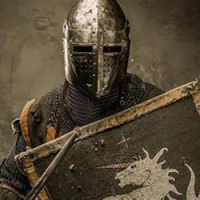
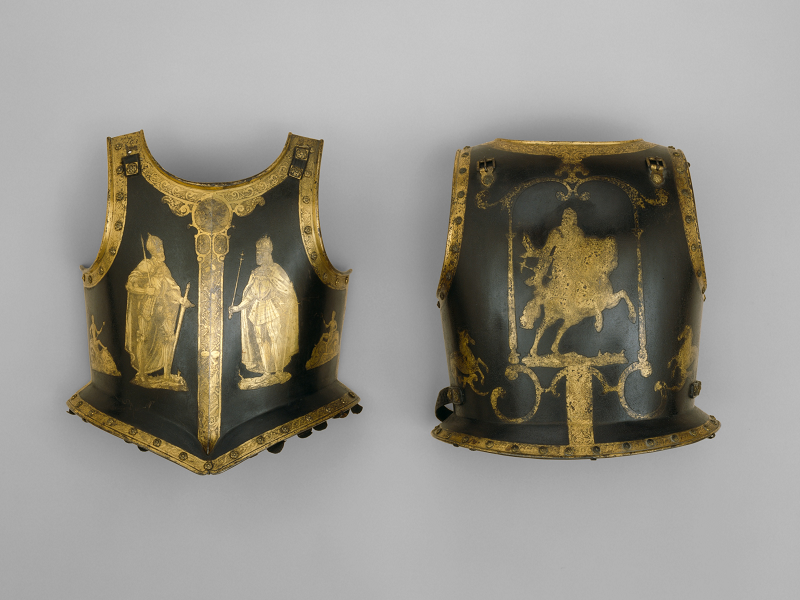
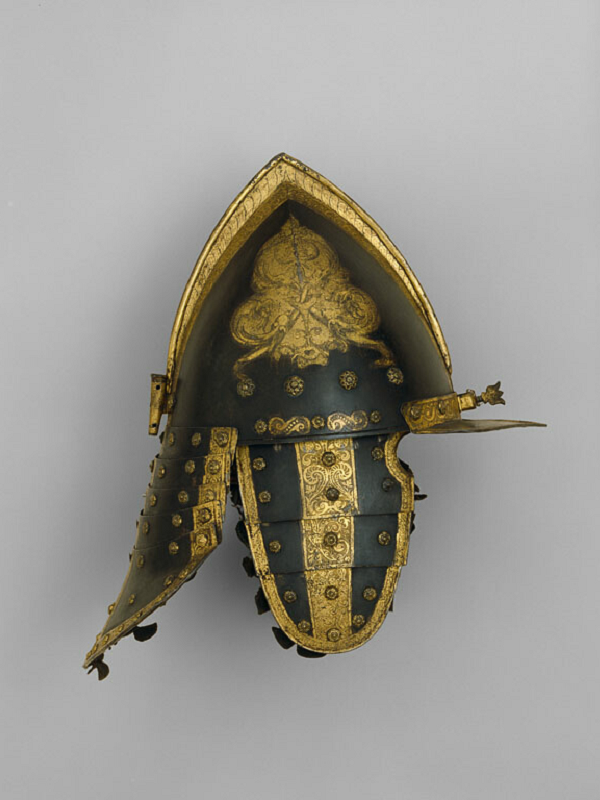
Zischägge (helmet) and cuirass (c. 1610–1630, Southern Germany). One of the best-documented sets is a light cavalry type of Eastern European style (Zischägge—a helmet with "Turkish" influence, often with a crest and cheekpieces). The cuirass is reinforced for bullet resistance, weighing approximately 11 kg (25 lbs) for these parts alone. Decorated with etching and gilding, the breastplate depicts the ancestors—Maximilian I and Charles V—emphasizing legitimacy and dynastic continuity. Held at the Art Institute of Chicago (inv. 1982.2239a-c), it is a typical example of transitional armor of the 17th century: not a full set, but key protective elements for heavy cavalry (cuirassiers).
Other armor mentioned in sources is often subject to confusion: many luxurious Milanese works (for example, by Lucio Piccinino) actually belonged to Archduke Ferdinand II of Tyrol (1529–1595), a great collector, not an emperor. Some ceremonial suits attributed to Emperor Ferdinand II were later found to have been made for others (for example, Alessandro Farnese).
Role in the history of armor.
Practice and ceremonial: During the Thirty Years' War, armor was used sparingly—primarily cuirasses and helmets for officers and heavy cavalry. Ferdinand II, an active participant in conflicts (including wars with Protestants and the Ottomans), wore armor as a symbol of imperial power and a defender of Catholicism. Collecting: The Habsburg armory collections (especially the Vienna Imperial Armory—Hofjagd- und Rüstkammer) expanded under him and his predecessors. The core of many exhibitions in the Kunsthistorisches Museum (Vienna) and Schloss Ambras was formed thanks to Archduke Ferdinand II of Tyrol, but Emperor Ferdinand II promoted their preservation and expansion.
Symbolism: The armor emphasized the connection with the chivalric ideals of the Habsburgs (the Order of the Golden Fleece, warrior ancestors). In portraits, he is often depicted in armor (for example, around 1614 or 1635).
By his time, full "Maximilian" or Renaissance armor sets had become rare, replaced by lighter, more functional, or purely ceremonial armor. Ferdinand II represents the end of the era of classical knightly armor as combat gear.
Compared to the previous ones:
Ferdinand I – functional field armor with symbols (Kunz Lochner).
Maximilian II – luxurious ceremonial armor (Hercules).
Ferdinand II – transition to simplified cavalry elements + collecting.