The Halberd (fr: Hallebarde, de: Hellebarde, it: Alabarda) is one of the most recognizable and versatile polearms of the late Middle Ages and early modern period. It is a combined infantry weapon, combining the functions of a spear, axe, and hook (or spike). It allowed for effective combat against both armored cavalry and infantry.
Halberd Construction and Components.
The classic halberd consisted of a long wooden shaft (usually made of a sturdy wood such as ash or maple) ranging from 1.5 to 2.5 meters in length and a complex metal tip. The total weight of the weapon ranged from 2.5 to 5.5 kg. The halberd's head included three main elements:
A thrusting point (pike or spike) – for piercing armor and keeping an enemy at bay.
A broad axe blade (battleaxe) – for powerful slashing blows capable of cutting through chainmail or even plate.
A hook (or spike/spine) on the reverse side – for hooking, unhorsing riders, disarming, or breaking shields and armor.
The shaft was often reinforced with metal splints (plates) to prevent it from being cut through. Blade and hook shapes varied greatly depending on region and period: from the simple broad axes of early Swiss designs to the elegant, sometimes richly decorated German or Italian versions of the 15th and 16th centuries.
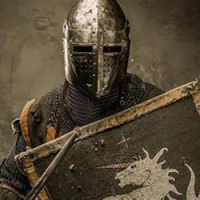
The illustrations above show how the halberd fits into the context of other polearms and its typical design.
History of its origins and development.
The word "halberd" comes from the German Hellebarde (or Helmbarte), literally meaning "hook axe" or "helmet axe." The first mentions and archaeological finds date back to the 13th and 14th centuries. The weapon evolved from simple combinations of an axe and a spear.
The halberd gained its greatest fame thanks to the Swiss infantry (Reislaufer). At the battles of Morgarten (1315) and Sempach (1386), the Swiss, armed with halberds, utterly routed the Austrian knights. This hybrid weapon was ideal for combating heavy cavalry: the pike was used to push the horse back, the axe to chop down the rider, and the hook to drag him to the ground.
The early Swiss halberds had a wider and more massive blade. Later, in the 15th century, the halberd became more elegant and effective. The Swiss turned the halberd into a symbol of their military might, and it became a key element of their famous "battle" tactics—dense infantry formations.
Later, the halberd was actively used by the German Landsknechts, who copied the Swiss model but developed their own styles. In the 16th century, it remained in infantry service in many European armies, including the French, Spanish, and Italian.
Tactics of Use.
The halberd is a weapon for formation and close combat. In dense formations (for example, in the Swiss or Landsknecht "needle"—a square formation), halberdiers often stood in the second or third rank behind the pikemen. When enemy pikes broke or the formation became disorganized, the halberdiers sprang into action: chopping, thrusting, and hooking.
Advantages:
Versatility: a single weapon could replace a spear, axe, and hook.
Effective against armored targets.
Relatively inexpensive to produce compared to swords or complex armor.
Disadvantages:
Heavy and requiring space for swinging (in very dense formations, it was sometimes inferior to long pikes).
Required good physical fitness and training.
Halberds were used not only in field battles, but also in ship boarding, fortification defense, and even as a ceremonial weapon for guards (for example, the Swiss Guard of the Vatican is still formally armed with halberds).
Types of halberds.
Swiss (early) - a massive, wide blade, often without a pronounced hook.
German (classical) - a narrow blade, a long point, and a curved hook.
Italian, Tyrolean, and Dutch designs - each with regional variations in shape and decoration.
Later versions (16th–17th centuries) were more decorative, engraved, and were sometimes used as status weapons for officers or guards.
Museums (the Metropolitan in New York, Swiss collections) house hundreds of examples, many of which are true masterpieces of blacksmithing.
The Decline of the Halberd.
With the spread of firearms (arquebuses, muskets) and the improvement of pikes, the halberd's role gradually declined. By the late 16th and early 17th centuries, it increasingly became a secondary or ceremonial weapon. However, the halberd did not disappear entirely: its elements can be seen in later partisans, glaives, and even some Asian counterparts (although the Chinese "ji" has its own roots and distinctive features).
Today, the halberd is a symbol of medieval infantry, popular among reenactors and in historical films. It recalls a time when simple foot soldiers with polearms could crush the cream of European chivalry.
The halberd is a shining example of medieval engineering: simple to make, yet incredibly effective in skilled hands. It is a weapon that helped change the balance of power on the battlefields of Europe.