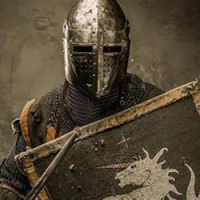

Leg protection is one of the most important and technically complex parts of a full plate armor. The legs bore the weight of the entire knight and his armor, withstood blows in close combat, and helped maintain balance in the saddle and run across the battlefield. Without reliable leg protection, even the strongest cuirass and helmet would not save a warrior from a fall or serious injury.
What did leg protection include?
A full leg harness (leg armor) of the 15th–16th centuries consisted of the following elements:
Cuisses — plates covering the thighs from above to the knee.
Poleyns — movable cup-shaped guards on the knees, often with additional "wings" or ridges to deflect blows.
Greaves — solid or slightly segmented plates encircling the shin from the front and back.
Sabatons are plate "boots" made of many small overlapping plates that protected the foot and toes.
All parts were connected with sliding rivets and leather straps, allowing the leg to bend at the knee with almost unlimited freedom. A full set of leg armor typically weighed 4–7 kg—the load was distributed evenly, allowing the knight to remain in motion for long periods.
Evolution: From Chainmail to "Steel Boots."
In the 14th century, legs were primarily protected by chainmail with separate knee plates. By the early 15th century, armorers had transitioned to solid steel greaves and cuirasses.
Gothic style (mid-late 15th century): graceful, with sharp lines, expressive kneecaps, and often with decorative "stiffeners." Such armor had a noble appearance and emphasized the knight's status. Maximilian style (early 16th century): covered with deep parallel flute-like grooves. These "ribs" not only glittered beautifully in the sun but also significantly increased the plate's strength.
Sabatons became particularly elaborate in the late period: some resembled the pointed shoes of the time, others resembled "bear paws" with wide toes.
Why was leg protection critical?
In foot combat, the legs were the most vulnerable target for an enemy with a halberd, glaive, or mace. A blow to the knee could instantly incapacitate a knight. In mounted combat, sturdy greaves and cuirasses protected against blows from below and helped maintain the knight's position in the saddle during a collision.
At the same time, leg armor had to be able to move freely: a knight had to quickly rise from a fall, run, and maneuver. This is why craftsmen used a system of sliding rivets and carefully adjusted each plate to the anatomy of a specific individual.
The donning process is a true ritual.
The legs were protected last. First, the knight donned his quilted trousers and cuirasses, then secured his greaves and sabatons. Everything was secured with straps and buckles. A well-fitting suit of armor sat snugly but not tightly, allowing the knees to bend and step freely.
The Legacy of Knightly "Steel Legs."
Today, original leg armor from the 15th and 16th centuries is housed in the world's largest museums and impresses with its precision fit even after centuries. Reenactors around the world create precise replicas, proving that in such armor one could not only walk and run, but also wage full-scale combat for hours.
Leg protection is a striking example of how medieval armorers combined strength, agility, and beauty. These gleaming greaves and graceful sabatons capture the essence of the knightly spirit: a willingness to stand firm on the ground, even when battle rages around them. When you see a knight in full armor, pay attention to his legs. They don't just support the warrior—they make him stable, fast, and nearly invulnerable. They embody all the wisdom of an era when steel and human will combined to create legend.