
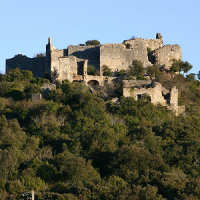
A knight's shield is more than just a piece of wood and metal; it is a true symbol of knightly identity, loyalty, and martial prowess. For centuries, the shield protected a warrior from arrows, spears, and swords, while the vibrant heraldry on its surface told the world who the knight was, what lineage he came from, and what ideals he fought for.
Evolution of form: from the Norman "kite" to the heater.
In the early Middle Ages (11th century), knights used the Norman shield—a long, teardrop-shaped or almond-shaped shield (the so-called "kite shield"). It reliably covered a rider's leg during a cavalry charge and allowed them to form a "shield wall" in dismounted combat. We see such shields in the Bayeux Tapestry.
By the 13th and 14th centuries, the shape became more compact. The classic heater shield emerged—triangular, with a rounded top and a pointed bottom. It was lighter, easier to maneuver in close combat, and ideal for mounted combat. This type became the most recognizable "knightly" shield.
How a knightly shield is constructed.
The shield was made from several layers of wood (often linden or poplar), glued crosswise for strength. Its exterior was covered with leather or canvas, and its edges were bound with iron. A metal boss (umbo) was attached to the center—a convex metal disc that deflected blows and allowed for counterattacks.
On the inside were leather or fabric straps: one for the hand (enarmes), the other for the forearm. This allowed the shield to be held firmly while simultaneously controlling the reins or weapon.
Types of knightly shields.
The types of knightly shields represent an entire evolutionary history of medieval military thought. The shape, size, and design of the shield varied depending on battlefield tactics, the type of troop (cavalry or infantry), the development of armor, and even heraldry fashions. Each type served its own purpose: from protecting a horseman at full gallop to creating a "wall" for crossbowmen.
1. Norman Shield (Kite Shield) – 11th-12th centuries.
The most recognizable "early knightly" shield is long, teardrop-shaped, or kite-shaped. Lengths reached 1.2-1.5 meters, and it reliably covered the rider's leg and left side during a cavalry charge.
Construction: multiple layers of wood, leather covering, metal boss, and iron edging. In the Bayeux Tapestry, these are the shields William the Conqueror's Norman warriors wield.
Advantages: excellent protection on horseback and when forming a "shield wall." Disadvantages: heavy and less maneuverable in close combat on foot.
2. Heater Shield – a classic of the 13th–15th centuries.
The most "knightly" shield of the late Middle Ages. The name comes from the shape of an iron (heater). A compact triangle with a rounded top and a pointed bottom – an ideal balance of weight, protection, and mobility.
It became the mainstay of heraldry: bright coats of arms, mottos, and family symbols. Lighter than its predecessor, it is suitable for both mounted and foot combat. These are the shields we most often see at tournaments and in illuminated manuscripts of the 14th–15th centuries.
3. Round Shield and Buckler.
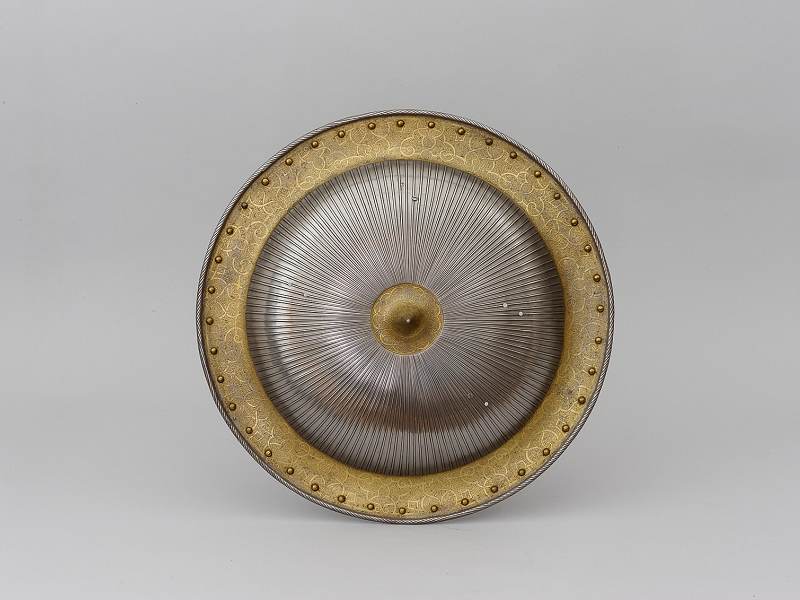
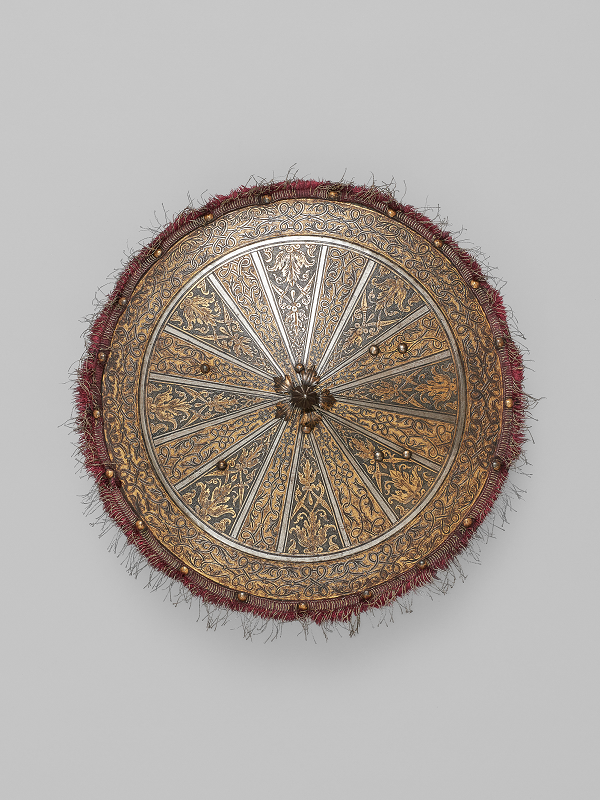
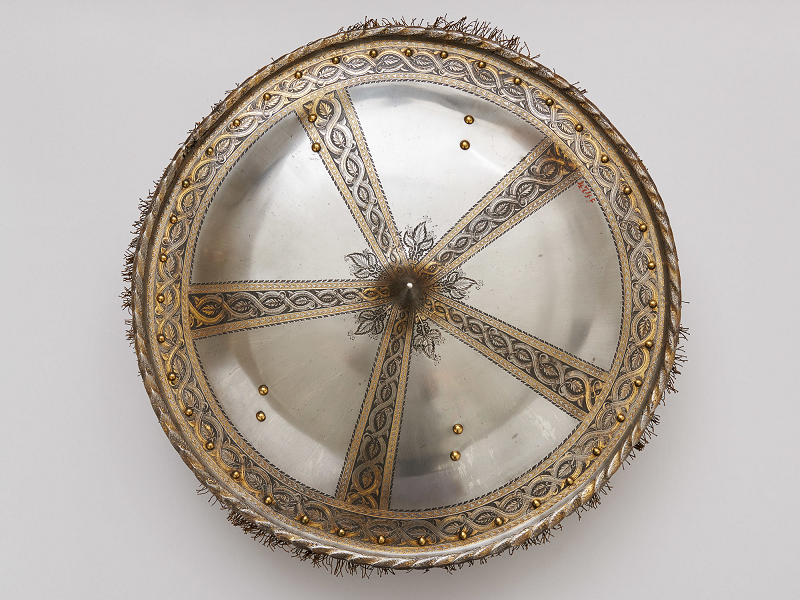
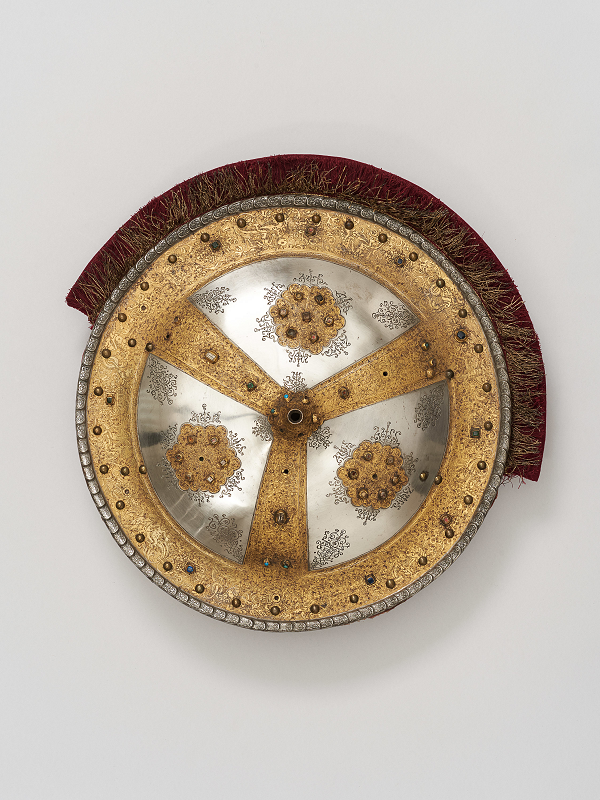
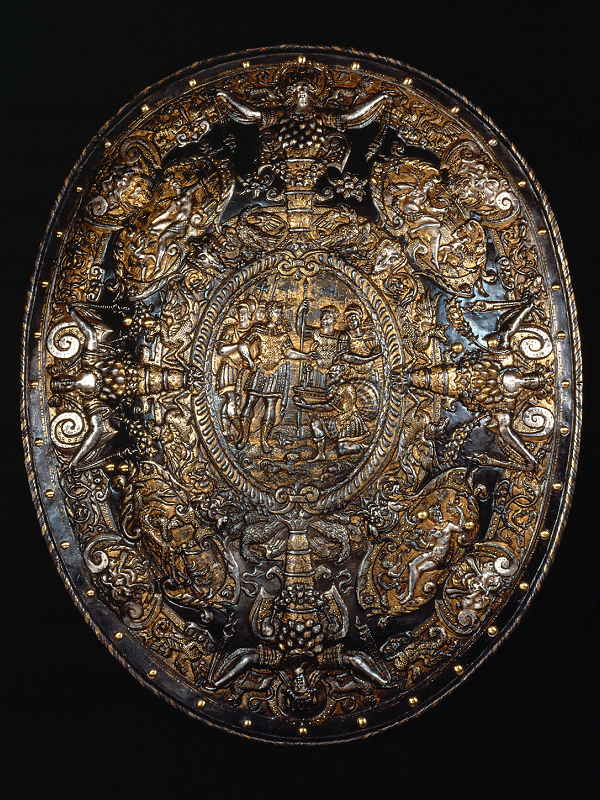
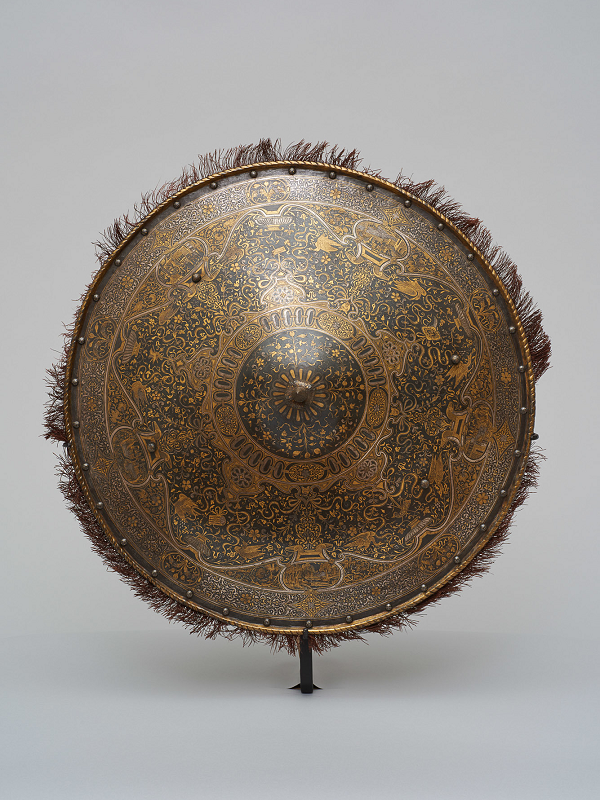
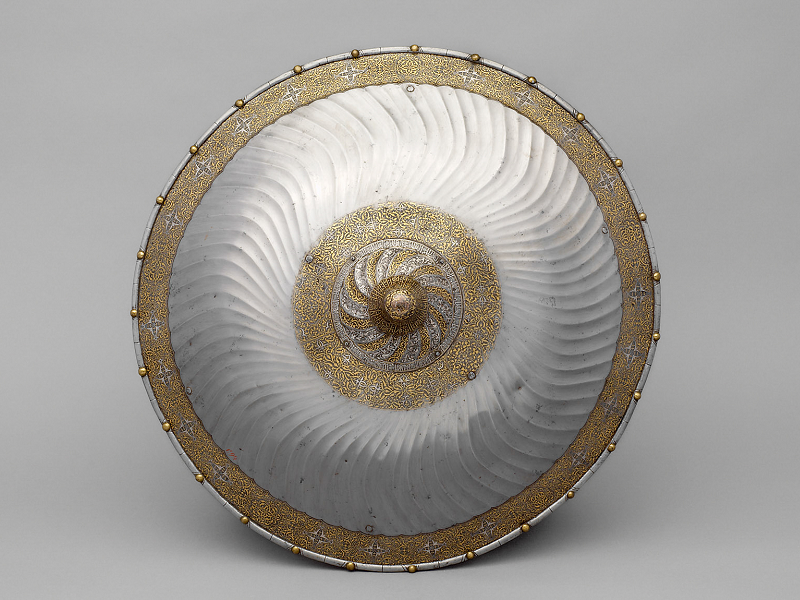
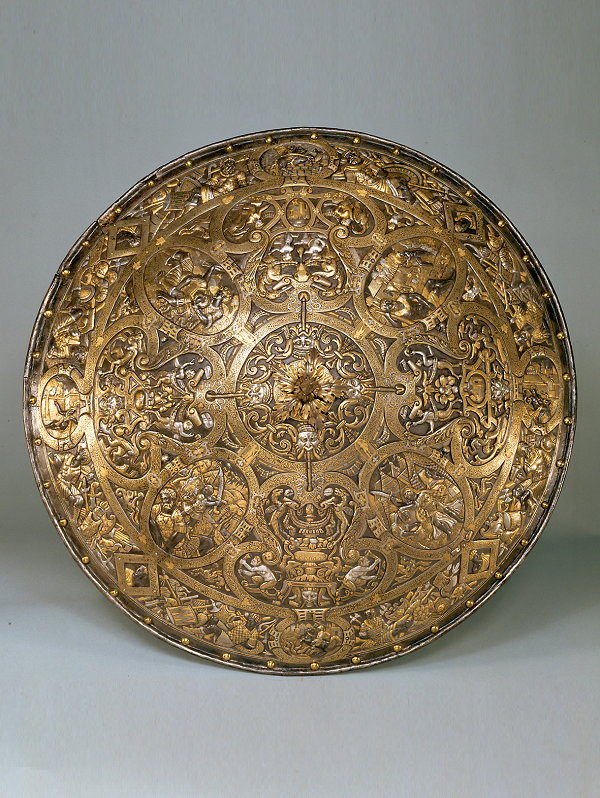
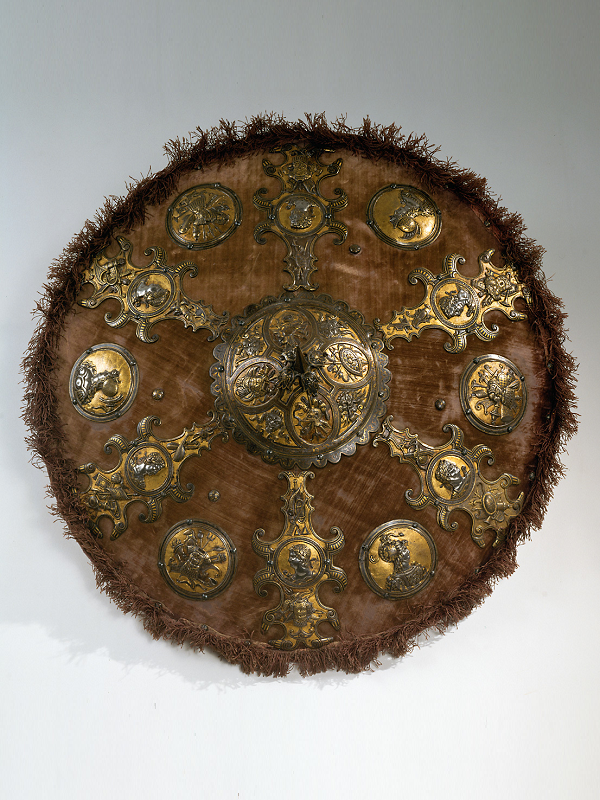
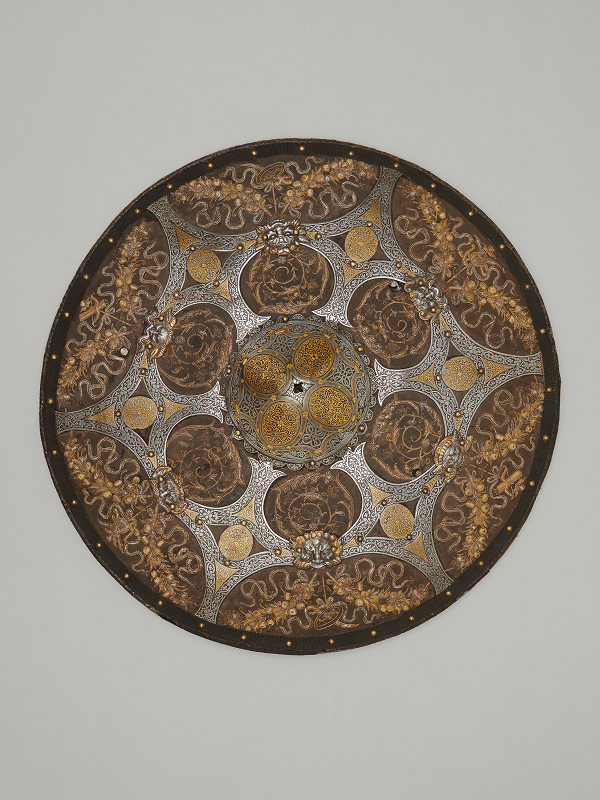
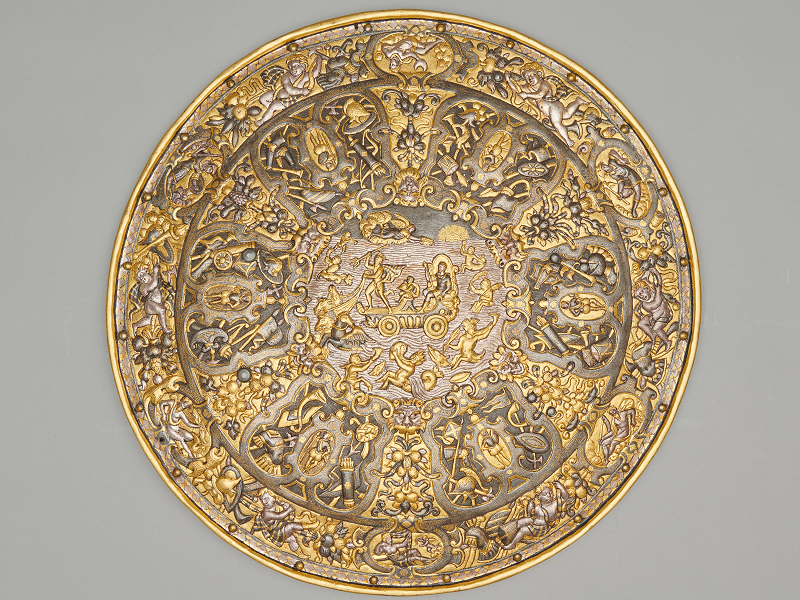
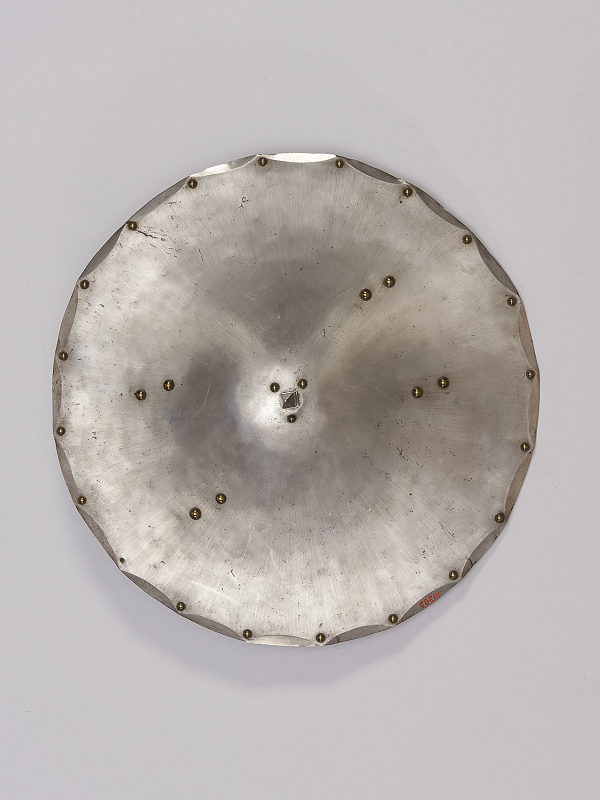
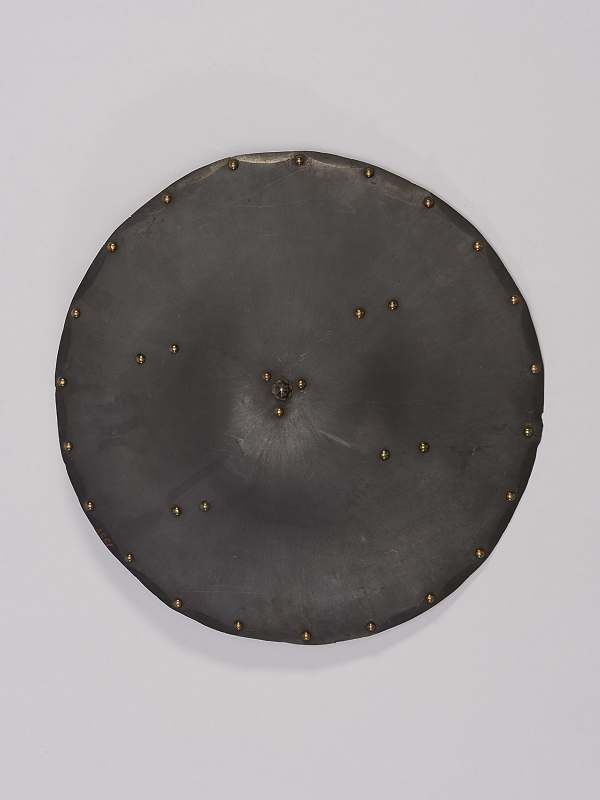
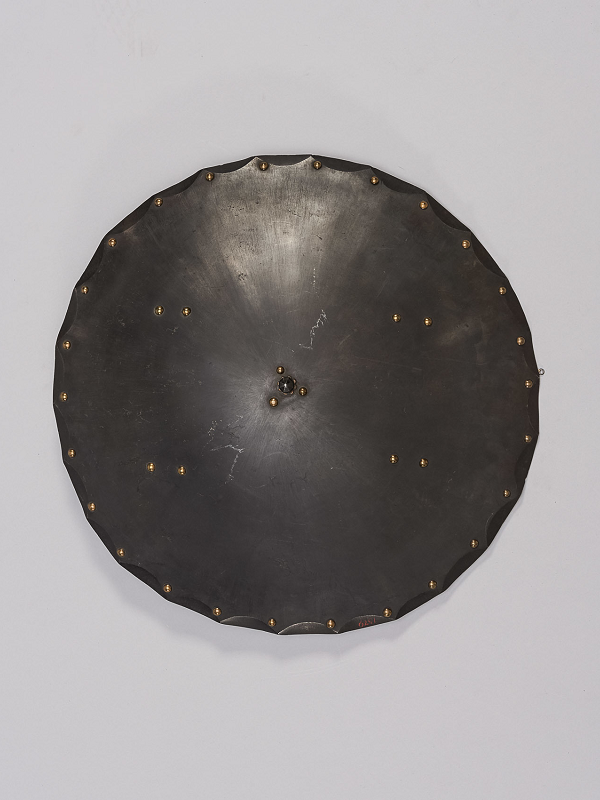
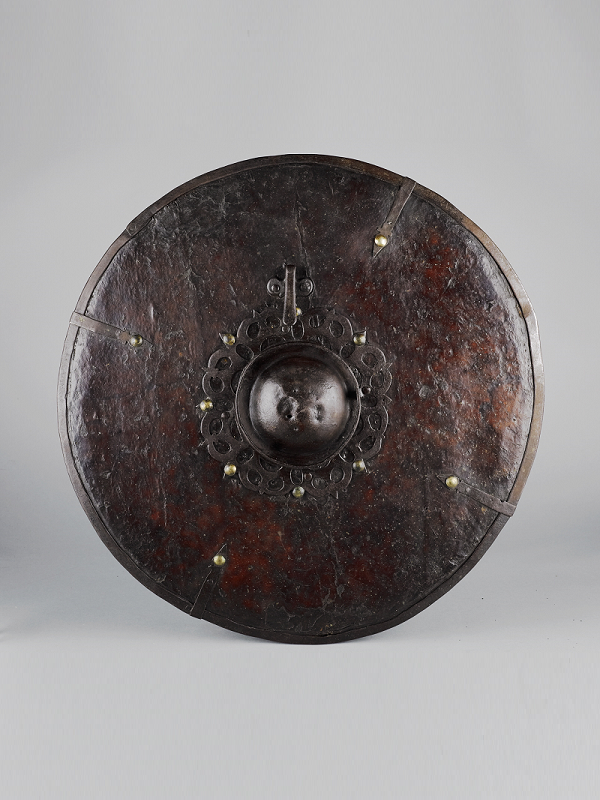
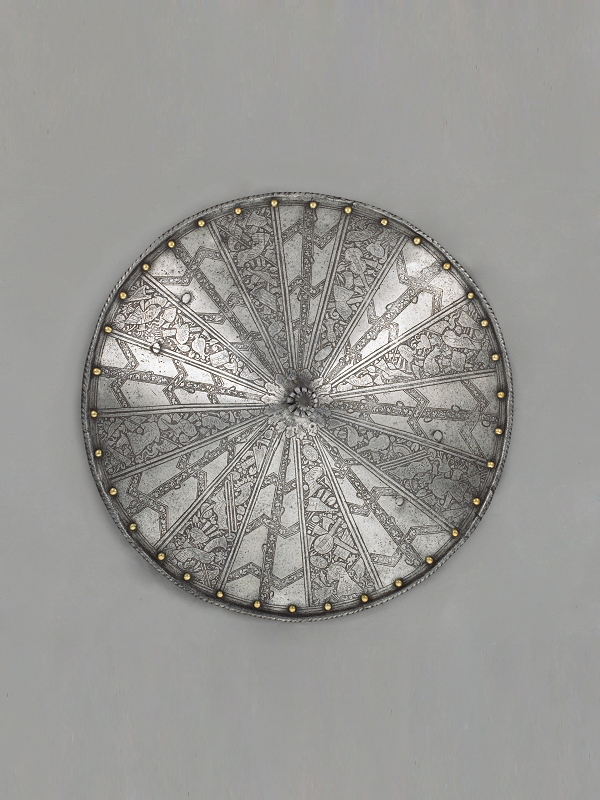
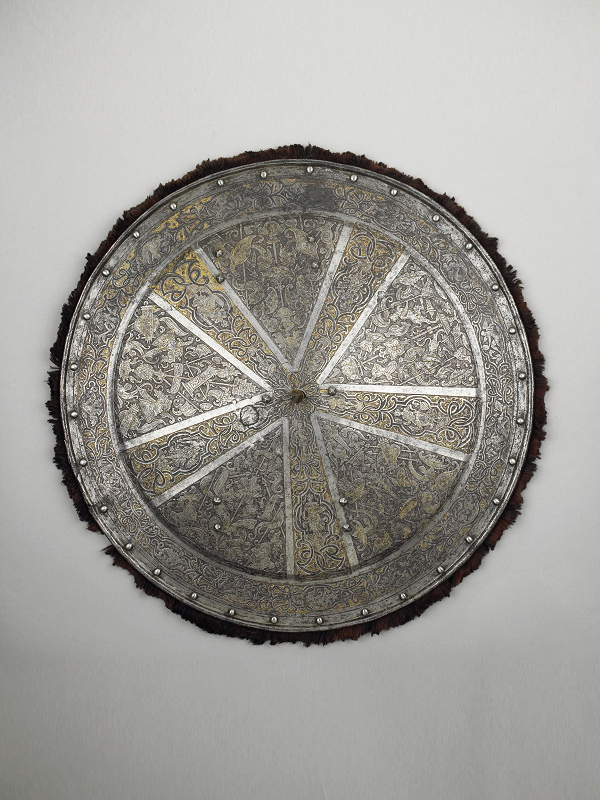
Round shields have been used since the early Middle Ages, alongside other types. Large round shields (about 60–90 cm) were used by Vikings, Anglo-Saxons, and early knights. A buckler is a small round shield (25–45 cm) held in the left hand along with a sword. It was a weapon for close combat, allowing for active parrying, thrusting with the boss, and even capturing enemy weapons. Popular with lightly armed warriors and in urban skirmishes.
4. Pavise – an infantry and crossbowman's shield.
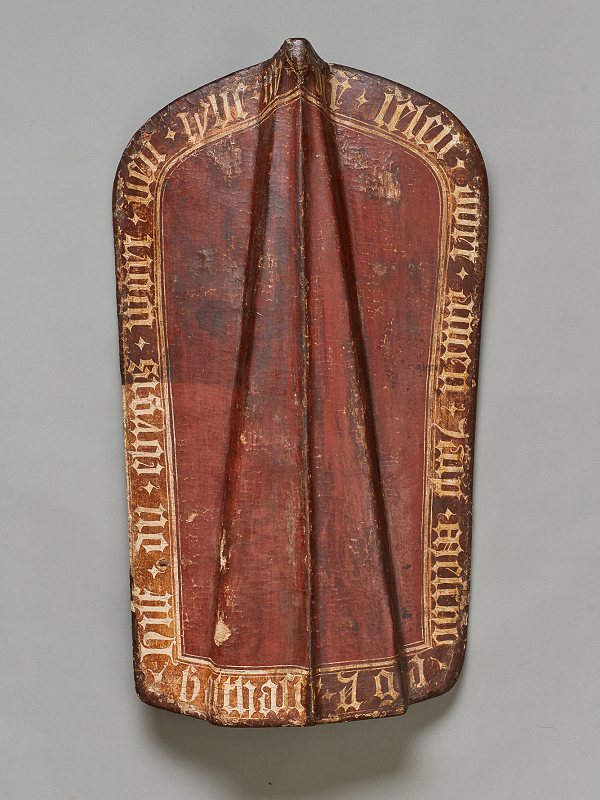
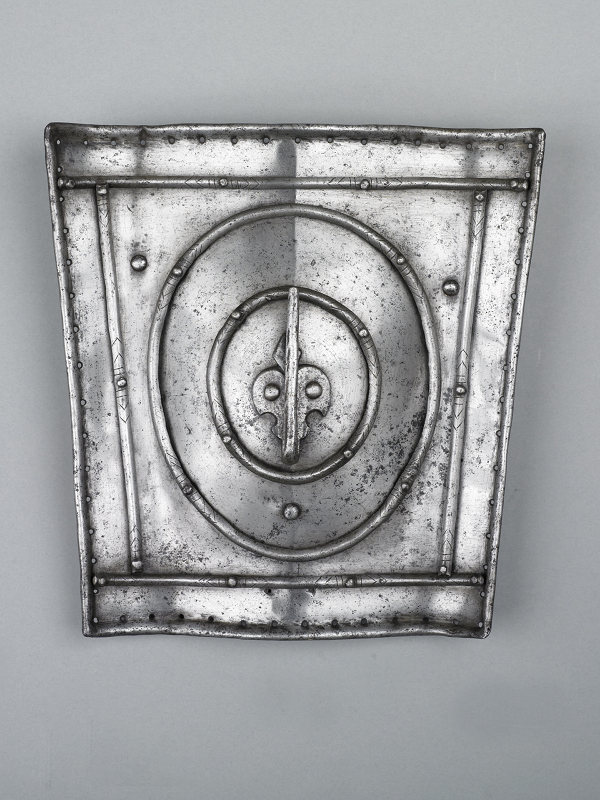
A huge rectangular or slightly curved shield, up to 1.5–2 meters high. It often had legs or a rest so that a warrior could place it on the ground and hide behind it while reloading a crossbow.
The pavise's surface often featured the coat of arms of a city or unit. It protected against arrows and bolts, turning it into a veritable mobile fortress. It was used primarily by infantry in the 14th–15th centuries.
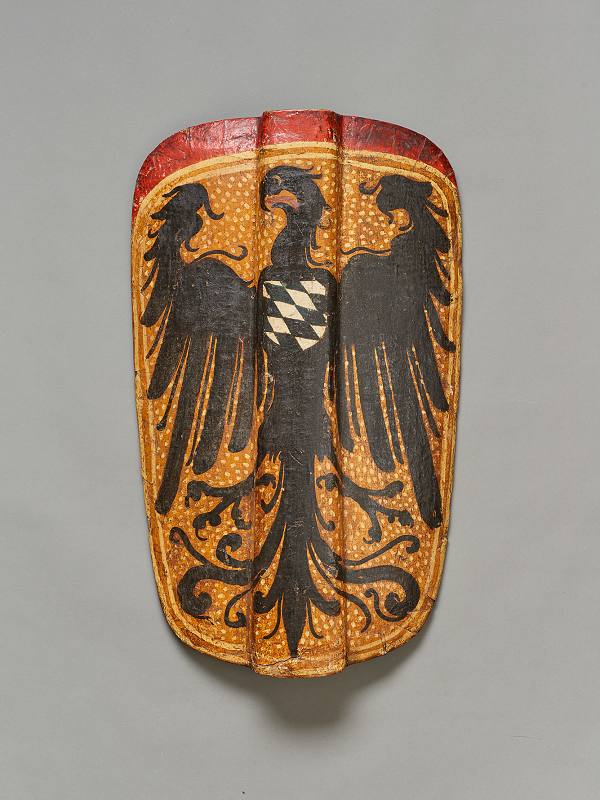
5. Targe and other regional variants.
A targe is a small round or oval shield popular in Scotland and the British Isles. It was often decorated with metal plaques and used with a one-handed sword or broadsword in mountain skirmishes.
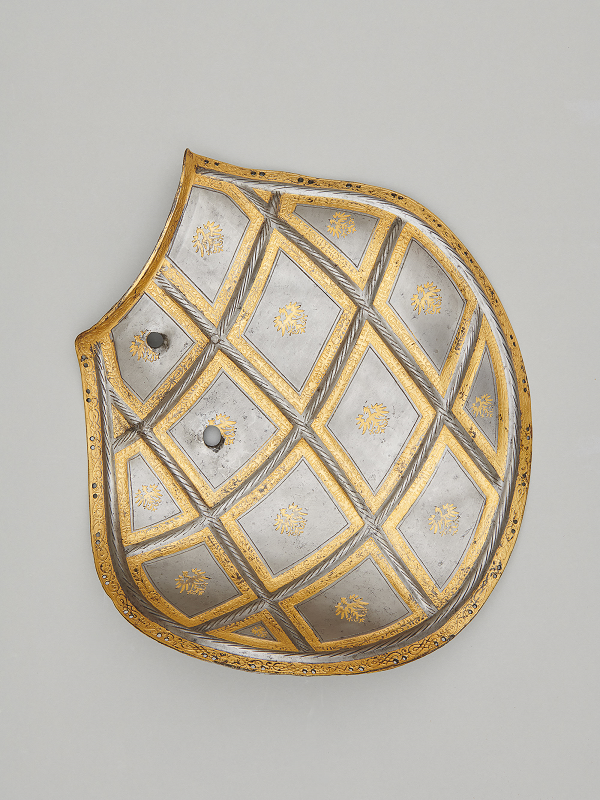
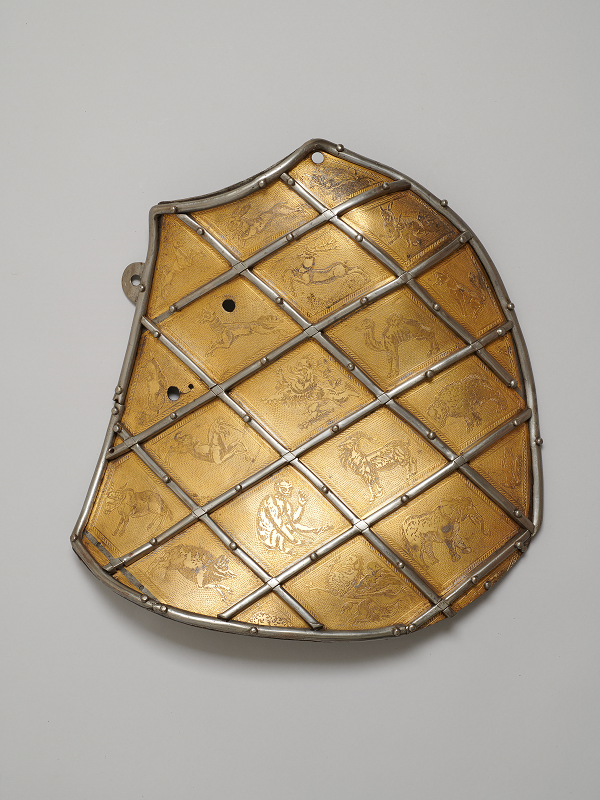
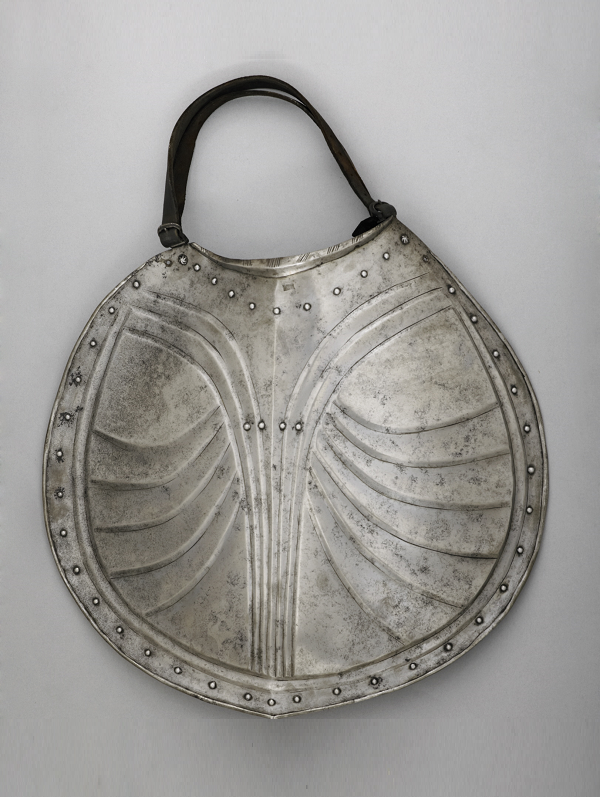
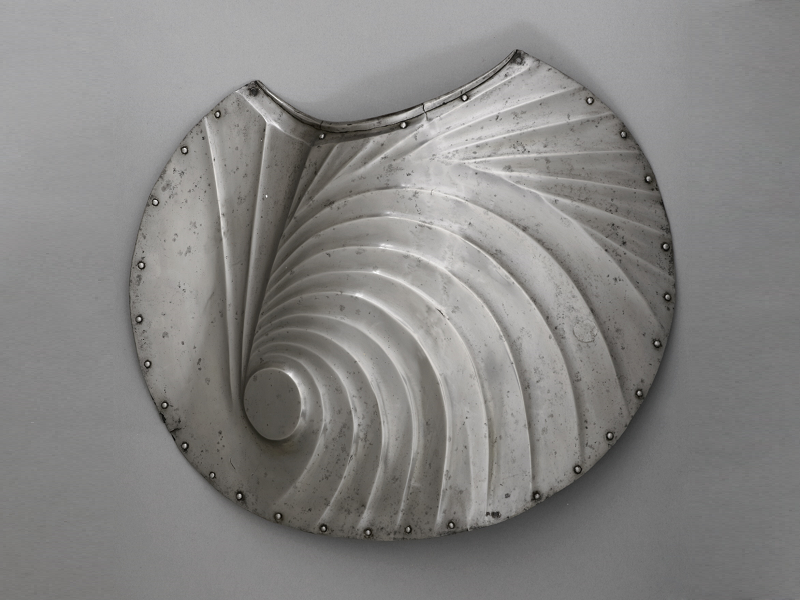
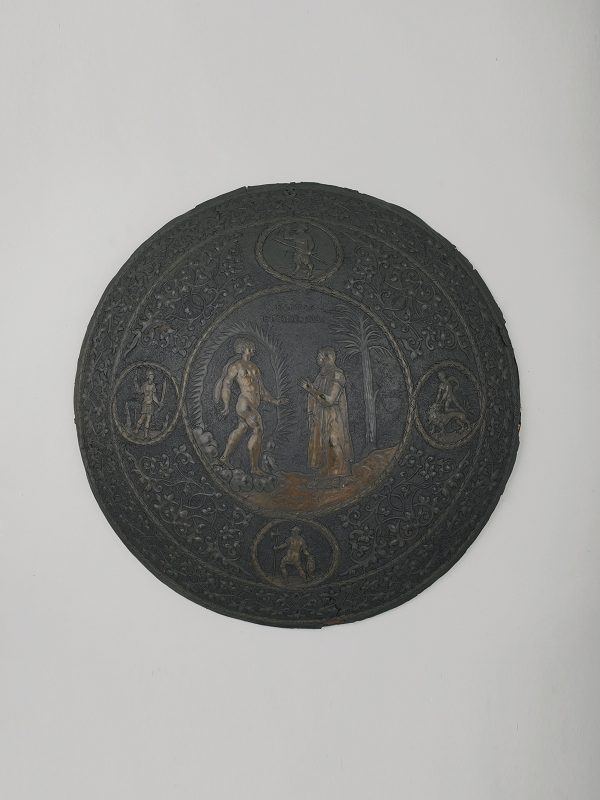
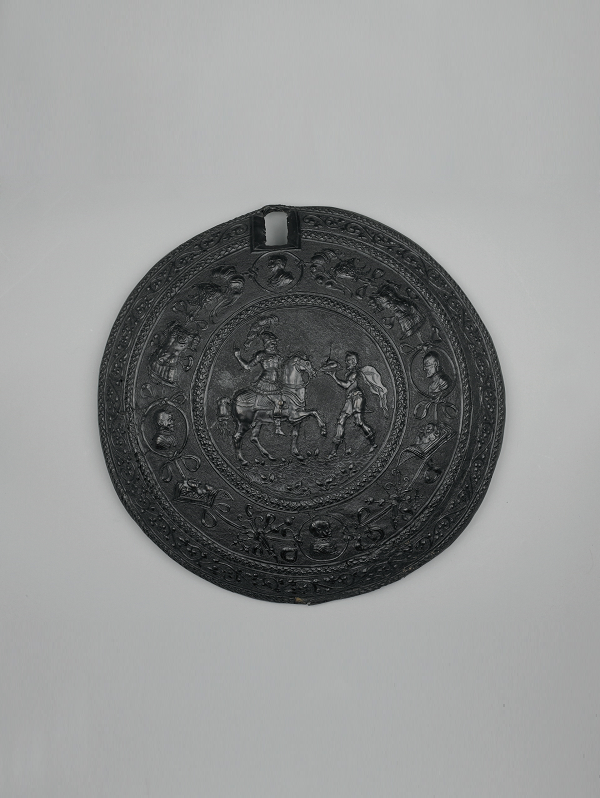
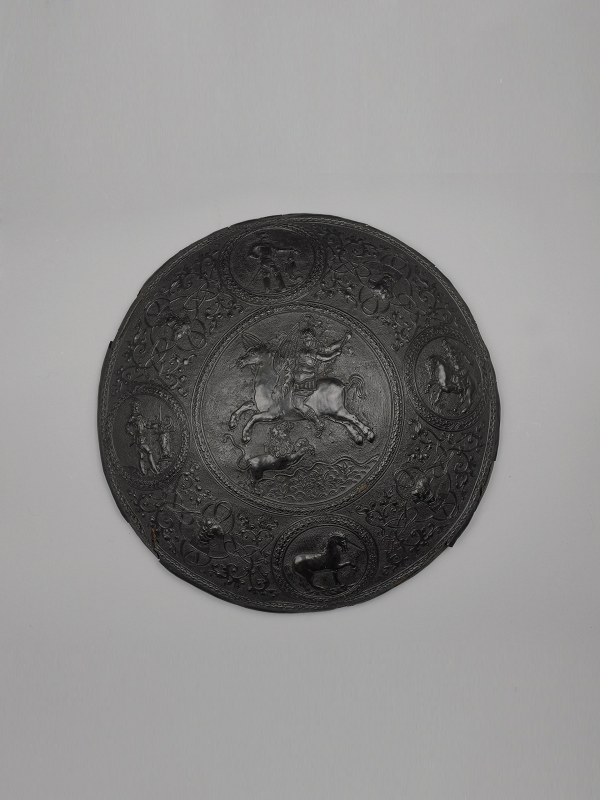
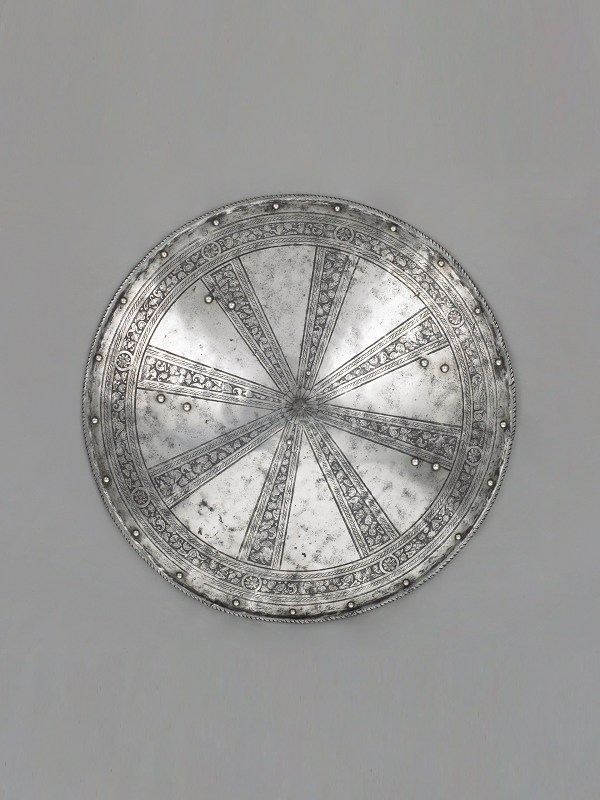
There were also mantles—large portable shields for sieges—and transitional forms that combined features of the heater and round shields.
Here's how they evolved:
Early period (11th-12th centuries): long kite shield—emphasis on cavalry and full-body protection.
Classical period (13th-14th centuries): heater shield—balance of protection and mobility, plus a flourishing of heraldry.
Late period (14th-15th centuries): shield size decreased with the development of plate armor, plus specialization (pavis for infantry, buckler for duels).
Each type reflected changes in warfare: from mass battles to jousting and sieges.
Heraldry: the shield as a calling card.
Since the 12th century, the shield has become a veritable canvas for heraldry. Knights covered it in bright colors and depicted a coat of arms—symbols of their family, their exploits, or their crusades. Lion, eagle, cross, dragon, or flowers—each element had a precise meaning.
Coats of arms were passed down through generations, and their appearance on the battlefield instantly identified an ally or enemy. At tournaments, a shield bearing a coat of arms announced the arrival of a knight and sometimes became the basis for a challenge to a duel.
In battle: a shield is an extension of the knight's arm.
A good shield could withstand powerful blows from an axe or spear. A knight used it not only for passive defense but also actively: deflecting enemy weapons, pushing an opponent, and covering himself and his horse during an attack.
In a dense formation, shields formed an impenetrable wall. In single combat, an experienced warrior skillfully "played" with his shield, creating angles for a counterattack. Even in the era of full plate armor, the shield remained an important element—especially in tournaments and among light cavalry.
The Legacy of the Knight's Shield.
Today, original medieval shields are a rarity in museums, but reenactors around the world create precise replicas. They prove that a properly crafted heater or kite shield is surprisingly comfortable and effective even in modern historical fencing.
A knight's shield is more than just protection. It is the embodiment of honor, family pride, and martial art. When a knight raised his shield with its bright coat of arms and charged into battle, he defended not only his body but also his name, his family, and his ideal.
The spirit of the Middle Ages—the spirit of courage, loyalty, and indomitable will—still lives within these wooden and metal plates.