Philip II of Spain (1527–1598), son of Emperor Charles V and King of Spain, Portugal, and other Habsburg possessions, played a significant role in the history of knightly armor as a patron and patron of the opulent armor of the late Renaissance. Although he was not a Holy Roman Emperor, his vast empire and collection of weapons made him a key figure in the development of ceremonial, tournament, and military armor.
His reign coincided with a period when classical knightly tournaments were gradually giving way to court parades and symbolic displays of power. Philip II's armor combined high protection, technical perfection, and rich artistic decoration (engraving, gilding, chasing, emblems). It reflected the transition from the Gothic/Maximilian style to the Renaissance, with influences from classical aesthetics.
Main surviving armor.
The majority of Philip II's collection is housed in the Real Armería (Royal Armory) in Madrid, one of the finest in the world, along with Vienna. Many suits of armor were commissioned during Charles V's lifetime from leading masters in Augsburg and Milan.
Flower-Pattern Garniture (c. 1550, Augsburg, A.217, A.218): One of the most famous. Made by Desiderius Helmschmid (or Colman Helmschmid). The decoration consists of wide, gilded bands with floral patterns (pavonadas—blue/peacock flowers in diamonds). It was intended for foot combat at the barrier. Philip wore it as a prince; it is depicted in portraits (including those by Titian). Parts of the garniture, including the gloves, have survived.


Armadura "de ondas o nubes" de Felipe II, (arnés) Wolfgang y Franz Grosschedel, (barda) Kunz Lochner, hacia 1550, Landshut, Alemania - A.243 (Real Armería de Madrid)
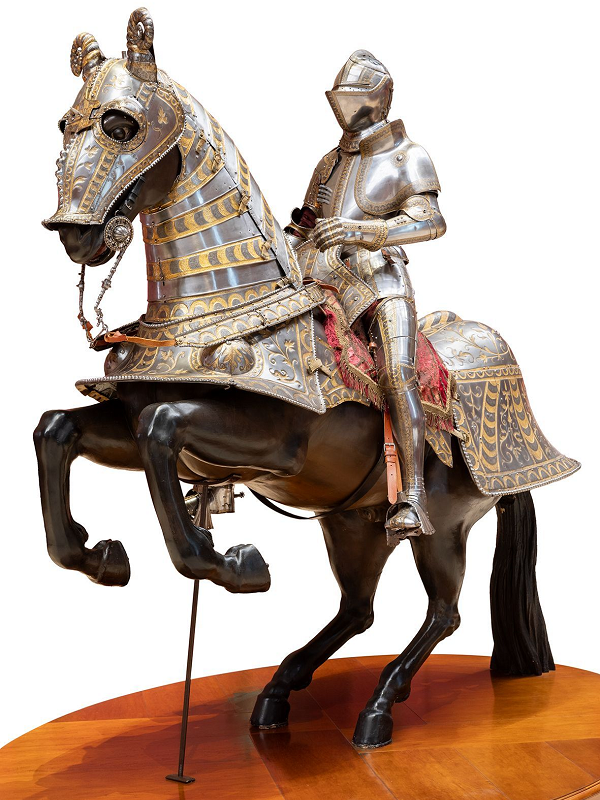
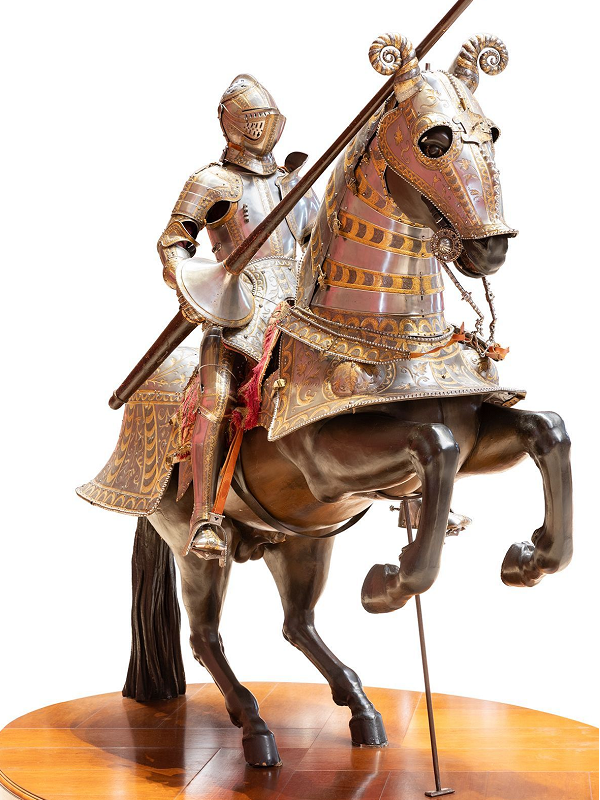
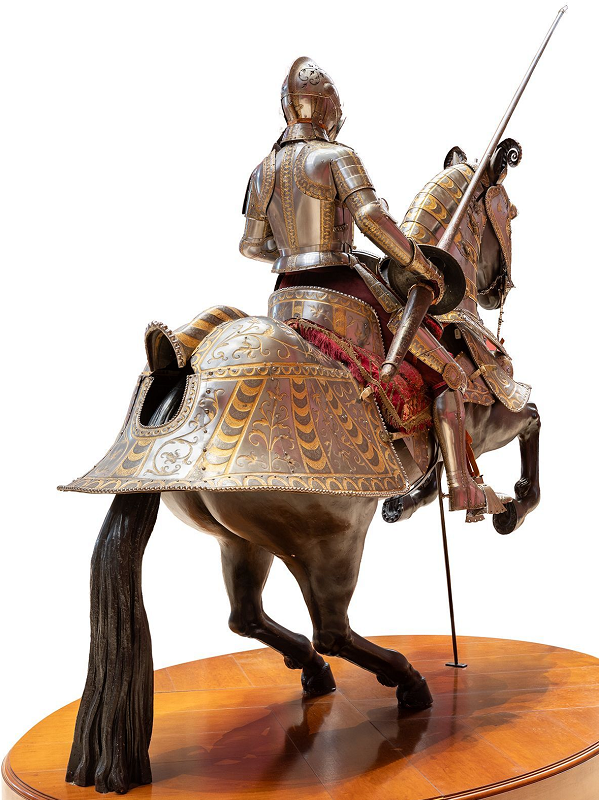
Ceremonial foot armor (circa 1560, Augsburg, craftsman Anton Peffenhauser, A.290): A masterpiece with rich chasing and engraving. Characterized by a high level of artistic decoration, unusual even for its time, it is considered one of the pinnacles of German armormaking.
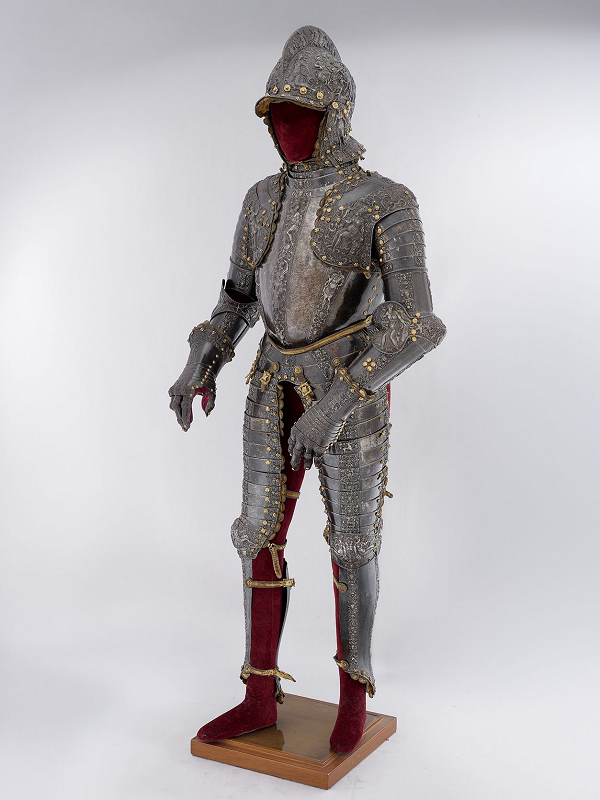
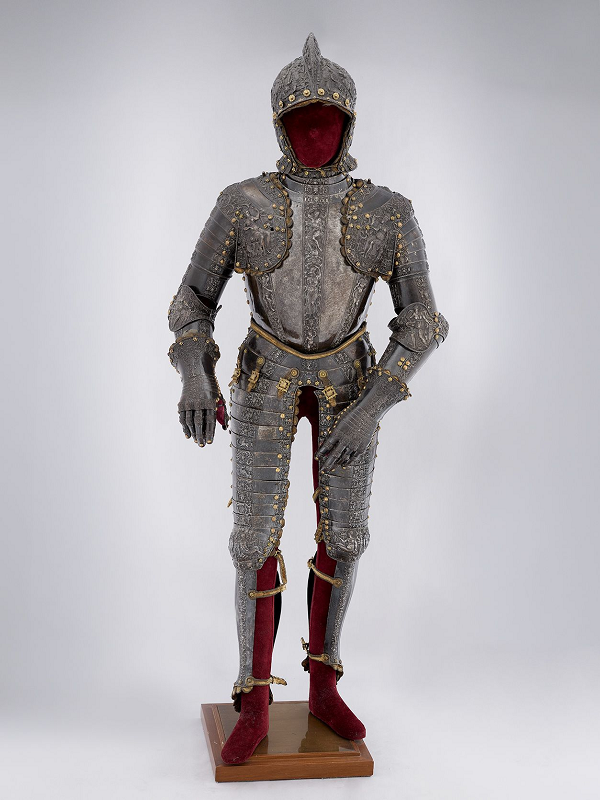
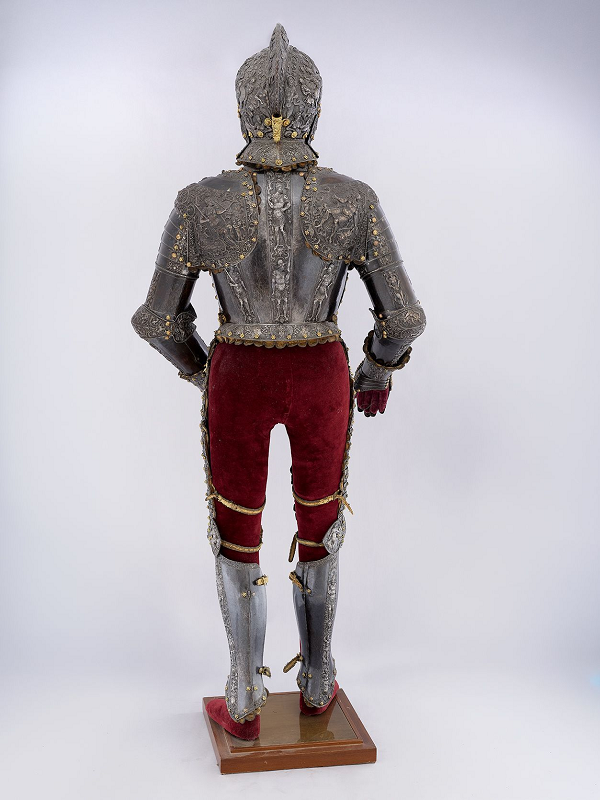
Other sets: Field/cavalry armor, tournament pieces, horse armor. Philip inherited and expanded his father's collection, including works by Filippo Negroli (Milan) and others. There are also Italian "antique" (all'antica) ceremonial armor.
Historical context.
Philip II actively participated in military campaigns (for example, the Battle of San Quentin in 1557), where he wore armor. However, it played a major role in propaganda: portraits by Titian (Philip II in Armor, 1551) depict him in luxurious armor as the ideal warrior ruler. Workshops in Augsburg (Helmschmied, Peffenhauser) and Milan supplied him with "garnitures"—suits with interchangeable parts for various types of combat, tournaments, and parades. The decoration included Habsburg heraldry, Christian, and classical motifs.80a493
After Philip's death, his armor became the core of the Madrid collection and a symbol of Spanish power. It influenced subsequent Habsburgs (Philip III, IV) and demonstrates the peak of armorsmithing before the decline of knightly culture in the 17th century.
Unlike his more "chivalrous" father, Charles V ("the Last Knight"), Philip II used armor more as an instrument of absolutist power and court ceremony.