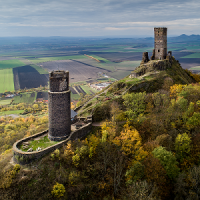
Ferdinand I (1503–1564), Holy Roman Emperor from February 24, 1558 to July 25, 1564 (King of the Romans from 1531), actively commissioned and used knightly armor both in military campaigns (the wars against the Reformation and the Ottoman Empire) and to demonstrate his status.
As the grandson of Maximilian I and brother of Charles V, he continued the Habsburg tradition of patronage of armor, although not on the legendary scale of his father. His reign coincided with a transitional period: armor increasingly became functional, field, or ceremonial, with rich engravings and etchings, but retained practical protection.
The most famous armor is the work of Kunz Lochner (1549).
One of the most famous sets is the field armor (Feldharnisch), made by the Nuremberg master Kunz Lochner (c. 1510–1567) in 1549. It is now housed in the Metropolitan Museum of Art (New York, inv. 33.164a–x).


Specifications: A complete steel suit (approximately 24 kg, height ~170 cm), designed for actual combat, not just parade. Decorated with etching—intricate ornamentation that does not weaken protection.
Symbolism:
The breastplate features the Madonna and Child (as on the armor of Charles V), symbolizing protection and the Catholic faith.
The back plate features crossed staves and firesteels—the emblem of the Order of the Golden Fleece, of which Ferdinand was a member. On the toes of the sabatons is a crowned double-headed imperial eagle (Reichsadler), indicating his status as King of Rome (the heir of Charles V).
Lochner made several similar suits of armor for Ferdinand and his son Maximilian (the future Maximilian II), including suits circa 1546.
This is a striking example of the southern German school of armormaking of the mid-16th century: a transition from the corrugated "Maximilian" armor to smoother forms with rich decoration.
Other famous armor and tournament suits.
Tournament armor of 1526 (Augsburg, Colman Helmschmidt) - for a Hungarian-style tournament or associated with the coronation/wars in Hungary and Bohemia. Ferdinand became king of these lands after the Battle of Mohács.
Reiterharnisch (Küriss) für Feld und Turnier, Kaiser Ferdinand I. Sohn des Philipp von Habsburg Österreich (1503 - 1564), 1526, Kolman Helmschmid, Augsburg, Germany - A349
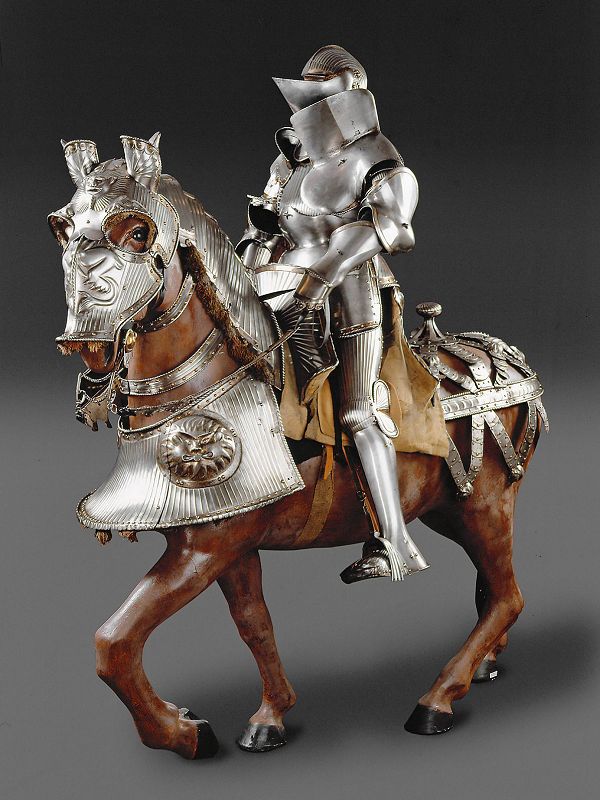
Ferdinand commissioned modular armours (garnitures) with additional parts for different types of tournaments and combat—a tradition continued by his son, Maximilian II.
The Imperial Armoury (Kunsthistorisches Museum) in Vienna and other collections contain items associated with him or his entourage.
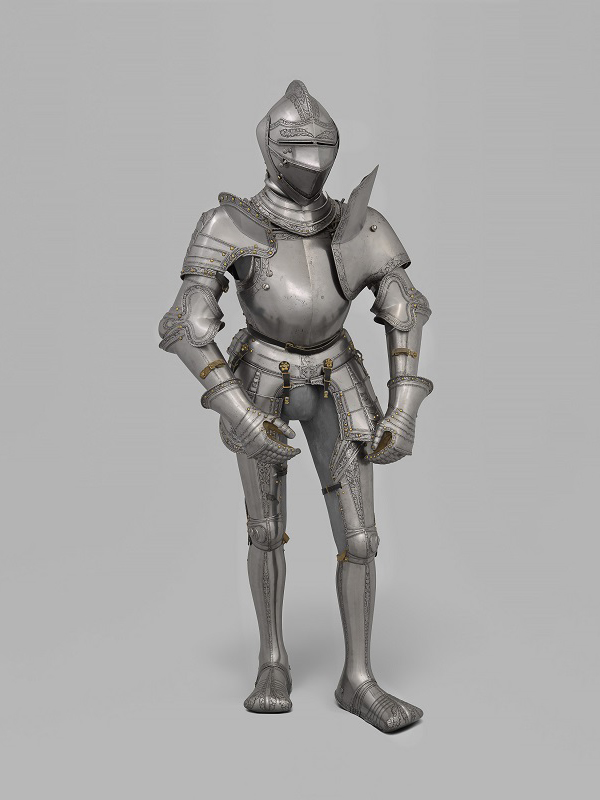
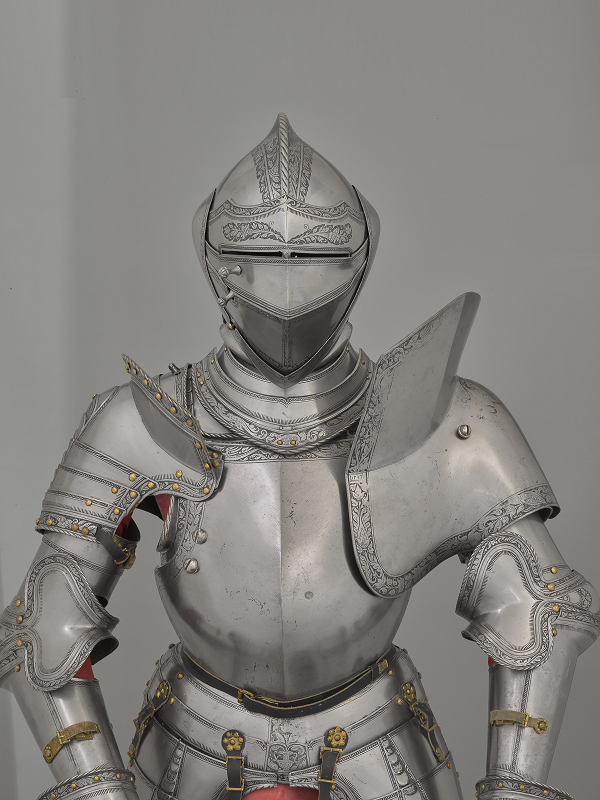
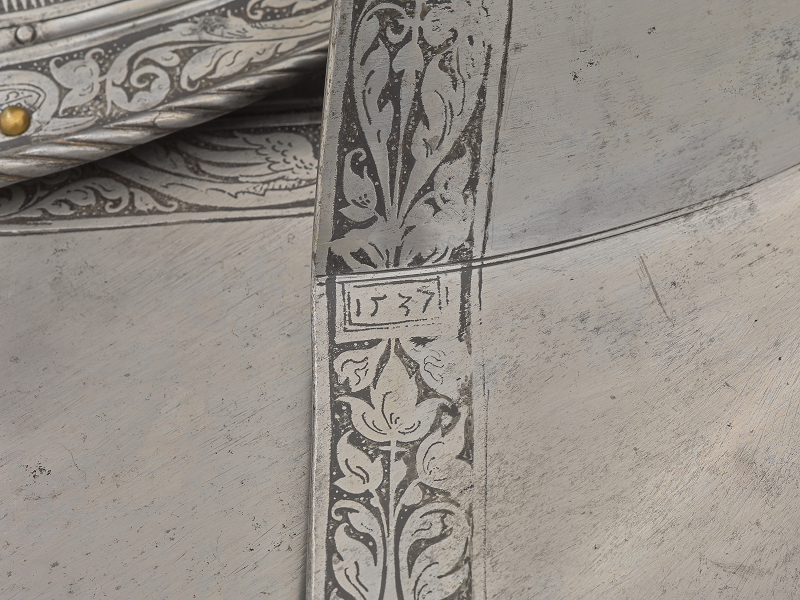
Harnisch, Kaiser Ferdinand I. Sohn des Philipp von Habsburg Österreich (1503 - 1564), 1537, Jörg Seusenhofer, Innsbruck, Austria - A472
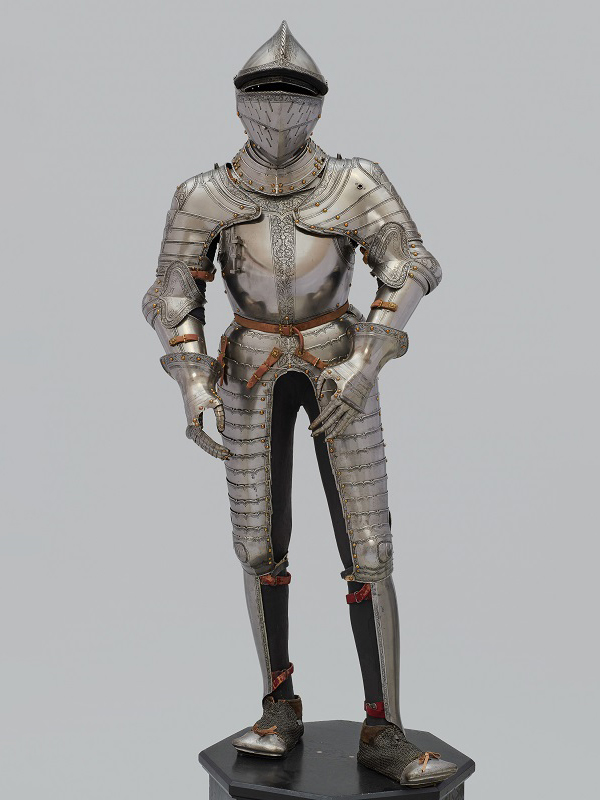
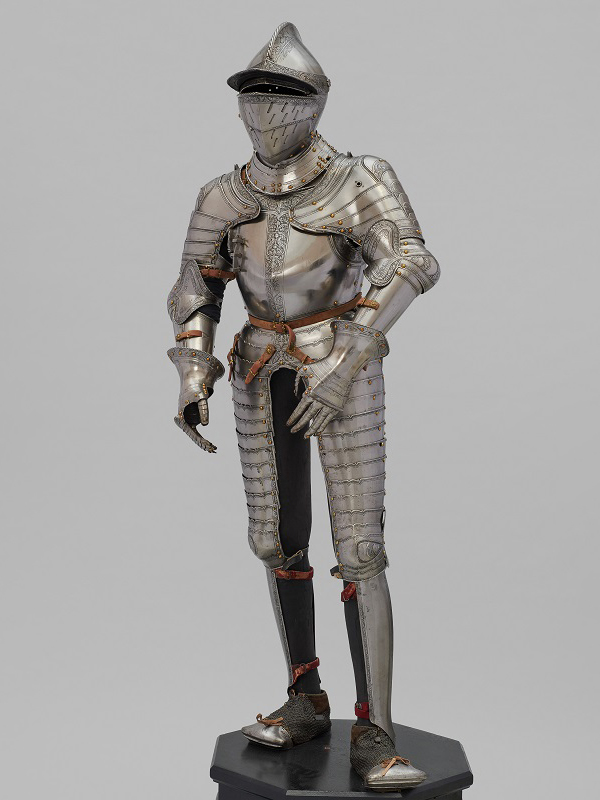
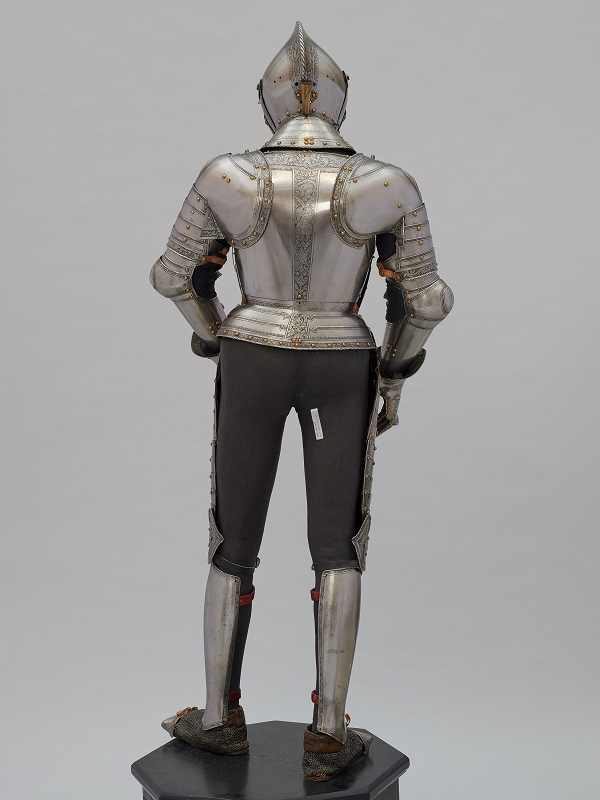
Harnisch, Kaiser Ferdinand I. Sohn des Philipp von Habsburg Österreich (1503 - 1564), 1537, Jörg Seusenhofer, Innsbruck, Austria - A472a
Role in the history of armour.
Ferdinand I did not "invent" a new style (like his grandfather with Maximilian corrugation), but:
He supported the leading masters of Nuremberg and Augsburg.
He used armour as a propaganda tool: a Catholic warrior-defender, heir to the Burgundian-Habsburg traditions of chivalry and the Order of the Golden Fleece.
His commissions reflected the practical needs of the era (wars with the Turks, internal conflicts) and the Renaissance taste for ancient/heroic symbolism.
By the mid-16th century, full knightly armor was gradually losing its dominance on the battlefield to firearms, but remained an important element of status, tournaments, and Habsburg court culture.
Compared to Maximilian II, his father emphasized functional field armor with symbolism, while his son emphasized luxurious ceremonial sets (for example, the "Armor of Hercules").