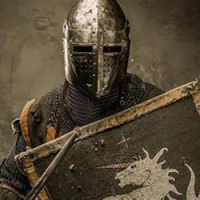

Medieval chivalry became one of the main symbols of European history. For several centuries, knights not only participated in wars and crusades but also shaped the political fate of states, defended fortresses, led armies, and became the heroes of numerous legends.
A true knight was expected to possess not only military prowess but also honor, loyalty to his liege lord, nobility, and a willingness to sacrifice his life for duty. Although reality often differed from the ideal, many historical figures truly earned fame as the greatest warriors of their era.
Below are the most famous knights of the Middle Ages, whose exploits have made history.
1. William Marshal (c. 1147–1219) – England's greatest knight.
Historians often call William Marshal "the greatest knight of the Middle Ages."
Born into a modest noble family, he rose to become one of the most influential men in England through his talent and military prowess.
During his lifetime, Marshal served five English kings:
Henry II;
Henry the Young King;
Richard the Lionheart;
John Lackland;
Henry III.
He became famous for his numerous victories in knightly tournaments, where he personally defeated dozens of opponents. After the death of King John, he became Regent of England and played a key role in preserving the English state during the First Barons' War.
Even at the age of over 70, Marshal personally commanded the army at the Battle of Lincoln (1217), achieving one of the most important victories in English history over the French.
2. El Cid (Rodrigo Diaz de Vivar, ca. 1043–1099).
The Spanish knight Rodrigo Diaz was nicknamed El Cid ("the Lord"). He rose to fame during the Reconquista—the centuries-long struggle of the Christian kingdoms of Spain against Muslim powers. El Cid was a talented military leader and repeatedly defeated superior enemy forces. In 1094, he managed to capture Valencia, which he ruled until his death. After his death, El Cid became a symbol of Spanish chivalry and a national hero.
3. Richard I the Lionheart (1157–1199).
King Richard I of England went down in history primarily as an outstanding warrior. He spent virtually his entire life on campaigns and in battle. During the Third Crusade, Richard won several major victories over the army of Sultan Saladin, demonstrating exceptional courage and military talent. Although he failed to recapture Jerusalem, his reputation became legendary even among his Muslim opponents.
4. Edward the Black Prince (1330–1376).
The eldest son of King Edward III of England became one of the finest commanders of the Hundred Years' War. Major victories: Battle of Crécy (1346); Battle of Poitiers (1356). It was at Poitiers that the English army defeated the French, and King John II of France was captured. The Black Prince was renowned for his courage, discipline, and outstanding leadership.
5. Bertrand du Guesclin (c. 1320–1380).
The French knight Bertrand du Guesclin became one of France's most successful military leaders. Despite his unremarkable appearance, he possessed outstanding military talent. Du Guesclin preferred to avoid open pitched battles and successfully employed maneuver warfare, gradually displacing English garrisons. He later achieved the highest military rank in France—constable.
6. Jean le Maingre (Boucicaut) (1366–1421).
A French marshal and renowned knight of the late Middle Ages. He participated in: the Crusades; numerous knightly tournaments; the Hundred Years' War. Boucicaut was considered a model of knightly honor and nobility. Contemporaries noted his incredible physical fitness and mastery of arms.
7. Godfrey of Bouillon (c. 1060–1100).
One of the main leaders of the First Crusade. After the capture of Jerusalem in 1099, he refused to wear the golden crown in the city where, according to Christian tradition, Christ wore the crown of thorns. Instead of the title of king, he adopted the title "Defender of the Holy Sepulchre."
8. Robert the Bruce (1274–1329).
King of Scotland and a distinguished knight. His victory over the English at Bannockburn in 1314 was one of the most important events in Scotland's struggle for independence. Robert the Bruce distinguished himself not only as a warrior but also as a talented statesman.
9. Joan of Arc (1412–1431).
Although Joan of Arc was not a knight in the literal sense, she became one of the most famous symbols of chivalrous valor. She led the French army during the Hundred Years' War and played a decisive role in lifting the siege of Orleans. Her courage inspired the French troops and changed the course of the war.
10. Maximilian I of Habsburg (1459–1519).
The Holy Roman Emperor is considered one of the last great knights of Europe. Maximilian actively participated in tournaments, perfected armor, and patronized the best armorers of his time. It was during his reign that many famous examples of late medieval knightly armor appeared.
What qualities did a true knight possess?
The ideal knight had to combine:
courage;
loyalty to the oath;
mastery of arms;
respect for the enemy;
protection of the weak;
nobility;
military discipline.
In practice, not all knights lived up to these ideals, but they formed the foundation of European chivalric culture.
The Legacy of Great Knights.
Even after many centuries, the names of the greatest knights continue to inspire historians, writers, and medievalists. Their lives have become the basis for chivalric romances, chronicles, feature films, and historical research.
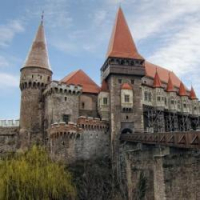
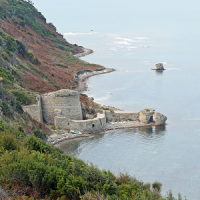
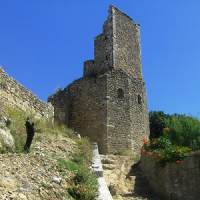
The castles in which they lived, the swords they fought with, and the armor they wore can be seen today in museums across Europe. Many knightly traditions—tournaments, coats of arms, and order ceremonies—have been preserved as part of cultural heritage.
The history of the Middle Ages would not have been possible without outstanding knights. William Marshal, El Cid, Richard the Lionheart, Edward the Black Prince, Bertrand du Guesclin, Godfrey of Bouillon, and other legendary warriors became symbols of their era. Their military prowess, personal courage, and influence on the course of European history made their names immortal, and their memory lives on hundreds of years later.