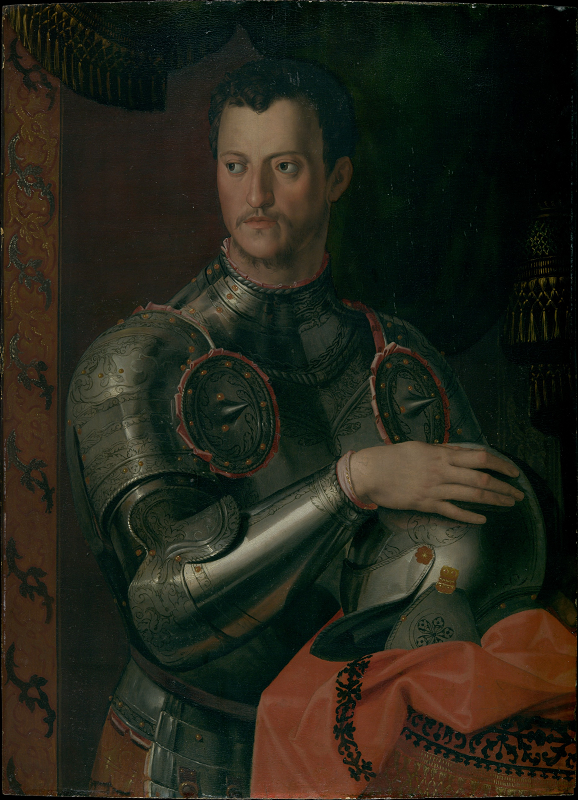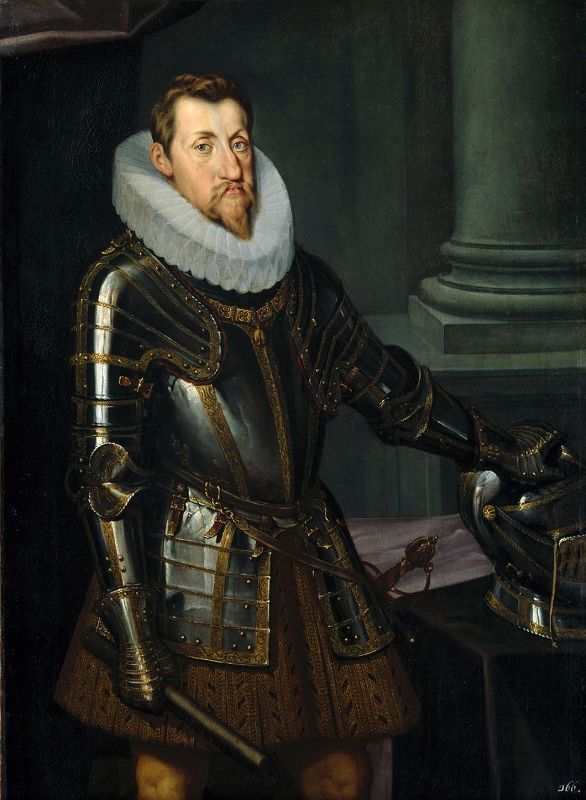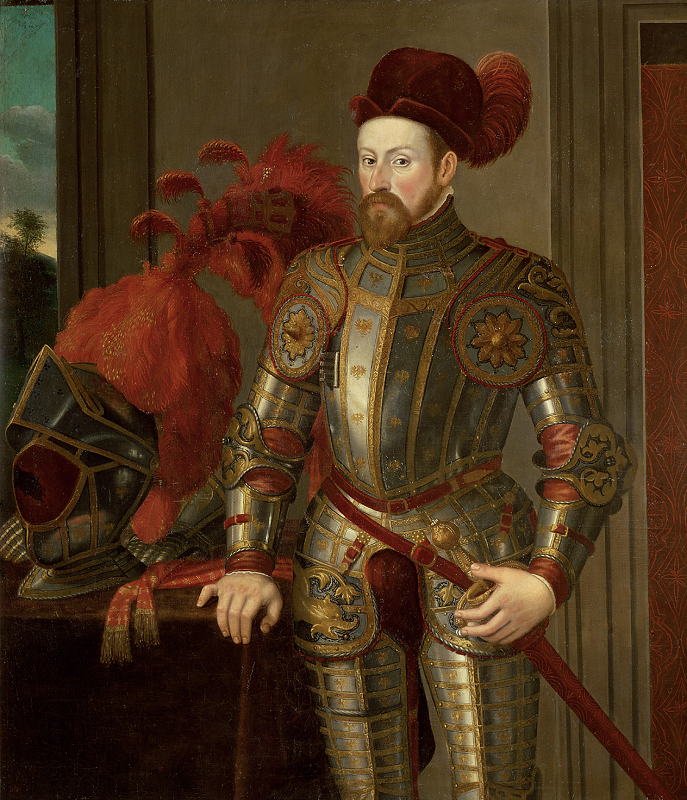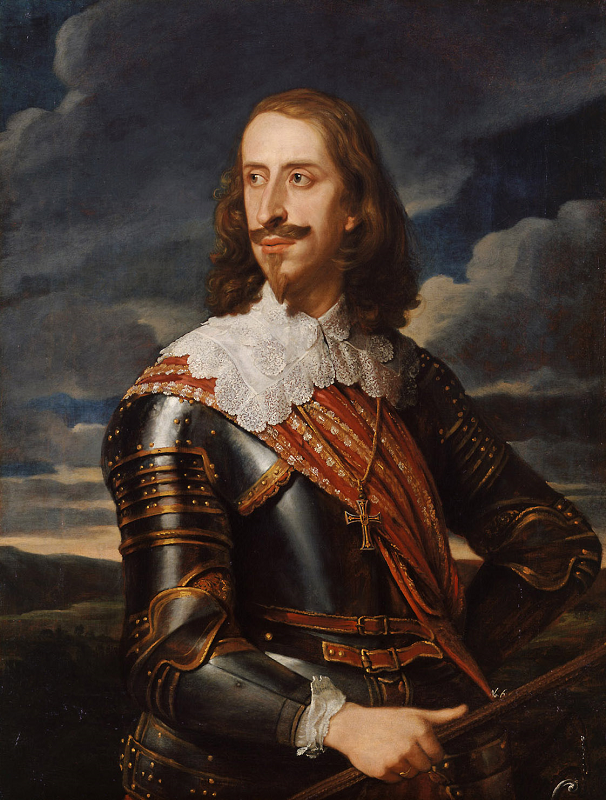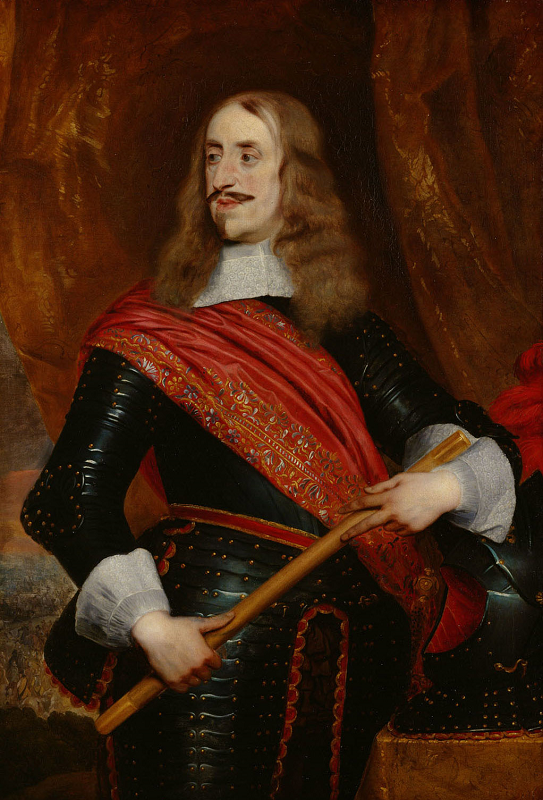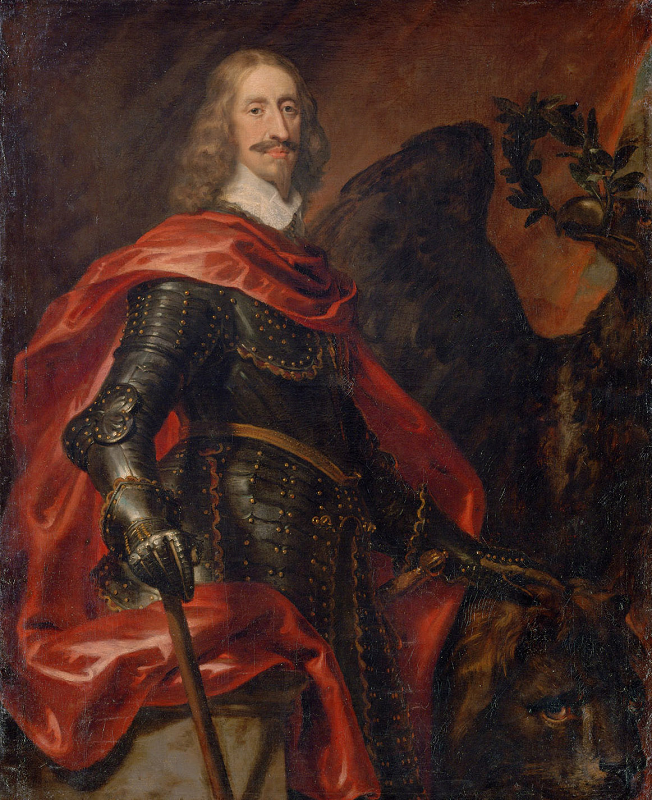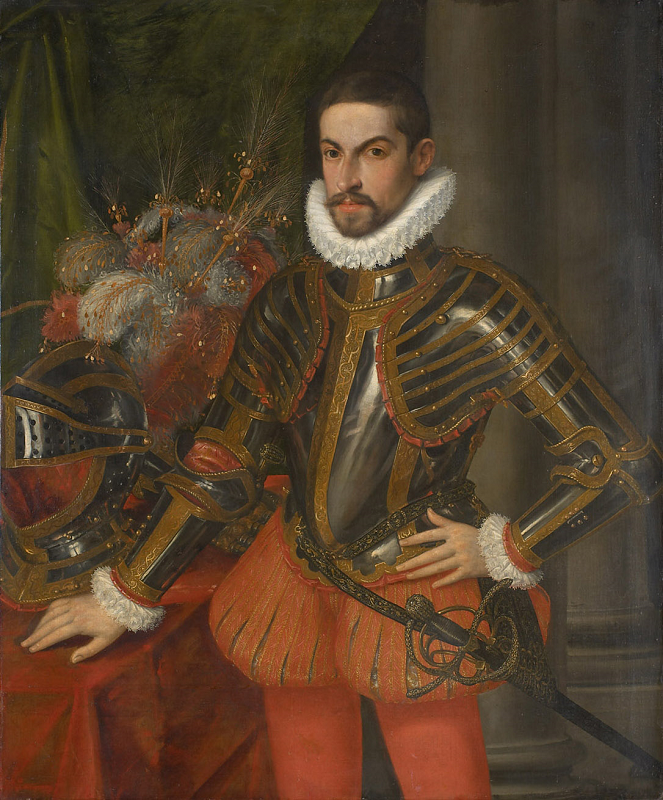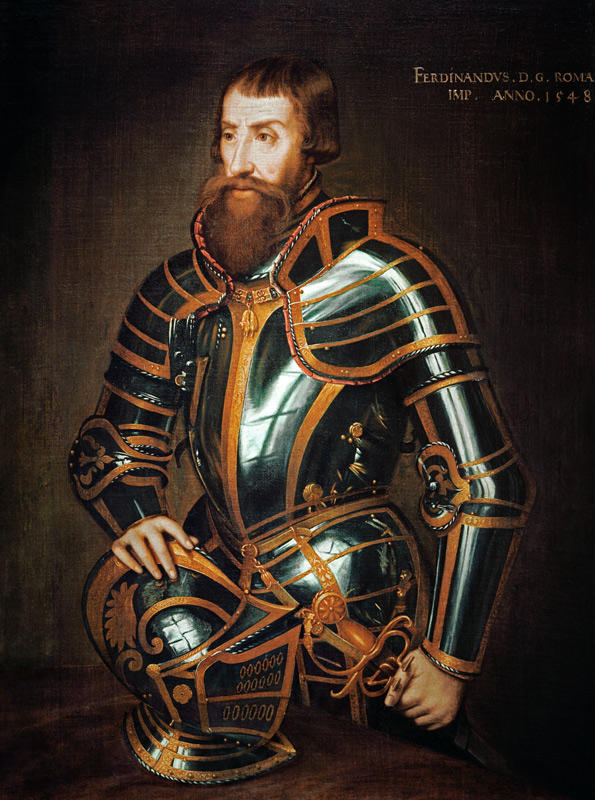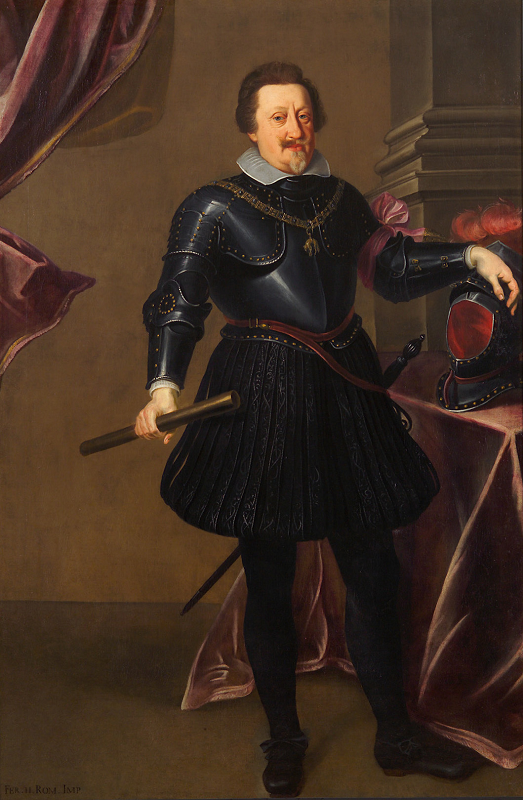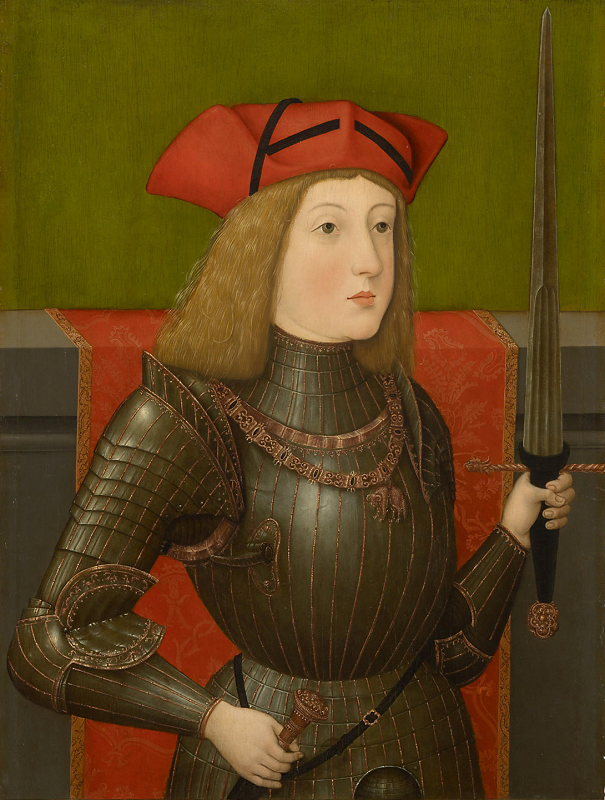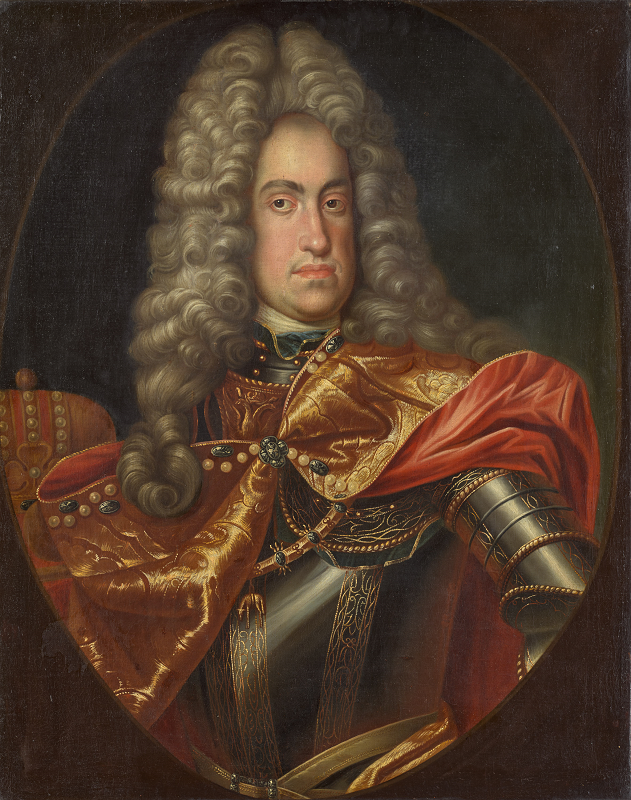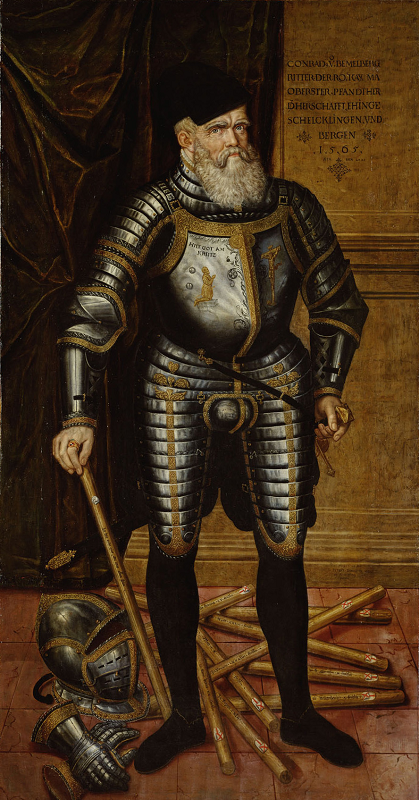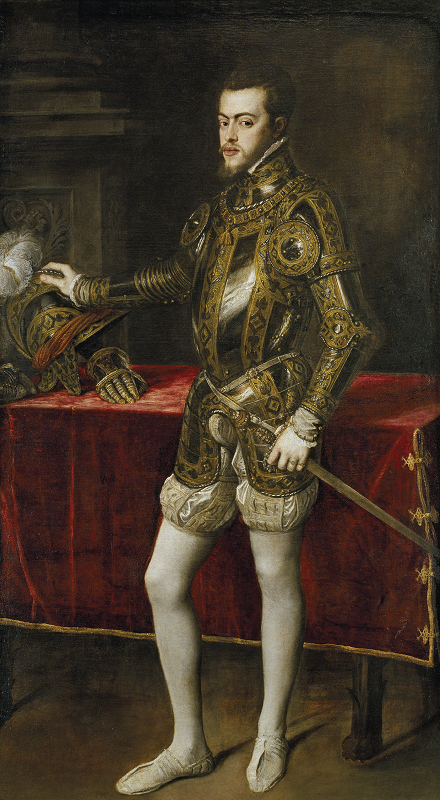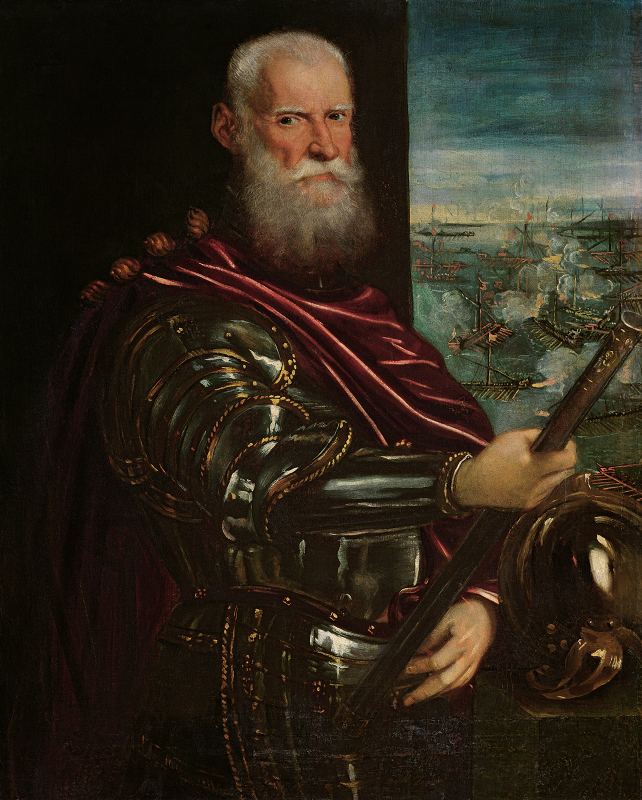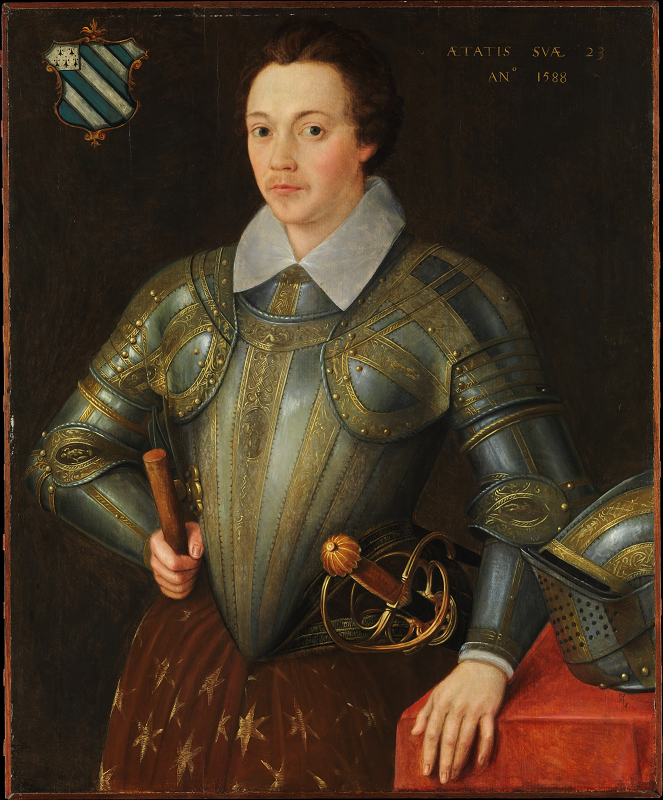
 Portraits of emperors, kings, dukes, and members of the high nobility in armor were one of the most important trends in European court art of the Renaissance and early modern periods. These works represented not only individual images but also a complex system of political symbols, where steel armor became a sign of power, military prowess, the legacy of chivalry, and the right to govern the state.
This genre developed particularly rapidly in the 16th century, when European monarchs sought to combine the ancient image of the emperor, the medieval ideal of the knight, and the modern image of the professional military ruler. The armored portrait became a unique political platform, designed to demonstrate the strength of the dynasty and the grandeur of the state.
Armor as a symbol of power and status.
In medieval society, armor had more than just practical military significance. It was a visual expression of membership in the military class—the knights. A full set of armor required significant financial outlay and was available primarily to the aristocracy. In 16th-century formal portraits, armor was often depicted with particular care:
polished steel surfaces symbolized the ruler's purity and perfection;
coats of arms and emblems indicated lineage;
a sword denoted the right to administer justice;
a helmet was a sign of military command;
orders emphasized membership in the highest political alliances. Thus, the artist depicted not simply a man in armor, but the ideal image of a "warrior-sovereign."
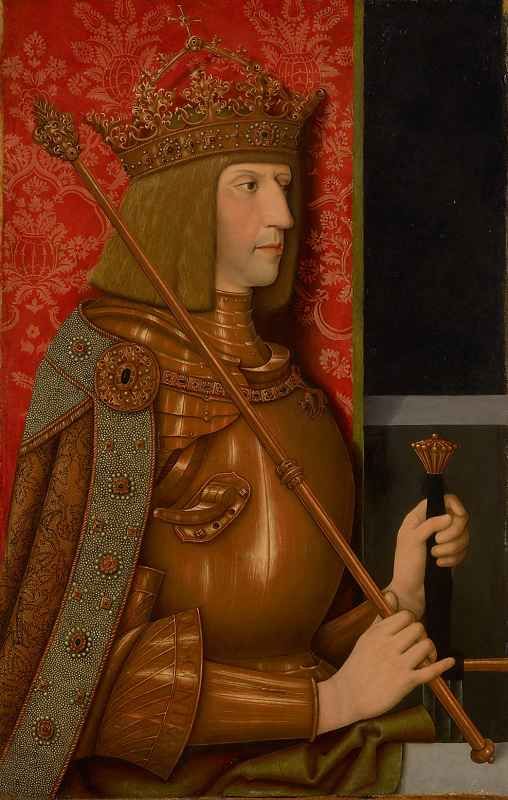
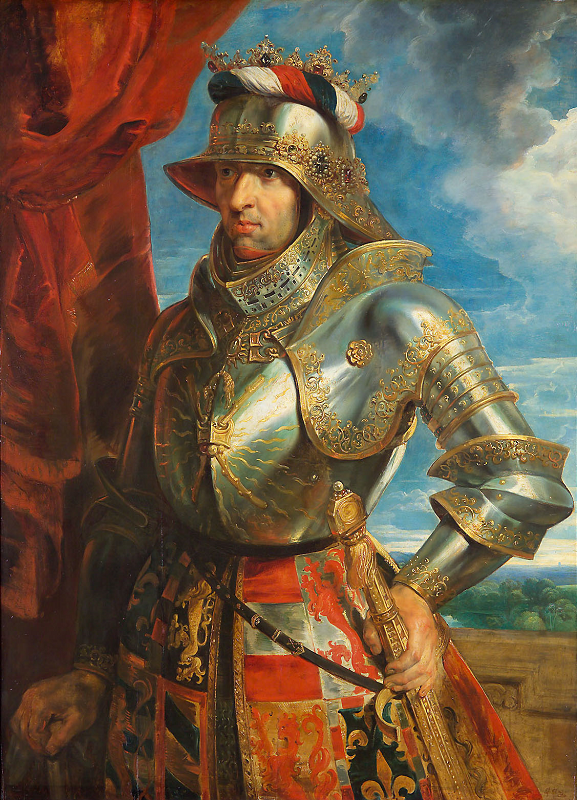
Emperor Maximilian I: Creating the Image of a Knight-Ruler.
One of the first European rulers to actively use chivalric symbolism in art was the Holy Roman Emperor Maximilian I of Habsburg. He consciously created the image of the last great medieval knight. His artistic approach utilized armor, tournaments, coats of arms, and genealogical legends to strengthen imperial authority. After achieving imperial status, the corresponding attributes of power—the crown, coat of arms, and imperial symbols—appeared in images.
Of particular significance were:
sumptuous tournament armor;
depictions of the emperor as the defender of Christendom;
connections with Charlemagne and the ancient emperors of Rome. Maximilian effectively transformed knightly culture into an instrument of state propaganda.
Charles V of Habsburg: the image of an invincible military monarch.
One of the most famous depictions of the ruler in armor is Titian's portrait of Emperor Charles V of Habsburg, "Charles V after the Battle of Mühlberg" (1548). This work became the pinnacle of the imperial military portrait genre.
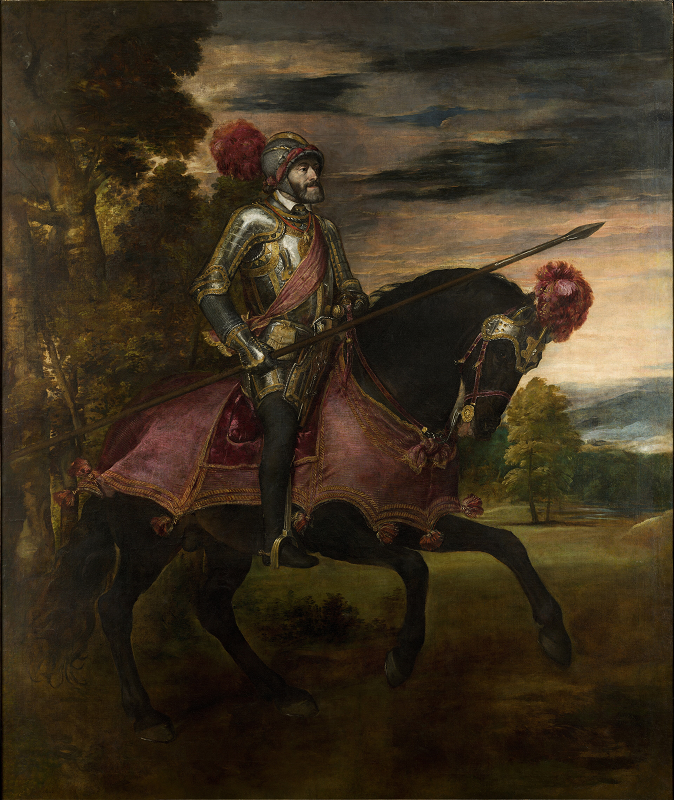
Charles V is depicted on horseback:
in magnificent steel armor;
with a spear in hand;
against a dramatic landscape.
The emperor's armor reflects the light and becomes an almost symbolic radiance of power. He is no longer simply a warrior, but an earthly defender of the empire, uniting political power and military might. Titian created a new type of monarch depiction: the emperor as a general, a victor, and an heir to the Roman tradition.
Portraits of the Italian Nobility: Armor and the Renaissance Ideal.
In 16th-century Italy, portraits in armor became especially popular among dukes and military aristocrats. Titian's painting "Portrait of Alfonso d'Avalos, Marchese del Vasto, in Armor and with a Page" (1533) depicts one of Emperor Charles V's most prominent military commanders.
Here, armor becomes part of a complex narrative:
the sitter's military power;
loyalty to the emperor;
noble birth;
the aristocrat's role as defender of the state. The page next to the warrior emphasizes the hero's courtly status.
The Medici and the Transformation of Armor into an Imperial Symbol.
The Florentine rulers of the Medici family also actively used military symbolism. Portraits of Cosimo I de' Medici show the ruler in both ancient and modern armor. In Niccolò della Casa's work, based on a design by Baccio Bandinelli, Cosimo is depicted in full armor, combining:
Roman imperial tradition;
the Medici coat of arms;
symbols of Florence;
the image of an absolute ruler. Thus, a new type of Renaissance monarch is formed: not a medieval knight, but a sovereign who uses chivalric symbolism to assert political power.
German and Northern European Tradition.
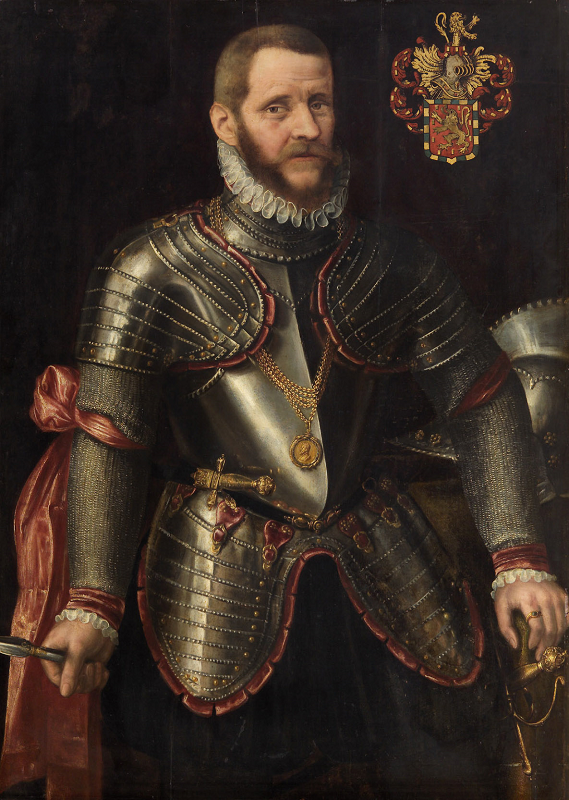
In Germany and the Netherlands, depictions of nobles in armor also became widespread. Artists emphasized:
military leadership;
noble honor;
membership in an ancient family.
For example, Lucas Cranach the Elder's engravings depicted princes in magnificent armor and with command batons, emphasizing their role as military leaders.
Armor in Portraits: Artistic Symbolism.
Each element of armor had a specific meaning.
Helmet Symbol:
military command;
readiness for battle;
knightly dignity.
Sword Symbol:
justice;
the right to punish;
defense of the state.
Armor Symbol:
invincibility;
discipline;
noble birth.
Horse In equestrian portraits:
power;
victory;
superiority over enemies.
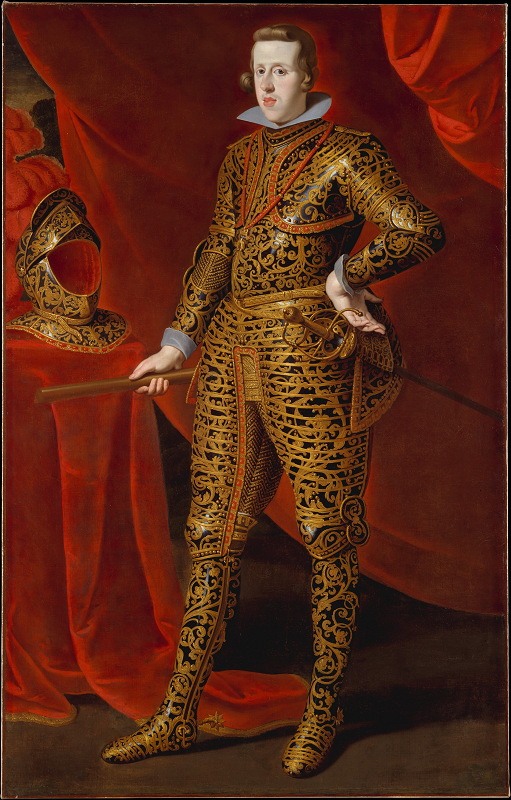
The Decline of a Tradition: The 17th Century.
In the 17th century, the meaning of armor gradually changed. Firearms made heavy armor less effective, and court fashion began to favor luxurious costumes. However, armor retained its symbolic function. Even when a ruler no longer wore armor in battle, it continued to be present in portraits as a sign of:
the military glory of ancestors;
aristocratic origin;
historical legitimacy.
Conclusion.
Paintings depicting emperors and nobles in armor are a unique historical source, reflecting not only the development of art but also the political culture of Europe. Armor in portraits was more than just an element of clothing. It represented the visual language of power: steel symbolized strength, a coat of arms symbolized lineage, a sword symbolized the right to rule, and the image of a knight symbolized the ideal of a noble sovereign. From Maximilian I to Charles V and the Medici, European rulers used the image of an armed monarch to create a legend of their power. These works remain the most important monuments of the era when the knightly tradition gradually transformed into an artistic and political myth.