- Articles
- Weapons
- Armor
- Armor for horses
- Emperor Armor
- Chivalry
- Chivalry
- Knights castle
- Knights tournament
- The Crusades
- Knightly Orders
- Knightly saddle
- Knightly motto
- Great Knights
- Price of armor
- Children's armor
- Castles and fortresses
- Museums of armor and weapons
- Coats of arms and heraldry
- Routes and excursions
- Guides



Grades Castle - Schloss Grades
Schloss Grades
By arrangement. Weekend: No
Adult - 13€
www.schloss-grades.at
Schloßstraße 1, 9362 Grades, Kärnten, Republik Österreich
46.983644, 14.254556 View map
Grades Castle - Schloss Grades, Grades, Carinthia, Republic of Austria.
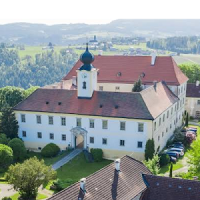
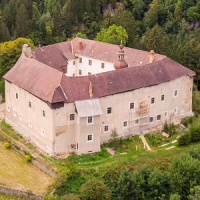
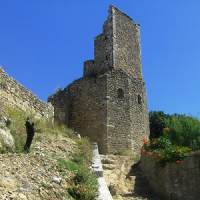
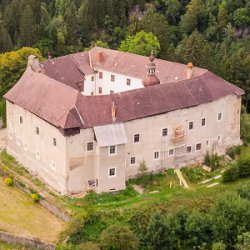
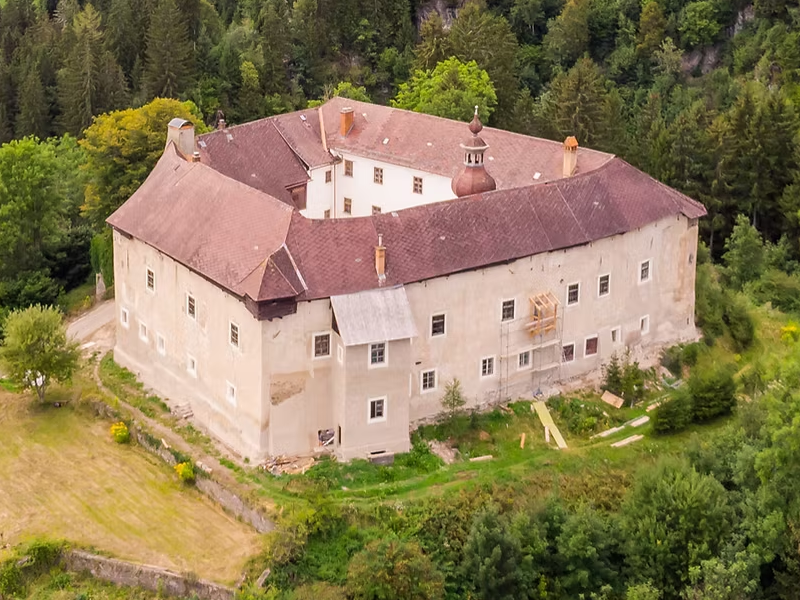
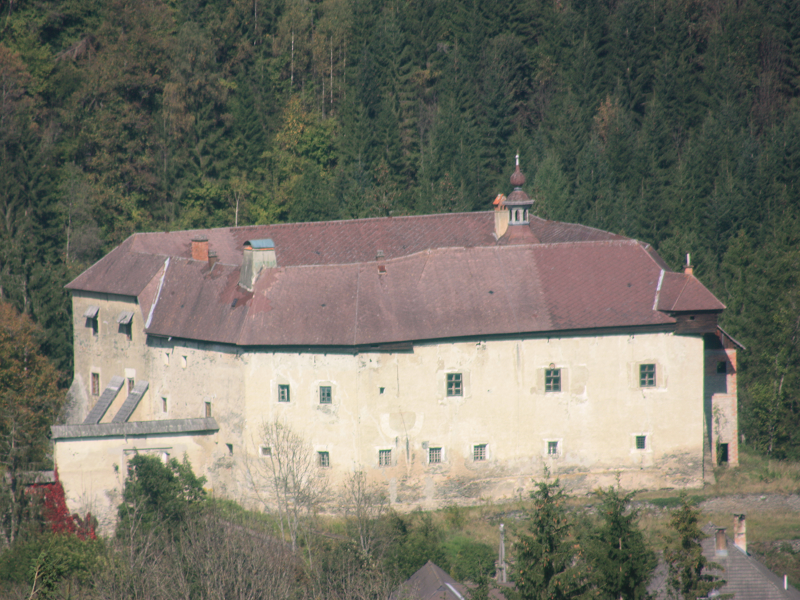
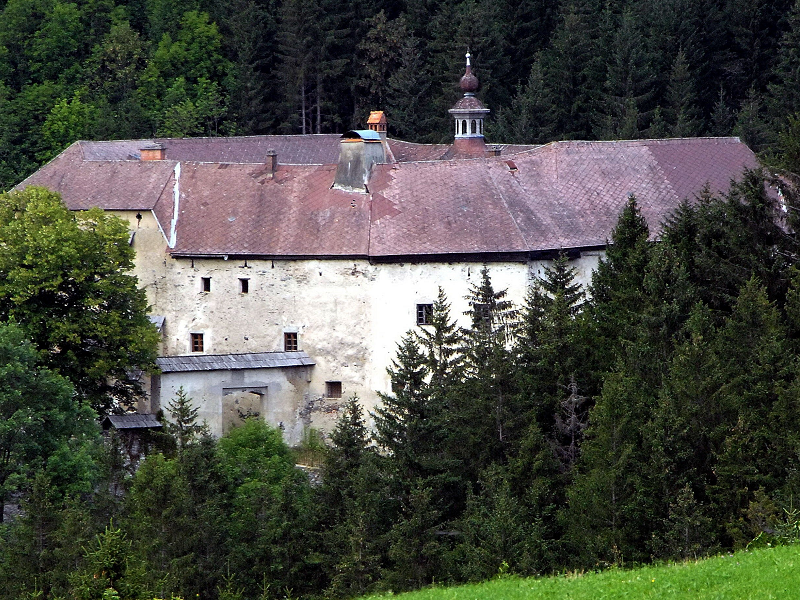
For centuries, Grades Castle has watched over the Metnitz Valley. Perched atop a steep rock, surrounded on three sides by the Metnitz River, it stands strategically and impregnabably, defying any siege.
The area of the present-day castle was already settled in Celtic times. Its unique location and the influence of the river, which practically encircles the castle, lead some to describe it as a place of power—a power that our ancestors may have sought there.
Later, the Romans left their mark on Grades. A visible testament to this era is a Roman sarcophagus relief in the vestibule of the present-day parish church of St. Andrew on Grades' market square.
After the death of Countess Hemma, the entire region came into the possession of the Church around 1045 and was administered by the Prince-Archbishopric of Salzburg.
The first documented mention of Grodas (Slavic: Burgstall – similar to Graz, Gradisca, etc.) dates back only to 1173 and mentions a chapel in the area of the then-existing castle. According to legend, this chapel was founded by Saint Hemma and is likely one of the first places of worship in the upper Metnitz Valley.
Grades served as a residence for the Bishops of Gurk, alongside Strasbourg. It was also the seat of the episcopal administration for the Metnitz Valley and, from 1301, the regional court. The exercise of jurisdiction was the responsibility of the episcopal steward. Over the centuries, Grades was besieged several times. Repeated conflicts between the Lords of Metnitz and the bishop's castle led to the complete destruction of Trübenberg Castle in Metnitz by Duke Rudolf III in 1302.
Under the episcopal administrator Andreas Staudacher, the steward of Grades, numerous structural alterations were undertaken. Simultaneously, construction began in 1453 on another church, the pilgrimage church of St. Wolfgang.
The stonemasons' marks in St. Wolfgang are the same as those in the castle and thus attributable to the same workshop and period.
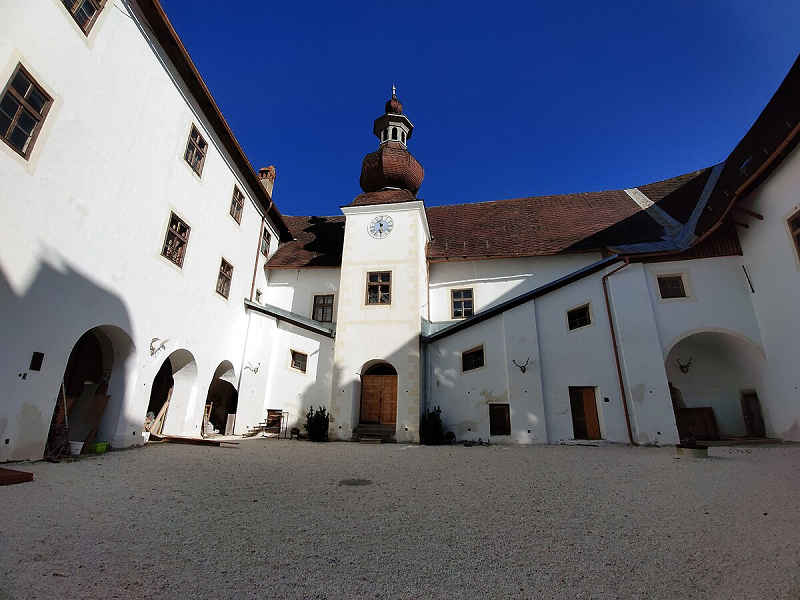
From the 17th century onwards, the fortification was gradually transformed into a residence. The impressive tower in the inner courtyard was added, the floor dimensions and room heights were altered, and the exterior facade was articulated and decorated with window surrounds. The earliest known illustration appears around 1680 in Johann Weichard von Valvasor's Topographia Archiducatus Carinthiae antiquae & modernae completa.
Under Bishop Jakob Maximilian von Thun-Hohenstein, the Baroque state rooms were furnished by artists including Josef Ferdinand Fromiller and Kilian Pittner. By 1722, at least the redesign of the chapel was completed, and the sacred space could be consecrated in its new splendor.
Later, a cloth manufactory and servants' quarters were housed here. With the construction of Pöckstein Castle and the relocation of the bishops to Klagenfurt, Grades further declined in importance as a residence. From the 19th century onward, it primarily served as the forestry office of the Diocese of Gurk.
That Grades Castle had nevertheless retained its fortified appearance throughout all these years is evidenced by a drawing by the painter Markus Pernhard from around 1850, in which an almost unchanged exterior can be seen compared to its current state.
During the Second World War, French prisoners of war were quartered in the castle. However, the town and the castle were spared major fighting in and around Grades, and thus the building survived this dark period unscathed.
At the end of the Second World War, Grades Castle also became accommodation for the homeless and displaced. The Josephinenheim, a care facility for disabled children, had lost its premises in Klagenfurt and was temporarily housed here by the diocese.
From the early 1950s onward, summer camps for Catholic youth were held at the castle. In up to three sessions, as many as 200 children between the ages of 10 and 16 spent their summers there. For decades, a large number of children from Datteln in Westphalia, as well as from Recklinghausen, Nordwalde, and other towns, came here. They have remained connected to the place and its people to this day. This idyllic summer life lasted until the mid-1990s, when this happy chapter came to an end with the sale of the castle by the Diocese of Gurk after 950 years of ownership.
In 2015, Constantin Staus-Rausch, through his company S. R. Monument- und Denkmalerhaltungs GmbH, purchased Grades Castle. The new owner's goal is to revitalize the building, renovate it professionally, and open it to the public. The major work was completed in 2023/24. Thus, Grades Castle stands surrounded by meadows, forests, and a breathtaking mountain landscape, a stone witness to a grand past and a beacon for the future.
12 feb 2026
1
0