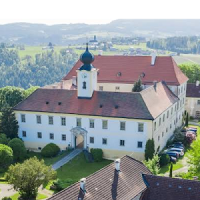
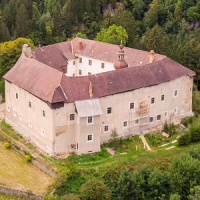


The history of medieval chivalry is traditionally presented as the history of men—warriors, vassals, castle owners, and tournament participants. However, the existence of the knightly class would have been impossible without the complex social and economic role of women, who occupied a special position in feudal society. The wives, mothers, daughters, and widows of knights were not merely passive observers of chivalric life. They could manage castles and estates, dispose of lands, negotiate marriage and property agreements, act as patrons of the arts, participate in diplomacy, and, in some cases, directly influence the military and political history of Europe.
The concept of a "knight's lady" should be understood more broadly than simply the spouse of a knight. In medieval culture, a woman's status was determined by her birth, marital ties, inheritance rights, and family holdings. The wife of a powerful knight or baron could wield significantly greater political power than her husband, especially if she came from a noble family or was an heiress to lands.
Moreover, the status of women varied significantly depending on region and era. A 12th-century English aristocrat, a 13th-century French courtier, and an Italian noblewoman of the 14th–15th centuries could have completely different legal and social opportunities.
Women in the Structure of Knightly Society.
Medieval European society was built around a system of kinship, property, and vassalage. For a noble family, marriage was not only a personal union but also a crucial political and economic instrument.
Marriage could unite:
landholdings of two families;
castles and fortresses;
hereditary rights;
political alliances;
vassal ties;
financial resources;
title claims.
Therefore, the choice of a spouse for a knight or feudal lord was often determined not by romantic feelings, but by the interests of the family.
However, this does not mean that medieval women were completely deprived of independence.Widows were especially often given the opportunity to manage family property, as they could become managers of hereditary estates after their husband's death.
Lady of the Castle.
One of the most important roles of a noblewoman was the management of the castle and its household. When a knight went to war, on a crusade, or participated in a long military campaign, his wife could remain the de facto manager of the estate.
Her responsibilities could include:
managing food supplies;
overseeing finances;
organizing the work of servants;
collecting revenue from the lands;
overseeing agricultural work;
maintaining correspondence;
receiving guests and representatives of neighboring lords;
organizing the castle's defense in an emergency.
Thus, the image of a medieval lady confined exclusively to her castle chambers, awaiting her husband's return, is a gross simplification.
The role of women became especially prominent during sieges. Sources contain instances of noble women participating in organizing the defense of fortresses, distributing supplies, and maintaining the defenders' morale.
Marriage and Political Power.
For the knightly aristocracy, marriage was one of the main mechanisms for forming political alliances.
A noblewoman could bring her husband:
land → income → political influence → alliance with another family.
The position of heiresses was especially important.
If a nobleman had no sons, a daughter could inherit a significant portion of the estate or rights to it. In such a case, marriage to a daughter became a crucial political event. This is why some medieval women became the target of struggles between powerful feudal houses.
Aliénor of Aquitaine is one of the most powerful women of the Middle Ages.
 (c. 1122–1204) occupies a special place in the history of medieval Europe.
She was the Duchess of Aquitaine and subsequently became Queen of France and then England. Her domains were vast and constituted one of the richest territorial complexes in Western Europe.
Eleanor's first husband was the French King Louis VII. After the dissolution of this marriage, she married Henry Plantagenet, the future King Henry II of England.
It was this marriage that significantly changed the political map of Western Europe.
Eleanor was more than just the monarch's wife. She actively participated in political life, governed territories, supported her sons, and performed diplomatic functions. In 1189, her son Richard the Lionheart became King of England. During his absence, due to the Third Crusade and subsequent captivity, Eleanor continued to play an important political role.
Her biography demonstrates how arbitrary the notion of medieval women as completely excluded from politics is.
Isabella of England and the political role of royal marriages.
Women of aristocratic origin often became instruments of diplomacy, but could also gain political influence in their own right.
Royal and princely marriages linked England, France, Castile, Aragon, the Holy Roman Empire, and numerous feudal houses.
Through marital alliances, women could become intermediaries between states and influential families.
At court, a complex system of personal relationships, correspondence, and patronage existed, where queens and noblewomen could influence decision-making.
Matilda of England.
 A Woman in the Struggle for the Throne. (1102–1167), daughter of Henry I of England, became one of the most significant women of the 12th century.
After the death of her only legitimate brother, William Adelin, the question of succession to the English crown arose. Matilda considered herself the rightful heir.
However, the English nobility supported her cousin, Stephen of Blois.
A civil war, known as the Anarchy, began. Matilda did not limit herself to diplomatic grievances.
She personally participated in the political and military struggle, formed alliances, and controlled her own supporters. Although she did not become Queen of England in the full sense of the word, her struggle ended with an agreement that the English throne would pass to her son, Henry Plantagenet.
He later became Henry II.
Thus, Matilda played a direct role in the emergence of the Plantagenet dynasty.
Blanche of Castile (1188–1252) was the regent and protector of the kingdom.
 She became one of the most influential women of the 13th century.
After the death of Louis VIII, she became regent of France for the young Louis IX, the future Saint Louis.
It was a time of political instability and a struggle between major feudal lords and royal authority.
Blanche was able to preserve her son's power and suppress a number of noble uprisings.
Her actions demonstrate that a woman in a medieval monarchy could wield real executive power, especially during the minority of the heir. Louis IX later became one of the most famous kings of the Middle Ages and was canonized.
Isabella of France (1295–1358) – the "She-Wolf of France" – has gone down in history as one of the most controversial women of the 14th century.
 She was the daughter of the French king Philip IV the Fair and the wife of the English king Edward II.
Her political career was linked to a profound conflict at the English court. In the 1320s, Isabella, along with her ally Roger Mortimer, rebelled against Edward II.
As a result, the king was overthrown. Isabella's image was later heavily mythologized.
She was portrayed as a power-hungry and ruthless woman.
However, the historical reality is much more complex than medieval and later legends.
Her example demonstrates that an aristocratic woman could participate even in the struggle for supreme power.
Christine de Pizan was a woman of the intellectual elite.
 (c. 1364–c. 1430) represented a different side of the lives of noble women.
She was a writer, poet, and intellectual at the French court.
Her works demonstrate the existence of a developed female intellectual culture in the late Middle Ages.
Her book, "The Book of the City of Ladies" (Le Livre de la Cité des Dames), written in 1405, is particularly well-known. In it, Christina defended the dignity and intellectual abilities of women, citing numerous historical and literary examples.
Joan of Arc (Jehanne Darc) is an exceptional example of a female warrior.
 (c. 1412–1431) was not a knight's wife in the traditional sense, but her story is directly linked to the knightly military culture of the late Middle Ages.
During the Hundred Years' War, she became a symbol of French resistance to English troops.
Joan wore military armor, participated in military campaigns, and was among the French nobility and military command.
Her story is particularly important for understanding that the idea of women as exclusively peaceful figures did not always correspond to reality.
However, Joan was an exception, not a typical model of medieval female behavior.
Ladies and the Knightly Culture of Love.
Women occupied a special place in courtly culture. In the 12th and 13th centuries, the tradition of courtly love developed at aristocratic courts.
In literature, knights were portrayed as serving their ladies, demonstrating their fidelity, courage, and nobility.
The image of the "lady of the heart" had a profound influence on European culture. However, it is necessary to distinguish between the literary ideal and historical reality.
A knight dedicating a heroic deed to his lady is, first and foremost, a cultural image. In real life, relationships between men and women in aristocratic society were much more complex and were determined by inheritance, politics, property, and family interests.
The Lady as Patron of Art.
Medieval women from noble families often commissioned works of art.
They could finance:
the construction of monasteries;
the creation of chapels;
the production of manuscripts;
the creation of tombstones;
Decoration of churches;
Religious institutions;
Literary works.
Women played a particularly important role in the dissemination of illuminated manuscripts. Commissioning a book was not only a manifestation of religiosity but also a way to demonstrate a family's status.
A knight's widow: a special position.
The status of a widow deserves special attention. Unlike a married woman, who was subject to the family system of governance, a widow could gain significantly greater independence.
Depending on local legislation and the nature of the estate, she could:
manage property;
protect the interests of children;
dispose of a portion of the inheritance;
conclude contracts;
remarry;
manage a castle;
be a party in legal disputes.
Some widows became the de facto heads of an aristocratic house. This is why medieval literature and documents reveal many women with significant resources and political influence.
Women and a knight's castle.
A castle was not only a military fortress. It was an administrative and economic center.
Therefore, the life of a castle depended on a large number of people:
owners;
knights;
squires;
servants;
artisans;
peasants;
clergy;
managers;
women of noble and common origin.
The lady of the castle could control a significant part of the internal life of this community. During the man's absence, it was the woman who could ensure the functioning of the household.
Historical reality and romantic image.
Modern popular culture often portrays the medieval lady as a beautiful woman in a luxurious dress, awaiting a knight.
This image has its basis in courtly literature, but does not reflect the whole historical picture.
A medieval aristocrat could be simultaneously:
wife → mother → heiress → landowner → castle manager → diplomatic intermediary → patron of the arts.
In exceptional circumstances, she could become: regent → political leader → military commander.
Conclusion.
Ladies of the knightly era were an important part of the social system of medieval Europe. Their historical role far exceeded the romantic image of the "beautiful lady" created by courtly literature.
A woman could be the center of family politics, the heiress of vast estates, the ruler of a castle, the mother of a future king, the regent of a state, or a patron of culture.
The position of women from the highest aristocracy was especially important. Their marriages could change the political map of Europe, hereditary rights became a source of conflict, and widowhood sometimes paved the way for independent governance of estates.
The stories of Eleanor of Aquitaine, Matilda of England, Blanche of Castile, Isabella of France, and other women demonstrate that the Middle Ages cannot be viewed exclusively as a male world of knights and wars.
The knight existed within a complex system of family, clan, property, and inheritance. And alongside him—sometimes in the shadows, sometimes right on the stage—stood a woman capable of influencing the fate of a castle, a family, and even an entire kingdom.
Thus, the history of medieval chivalry is not only the history of swords and armor. It is also the history of women, without whom the very system of European chivalry could not have existed.