- Articles
- Weapons
- Armor
- Armor for horses
- Emperor Armor
- Chivalry
- Chivalry
- Knights castle
- Knights tournament
- The Crusades
- Knightly Orders
- Knightly saddle
- Knightly motto
- Great Knights
- Price of armor
- Children's armor
- Castles and fortresses
- Museums of armor and weapons
- Coats of arms and heraldry
- Routes and excursions
- Guides


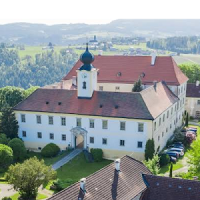
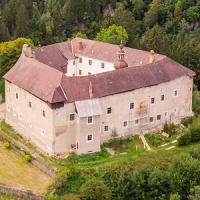

Loket Castle
Hrad Loket
November-March Mo-Su 09.00-16.00, April-June Mo-Su 09.00-17.00, Jule-August Mo-Su 09.00-18.30, September-October Mo-Su 09.00-17.00. Weekend: No
Adult - 220CZK, Children's (0-5) - Free, Children's (6-17) - 70CZK, Students - 180CZK, Pensioners - 180CZK
www.hradloket.cz
Zámecká 67, 357 33 Loket, Karlovarský kraj, Česká republika
50.187032, 12.754335 View map
Loket Castle - Hrad Loket, Loket, Karlovy Vary Region, Czech Republic.
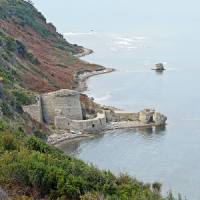
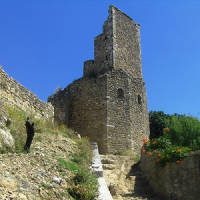
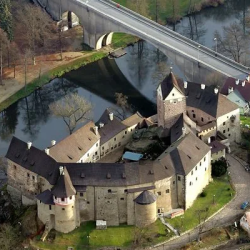
Loket, a royal stone castle, is a stronghold over 900 years old, towering atop a granite massif encircled by the Ohře River. It was likely founded as a border fortress. Throughout its history, the castle served kings, the Schlick family, and the Lords of Plauen, as well as the townspeople of Loket; in the 19th and 20th centuries, it also functioned as a prison. It was opened to the public shortly after 1989; the tour route leads through porcelain exhibitions, the former municipal museum's collections, and a weapons museum, finally reaching the former prison area, which now houses an impressive and authentic exhibition on the history of torture and judicial punishment.
The founding of Loket Castle.
Loket Castle likely originated around the turn of the 11th and 12th centuries. Even in this early phase, it was constructed as a stone castle using mortar—a rarity in Bohemia at the time—which may have been due to influences from neighboring lands, particularly Bavaria.
Establishment of the fortified settlement below the castle.
A fortified settlement developed below the castle and was later elevated to the status of a royal town. By the end of the 14th century, the castle had acquired its current Gothic appearance and served as a frequent refuge for members of the royal family.
First written mention of Loket.
The first surviving written mention of Loket dates back to 1227, when the Czech King Přemysl Otakar I and his daughter, Agnes of Bohemia (Anežka Přemyslovna), stayed there. However, the castle existed prior to that, as proven by archaeological research conducted in 2025.
The imprisonment of Prince Wenceslaus (Charles IV).
Amidst unrest directed against King John of Luxembourg, Queen Elizabeth Přemyslid sought refuge at Loket with the infant Wenceslaus—the future Holy Roman Emperor Charles IV. Although he was imprisoned there at the age of three, he enjoyed returning to Loket in his adult years.
Pledging of the castle to Chancellor Kaspar Schlick.
The Hussites besieged the castle but failed to capture it, even on their second attempt. Chancellor Kaspar Schlick acquired the castle as a pledge in return for financial assistance; under the administration of the Schlick family, Loket was transformed into a stately ancestral seat featuring elements of the emerging Renaissance style.
The castle under the administration of the Lords of Plauen.
Following conflicts with the townspeople and the extensive confiscation of Schlick family assets, Loket Castle passed to the Lords of Plauen. However, they proved to be poor stewards, and the castle subsequently came under the administration of the townspeople of Loket.
The castle becomes the property of the town of Loket.
The castle became the property of the townspeople of Loket and served primarily economic purposes in the years that followed. Due to the dilapidated state of the town hall, city councilors even held their meetings within the castle.
The death of Jiří Popel of Lobkowicz. Jiří Popel of Lobkowicz—formerly the Supreme Hofmeister of the Kingdom of Bohemia, who had been imprisoned in Kladsko and later at Loket for insulting the imperial majesty—dies in the castle prison. He is buried at the site of the former church tower.
The Thirty Years' War.
Like the rest of Bohemia, the castle and town of Loket suffer numerous calamities during the Thirty Years' War. The town is besieged and bombarded repeatedly before finally being captured by imperial troops. Towards the end of the war, it faces a siege by Swedish forces; however, Loket is economically devastated primarily by outbreaks of the plague and by imperial decrees designating it a border fortress.
Conversion of the castle into a municipal prison.
In 1788, a proposal is made to convert the castle into a prison; the project is completed in the 1820s. The "Rock Chamber" palace (*Skalní světnice*), located next to the castle tower, is demolished to make way for the conversion. The castle serves as a prison until 1948.
The castle under the administration of the Heritage Institute in Plzeň.
The castle is transferred from the ownership of the town of Loket to the administration of the Heritage Institute in Plzeň.
Return of the castle to the town of Loket.
A new era begins for the castle as it reverts to municipal ownership. The newly established Loket Castle Foundation (later transformed into a public benefit corporation) is entrusted with its management; Loket regains its former beauty and attracts the attention of thousands of visitors once again.
Archaeological research. Archaeological research conducted in 2025 revealed the oldest section of the stone wall at Loket Castle, as well as traces of its later reconstruction. Researchers successfully dated the structures using a unique radiocarbon dating method applied to food residues found in ceramic vessels—a technique used on medieval material in the Czech Republic for the first time.
2 okt 2026
0
0