- Articles
- Weapons
- Armor
- Armor for horses
- Emperor Armor
- Chivalry
- Chivalry
- Knights castle
- Knights tournament
- The Crusades
- Knightly Orders
- Knightly saddle
- Knightly motto
- Great Knights
- Price of armor
- Children's armor
- Castles and fortresses
- Museums of armor and weapons
- Coats of arms and heraldry
- Routes and excursions
- Guides


Stary Jicin Castle
Zřícenina Hradu Starý Jičín
Information on the website. Weekend: Information on the website
Adult - 60CZK, Children's (0-5) - Free, Children's (6-18) - 30CZK, Students -30CZK, Pensioners - 30CZK, Family (2+4) - 150CZK
www.hradstaryjicin.cz
742 31 Starý Jičín, Moravskoslezský kraj, Česká republika
49.582790, 17.963362 View map
Stary Jicin Castle - Zřícenina Hradu Starý Jičín, Stary Jicin, Moravian-Silesian Region, Czech Republic.
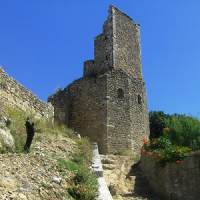
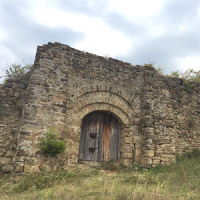
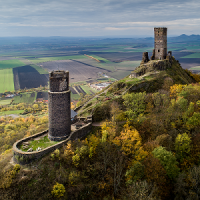
Starý Jičín is a castle ruin situated above the village of the same name, near the town of Nový Jičín. The castle was established in the late 12th or early 13th century; the first written record of it dates back to July 14, 1240. Built on the site of an earlier wooden stronghold, it served primarily a military function—thanks to its strategic location and sweeping views of the surrounding area—by protecting the so-called Amber Road, which ran from the Adriatic to the Baltic Sea.
Following the Slavic settlement of the region, the hill of Starý Jičín likely soon began serving as a lookout post. By the end of the 12th century or the very beginning of the 13th, this outpost evolved into a border castle guarding the route to Poland. While its primary role was military, it also served minor administrative and recreational functions. A small settlement for the castle community—the present-day village of Starý Jičín—sprang up below; for a time, it was likely the furthest permanently inhabited point along the trade route. This is further suggested by the fact that the local church is dedicated to St. Wenceslas, who was regarded at the time as the patron saint of state borders. Both the castle and the settlement below bear an undeniably Slavic name, derived from the word or proper name *Dik*—referring to a wild man, someone of wild nature, or a wild boar. With the addition of the suffix *-ín*, the name signifies "Dik's [property]."
Starý Jičín developed into a market village as early as the beginning of the 13th century. Additional settlements established through colonization sprang up along the roads connecting the area to its surroundings. These lands became part of an estate centered on the market town of Starý Jičín. Arnold of Hückeswagen—a nobleman from the Rhineland who held a significant position in the retinue of King Přemysl Otakar I—likely acquired Starý Jičín and the surrounding area around 1230. The first written mention of the castle dates to July 14, 1240, when Arnold issued a deed of gift for the Premonstratensians of Steinfeld while at "Ditschin." In the early 14th century, the Lords of Kravaře became the castle's owners. Following several changes of ownership after the Hussite Wars, the estate passed to the Lords of Žerotín in the early 16th century. At the start of the Thirty Years' War, the Žerotín family lost both the estate and the castle, which was occupied by troops from both sides during the conflict. A succession of noble families held Starý Jičín throughout the 17th and 18th centuries. By the end of the 18th century, the castle and estate had come into the possession of the Seilern family. Due to the owners' lack of interest, the castle rapidly fell into disrepair. Unfortunately, even the efforts of Count Dr. Bedřich Deym in the early 20th century could not halt the ravages of time, and the once-mighty castle was reduced to ruins.
In 1996, the municipality renovated the castle tower. Period exhibitions featuring armor and documents relating to the castle and the Starý Jičín estate were installed on the upper floors. The municipality of Starý Jičín is continuing the renovation of the castle walls with financial support from the Ministry of Culture under the Cultural Heritage Preservation Program.
9 okt 2026
0
0