- Articles
- Weapons
- Armor
- Armor for horses
- Emperor Armor
- Chivalry
- Chivalry
- Knights castle
- Knights tournament
- The Crusades
- Knightly Orders
- Knightly saddle
- Knightly motto
- Great Knights
- Price of armor
- Children's armor
- Castles and fortresses
- Museums of armor and weapons
- Coats of arms and heraldry
- Routes and excursions
- Guides


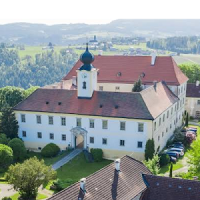
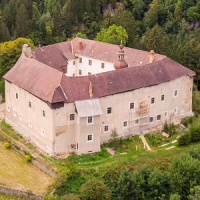
Sychrov Castle
Zámek Sychrov
Information on the website. Weekend: Information on the website
Adult - 260CZK, Children's (0-5) - Free, Children's (6-17) - 80CZK, Students - 210CZK, Pensioners - 210CZK
www.zamek-sychrov.cz
Sychrov 1, 463 44 Sychrov, Liberecký kraj, Česká republika
50.626303, 15.088933 View map
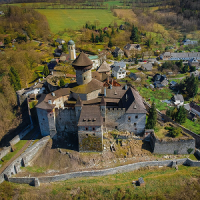
Sychrov Castle - Zámek Sychrov, Sychrov, Liberec Region, Czech Republic.
The history of the site where the château stands dates back to the 15th century. At that time, a fortified manor—property of the Bohemian Royal Chamber—was recorded here. In the 16th century, a stone manor house was built on the site, followed between 1690 and 1693 by a small Baroque château commissioned by the Lamott of Frintrop family, a family of knights. Members of this French noble house belonged to the group of officers rewarded with estates confiscated from the Czech nobility for their service to the Austrian Emperor during the Thirty Years' War. In 1740, the estate was purchased by František of Wallenstein, of the Mnichovo Hradiště branch. As the Wallensteins resided at Mnichovo Hradiště, Sychrov Château ceased to serve as the permanent seat of the nobility. For nearly eighty years, no significant changes took place, and the building was used for agricultural purposes and staff accommodation. The situation changed radically on August 30, 1820, when Prince Charles Alain Gabriel Rohan became the new owner of the Sychrov and Svijany estates. That year marked the beginning of the 125-year Rohan era at Sychrov and the château's period of greatest glory. Brittany was the cradle of the House of Rohan; the earliest record of the family dates back to 951. Over the centuries, their status grew until they ranked among the ten most influential noble families in France, and—as direct cousins of the French kings—they even held the title of Princes of the Blood Royal. The family comprised several branches, whose members held significant military, political, and ecclesiastical offices. Following the French Revolution, they left France and settled in the Austrian monarchy. Unlike other noble émigrés who returned to France (during the reign of Napoleon I and, more notably, the Bourbon Restoration under Louis XVIII and Charles X), the Rohans remained in Bohemia, even though they were later explicitly invited to return.
The family's principal seat was Sychrov; however, in its original state as a dilapidated Baroque manor, it failed to meet the standards required for a ducal and princely residence. A magnificent reconstruction in the Empire style was carried out under the first owner, Prince Charles Alain Gabriel de Rohan (completed in 1834). Yet, the architectural evolution of the château continued—most notably under Prince Camille Joseph Philippe Idesbald de Rohan—when the structure took on the Neo-Gothic appearance it retains today. The Romantic Neo-Gothic reconstruction carried out between 1847 and 1862—based on designs by Bernard Grueber, a professor at the Academy of Fine Arts—established Sychrov as one of the most significant monuments of 19th-century historicist architecture (alongside sites such as Hluboká nad Vltavou, Hrádek u Nechanic, and Lednice). All work was entrusted exclusively to local artists and craftsmen. A prominent figure among them was the woodcarver Petr Bušek; his creative and distinctive talent imbued the château’s interiors with immense artistic value and a unique atmosphere. His work was complemented by the contributions of numerous other artists and craftsmen (including sculptors Emanuel Max and Vincenc Smolík, upholsterer Ludvík Grein, joiner Petr König, and blacksmith Jan Novák). Prince Kamil Rohan also devoted exceptional attention to the English-style château park; during his lifetime, it flourished remarkably and served as a model for the creation of several arboretums that are renowned today, such as those at Průhonice and Konopiště. This period saw the achievement of a rare harmony between the château’s exterior, its interiors, and the park. The turn of the 1920s and 1930s brought a Functionalist renovation to the château, altering not only its exterior—involving the removal of various decorative Neo-Gothic oriel windows and parapets, and the stripping of plaster from the towers to reveal exposed quarry stone—but also its interiors. In many rooms, Bušek’s elaborate wood carvings (such as the ceiling panels in the stair hall) and French embossed pigskin wallpapers were removed. Neo-Gothic furnishings were replaced with new, modern pieces.
Following World War II, the château was confiscated under Decree No. 12/1945 Coll. and became state property. Initially, it served as a collection point for confiscated assets, and from May 1, 1950, it was opened to the public on a limited scale. During the 1970s, the tour route was expanded to include the east wing and the corridor of the southern wing, which housed the Antonín Dvořák Memorial. Since the early 1990s, extensive reconstruction and restoration work has been underway on the exteriors, interiors, and the château park, aiming to return Sychrov Château as closely as possible to its peak era—specifically, its state during the second half of the 19th century.
8 okt 2026
0
0