- Articles
- Weapons
- Armor
- Armor for horses
- Emperor Armor
- Chivalry
- Chivalry
- Knights castle
- Knights tournament
- The Crusades
- Knightly Orders
- Knightly saddle
- Knightly motto
- Great Knights
- Price of armor
- Children's armor
- Castles and fortresses
- Museums of armor and weapons
- Coats of arms and heraldry
- Routes and excursions
- Guides


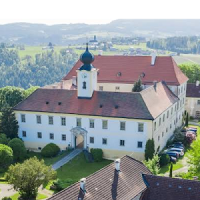
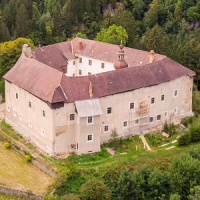
Litomysl Castle
Zámek Litomyšl
Information on the website. Weekend: Information on the website
Adult - 220CZK, Children's (0-5) - Free, Children's (6-17) - 70CZK, Students - 180CZK, Pensioners - 180CZK
Jiráskova 93 570 01 Litomyšl, Pardubický kraj, Česká republika
49.873578, 16.312826 View map
Litomysl Castle - Zámek Litomyšl, Litomysl, Pardubice Region, Czech Republic.
The first mention of a castle stronghold on the site of the present-day château dates back to 981 and appears in the Chronicle of Cosmas. At that time, Litomyšl lay on the historic Trstenice trade route, which the castle guarded. Around 1145, Bishop Jindřich Zdík of Olomouc invited the Premonstratensian order to Litomyšl; their new monastery gave the castle hill the name "Mount Olivet." The monastery gradually became an economic and cultural hub, and a new town settlement expanded around it and at the foot of Mount Olivet. In 1259, Litomyšl was granted town rights by King Přemysl Otakar II, and in 1344, Emperor Charles IV established a new bishopric there—the second oldest in the country after Prague's. The Premonstratensian monastery was partially utilized for its establishment. The bishopric administered Litomyšl until 1425, when the town was sacked by the Hussites.
Between 1432 and 1547, the estate was held by the Kostka of Postupice family. Under their rule, Litomyšl flourished but also became a key center for the faith of the Unity of the Brethren—a Protestant religious community that had been taking shape in Bohemia since the second half of the 15th century. However, the estate was confiscated from the last member of the Kostka of Postupice family due to his participation in an uprising against the king—the so-called First Estates Revolt. In 1567, members of the illustrious House of Pernštejn acquired Litomyšl as a pledge. The first of them was Vratislav of Pernštejn, known as "the Magnificent." He held the office of Chancellor of the Kingdom of Bohemia—the highest-ranking official in the land after the king (a role comparable today to that of a prime minister). Prior to this, he had traveled extensively across Europe, visiting France and England and becoming well-acquainted with Italy. In 1551, he even led a delegation of Bohemian nobles to Genoa, where the Emperor and King of Bohemia, Maximilian II, met his new wife, Maria of Spain. One of her ladies-in-waiting was Maria Manrique de Lara—from the noble Spanish Mendoza family—who would later become Vratislav’s wife.
It is said that the new Renaissance-style chateau was built by Vratislav of Pernštejn specifically for his beautiful Spanish wife. The foundation stone was laid in 1568, and the chateau was completed in 1581. Designed in the style of Moravian Renaissance chateaux, the building was the work of the Italian architect Giovanni Battista Avostalis de Sala.
The last member of the family, Frebonie of Pernštejn, invited the Piarist Order to Litomyšl, bringing a new Baroque touch to the site. However, following her death in 1649, the chateau was sold to the German Trauttmansdorff family. Subsequently, from 1753, the Waldstein-Wartenberg family acquired the estate and château through marriage; however, they accumulated so much debt during their tenure that, in 1855, Litomyšl was sold to the Thurn-Taxis family, its final private owners. In the 20th century, ownership passed to the state—Czechoslovakia from 1945 and the Czech Republic from 1993. To this day, the château remains state property and is managed by the National Heritage Institute.
In 1999, the Litomyšl château was inscribed on the UNESCO World Heritage List in recognition of its unique Renaissance architecture.
2 okt 2026
0
0