- Articles
- Weapons
- Armor
- Armor for horses
- Emperor Armor
- Chivalry
- Chivalry
- Knights castle
- Knights tournament
- The Crusades
- Knightly Orders
- Knightly saddle
- Knightly motto
- Great Knights
- Price of armor
- Children's armor
- Castles and fortresses
- Museums of armor and weapons
- Coats of arms and heraldry
- Routes and excursions
- Guides





Lemberk Castle
Zámek Lemberk
Information on the website. Weekend: Information on the website
Adult - 220CZK, Children's (0-5) - Free, Children's (6-17) - 70CZK, Students - 180CZK, Pensioners - 180CZK
www.zamek-lemberk.cz
Lvová čp.1, Jablonné v Podještědí 471 25, Liberecký kraj, Česká republika
50.777384, 14.787879 View map
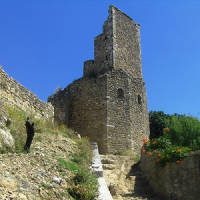
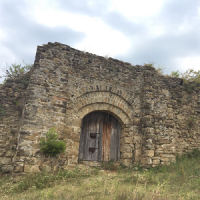
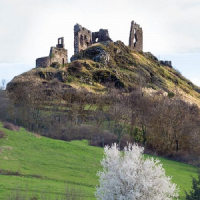
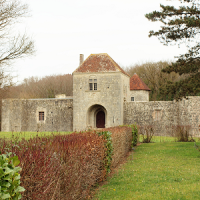
Lemberk Castle - Zámek Lemberk, Jablonne v Podjestedi, Liberec Region, Czech Republic.
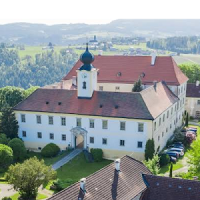
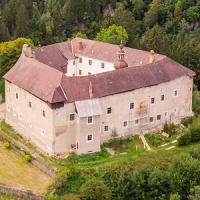
The predecessor to today’s early Baroque chateau was a medieval castle founded in the mid-13th century by Havel of the Markvartic family. Havel of Lemberk served at the courts of King Wenceslaus I and his son, Ottokar II. His wife, Zdislava of Lemberk, hailed from Křižanov in Moravia and gained widespread public recognition in 1995, when she was canonized by
Pope John Paul II.
The oldest surviving part of the castle is the main tower. Even an archaeological survey conducted in 1994 failed to determine the castle's exact original appearance and layout. The Lords of Lemberk held the castle until the end of the 14th century.
During the Hussite Wars of the 15th century, the property changed hands frequently, passing primarily to the nobility of Lusatia and Saxony. The castle gradually lost its early Gothic character as it was transformed into a Renaissance chateau. In 1550, Jindřich Kurzbach of Trachenberk inherited the Lemberk estate, ushering in a period of peace and economic growth. He repopulated abandoned villages with new serfs, founded and acquired additional villages, and established new mills, sawmills, ironworks, and a brewery.
Further Renaissance remodeling took place in the early 17th century, by which time the chateau and estate belonged to the Lords of Donín. A second story was added to the building, and the exterior was decorated with "envelope-style" sgraffito. Around 1610, under the Lords of Donín, a wooden coffered ceiling featuring painted scenes from animal fables was created in the main hall; this gave the room its name, the "Fable Hall." Albrecht von Wallenstein acquired the estate after 1620, and following his death in 1634, the property passed to Jan Rudolf Breda. Between 1660 and 1680, the Breda family invited artists and builders from the Netherlands and Italy to the region and had the château rebuilt in the Baroque style. It was during this period that Lemberk acquired its current appearance and, notably, its rich stucco decoration.
At the same time, the Breda Summer Pavilion and a garden were built near the château for the nobility's leisure. Construction work ceased after the death of Kryštof Rudolf Breda in 1680 and was never resumed. In 1726, the Gallas family—and subsequently the Clam-Gallas family—acquired the entire estate from the Bredas, using it as their country residence.
The château suffered significant damage during the Seven Years' War. In 1758, a field hospital for soldiers wounded at the Battle of Hochkirch was established at Lemberk, right inside the Fable Hall. Due to a lack of medicines and poor supplies, more than 1,000 men died there. They are buried in the forest near the château, and a wooden cross marks the site today.
Minor structural modifications were made to Lemberk during the 19th century. The Clam-Gallas family notably had all the windows, doors, and tiled stoves replaced, and the sculptural decorations in the Bredovská Garden repaired. They donated an empty plot of land near the garden to the municipality for the construction of a school,
which served its purpose until 1879.
Following the death of the last male heir, František Clam-Gallas, Lemberk passed to one of his daughters, Princess Gabriela Auersperg. In 1945, the château was nationalized under Decree No. 12 issued by President Edvard Beneš. The Provincial National Committee in Prague placed the Lemberk estate under national administration
and appointed Jan Urban from Komárov u Hořovic as the national administrator.
In June 1951, the National Cultural Commission installed an exhibition on "Domestic Culture" within the château, in collaboration with the Museum of Decorative Arts in Prague. The museum also assumed responsibility for the management
and safekeeping of the majority of the original château furnishings, pursuant to Act No. 137/1946 Coll. The exhibition showcased various stylistic periods as reflected in domestic culture and artistic decoration, ranging from Late Gothic to Art Nouveau. The project was conceived by Dr. Emanuel Poche, the director of the Museum of Decorative Arts in Prague.
In July 1971, a section of the crowning cornice—approximately 10 meters in length—collapsed above the château's western wing. The masonry fell into the courtyard at a time when a group of visitors was passing through the château. The chateau was temporarily closed,
and a structural assessment of the building was conducted. It was discovered that the majority of the wooden roof trusses and structural elements were infested with wood-decaying fungi, compromising the structural integrity of the individual chateau buildings. A decision was made to close the chateau to the public and carry out a comprehensive renovation. The District National Committee in Česká Lípa first had to secure the necessary funding for such an extensive project. Studies regarding the future use of the premises were prepared,
along with the necessary project documentation. Construction work began in 1979. The building complex underwent structural reinforcement, and all infested roof trusses were either treated or replaced. The roofing material was also replaced. New electrical wiring and plumbing systems had to be installed in the various wings of the chateau. In the late 1980s, restoration work began on the ceiling of the Fable Hall, the "black kitchen," and other rooms.
Lemberk Chateau reopened to the public in July 1992.
2 okt 2026
0
0