- Articles
- Weapons
- Armor
- Armor for horses
- Emperor Armor
- Chivalry
- Chivalry
- Knights castle
- Knights tournament
- The Crusades
- Knightly Orders
- Knightly saddle
- Knightly motto
- Great Knights
- Price of armor
- Children's armor
- Castles and fortresses
- Museums of armor and weapons
- Coats of arms and heraldry
- Routes and excursions
- Guides


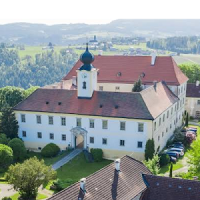
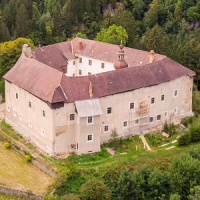
Hruby Rohozec Castle
Zámek Hrubý Rohozec
Information on the website. Weekend: Information on the website
Adult - 220CZK, Children's (0-6) - Free, Children's (7-15) - 70CZK, Students - 180CZK, Pensioners - 180CZK
www.zamek-hrubyrohozec.cz
Hrubý Rohozec 1, 511 01 Turnov, Liberecký kraj, Česká republika
50.598246, 15.157525 View map
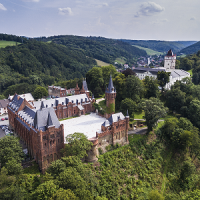
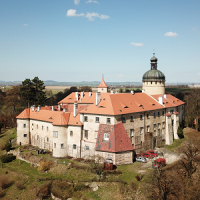
Hruby Rohozec Castle - Zámek Hrubý Rohozec, Turnov, Liberec Region, Czech Republic.
The predecessor to the current château was an Early Gothic castle built after 1300 on a rocky outcrop overlooking the Jizera River. Its founder was most likely a member of the Markvartic family—Havel—who subsequently adopted the predicate "of Rohozec" after his newly established seat. During the 14th and 15th centuries, ownership of the castle passed through the hands of the Lords of Turgov, the Lords of Michalovice, and the Krajíř family of Krajek. In the early 16th century, under Konrád Krajíř of Krajek, Hrubý Rohozec was remodeled into a comfortable Late Gothic residence.
From the mid-16th century, Hrubý Rohozec was owned by the Vartenberk family, who undertook further renovations after 1600, transforming it into a Renaissance château. However, the Vartenberks participated in the Bohemian Revolt, and their property was consequently confiscated following the Battle of White Mountain; in 1623, the famous Albrecht von Wallenstein purchased Hrubý Rohozec. Yet, as early as 1628, Mikuláš Des Fours acquired the château and the surrounding estate from him; the property subsequently served as the family seat for his descendants for over three centuries, until its confiscation in 1945.
Members of the Des Fours family (known as Des Fours Walderode from 1831 onwards) modified the château, its interiors, and its immediate surroundings to suit their own requirements and the tastes of the times. Thus, Hrubý Rohozec first underwent Baroque modifications; The interior of the chateau’s Chapel of the Holy Trinity, featuring Baroque and Rococo furnishings, has survived from this period to the present day. The chateau acquired its final form in the 19th century, when it was rebuilt in the Empire style based on designs by architect Jan Filip Joendl. Romantic-style modifications made in the mid-19th century—such as the Neo-Gothic doorway leading to the staircase to the chateau chapel—did not significantly alter the chateau's overall appearance.
Certain chateau interiors also took on their current form during the 19th century; notable examples include the dining room, featuring valuable wall and ceiling paintings in the Romantic Gothic style, and several second-floor rooms decorated in the Second Rococo style.
Today, the chateau’s interiors are presented as they appeared in the 1930s, when the estate was inhabited by its penultimate owner, Count Mikuláš Vladimír Des Fours Walderode, together with his wife Gabriela Karolína and their sons Maxmilián and Ludvík.
20 sen 2026
0
0