- Articles
- Weapons
- Armor
- Armor for horses
- Emperor Armor
- Chivalry
- Chivalry
- Knights castle
- Knights tournament
- The Crusades
- Knightly Orders
- Knightly saddle
- Knightly motto
- Great Knights
- Price of armor
- Children's armor
- Castles and fortresses
- Museums of armor and weapons
- Coats of arms and heraldry
- Routes and excursions
- Guides


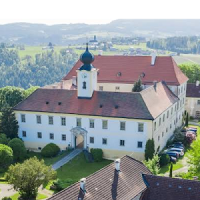
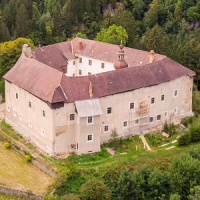


Detenice Castle
Zámek Dětenice
Information on the website. Weekend: Information on the website
Adult - 225CZK, Children's (0-3) - Free, Children's (4-11) - 105CZK, Children's (12-18) - 165CZK, Pensioners - 185CZK
www.zamekdetenice.cz
Dětenice 1/1, 507 24 Dětenice, Královéhradecký kraj, Česká republika
50.368075, 15.172900 View map
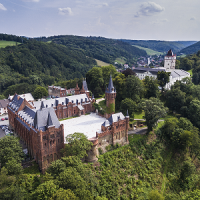
Detenice Castle - Zámek Dětenice, Detenice, Hradec Kralove Region, Czech Republic.
According to legend, Dětenice was founded on the spot where Prince Oldřich, while riding through the region in the mid-11th century, discovered two abandoned boys and took pity on them. He took them under his care and left some of his men behind to protect and raise them. The local settlement was named Dětenice after the children who were found there.
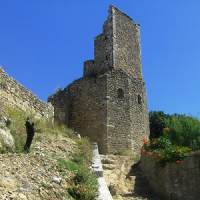
Beneš of Valdštejn and Dětenice (1269–1318) rebuilt the original wooden stronghold into a stone Gothic fortress. Remains of the castle tower and Early Gothic cellars are still visible in the chateau today. Legend has it that Beneš "the White" used to sit at a place called *Na Viničkách* beneath a rocky outcrop, where he would secretly read Hussite books, as his wife was a Catholic. In the 19th century, stones from this outcrop were quarried and moved to the chateau park.
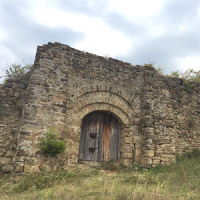
In 1503, the estate was purchased by the Křinecký family. The last member of the "Ronovec" (or Křinecký) line was Jiří Křinecký, who commissioned a clock tower for the chateau and transformed the Gothic stronghold into a Renaissance-style residence. Jiří Křinecký took part in the uprising against Ferdinand II. Following the Battle of White Mountain, his assets were confiscated for this treason and sold at auction to Albrecht von Wallenstein. Jiří Křinecký was sentenced to death and was slated for execution in Old Town Square alongside twenty-seven other Czech nobles. However, he managed to escape to Saxony; he had buried his entire fortune in secret passages within the chateau's cellars, hoping to return for the wealth one day. To this day, the treasure remains undiscovered. After the death of Albrecht von Wallenstein (1634), the estate passed to his nephew, Adam von Wallenstein. Adam’s grandson, Oktavián (1670–1717), commissioned the plague statue of St. Salvator (1713), a statue of the Virgin Mary near the Suchánek homestead, and a statue of St. Barbara in the chateau park. It was also through his efforts that the statue of St. John of Nepomuk was erected on the village green in Dětenice and the chateau chapel was built. In 1673, Oktavián von Wallenstein had a school built in Dětenice.
Among the estate's other owners, Count Jan Clam-Gallas (1760) is worth mentioning; he ordered the felling of significant tracts of forest, built the *Nový dvůr* (New Farmstead), and had the chateau rebuilt in the Late Baroque style to its present-day appearance. He also had vineyards planted on the hill towards Osenice (an area known today as *Na Viničkách*). His son Karel had a spa built at *Na Viničkách* for his ailing wife; however, despite his accompanying her to her bath every morning, she passed away, leaving behind a three-year-old daughter. The Count took his own life, and the guardian of young Aloisie sold the estate.
The new owner, Baron Wimmer (1790–1808), established a sawmill near the Hasina pond (known today as *Pilský rybník* or Sawmill Pond). The subsequent owner, Filip Wessenberk (1808–1866), drained most of the local ponds, thereby ridding the landscape of the ague (malaria). In 1820, he renovated the chateau to its current form, restored the chateau chapel, and established the *Filipíen* farmstead. Young Filip was an avid traveler. From his travels, he brought back a small monkey and a young Black boy named Táha; the latter was baptized Jindřich in the Osenice church and, upon returning to his homeland, became the director of a girls' school in Cairo. Following the death of Filip Wessenberg, the estate passed to the Order of the Knights of Malta (1867), of which he had been a member.
During the tenure of the Knights of Malta (1866–1903), a brickworks was established in Osenice (1900), the railway line from Bakov to Kopidlno was opened (1882), the brewery was renovated, and a village green chapel was built (1876); additionally, a new school was erected in Dětenice on the site of a distillery that had burned down (1876). The château park was also expanded—with new additions joining the existing Rococo statuettes, including a château fountain (created by Fr. Rous)—and terraces were added to the château building.
In 1903, the Bloch brothers purchased Dětenice; they rebuilt the farmyards, installed a light railway, and had the village electrified. The estate's final owner, from 1926 to 1945, was Ing. Emanuel Řehák, who used to invite the residents of Dětenice to the château for harvest festivals and other celebrations. In 1948, Řehák's property was nationalized. The château building first housed an apprentice school for gardening, and from 1959, a residential special school. In 1991, the special school was closed and relocated; the château stood empty and gradually fell into disrepair while under the ownership of the Jičín District Authority. In 1998, Mr. Pavel Ondráček purchased the château from the state and carried out an extensive yet sensitive renovation over the course of two years. The château was reopened to the public in 2000.
21 sen 2026
0
0