- Articles
- Weapons
- Armor
- Armor for horses
- Emperor Armor
- Chivalry
- Chivalry
- Knights castle
- Knights tournament
- The Crusades
- Knightly Orders
- Knightly saddle
- Knightly motto
- Great Knights
- Price of armor
- Children's armor
- Castles and fortresses
- Museums of armor and weapons
- Coats of arms and heraldry
- Routes and excursions
- Guides



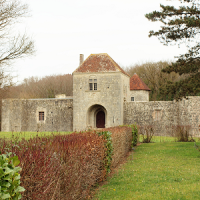
Petar Hektorovic Castle
Tvrdalj Petra Hektorovića
Trg Tvrdalj Petra Hektorovića 12, 21460, Stari Grad, Splitsko-dalmatinska županija, Republika Hrvatska
43.183021, 16.595744 View map
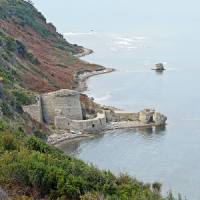
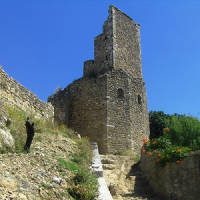
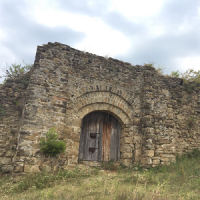
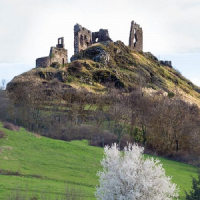
Petar Hektorovic Castle - Tvrdalj Petra Hektorovića, Stari Grad, Split-Dalmatia County, Republic of Croatia.
In 1448, Hektor Hektorović received permission from the Governor of Hvar to build a villa on the far western outskirts of Stari Grad, directly on the shore of the bay. Excavations in 1898 revealed that fortifications had previously existed on this site.
In 1520, Petar Hektorović, Hektor's great-grandson and a prominent figure in Croatian culture (1487-1572), rebuilt the residence to address the threat posed by the Ottoman Turks, Algerian pirates, and the Venetians. He fortified his home so that it could serve as a refuge for local residents. This is what the Latin inscription above the entrance says:
"PETRUS HECTOREUS MARINI FILIUS PROPRIO SUMPTU ET INDUSTRIA AD SUUM ET AMICORUM USUM CONSTRUXIT" (Peter Hektorović, son of Marino, built at his own expense and with his own efforts for himself and his friends).
Peter conceived his castle as a model of metaphysical principles: with fish in the pond symbolizing Christ and birds symbolizing the Holy Spirit. Therefore, the picturesque courtyard features a pool of seawater, filled with mullet and trout, and a dovecote tower has been built next to the pool. And man walks on earth—hence the numerous ethical maxims carved into the castle walls in Latin. Here are some of them:
RESPICE QUOD SALVANT NEC OPES NEC GLORIA MUNDI NON DECOR AUT AETAS MORS QUIA CUNCTA RAPIT - Remember that neither wealth, nor fame, nor beauty, nor age can save you from death, which takes everything.
HEU FUGIUNT FLUXU NON REDEUNTE DIES - Alas, the days flow like waves and cannot be brought back.
SI TE NOSTI CUR SUPERBIS - Do you know what you are? Then why are you proud? (inscription on a toilet door)
In 1571, Stari Gorod was attacked again and Tvrdalj Castle was set on fire by the Turks. A year later, Petar Hektorović died, and the damaged palace was divided among his relatives. In accordance with his will, gradual improvements were made to the structure. In 1834, the castle underwent extensive construction: the southern wall of the complex was removed, vaults around the pool and a second floor were added, and new two-story houses were constructed. Part of the bay in front of Tvrdalj was filled in to improve the harbor.
In the 20th century, major changes occurred in 1901, when the eastern wall was demolished and houses were built behind the storage and cistern, which still form part of the entrance to Tvrdalj Castle.
Today, the site attracts tourists with its Renaissance architecture, swimming pool, and beautiful garden located behind the main building, where Hektorović cultivated medicinal herbs and plants.
9 sen 2026
0
0