- Articles
- Weapons
- Armor
- Armor for horses
- Emperor Armor
- Chivalry
- Chivalry
- Knights castle
- Knights tournament
- The Crusades
- Knightly Orders
- Knightly saddle
- Knightly motto
- Great Knights
- Price of armor
- Children's armor
- Castles and fortresses
- Museums of armor and weapons
- Coats of arms and heraldry
- Routes and excursions
- Guides


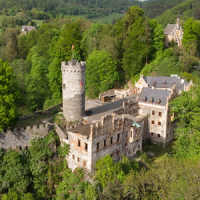
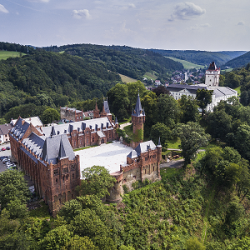
Hradec nad Moravicí Castle
Státní zámek Hradec nad Moravicí
Information on the website. Weekend: Information on the website
Adult - 260CZK, Children's (0-5) - Free, Children's (6-17) - 80CZK, Students - 210CZK, Pensioners - 210CZK
www.zamek-hradec.cz
Městečko 2 747 41 Hradec nad Moravicí, Moravskoslezský kraj, Česká republika
49.865090, 17.875163 View map
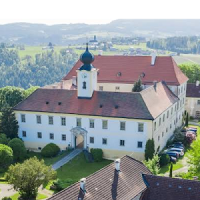
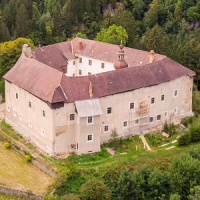
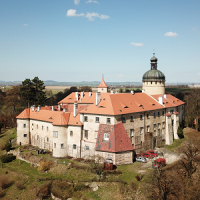
Hradec nad Moravicí Castle - Státní zámek Hradec nad Moravicí, Hradec nad Moravici, Moravian-Silesian Region, Czech Republic.
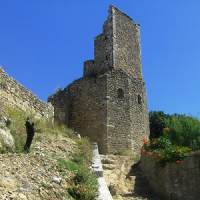
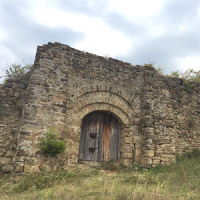
The Hradec promontory has been continuously settled since around 2000 BC. The site's architectural evolution began with a Slavic hillfort. Following a fire that destroyed the original Přemyslid princely castle, King Přemysl Otakar II initiated the construction of a new, grand Gothic castle—distinguished by both its scale and magnificence—surrounded by an ingenious fortification system; between 1279 and 1281, his widowed consort, Kunhuta, held court here.
In the 14th century, Hradec served as the seat of the Opava branch of the Přemyslid dynasty and as the administrative center of the Duchy of Opava. In 1481, it was granted town status, a coat of arms, and market rights.
From the early 16th century, the estate passed through the hands of several pledge-holders; the last of these was Kašpar Pruskovský of Pruskov, who acquired the property as a hereditary holding in 1585 and simultaneously began transforming the castle complex into a Renaissance residence featuring an ornamental garden and a landscaped park. This new, more modern standard of living undoubtedly influenced the quality of family and social life in Hradec. Among other things, a number of resident musicians were active here—including a renowned chateau orchestra from the 1730s onwards—and operas were even performed in the theater hall.
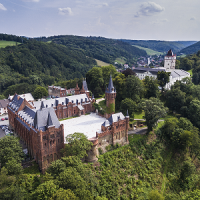
In 1778, the Hradec estate passed to the Lichnovský of Voštice family, a princely house of Prussian origin; in the early 19th century—following a fire in 1796—they comprehensively renovated the chateau in the style of the contemporary Empire period. The extensive transformation of the main residential building in the second half of the 19th century was accompanied by the expansion of the complex to include the Neo-Gothic "Red Chateau," featuring stables, a carriage house, and a defensive wall. The chateau's surroundings also underwent changes: the old fortification system was dismantled, the slopes were leveled, and a naturalistic landscape park of exceptional compositional and dendrological quality was established. Finally, the complex's last structure—the Pseudo-Gothic "White Tower"—was erected near the garden wing.
The Hradec estate was held by eight princes and counts of the Lichnovský family across six generations. Each was a distinctive figure possessing exceptional education, diverse interests, notable abilities, and refined social connections. These qualities enhanced the chateau's status as a center for social and ceremonial life, as well as the scope and quality of its collections. Beyond hosting monarchs, dignitaries from European courts, and political and social celebrities, the chateau welcomed many luminaries of the cultural world. Visitors to Hradec included Ludwig van Beethoven, Franz Liszt, Josef Mánes, Gerhart Hauptmann, Hugo von Hofmannsthal, Karl Kraus, and Liszt’s daughter, Cosima Wagner. The Lichnovský family maintained friendships with figures such as W. A. Mozart, N. Paganini, A. von Humboldt, V. Hugo, R. M. Rilke, M. Twain, P. Picasso, and O. Kokoschka. In May 1945, the estate was confiscated by the Czechoslovak state, and the château was opened to the public shortly thereafter. A major renovation of the building began in 1978, and a large part of it is currently accessible to visitors.
20 sen 2026
0
0