- Articles
- Weapons
- Armor
- Armor for horses
- Emperor Armor
- Chivalry
- Chivalry
- Knights castle
- Knights tournament
- The Crusades
- Knightly Orders
- Knightly saddle
- Knightly motto
- Great Knights
- Price of armor
- Children's armor
- Castles and fortresses
- Museums of armor and weapons
- Coats of arms and heraldry
- Routes and excursions
- Guides


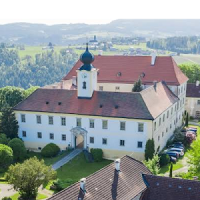
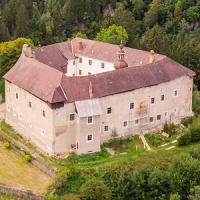
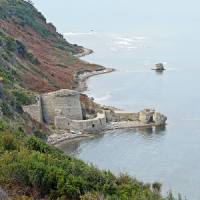
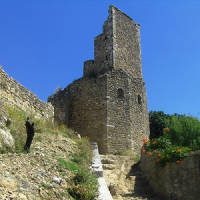
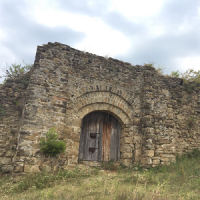

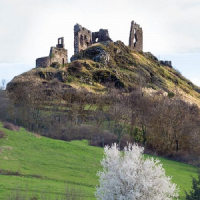
Lednice Castle
Státní zámek Lednice
Information on the website. Weekend: Information on the website
Adult - 300CZK, Children's (0-5) - Free, Children's (6-17) - 90CZK, Students - 240CZK, Pensioners - 240CZK
www.zamek-lednice.com
48.801586, 16.805736 View map
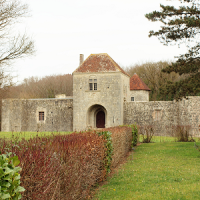
Lednice Castle - Státní zámek Lednice, Lednice, South Moravian Region, Czech Republic.
The first historical record of this site dates back to 1222. A Gothic stronghold with an associated manor likely stood here as early as that time; in 1249, King Wenceslaus I of Bohemia granted the estate to the Austrian nobleman Sigfried Sirotek.
In 1322, the Liechtenstein family—originally from Styria—acquired Lednice; they gradually amassed landholdings on both sides of the Moravian-Austrian border. Family members primarily pursued military careers, though during the Renaissance, they also engaged in business ventures. From the second half of the 15th century onwards, members of the family also held the highest provincial offices. However, a fundamental shift in the family's status in Moravia occurred only under the brothers Karl, Maximilian, and Gundakar von Liechtenstein. Through advantageous marriages, Karl and Maximilian secured the vast wealth of the ancient Moravian noble house of Černohorský of Boskovice. Like their father and grandfather, the brothers were initially Lutheran Protestants, but they soon converted to Catholicism, thereby paving the way for their future political careers. This was particularly true for Karl, who served at the court of Emperor Rudolf II; he became the Provincial Governor of Moravia in 1604, and in 1608, he was elevated to the rank of Prince by the future King Matthias II and granted the Principality of Opava.
During the Bohemian Revolt, he sided with the Habsburgs and participated in the Battle of White Mountain. Following the defeat of the Estates Revolt in 1620, the Liechtenstein family became the wealthiest dynasty in Moravia—supplanting the House of Žerotín—through the systematic acquisition of estates confiscated from participants in the uprising. Their vast landholdings generated immense profits, enabling them to undertake grand construction projects, such as the one here in Lednice.
As early as the 16th century, Hartmann II of Liechtenstein likely had the local medieval moated fortress demolished and replaced with a Renaissance château. Towards the end of the 17th century, that structure was also torn down to make way for a Baroque residence featuring an expansive, architecturally designed garden and a monumental riding school—designed by Johann Bernhard Fischer von Erlach—which has survived to the present day with only minor alterations.
After the mid-18th century, the château underwent further structural modifications; in 1815, the front wings—part of the original Baroque complex—were removed.
Its current appearance dates from the years 1846–1858, when Prince Alois II of Liechtenstein decided that Vienna was unsuitable for hosting summer festivities and commissioned the transformation of Lednice into a magnificent summer residence in the English Gothic style. The state rooms on the ground floor (now part of the first tour route) were designed to host grand gatherings of the European nobility; they feature carved ceilings, wood-paneled walls, and exquisite furnishings. On the first floor of the château, you can visit the private apartments of the Liechtenstein family. The second floor houses the children's rooms and their governesses' quarters, along with the Milan Knížák Puppet Museum.
2 okt 2026
0
0