- Articles
- Weapons
- Armor
- Armor for horses
- Emperor Armor
- Chivalry
- Chivalry
- Knights castle
- Knights tournament
- The Crusades
- Knightly Orders
- Knightly saddle
- Knightly motto
- Great Knights
- Price of armor
- Children's armor
- Castles and fortresses
- Museums of armor and weapons
- Coats of arms and heraldry
- Routes and excursions
- Guides


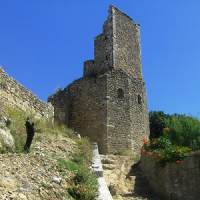
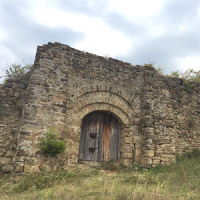

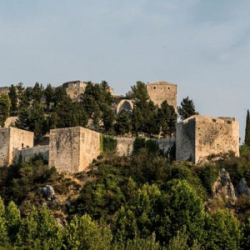
Stolac Fortress
Stari Grad Stolac
Stolac, Hercegovačko-neretvanski kanton, Federacija Bosne i Hercegovine, Bosna i Hercegovina
43.081215, 17.954868 View map
Stolac Fortress - Stari Grad Stolac, Stolac, Herzegovina-Neretva Canton, Federation of Bosnia and Herzegovina, Bosnia and Herzegovina.
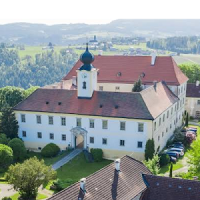
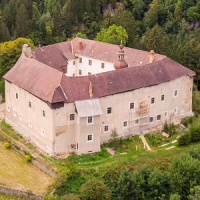
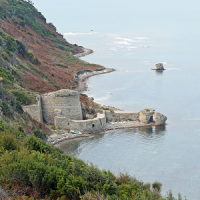
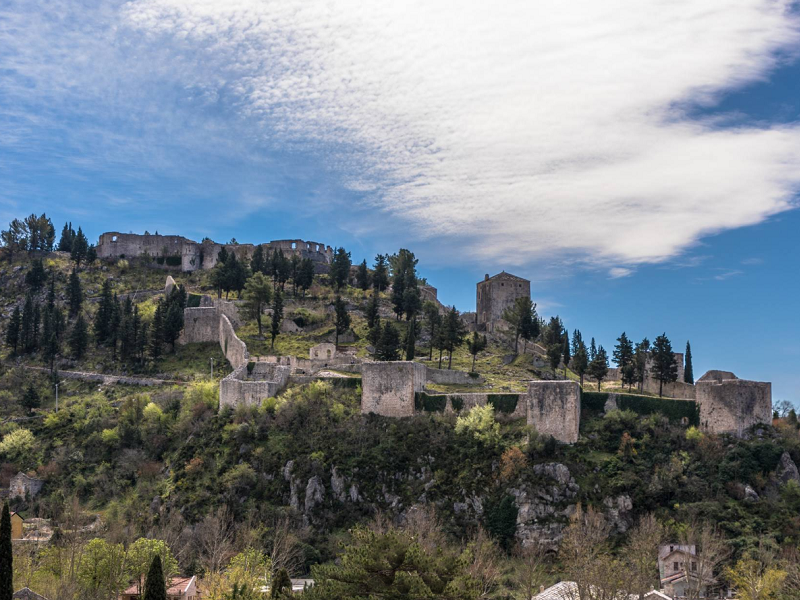
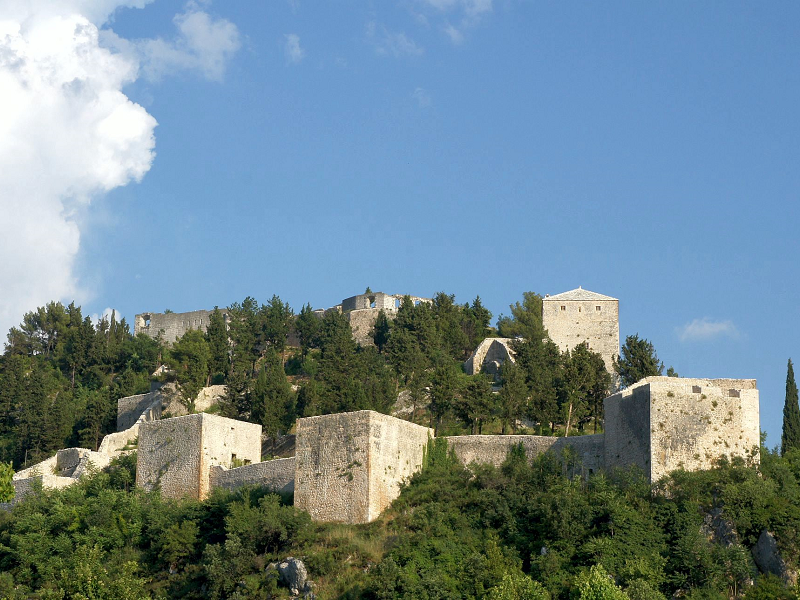
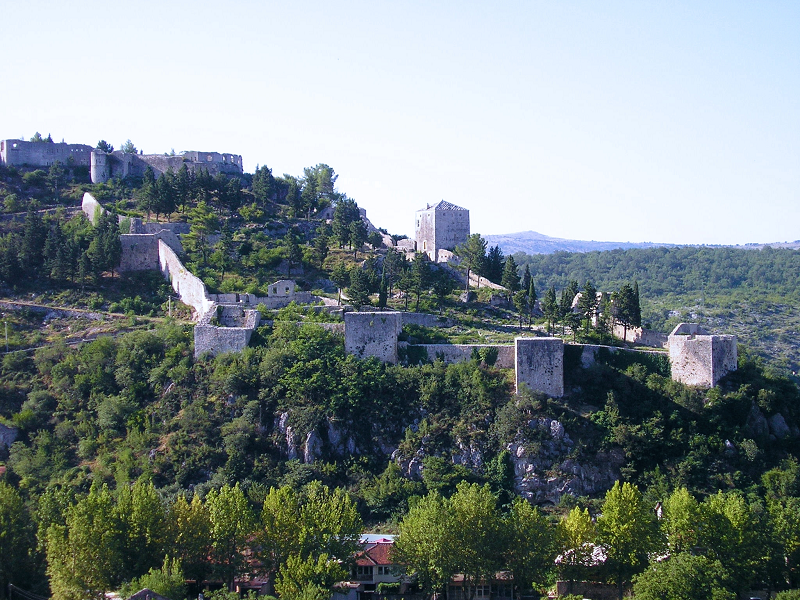
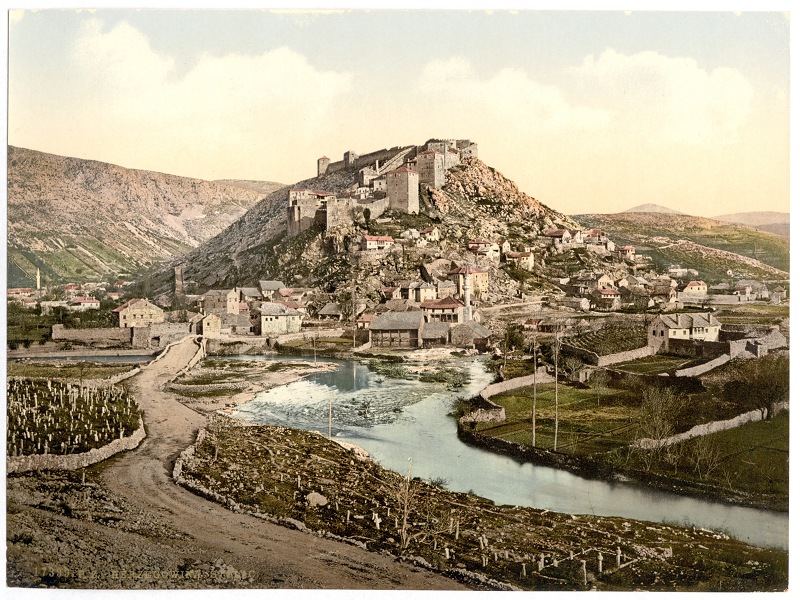
The old town of Križevac is located on a hill above the present-day center of Stolac and is a defense facility that, in terms of its size, is one of the largest cities in Bosnia and Herzegovina. In the XVII. century, the city had 13 towers and was the best fortified city in Herzegovina. The old town is situated on a conical limestone hill, whose western slope towards Zagrad is called Šetnica, the northern towards the present-day center of the city is called Carinska strana, and the eastern slope towards Uzinović is called Križevac.
The old town of Križevac is located on the left bank of Bregava, above Stolac, from where there is a view of the settlement, the fertile Vidovo polje, the river Bregava and the surrounding hills: Hrgud in the north, Komanje brdo in the east, Ošaniće in the west and the Bašnik hill in the south, at the end of Vidovo polje. The national monument consists of the lower town, the upper town, the central plateau with construction from the period of Austro-Hungarian administration, an access road with a total length of 1200 m from the lower gate to the upper gate, as well as part of the hill below the ramparts.
The old town covers an area of 20,503 m2. It is protected by a chain of stone towers and ramparts, which are about 2 m thick and are made of hewn blocks of limestone. In addition to the towers, the city also has 10 water cisterns, a flour warehouse and housing facilities.
The names Stolac and Vidoški have been constantly intertwined since they appeared in historical sources. Both remained in use almost until the end of the 19th century. Centuries. It is assumed that in prehistoric times, life took place in the northwestern part of the fortifications towards Podgrad, in the part of the hill called Šetnica. Late antique substructures were discovered on the northern side of the city (towers I – IV). On the site of today's town of Stolac was the ancient municipium Diluntum with findings from the 1st - 4th centuries BC. Kr. And a fortification from the late antique period. In the Middle Ages, the area of the city of Stolac belonged to the Vidoš parish. Vidovo polje appears in the Latin translation "Planum Sancti Viti" in 1417. The first reliable information about Stolac in the Middle Ages is from the 15th century, i.e. "Loco dicto Stolac" in 1420 in connection with some robbery of merchants, and it appears again a few years later.
Archaeological works in 1976 did not reveal clear remains of the medieval town, but it is assumed that they were covered by the construction of fortifications from the era of Austro-Hungarian administration. Stolac became part of the Ottoman Sultanate, after the conquest on June 13, 1465, but there is no reliable information that a crew was kept there until the beginning of the XVIII century. century. After the Peace of Karlovac in 1699, the city was repaired and expanded and an administration headed by Dizdar was appointed. Around 1706, the Stolac captaincy was founded. In 1832, Husein-Captain Gradaščević's army besieged Stolac in vain. Established in August 1878 is the Austrian administration. The military commander thoroughly repaired the old town in 1883, and in 1888 he built a modern fortress, located above the one that existed during the period of Ottoman rule.
The historical area - the Old Town of Stolac was declared a national monument of Bosnia and Herzegovina in 2003.
Sourse: www.stolac.gov.ba
7 sen 2026
0
0