- Articles
- Weapons
- Armor
- Armor for horses
- Emperor Armor
- Chivalry
- Chivalry
- Knights castle
- Knights tournament
- The Crusades
- Knightly Orders
- Knightly saddle
- Knightly motto
- Great Knights
- Price of armor
- Children's armor
- Castles and fortresses
- Museums of armor and weapons
- Coats of arms and heraldry
- Routes and excursions
- Guides



Ostrovica Fortress
Stari Grad Ostrovica
Around the clock. Weekend: No
Ostrovica, Unsko-sanski kanton, Federacija Bosne i Hercegovine, Bosna i Hercegovina
44.557974, 16.081051 View map
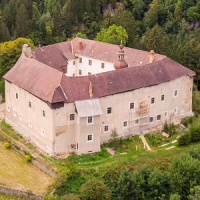
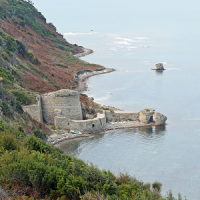
Ostrovica Fortress - Stari Grad Ostrovica, Ostrovica, Una-Sana Canton, Federation of Bosnia and Herzegovina, Bosnia and Herzegovina.
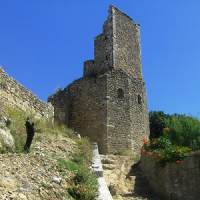
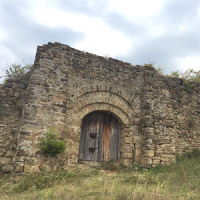
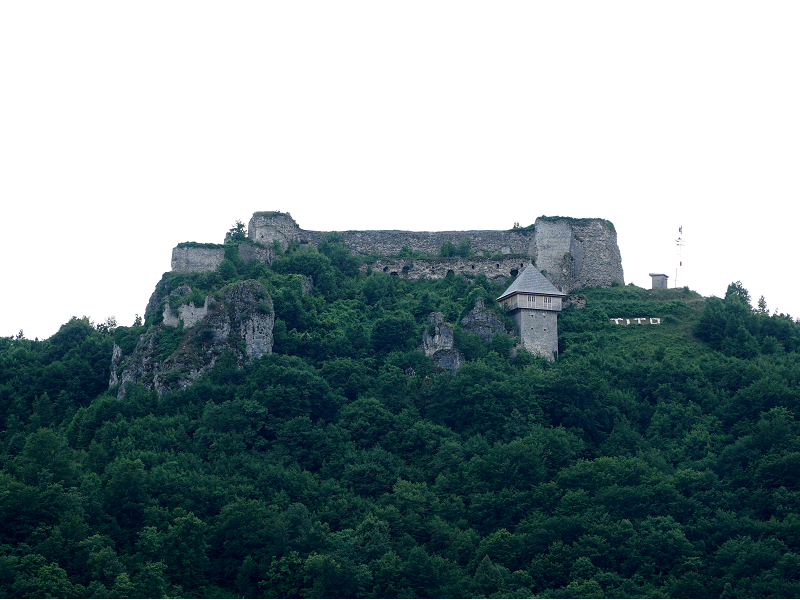
The town of Ostrovica contains at least three recognizable historical layers. The medieval layer of the city was built in the 15th century on a prehistoric rampart, of which the remains of the protective rampart on the hill of the same name have been preserved in places. The castle was defended by a combination of a protective rampart and a steep rock, from the most inaccessible north-eastern side, whose embankments, 282 m long and 211 m wide, can still be recognized today. A moat stretches under the western wall of the fort. On the western side are the foundations of the ruins, they are 14 m long and 6 m wide. The entrance is on the west side. People call that church "Ostrovička" or "Greek church". The medieval town of Ostrovica was located in the parish of Lapac, and belonged to Karlovići. In the Middle Ages, it was the most fortified town in the upper reaches of the Una River. Its development and expansion of the fortress continued during the Ottoman rule in Bosnia and Herzegovina. The main entrance was from the south, and the secondary entrance from the north. In December 1523, the city fell under the Ottoman administration and until 1878, the Ottoman government kept a garrison in it, and it was abandoned in 1878. Its importance and size is indicated by the fact that during the 16th century, a crew of 60 horsemen and 150 foot soldiers was stationed in it. In the 18th century, the town was expanded and strengthened with four towers and two tabia. Since then, no additional constructions or modifications have been made on it. The captaincy of Stara Ostrovica was named after her, and it stretched on both sides of the upper reaches of the Una river, from the source to about 15 km below the present-day Kulen Vakuf. The towns of Orašac, Havala, Jisr-i-kebir, Palanka Čovka and Donji Lapac were also part of this captaincy. The captaincy had the task of defending the borders and guarding the interior of the territory, as well as the more important roads and passes, and later took over police duties. Captains were at the head of the captaincy and these were hereditary functions. Stara Ostrovica was significantly expanded and fortified after the Peace of Karlovac, and a small town was built next to the tower in Orašac, while the towns of Havala and Jisr-i-kebir (Great Bridge), today Kulen Vakuf, were built from the ground up. The captaincy was first mentioned in 1699, and the captains belonged to the Kulenović family, known as Haračlije. Captains survived in Stara Ostrovica until after 1791. In front of the main entrance to the city was their ožak (noble manor). After losing Lapac and moving the border to the immediate vicinity of Stara Ostrovica, the captain moved his headquarters to Prkose, where he built a chimney and a tower next to it. The first known captain was Salih-aga Kulenović, and the last captain was Mehmed-bey (1821-1835).
Sourse: www.bihac.org
7 sen 2026
0
0