- Articles
- Weapons
- Armor
- Armor for horses
- Emperor Armor
- Chivalry
- Chivalry
- Knights castle
- Knights tournament
- The Crusades
- Knightly Orders
- Knightly saddle
- Knightly motto
- Great Knights
- Price of armor
- Children's armor
- Castles and fortresses
- Museums of armor and weapons
- Coats of arms and heraldry
- Routes and excursions
- Guides


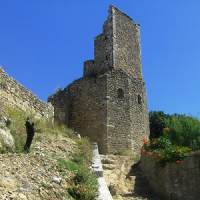
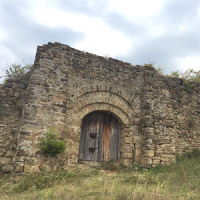


Shumen Fortress
Крепост Шумен
April - October Mo-Su 08.30-17.00. Weekend: November - March
Adult - 6BGN, Children's (0-6) - Free, Children's (7-18) - 2BGN, Students - 2BGN, Pensioners - 4BGN
www.museum-shumen.eu
Шуменско плато, 9700 Шумен, Област Шумен, Република България
43.262613, 26.894547 View map
Shumen Fortress - Крепост Шумен, Shumen, Shumen Province, Republic of Bulgaria.
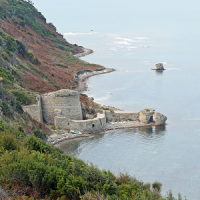
On a rocky hill, about 3 km west of the modern town of Shumen, in the Hisarlaka area, stands the Shumen Fortress. Protected on three sides by impregnable slopes and strong walls, it is close in location to the late medieval Bulgarian fortresses in Tarnovo, Cherven, and Lovech. Its important strategic position determines its leading role among the other fortifications on the plateau throughout all historical eras.
Regular archaeological research, which began in 1957 under the leadership of Vera Antonova and lasted for nearly 30 years, proves the existence of a significantly fortified settlement as early as Thracian times (5th–2nd century BC). Later, during the Roman era (2nd–4th century), the fortress became a dominant fortress on the Visantium – Odessus road, and during the time of Emperor Justinian I (5th–6th century) it grew into a stronghold defending the approaches to the Balkan Mountains. After a short interruption, life here was restored and during the early Middle Ages (8th–10th centuries) the fortification regained its strategic functions. The most significant period in the historical development of the Shumen Fortress was the late Middle Ages (12th–14th centuries), when it became one of the most important urban centers of the Second Bulgarian Kingdom, which, according to some recent studies, had functions similar to those of the capital centers. This was the time when the construction of the reinforced fortification of the city was necessary, which included an external fortification consisting of three fortress walls and a small internal fortification - the citadel. Both during the early periods - throughout the Roman and Early Byzantine era (2nd–4th centuries), and during the late Bulgarian Middle Ages, the inner city, locked between the walls, was densely built up. Several main streets, reaching a width of 2.50 m, lead from the entrances of the fortress to the citadel, churches, reservoirs and small squares. Narrower streets (27 in number) start from them and reach all the buildings. The overall urban planning is subordinate to the limited area and is consistent with the six formed quarters, in the area of which there are also six Christian churches. Outside the fortress walls, four more churches were erected, which, like the inner ones, are richly decorated with exquisitely crafted architectural details - columns, capitals, cornices, friezes. During the Second Bulgarian Kingdom, the city grew as an economic and production center, which is confirmed by the numerous and diverse material discovered in the process of long-term research. The Shumen fortress is one of the significant centers, both strategically, economically, and culturally, which assigns it a worthy place in the historical development of the European southeast throughout all historical eras. It was taken by the troops of Ali Pasha in 1388. It was finally destroyed in 1444 during the clash between the Turkish garrison guarding it and the crusaders of Vladislav III Jagiellon. From that moment on, life continued only in the lowland below the fortress, where the modern city of Shumen is located.
Source: www.museum-shumen.eu/ova_sev/ганкц-шуменска-крепост/
8 sen 2026
0
0