- Articles
- Weapons
- Armor
- Armor for horses
- Emperor Armor
- Chivalry
- Chivalry
- Knights castle
- Knights tournament
- The Crusades
- Knightly Orders
- Knightly saddle
- Knightly motto
- Great Knights
- Price of armor
- Children's armor
- Castles and fortresses
- Museums of armor and weapons
- Coats of arms and heraldry
- Routes and excursions
- Guides


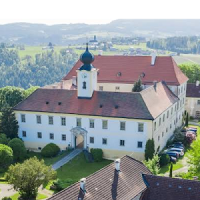
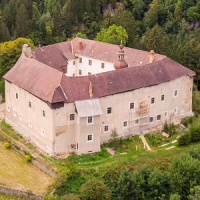
Muzeum Wojska Polskiego.
Muzeum Wojska Polskiego
Tu-Su 10.00-18.00. Weekend: Monday
Adult - 40PLN, Preferential - 30PLN. Thursday - Free.
www.muzeumwp.pl
Al. Jerozolimskie 3, Warszawa, Województwo mazowieckie, Rzeczpospolita Polska.
52.232182, 21.025884 View map
Muzeum Wojska Polskiego - Polish Army Museum, Warszawa, Województwo mazowieckie, Rzeczpospolita Polska.
As one of the largest museums in Poland, the Polish Army Museum collects, researches, and exhibits military artifacts of historical value. The museum was founded on April 22, 1920, by order of Marshal Józef Piłsudski, Commander-in-Chief of the Polish Armed Forces, and its collection was created by the museum's first director, Colonel Bronisław Gębarzewski.
Medieval Hall.
The history of the Polish armed forces begins in the 10th century. This section of the exhibition tells visitors the evolution of the Polish armed forces, beginning with the prince's mounted retinue and shield bearers and culminating in the introduction of mass levies and the recruitment of cavalry and infantry in the 15th century.
Renaissance Hall.
In the history of the Polish armed forces, the 16th century marked the creation of Poland's first regular army—a common defense force organized to protect the country's southeastern border from the Tatars and Turks. The display in this section of our exhibition includes weapons and armor used by this force, as well as souvenirs of its commanders. Our extensive collection of Renaissance armor, armor elements, and horse trappings used by Renaissance military leaders are particularly noteworthy.
Seventeenth-Century.
Hall.A remarkable set of late 17th-century cannons, cast by the court founder Hermann Moltzfeld at the Radziwill foundry in Nizhny, opens the exhibition, accompanied by examples of armor typical of Polish hussars, "foreign contingents," infantry officers, and the Royal Navy, dating back to the early 17th-century wars with Russia, Sweden, and the Ottoman Empire.
Sobieski Hall.
Considered the most difficult in Polish history, the 17th century was an era of constant warfare against Sweden, Russia, the Ottoman Empire, and the Tatars: Poland was at war for 28 years without interruption. The Sobieski Hall exhibit features hussar plates and scale armor, as well as the weapons of armored cavalry and Polish medium cavalry, complete with typical shields called kalkans. Many interesting, if not exotic, objects take visitors back to the Swedish invasion of Poland in 1655 and the wars with the Ottoman Empire. Here you'll find a portrait of King Jan III Sobieski and one of Józef Brandt's most famous paintings, "The Battle of Vienna."
The museum displays the works of famous masters:
Anton Peffenhauser, Augsburg, Germany.
23 nov 2025
0
0