- Articles
- Weapons
- Armor
- Armor for horses
- Emperor Armor
- Chivalry
- Chivalry
- Knights castle
- Knights tournament
- The Crusades
- Knightly Orders
- Knightly saddle
- Knightly motto
- Great Knights
- Price of armor
- Children's armor
- Castles and fortresses
- Museums of armor and weapons
- Coats of arms and heraldry
- Routes and excursions
- Guides


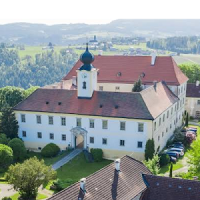
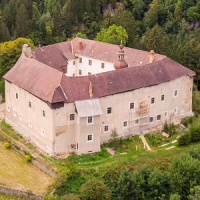
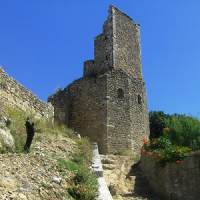
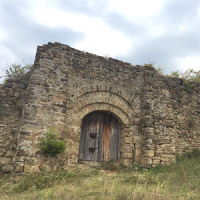

Poeke Castle
Kasteel van Poeke
www.poeke.net
Kasteelstraat 38, 9880 Poeke, Province de Flandre-Orientale, Région flamande, Royaume de Belgique
51.041215, 3.450024 View map
Poeke Castle - Kasteel van Poeke, Poeke, East Flanders Province, Flemish Region, Kingdom of Belgium.
The Lordship of Poeke already existed in the first quarter of the 12th century, but the formerly fortified castle must have been built in the 14th and 15th centuries and was likely part of a stronghold for the people of Ghent against various invaders. The oldest known lord is Steppo van Poeke (1139). The castle was largely destroyed in 1453 during the Ghent uprising against Philip the Good and remained in ruins until the early 17th century. The estate was purchased in 1597 by the de Preudhomme d’Hailly family, who retained possession of the castle until 1872. The buildings and surroundings of that time are depicted in Sanderus’s ‘Verheerlykt Vlaandre’ (1735).
The castle was renovated as early as 1671 (see the date reportedly found in the stucco vault of the southwestern tower). Instead of a hexagonal shape, it was given a rectangular form with two side wings. The foundations and the four corner towers of the later castle likely date from that period, possibly with the retention of some older towers.
Major renovations took place between 1743 and 1752, commissioned by Charles Florent Idesbald de Preudhomme d’Hailly, Viscount of Nieuwpoort, Oombergen, Sint-Lievens-Essen, and Schoonbergen, Baron of Poeke, and Lord of Neuville, Kanegem, and Velaine. According to recovered accounts, these works were carried out by Ghent craftsmen and artists. Master mason Jan Baptist Simoens likely played a significant role as architect. Internal renovations and renovations to the furnishings took place between 1745 and 1747. The external renovations began in late 1747-early 1748 on the rear facade and ended with the renovation of the front facade in 1750-1751. The right wing is believed to date from 1761. The 18th-century condition is relatively familiar to us from old photographs taken before the last renovation campaign.
3 sen 2026
0
0