- Articles
- Weapons
- Armor
- Armor for horses
- Emperor Armor
- Chivalry
- Chivalry
- Knights castle
- Knights tournament
- The Crusades
- Knightly Orders
- Knightly saddle
- Knightly motto
- Great Knights
- Price of armor
- Children's armor
- Castles and fortresses
- Museums of armor and weapons
- Coats of arms and heraldry
- Routes and excursions
- Guides


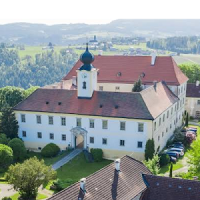
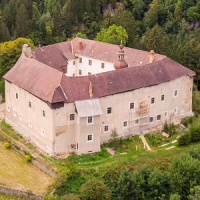
Neerhof Castle
Kasteel Neerhof
Restaurant. Weekend: No
www.cafedenherberg.be
Watermolenweg 1, 2280 Grobbendonk, Province de Anvers, Région flamande, Royaume de Belgique
51.194258, 4.755833 View map
Neerhof Castle - Kasteel Neerhof, Grobbendonk, Antwerp Province, Flemish Region, Kingdom of Belgium.
The Kasteelhoeve d’Ursel in Grobbendonk has a rich history dating back to the 12th and 13th centuries. The first known lord of Grobbendonk was Sebastianus de Grebendunc, known from a marriage certificate from 1219. He owned the now-vanished castle and the surrounding lands that now form the municipality. His granddaughter Leysa later married the lord of Wilre.
According to legend, Sebastian was an avid builder, even having secret passages built beneath his castle. In 1545, the castle and surrounding lands were sold to Erasmus Schetz, an exceptionally wealthy merchant of German descent. Schetz was a prominent figure in Antwerp's Golden Age of the 16th century. His other property, the Huis van Aken (House of Aachen), can be found next to the St. Charles Borromeo Church in Antwerp.
So what did Schetz come to Grobbendonk for? During the uncertain wartime of the 16th century, he was looking for an investment to safeguard his fortune. Like many other merchants, he quickly wanted to join the feudal nobility. Becoming a nobleman wasn't just a matter of status. Elevation to the nobility came with tax exemption and the opportunity to acquire administrative positions and political power.
He succeeded. Erasmus's son, Gaspard, became a key figure during the Eighty Years' War. During that conflict between the Netherlands and Spain, he tried to keep the church (both Catholic and Protestant) in the middle. He wasn't entirely successful, and in 1579, Spanish troops plundered Grobbendonk Castle. The castle burned down completely.
Gaspard was undeterred. Around 1586, the castle was rebuilt as a moated castle. We know what it looked like a century later from an etching in an early tourist guide: the Notitia Marchionatus Sacri Romani Imperii, hoc est urbis et agri Antverpiensis. Or, loosely translated, the most beautiful landscapes around Antwerp. That's still true, isn't it?
During the reconstruction in 1586, the Neerhof, or Castle Farm, first came into view. The Castle Farm served as a place where tenants paid their rent, poachers were imprisoned, and also functioned as a farm to feed the castle's hungry mouths.
In 1726, the last lord of Grobbendonk died, and the inheritance passed to the d'Ursel family. Conrad d'Ursel became the first member of this family to use the castle. At that time, the castle was in poor condition. Around the French Revolution, the dilapidated castle was demolished and sold for building materials—an early example of circular construction!
The Castle Farm remained and was used for generations by successive counts of d'Ursel: Conrad, Karel, Wolfgang, Charles, Auguste, Adrien, Ferdinand, and Ghislain d'Ursel. They used the castle farm as a hunting base and as a holiday residence. In 2017, Dorien & Bartel opened a cozy traditional pub in the central wing of the castle farm. Since then, the castle farm has become a welcoming meeting place for young and old, where cyclists, kayakers, and hikers can find a pleasant stop to quench their thirst.
In 2022, former owner Reno took over from Bartel and Dorien, who can still be found behind the bar today. Will you join us in writing another 100 years of café history?
3 sen 2026
0
0