- Articles
- Weapons
- Armor
- Armor for horses
- Emperor Armor
- Chivalry
- Chivalry
- Knights castle
- Knights tournament
- The Crusades
- Knightly Orders
- Knightly saddle
- Knightly motto
- Great Knights
- Price of armor
- Children's armor
- Castles and fortresses
- Museums of armor and weapons
- Coats of arms and heraldry
- Routes and excursions
- Guides


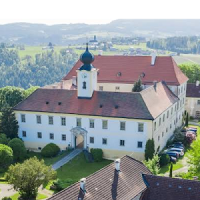
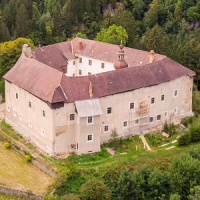
Zvikov Castle
Hrad Zvíkov
Information on the website. Weekend: Information on the website
Adult - 180CZK, Children's (0-5) - Free, Children's (6-17) - 50CZK, Students - 140CZK, Pensioners - 140CZK
www.hrad-zvikov.cz
Státní hrad Zvíkov, 397 01, Písek, Jihočeský kraj, Česká republika
49.438946, 14.192485 View map
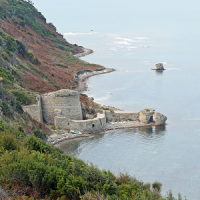
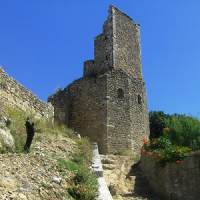
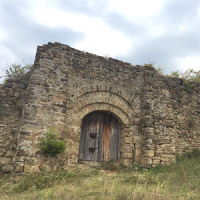
Zvikov Castle - Hrad Zvíkov, Pisek, South Bohemian Region, Czech Republic.
From its inception, the history of Zvíkov Castle has been linked to the royal Přemyslid dynasty. The first step toward its founding was likely taken by Přemysl Otakar I (1197–1230), who in 1226 exchanged the Oslov estate—previously the property of the Doksany Monastery—for six other villages. In doing so, he acquired the rocky promontory upon which the castle was subsequently built. Zvíkov ranks among the most significant examples of medieval secular architecture in Bohemia. The history of its gradual construction is most clearly documented during the reign of Wenceslaus I (1230–1253). By 1234, the castle must have been at least partially completed, as written records mention a burgrave, Konrad of Janovice, serving there. King Wenceslaus I frequently enjoyed staying at Zvíkov. When the young prince Přemysl Otakar rose in rebellion against his father in July 1247, Zvíkov Castle—along with Loket and Most—remained loyal to Wenceslaus I. It was also at Zvíkov that Wenceslaus I received a delegation representing his rebellious son and the Bohemian nobility, led by Bishop Nicholas of Prague, and had them imprisoned in the tower. Construction of the castle was continued by his son, Přemysl Otakar II (1253–1278); he made an excellent choice in appointing Hirzo as burgrave at Zvíkov in 1250. It was at this time that the major construction of the so-called Royal Palace and the fortifications began. The construction team building Zvíkov was simultaneously working on other projects in the royal town of Písek and in Myšenec. In 1306, the Přemyslid dynasty died out in the male line, and the castle was ceded to Henry of Rosenberg. The castle achieved its greatest renown during the reign of Charles IV (1346–1378), who had it thoroughly renovated and enjoyed staying there. Until the completion of Karlštejn Castle, Zvíkov served as a temporary repository for the coronation jewels. With the loss of this exclusive status, Zvíkov’s importance as a premier royal castle declined, and it began to change hands frequently. Two powerful families—the Lords of Rosenberg and the Lords of Švamberk—successively held the castle as a pledge.
During the Hussite Wars, the castle was besieged by the Taborites in 1429 (at which time it was held by Emperor Sigismund) but was not captured. In 1437, the castle was acquired once again by Oldřich of Rosenberg, a leader of the Catholic nobility. Zvíkov retained its character as a royal castle until the third third of the 16th century, when it was sold to the Lords of Švamberk (the sale was recorded in the Land Rolls by Maximilian II in 1575). The Švamberks carried out extensive Renaissance modifications to the dilapidated castle, though these did not compromise the structure's original character. The castle's outstanding fortification system enabled it to withstand attackers even during the Thirty Years' War. It was not until 1622 that the Zvíkov garrison surrendered to a superior force; the castle was subsequently looted and devastated by the imperial army.
In 1623, the Eggenberg family acquired the castle, and following the extinction of their line in 1719, it passed into the ownership of the Schwarzenbergs. Following the division of the family into two branches in 1790, Zvíkov passed into the ownership of the younger (so-called secundogeniture) branch, represented by Marshal Karl I. Schwarzenberg, who resided at nearby Orlík. It was only then that extensive stabilization work was undertaken: the chapel was repaired and the Late Gothic paintings were preserved first, but the masonry of the royal palace was already in such poor condition that the New Gate collapsed in 1829, followed by the collapse of a section of the palace overlooking the river. Consequently, the reconstruction of both the royal palace and the ramparts began after 1880. The original stone elements have a slightly pinkish hue and are easily distinguishable from the newly inserted sections. The work was completed at the turn of the 20th century, and Zvíkov once again became a masterpiece of Czech architectural art. The castle remained the property of the Schwarzenbergs until 1948.
22 sen 2026
0
0