- Articles
- Weapons
- Armor
- Armor for horses
- Emperor Armor
- Chivalry
- Chivalry
- Knights castle
- Knights tournament
- The Crusades
- Knightly Orders
- Knightly saddle
- Knightly motto
- Great Knights
- Price of armor
- Children's armor
- Castles and fortresses
- Museums of armor and weapons
- Coats of arms and heraldry
- Routes and excursions
- Guides


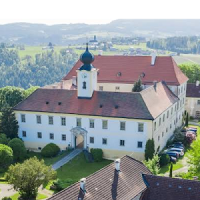
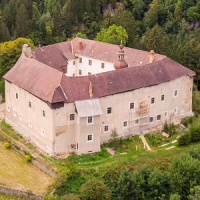
Sovinec Castle
Hrad Sovinec
Information on the website. Weekend: Information on the website
Adult - 180CZK, Children's (0-3) - Free, Children's (4-14) - 120CZK, Students -120CZK, Pensioners - 120CZK, Family (2+4) - 540CZK
www.mubr.cz/sovinec
Hrad Sovinec, 793 51 Sovinec, Moravskoslezský kraj, Česká republika
49.837437, 17.246030 View map
Sovinec Castle - Hrad Sovinec, Sovinec, Moravian-Silesian Region, Czech Republic.
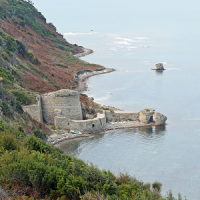
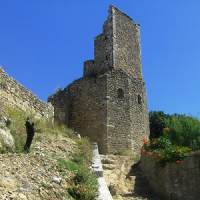
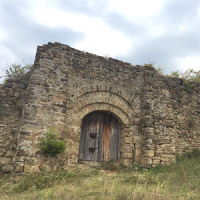
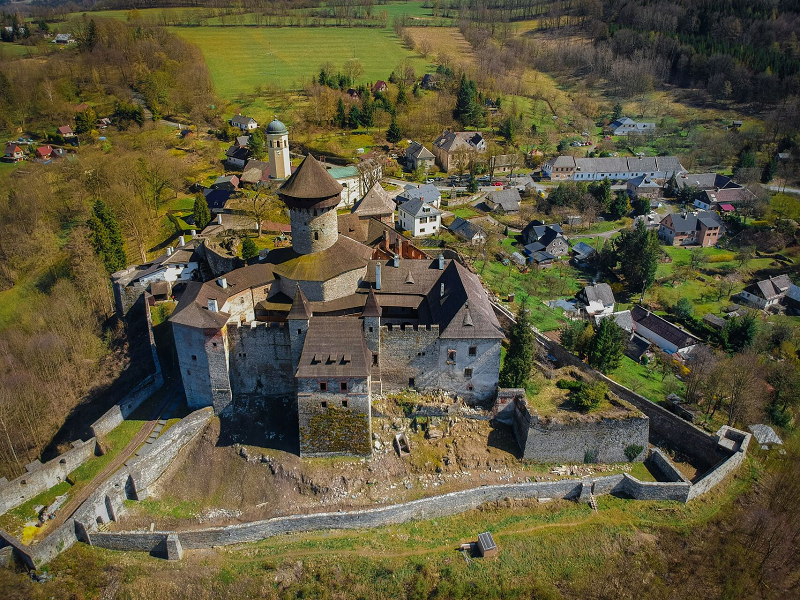
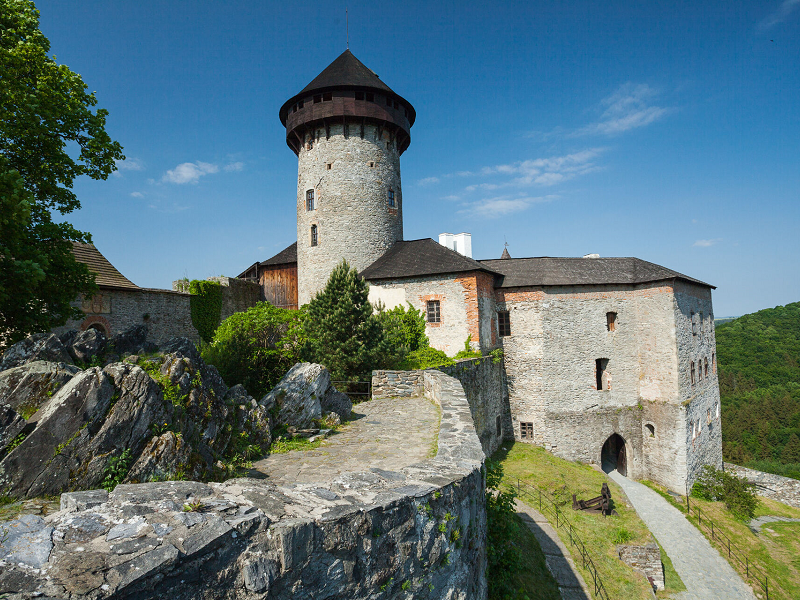
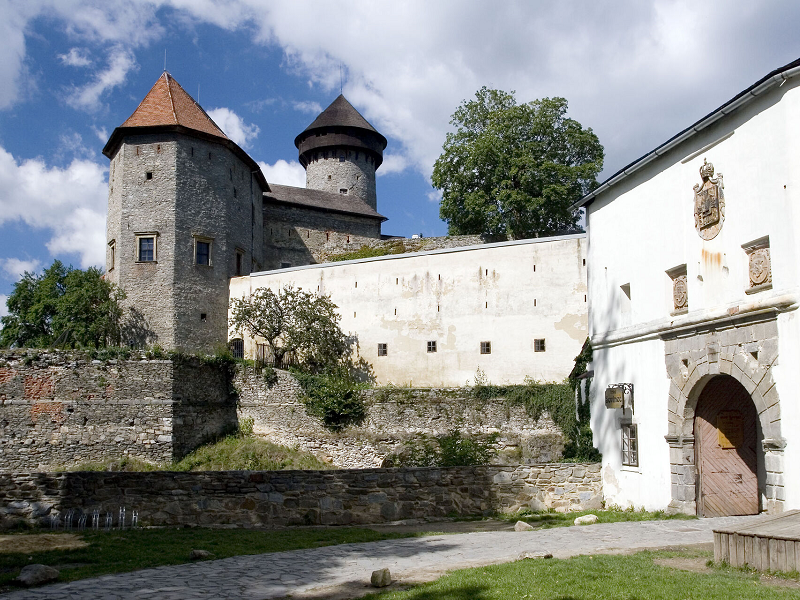
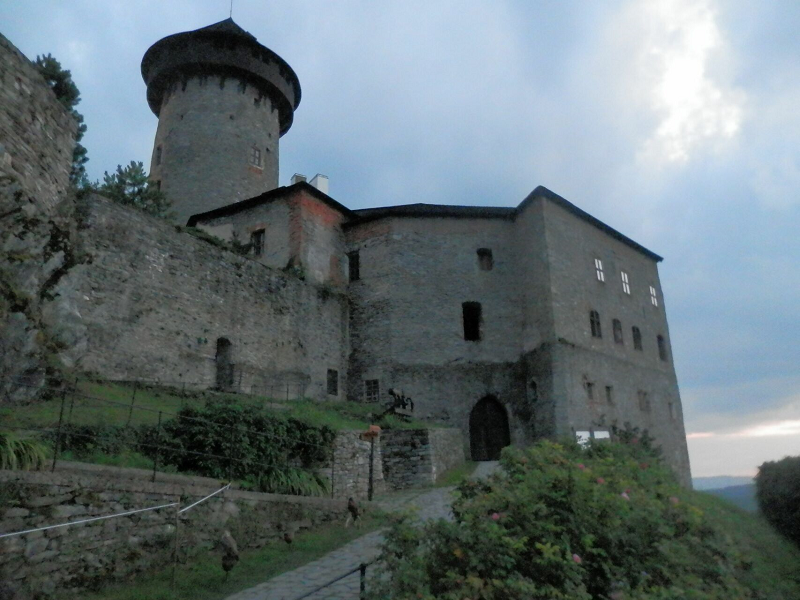
The original castle, founded between 1329 and 1332 by the brothers Pavel and Vok of the Moravian Hrutovic family, consisted of a cylindrical tower (bergfried) and a palace. At the turn of the 14th and 15th centuries, Vok’s son Pavlík of Sovinec constructed a narrow outer ward (parkán) around the castle core and fortified the outer bailey. Further expansion took place in the early 16th century under the Pňovský family of Sovinec with the construction of a courtyard featuring two palaces connected by a curtain wall; these structures were later renovated in the Renaissance style by the Lords of Boskovice during the third quarter of the 16th century. In the final quarter of the 16th century and the early 17th century, under Vavřinec Eder of Štiavnica and his son-in-law Jan the Elder Kobylka of Kobylí, the burgrave's house and the current third castle gate were built. Castle defenses were enhanced by a polygonal artillery bastion (the *Remter*), a new curtain wall to the southeast, the fortification of a rocky spur overlooking the valley known as "Cat's Head" (*Kočičí hlava*), and an advanced octagonal battery tower (which forms the lower section of the present-day church tower). The castle entrance was guarded by a massive Renaissance barbican featuring a substantial shield wall and the first castle gate.
From the first half of the 17th century, Sovinec served as the primary stronghold of the Teutonic Order within the Bruntál and Sovinec estates. Between 1627 and 1643, massive fortifications were constructed, including the St. George, Central, St. John, and William bastions, as well as the Klippel Curtain; the so-called New Bastion was built above the "Cat's Head" (*Kočičí hlava*) section. These defenses were complemented by walled moats, outer palisades, and the advanced *Lichtenštejnka* artillery bastion. However, even these fortifications could not withstand the onslaught of Swedish forces; led by Lennart Torstensson, they captured the castle after fierce fighting between September 16 and October 7, 1643, and held it until 1650. The castle's military importance gradually declined, and it was disarmed in the mid-18th century. Thereafter, only minimal maintenance was carried out. Following a fire in 1784, the castle tower and the southern palace were reduced in height by one story. The castle's gradual decay—at one point in the early 19th century, parts were even sold off as building material—was halted in the 1840s. At that time, the Church of St. Augustine was built in front of the castle, with the castle's raised octagonal artillery tower serving as its bell tower; a building was also erected in the sixth courtyard, serving initially as a seminary for the Order and later, in the final third of the 19th century, as a forestry school. Final structural modifications, completed in 1904, transformed the castle into a summer residence for the Grand Master of the Teutonic Order. During World War II, French officers were imprisoned at the castle. The castle burned down as the front line passed through the area in early May 1945; only the former stables and the buildings in the outer bailey remained intact. Stabilization work began as early as 1951, and reconstruction efforts have continued with varying intensity to this day.
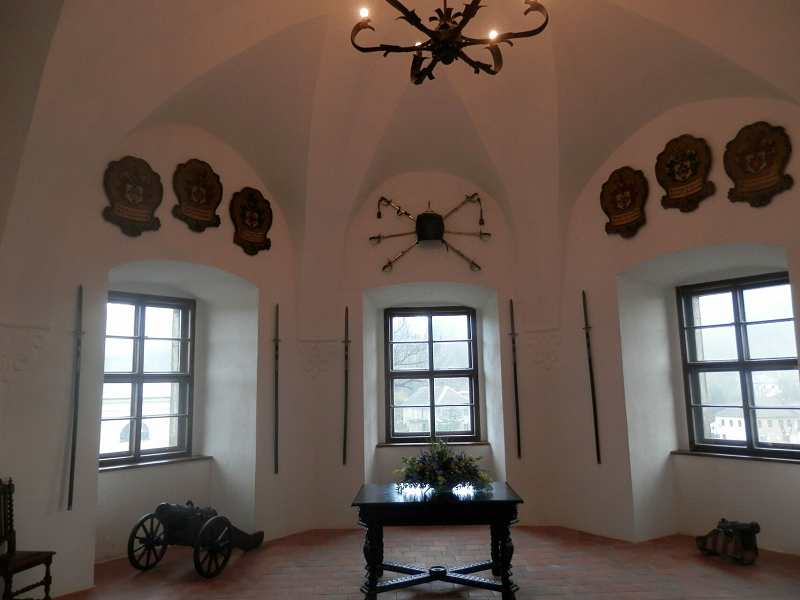
Sovinec Castle was nationalized in 1945 and placed under the administration of the Bruntál Museum in 1965. Exhibitions detailing the site's history are housed in the castle's restored areas—including the South Palace, the Burgrave's House, the stables, the "Remter" hall, and the gatehouses—while the main tower offers views of the beautiful landscape of the Sovinec Nature Park.
Sovinec hosts occasional exhibitions and cultural events—such as performances by fencing groups, theater troupes, and musicians—as well as demonstrations of traditional crafts.
8 okt 2026
0
0