- Articles
- Weapons
- Armor
- Armor for horses
- Emperor Armor
- Chivalry
- Chivalry
- Knights castle
- Knights tournament
- The Crusades
- Knightly Orders
- Knightly saddle
- Knightly motto
- Great Knights
- Price of armor
- Children's armor
- Castles and fortresses
- Museums of armor and weapons
- Coats of arms and heraldry
- Routes and excursions
- Guides


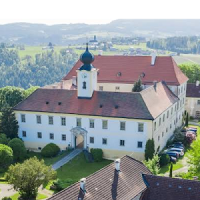
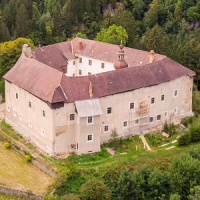
Rokstejn Castle
Hrad Rokštejn
Around the clock. Weekend: No
www.brtnice.cz/hrad-rokstejn
Panská Lhota, 588 22 Brtnice, Kraj Vysočina, Česká republika
49.333626, 15.726043 View map
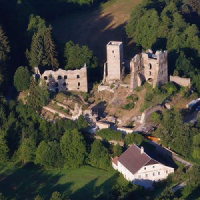
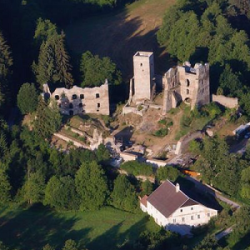
Rokstejn Castle - Hrad Rokštejn, Brtnice, Vysocina Region, Czech Republic.
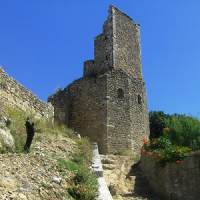
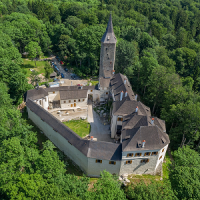
Rising above the valley is Rokštejn Castle, featuring the remains of two residential palaces and a massive, 17-meter-tall rectangular tower. The castle is first mentioned in historical records in 1289. Around 1359, the Moravian Margrave John Henry incorporated the castle into his estates. Between 1396 and 1399, the castle came into the possession of the Valdštejn family. After it was damaged during the Hussite Wars, the Valdštejns relocated their seat to Brtnice and abandoned Rokštejn. Extensive reconstruction of the entire complex took place under John Henry. Essentially, only the main rectangular tower remained from the original castle, though it was heightened by an additional story. The newly built palace featured a large ceremonial hall on the first floor, likely adjacent to a chapel—a wall niche for the sacrament (aumbry) has survived to this day. A new curtain wall enclosed the Upper Castle, as well as the Lower Castle, which housed the lower palace and a second rectangular tower. Ceremonial rooms on the lower floors of both palaces were adorned with floors of relief-patterned tiles. Hip roofs were covered with pantiles. During this period, the castle was heated by fireplaces and tiled stoves. The result of John Henry’s reconstruction—completed before 1380—was a so-called "double castle" with an outer ward (parkán); a gate in the northern curtain wall provided entry into the castle proper, a massive structure with triple fortifications covering a total built-up area of nearly 0.6 hectares. After 1400, the Wallenstein family primarily expanded the existing structures through additions. They added another story to the Upper Castle palace, installed a hot-air heating system in the Lower Palace, and built a new service wing in the lower section of the castle, among other improvements. Archaeological research at Rokštejn Castle—originally initiated as a rescue project—began in 1981. Today, it ranks among the most extensive research projects of its kind regarding medieval monuments, not only in the Czech Republic but across Central Europe. From the project's inception until his untimely death, the research was led by Prof. Zdeněk Měřínský (1948–2016) from the Faculty of Arts at Masaryk University in Brno.
7 okt 2026
0
0