- Articles
- Weapons
- Armor
- Armor for horses
- Emperor Armor
- Chivalry
- Chivalry
- Knights castle
- Knights tournament
- The Crusades
- Knightly Orders
- Knightly saddle
- Knightly motto
- Great Knights
- Price of armor
- Children's armor
- Castles and fortresses
- Museums of armor and weapons
- Coats of arms and heraldry
- Routes and excursions
- Guides


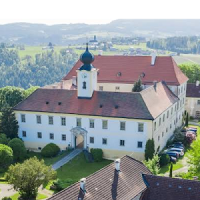
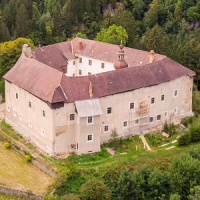
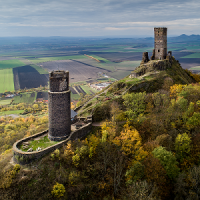
Cheb Castle
Hrad Chebský
Adult - 120CZK, Children's (0-5) - Free, Children's (6-15) - 60CZK, Students -60CZK, Pensioners - 60CZK, Family (2+2) - 300CZK
www.hrad-cheb.cz
Dobrovského 21, 350 02 Cheb, Karlovarský kraj, Česká republika
50.080956, 12.366159 View map
Cheb Castle - Hrad Chebský, Cheb, Karlovy Vary Region, Czech Republic.
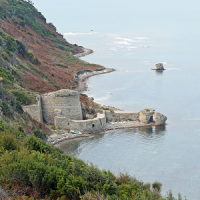
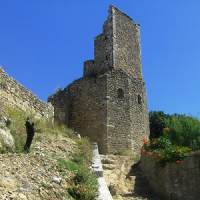
The long history of Cheb Castle began as early as the start of the 12th century. Its story is linked, among others, to the powerful House of Hohenstaufen, which produced a number of Holy Roman Kings and Emperors. It was one of them—the famous Frederick Barbarossa—who, in the late 12th century, had the original structure rebuilt into an imperial *Pfalz* (palace complex), the only example of this type of castle architecture in the Czech lands. Surviving to this day are the remains of the once-magnificent palace, the mighty defensive Black Tower, and, above all, the unique double chapel—combining Romanesque and Gothic styles—dedicated to Saints Martin, Erhard, and Ursula.
Frederick Barbarossa visited the castle repeatedly in person, holding Imperial Diets there; he even stayed at the site shortly before departing for the Third Crusade, during which he met an unexpected death in the swift currents of the Saleph River. However, Frederick was not the only monarch hosted within the cozy chambers of Cheb Castle; it was also visited by Charles IV—known as the "Father of the Nation"—and the Hussite King George of Poděbrady. The castle also endured turbulent and trying times, witnessing numerous wars and sieges. Hussite wagons rumbled past its walls; during the Thirty Years' War, mercenaries in Swedish service brandished their weapons there; and in the 1740s, the castle was ravaged by fire and sword by the troops of the French King Louis XV, who was at war with the only woman to sit on the Czech throne—the indomitable Maria Theresa. Every proper castle has its own ghost, and Cheb Castle is no exception; for centuries, the last loyal companions of Albrecht von Wallenstein—who fell victim to a murderous rampage on the evening of February 25, 1634—have wandered its grounds in sorrow. The castle underwent its final phase of development at the turn of the 17th and 18th centuries, when it was partially rebuilt into a Baroque fortress citadel.
10 okt 2026
0
0