- Articles
- Weapons
- Armor
- Armor for horses
- Emperor Armor
- Chivalry
- Chivalry
- Knights castle
- Knights tournament
- The Crusades
- Knightly Orders
- Knightly saddle
- Knightly motto
- Great Knights
- Price of armor
- Children's armor
- Castles and fortresses
- Museums of armor and weapons
- Coats of arms and heraldry
- Routes and excursions
- Guides


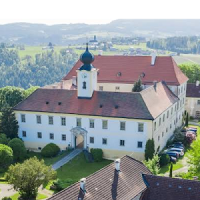
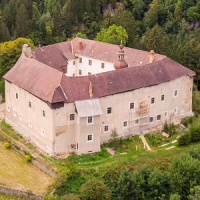
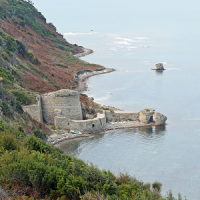
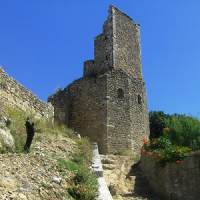
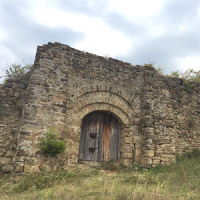


Havre Castle - Kasteel Havré - Château de Havré, Havre, Hainaut Province, Wallonia, Kingdom of Belgium.
The casle of Havré as we know it today was built on the remains of a 12th century feudal fortress. A stronghold was built there, serving as an important defensive position for the earldom of Hainaut. Remains of the stronghold can still be seen in the present castle which has undergone many changes over the centuries.
As the Lord of Hainaut has sided with the States General, the feudal castle was besieged in 1578 by 6000 of Don Juan’s men before conditionally surrendering. On 23rd July of the same year, it was shelled, retaken and burnt by the Duke of Anjou.
Reconstruction started in 1600 and was completed under Charles Alexander de Croy-Havré, one of the greatest lords of his times in the Low Countries.
The castle has always belonged to important families, and has therefore has an outstanding history, particularly under the Marquises and later the Dukes of Havré, a branch of the illustrious house of the Croy.
During the Renaissance, the castle was transformed into a wealthy residence where many celebrities stayed, such as Rubens in January 1622, Van Dyck, a close friend of the Croy-Havré family, Marie of Hungary in 1537, Marie de Medicis and the Infanta Isabella in 1631, Prince Eugène of Savoy and the Duke of Marlborough in 1709. Ambroise Pare (1569), the famous surgeon, was sent to the castle by King Louis IX of France to attend Philippe de Croy, who had been wounded by a harquebus shot at the battle of Montcontour.
During the french occupation, the castle was sold as a national estate on the first of Nivôse (fourth month), year 7 of the republican calendar, and bought back by Mme Adelaïde de Croy in 1807.
The de Croy having abandoned the castle in 1839, it was sold to the Canon Puissant in 1919, who tried to save it. Unfortunately it was an insurmontable task. So Canon Puissant sells it to an American who wanted to rebuild the castle in America. Il was a good thing that the Province of Hainaut vetoes his demand. In the impossibility to sell the castle, the American transferred it to the Province of Hainaut. It was then forgotten, in spite of being listed in 1936.
23 aug 2026
0
0