- Articles
- Weapons
- Armor
- Armor for horses
- Emperor Armor
- Chivalry
- Chivalry
- Knights castle
- Knights tournament
- The Crusades
- Knightly Orders
- Knightly saddle
- Knightly motto
- Great Knights
- Price of armor
- Children's armor
- Castles and fortresses
- Museums of armor and weapons
- Coats of arms and heraldry
- Routes and excursions
- Guides


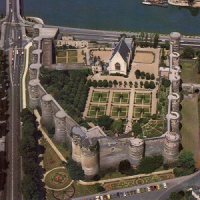
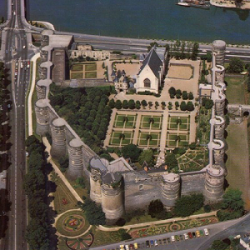
Angers Castle
Château d'Angers
www.chateau-angers.fr
2 Promenade du Bout du Monde, 49100 Angers, Maine-et-Loire, Pays-de-la-Loire, République Française
47.470006, -0.560000 View map
Angers Castle - Château d'Angers, Angers, Maine and Loire, lands of the Loire, French Republic.
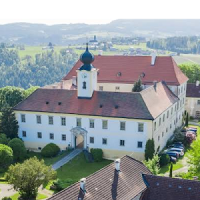
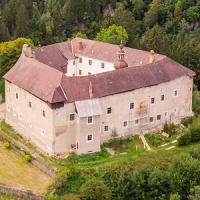
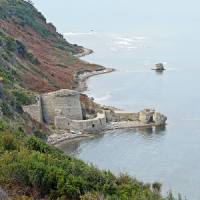
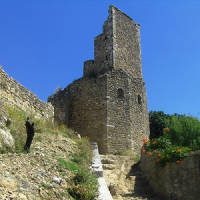
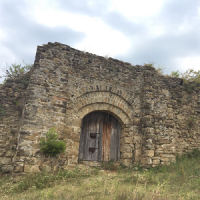
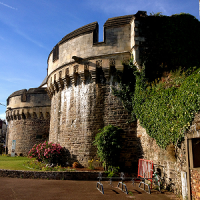
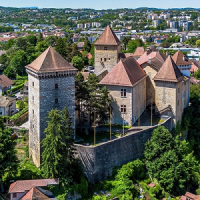
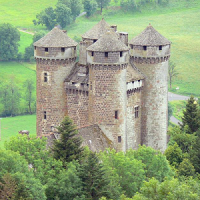
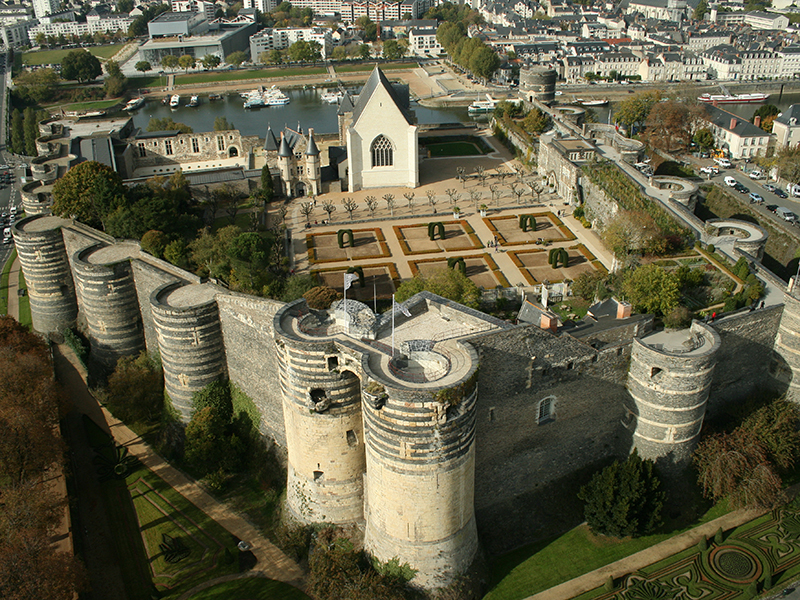
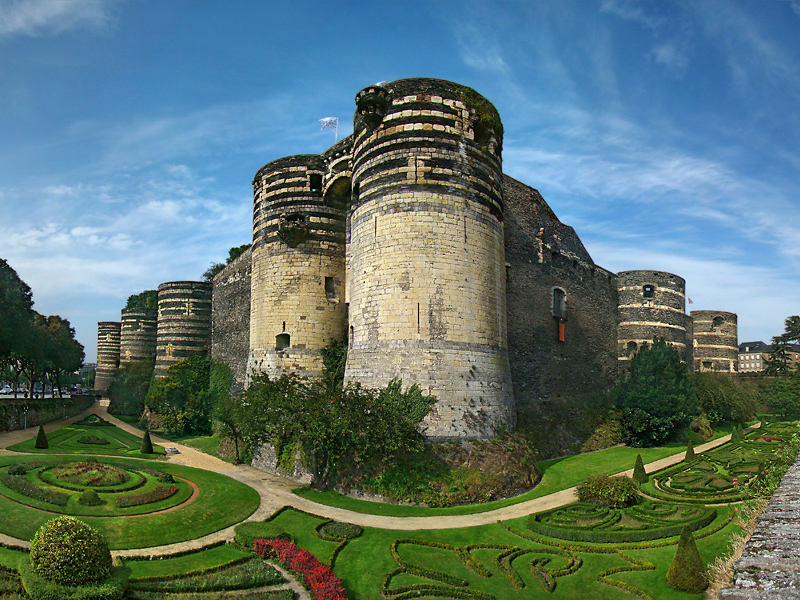
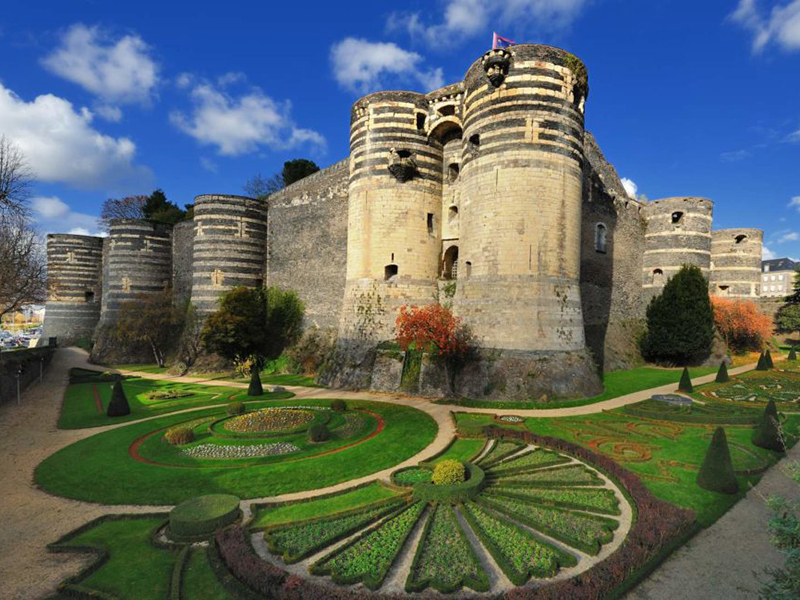
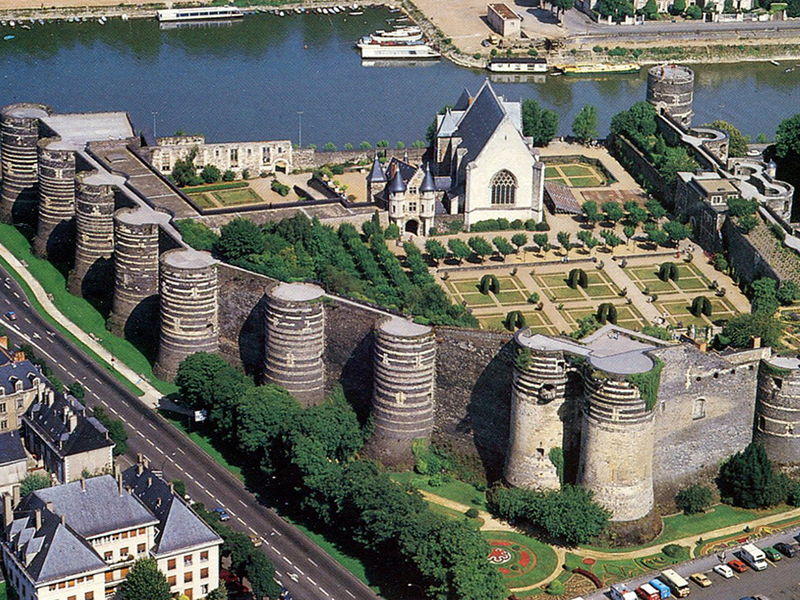
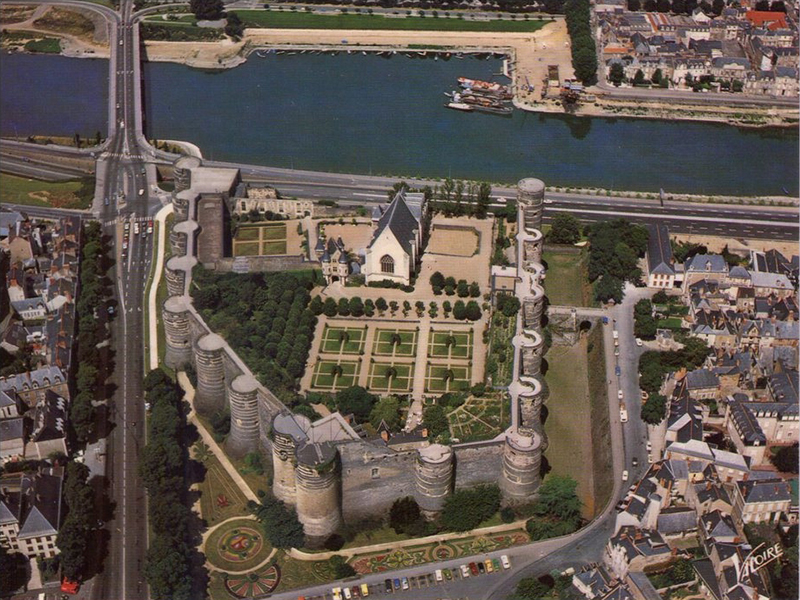
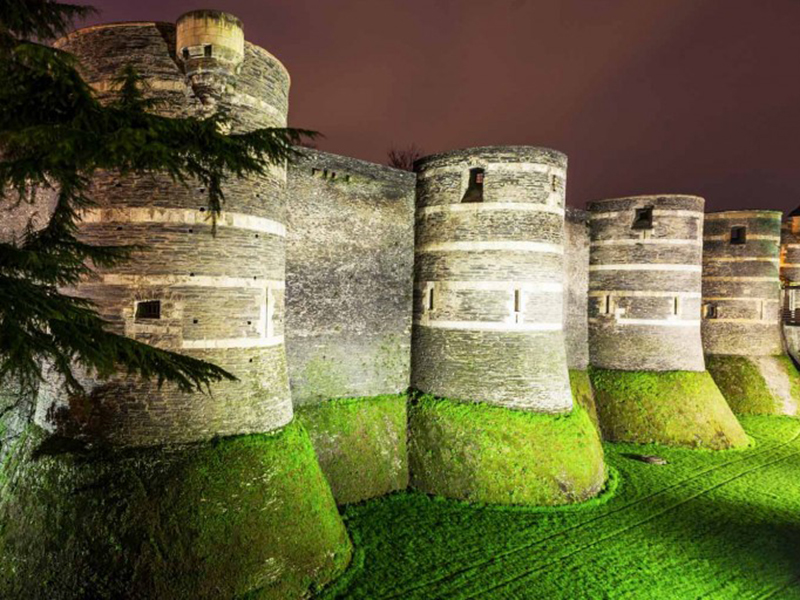
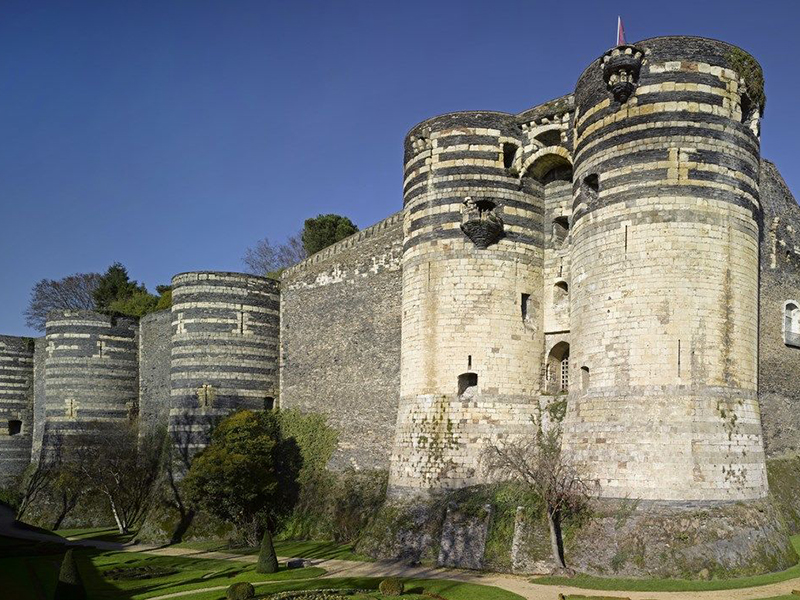
Angers Castle—also known as the Castle of King René the Good or the Castle of the Dukes of Anjou—is located in the city of Angers, in the Maine-et-Loire department of France.
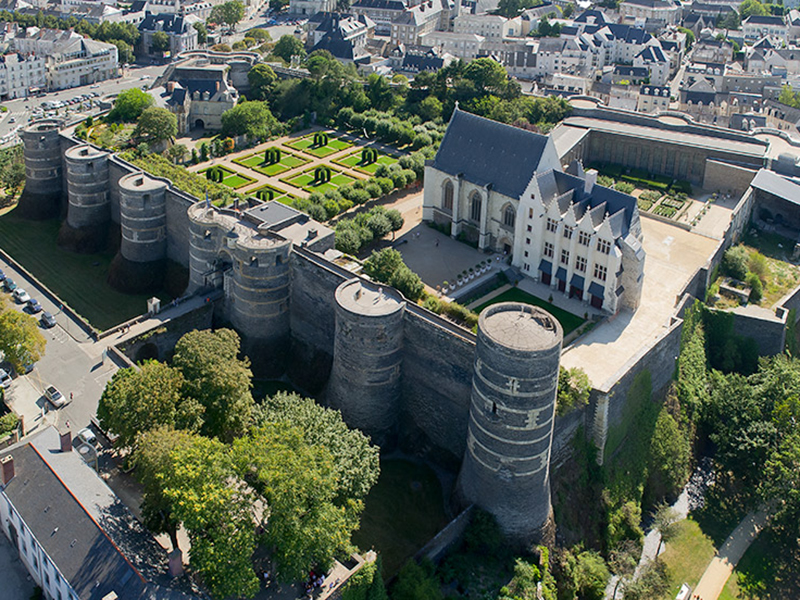
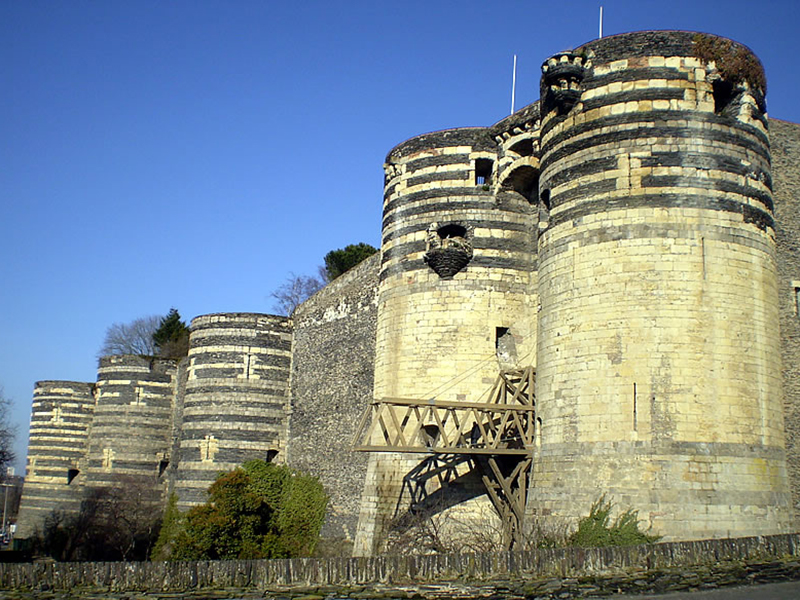
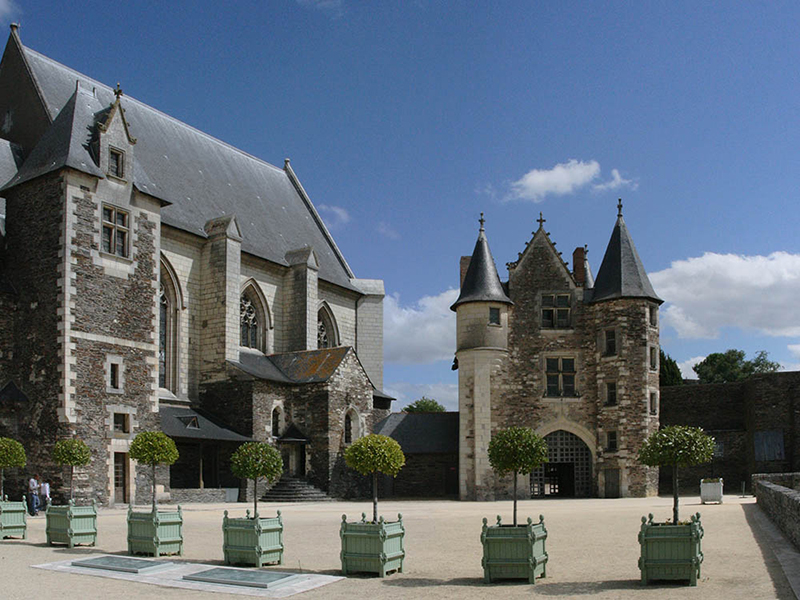
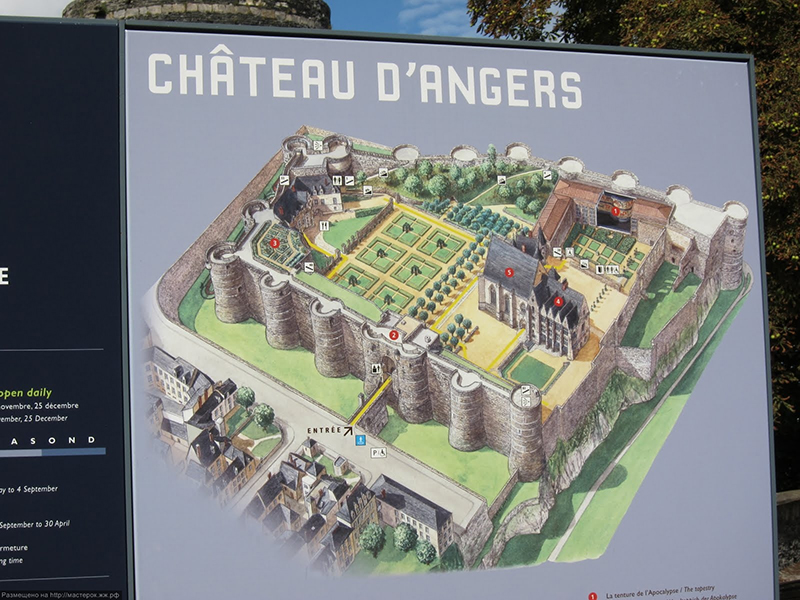
Originally, the site featured a wooden fortification that was repeatedly plundered by the Vikings. In the 11th century, by order of Geoffrey II, a stone castle was constructed. Subsequently, the city of Angers attained the status of an "itinerant capital" for the English kings; Henry II Plantagenet and Richard the Lionheart both stayed here on several occasions. In the early 13th century, following the death of Richard the Lionheart, the French king Philip II reconquered these territories, along with Maine, Normandy, and Brittany. Over the centuries, the castle continued to be expanded and improved: new royal chambers and a chapel were added, and the surrounding grounds were landscaped with parks and gardens. Flowers and shrubs were brought in from the family estate in Provence, and a unique menagerie was established—a precursor to the modern zoo. During the reign of Louis XI, the castle’s defenses were bolstered by an additional dry moat, and its artillery was upgraded. In 1562, Queen Catherine de' Medici further fortified the castle to withstand the military artillery of the era. Upon ascending the throne, Henry III—fearing that the fortress, should it fall into the hands of the Protestants, would become an impregnable stronghold for them—ordered that 17 of its towers be razed to the level of the curtain walls, effectively turning them into simple wall sections. Throughout the years that followed, the castle’s fate took many different turns. It was converted into a prison and later housed a military academy for officers; during the Second World War, it served as a garrison and an ammunition depot. In 1940, Angers was occupied by the Nazis, and by 1942, the site had become a regional headquarters for the Gestapo. Angers was liberated in 1944.
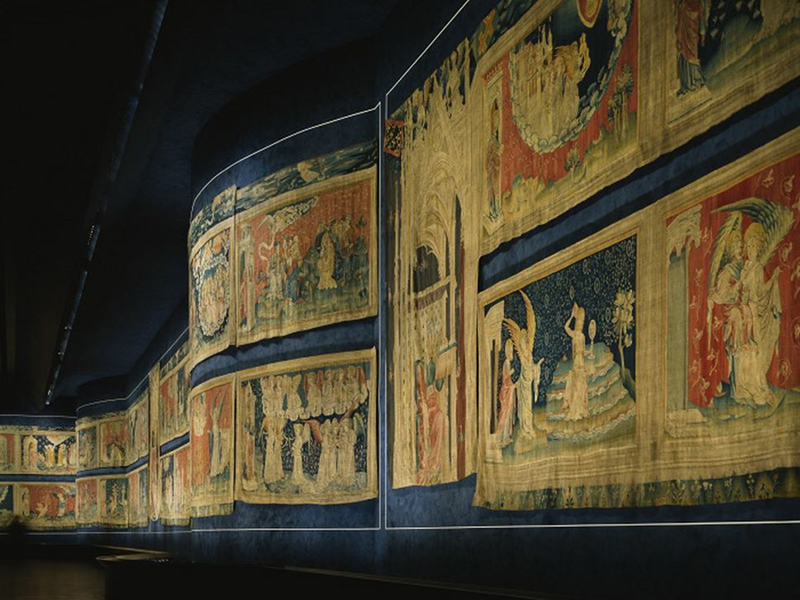
Since the beginning of the 21st century, the castle has belonged to the city of Angers. Visitors can explore parts of the ramparts and the chapel, as well as the gallery housing the "Angers Apocalypse" tapestries—a renowned work of art. It is also possible to climb the Mill Tower (Tour du Moulin) to enjoy panoramic views of the city.
27 okt 2026
0
0