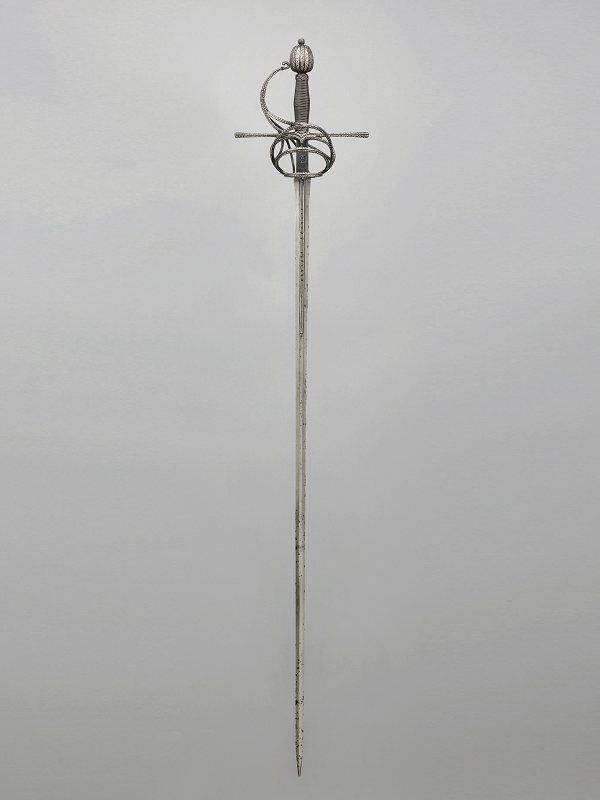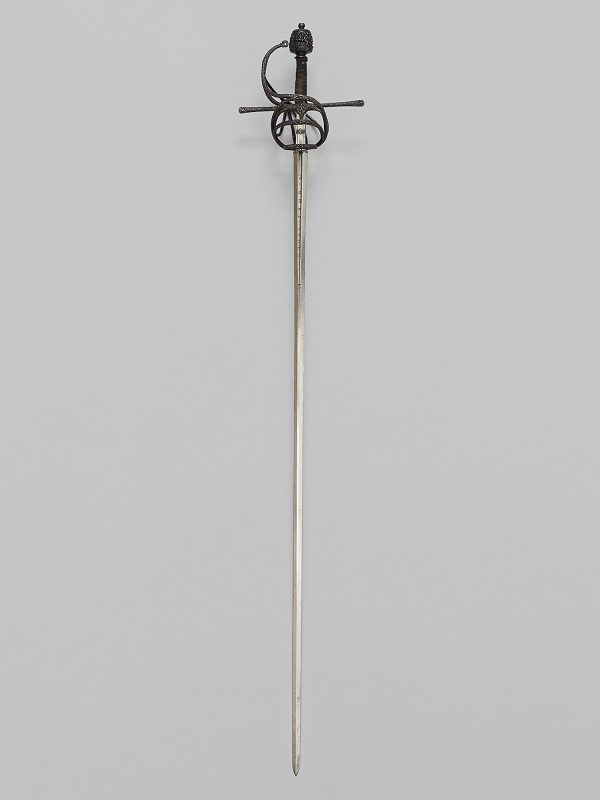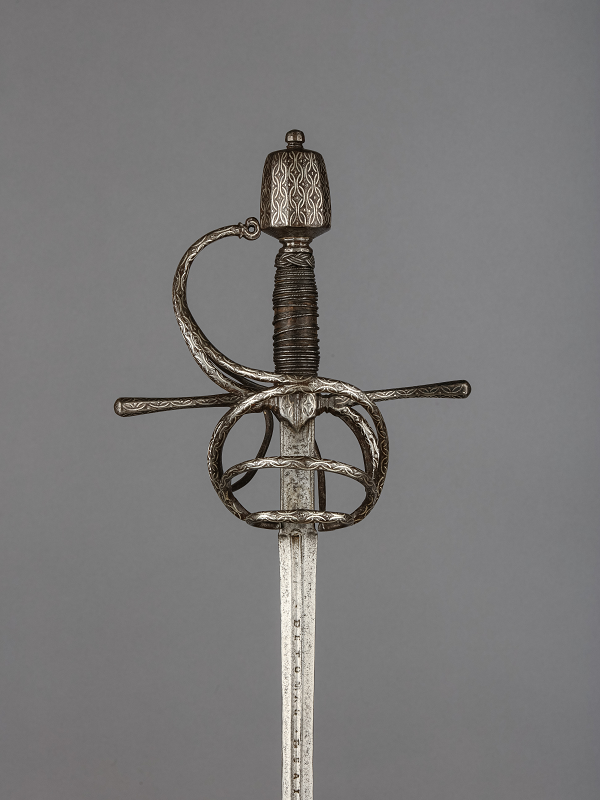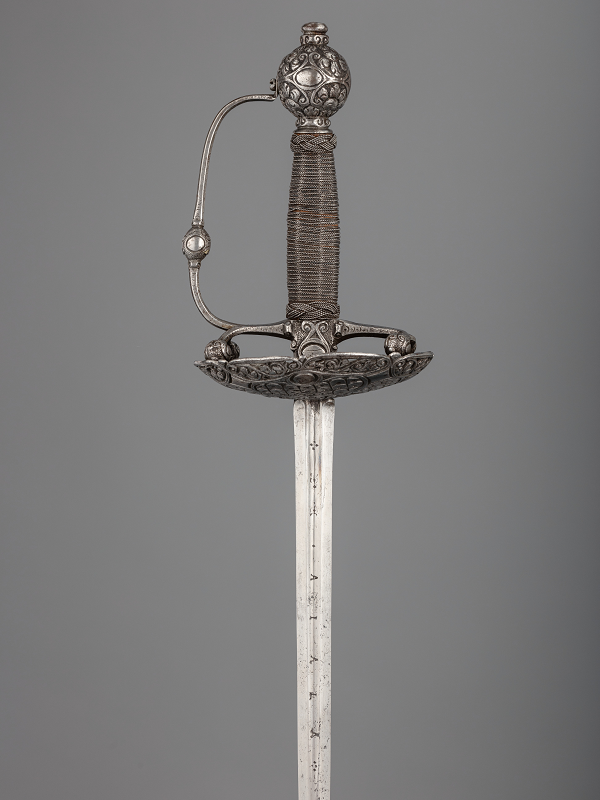

Tomás de Ayala, (1570-1625), Toledo, Spain.
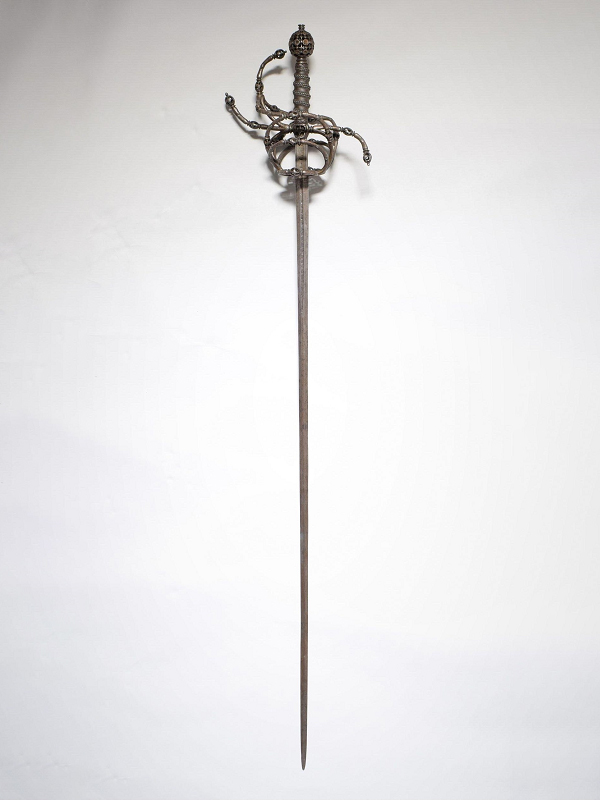
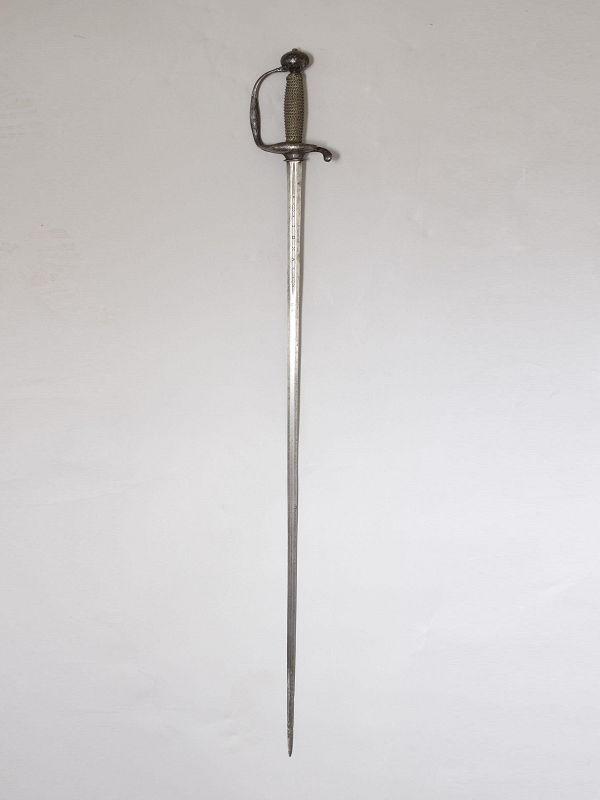
Master of the "Thomas blades," once so famous in Spain and France. His ancestors date back to 1510 to Diego and Juan de Ayala, who worked in Barcelona. They are mentioned in the fifth book of Juan de Arfa Quilatador. Diego notes that he was a merchant in Castile, and his son Juan was a goldsmith to Queen Isabella the Catholic. His activity spanned the period from 1566 to approximately 1620. His productivity was exceptionally high, and his business was extremely extensive. His blades are distinguished by the highest iron purity. Thomas produced only flexible rapiers and fencing blades; rigid thrusting blades, so-called "estocs," are not found among his works. His particularly fine rapiers are uncavated, blued, and his name is engraved in gold. Details of his personal life are unknown.
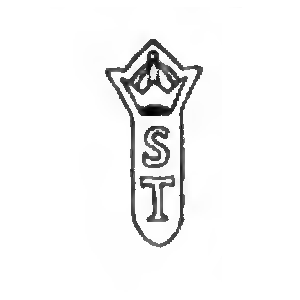
Ayala's works are largely housed in the arms collections of Paris, Berlin, Brussels, and Vienna. He did not always mark his works consistently. In the Vienna art collections, we find the blade of a fine rapier (A1028) that, in addition to the crowned letter S, also bears another leaf-shaped mark. However, Thomas's actual mark is the one that, albeit only in passing, indicates Palomino and is a crowned shield with the letters S and T superimposed. The blade of a fine rapier in the Artillery Museum (J. 97), dating from the mid-16th century, was probably marked somewhat later. In contrast, a fine blade (J. 126) bears the aforementioned ST mark, contemporary with the hilt, which bears the year 1570. The blade of a German rapier (J. 152) from the second half of the 16th century, housed there, bears only the name and mark of Toledo. Another fine rapier (f. iSQ) in the same museum bears a slightly different inscription: TOLEDO. TOMAS D*AIALA. Its origin is doubtful and probably French. The hallmark on the rapier blade in Berlin is illegible.
In the Royal Museum in Brussels, where the master’s works are most numerous, we find no less than twenty-five rapiers (from 35 to 59) with blades made by his hand, as well as a 17th-century rapier blade: DE . TOMAS . DE . AIALA (78), another blade from the turn of the 16th century (83), and finally, a cavalry rapier blade. The last three were acquired in Spain in 1839.
Blade B. 181 on a sword in the Royal Arms Collection in Copenhagen bears the name and the well-known hallmark ST.
The master’s son, Luis, is less well known, and his blades are extremely rare. According to Palomino, it bears his father's famous ST mark, as well as a crowned shield with the letter L. We know of only one blade made by him—a sword (B. 135) in the Royal Collection of Historical Arms in Copenhagen. It bears the inscription typical of Milanese blades: Jesus Maria, the name Luis de Aiala, and his father's mark, but lacks the other mark mentioned by Palomino.
The maker is also represented by a blade on a rapier in the Moscow Armory (5752); here one can read the name TOMAS . AIAL.
Source: Meister der Waffenschmiedekunst vom XIV. bis ins XVIII. Jahrhundert, Wendelin Boeheim, 1897, Berlin, 4
Weapons of the great master you can see:
The Wallace Collection, London, Greater London, United Kingdom.
Victoria and Albert Museum, London, Greater London, United Kingdom.
The Metropolitan Museum of Art, New York, New York, USA.
Hofjagd- und Rüstkammer, Wien, Republik Österreich.