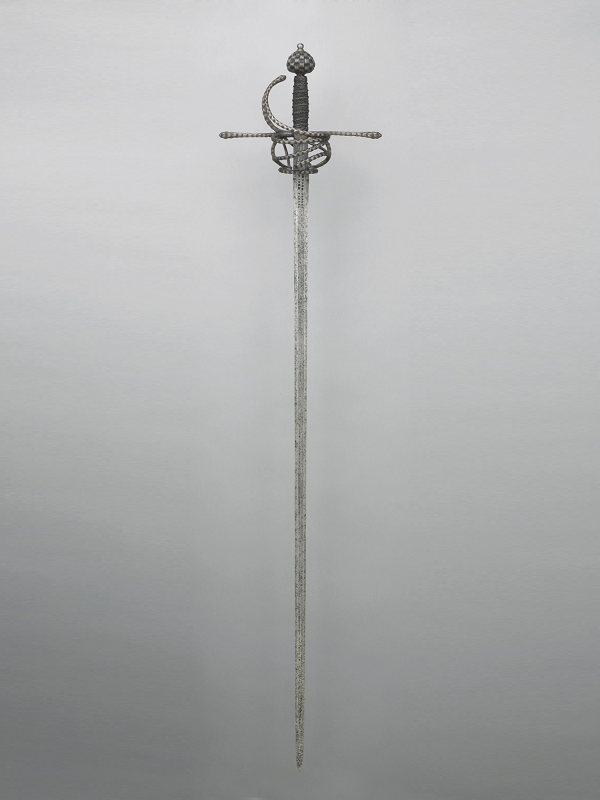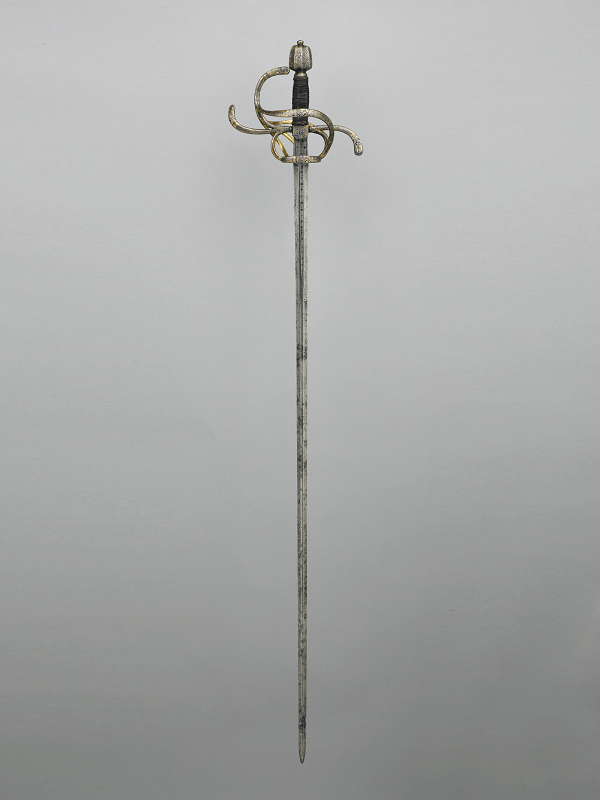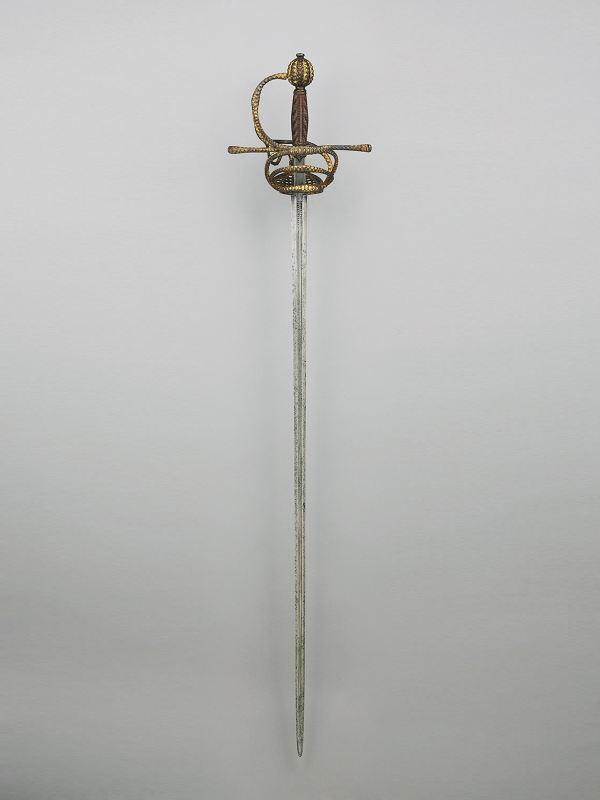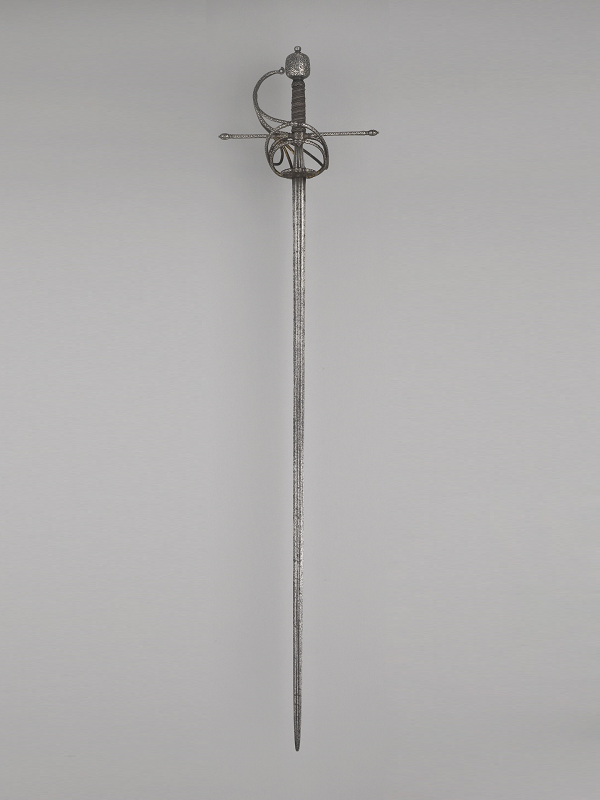
Andrea Ferrara, (about 1530-1590), Belluno, Italy.
Of the two brothers, Andrea is the more famous. They initially worked in Belluno in the workshops of Gianbattista Barcelloni in Fisterre. The family name, contrary to the erroneous assumptions of some writers, such as Smiles and his translators, does not derive from Ferrara; as baptismal records reveal, they originated in Fonzaso. In the records of Belluno Cathedral and the parish register, to which the Fisterre workshops belonged, the names Ferrere, Ferraro, Ferrari, and usually Ferrara appear; this spelling is certainly derived from their occupation, Ferrajo. The birth years of Andrea and his brother Gianbattista Barcelloni have not been found anywhere, but the records show that by 1567 both were already masters and managers of the aforementioned workshops.
Their names are not readily available. According to the parish church records of Cusighe, Andrea married in 1567. He must therefore have been around 30 years old at that time, suggesting his birth year was around 1530. His first son was born in 1568, and as the cathedral records show, he married a second time in 1583.
Andrea's blades bear his full name, along with the initials I. H. S., but often they are also unmarked. These, as well as those of his brother, are frequently forged and labeled with names that could easily be misleading upon superficial reading, such as Andree Ferare, etc. Giandonato's blades are invariably marked ZANDONA; all others are forgeries, mostly from Seravalle and the surrounding area. In Belluno, it is particularly emphasized that Andrea sold his blades in a spirally rolled state. However, this was an imitation of the Toledo smiths, who first and later generally shipped their blades rolled. The year of death of the two masters has not yet been determined. Andrea is believed to have died around 1590.
A large dagger with a 41-inch blade, made by him, was part of the renowned Soeler Collection in Augsburg.
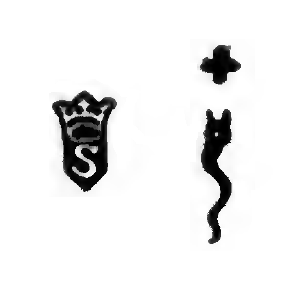
Many of his blades, though not all, bore a crowned "S" as a mark, imitating the blades of the Sahagún family. Blades by Andrea and his brother can be found in the Royal Palace in Stockholm (Galleries 71 and 74).
In the armory of the Imperial House in Vienna, there is an Italian blade by Andrea on a Landsknecht sword bearing his name and a cross-shaped mark at the base, a mark that appears only very rarely in connection with this master.
An Italian sword bearing the name "Andrea Feraro" on the blade was exhibited at the Kuppelmayer Collection auction in 1895. This sword also bore a snake stamped beneath the aforementioned cross. It was dated 1530-1560.
The catalog of the Musée d'Artillerie in Paris lists no blade by these masters. A blade on a basket-hilted rapier in the Royal Historical Arms Collection in Copenhagen (B 20) bears the name Andreas with the initials I. H. S. A fine and beautiful blade by Ciandonato can be seen in the Arsenale in Venice, and another, no less well-crafted one, is in the small but valuable and well-organized armory in Rothenburg. Blades by both masters are not uncommon in private collections, where their value is generally not recognized. For example, as mentioned, the Soeter Collection in Augsburg contained that long dagger with an excellent blade by Andrea, which went completely unnoticed.
Source: Meister der Waffenschmiedekunst vom XIV. bis ins XVIII. Jahrhundert, Wendelin Boeheim, 1897, Berlin, 68
Weapons of the great master you can see:
The British Museum, London, Greater London, United Kingdom.
The Wallace Collection, London, Greater London, United Kingdom.
Victoria and Albert Museum, London, Greater London, United Kingdom.