
Peter von Speyer (activ 1524-1560/62), Brunswick, Germany.
Peter von Speyer is the ancestor of a long line of gunsmiths whose lineage dates back to the 17th century in Saxony. His year of birth and place of origin are unknown, and although his surname suggests Rhenish origins, it could only have been inherited by the earliest ancestors of the family. People with this surname are known to have lived in Augsburg even before the master's death.
Peter's name first appears in records in the last years of his life, namely in 1559. However, several references in these records indicate that he had worked at the Saxon court for several years prior. A letter from Elector Augustus dated December 12, 1559, mentions a cuirass made by the master for King Frederick II of Denmark. Since Augustus was personally present in Copenhagen for Frederick's coronation in 1559, it can be assumed that Peter was in his entourage that day. The letter also mentions a cuirass made for Count Peter Ernst von Mansfeld, a respected engraver from Pallium*, the order for which likely dates back to 1557, the year of the Count's return from French captivity. The letter also states that Augustus commissioned a cuirass similar to the one made for King Frederick II, and that both were to be completed by Shrove Tuesday (February 25) 1560.
A letter from Elector Joachim II of Brandenburg, dated March 15, 1560, indicates that Peter was summoned to Dresden by Elector Augustus and from there sent to Berlin to receive orders from Joachim, who intended to make "a cuirass and other armor." Peter completed this commission only the following year, as evidenced by Joachim's letter to Augustus dated June 30, 1562, which indicates that the master had previously visited Berlin, stayed there for an extended period, and completed all the work to his complete satisfaction.
This richly engraved suit of armor, made for Joachim, is apparently the same one that is still housed in the Royal Armoury in Berlin. This assumption is all the more likely because the engraved mark "1560" appears on it in several places. The fact that the mark is etched, rather than stamped as is customary, suggests that Peter also performed the engraving himself.
Shortly after returning from Berlin, Peter von Speyer died. A letter dated July 12, 1562, attests to the "old gunsmith"'s distinguished and renowned workshop and extensive output, but also mentions that his son, Wolf von Speyer, commissioned him for "the most important work in several years." Wolf was one of Germany's finest and most prolific gunsmiths, and unfortunately, since he presumably did not use a hallmark, we cannot positively identify any of his undoubtedly numerous works. The aforementioned work for Joachim II of Brandenburg, blued and decorated with black etched ornamentation, is also the only work by his father to bear his maker's mark. The lines contain floral ornamentation in the style of Aldegrever, interspersed with heraldic images and figures in the manner of Lucas Cranach. Although other works held in various collections may exhibit stylistic similarities to the work in question, such observations are not sufficient to definitively attribute them to his oeuvre.
Source: Meister der Waffenschmiedekunst vom XIV. bis ins XVIII. Jahrhundert, Wendelin Boeheim, 1897, Berlin, 206
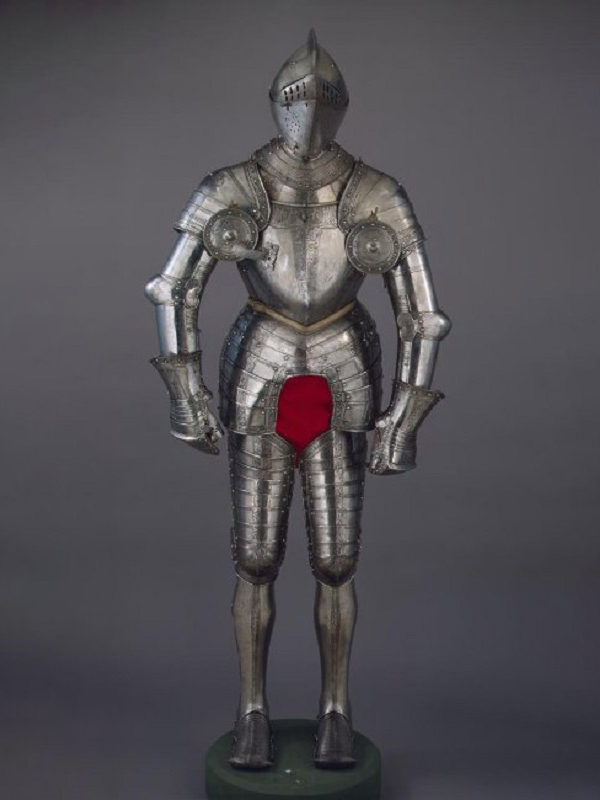
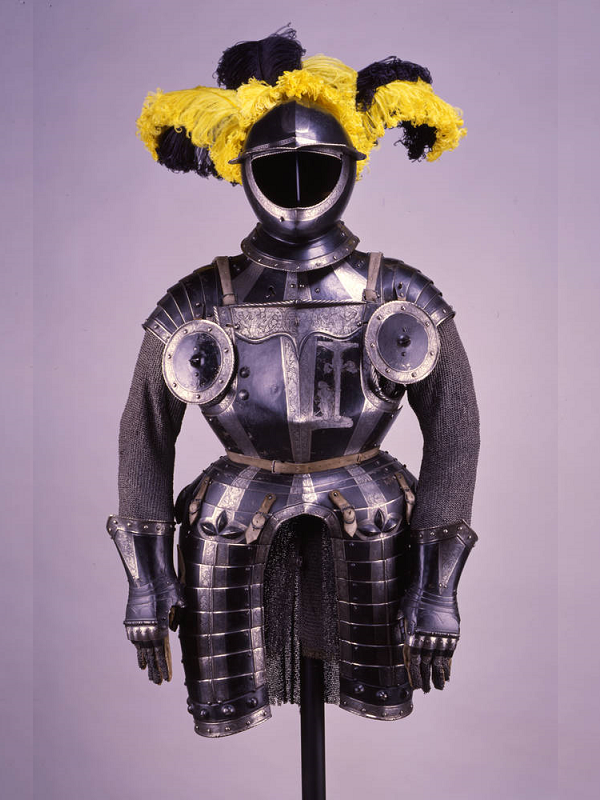
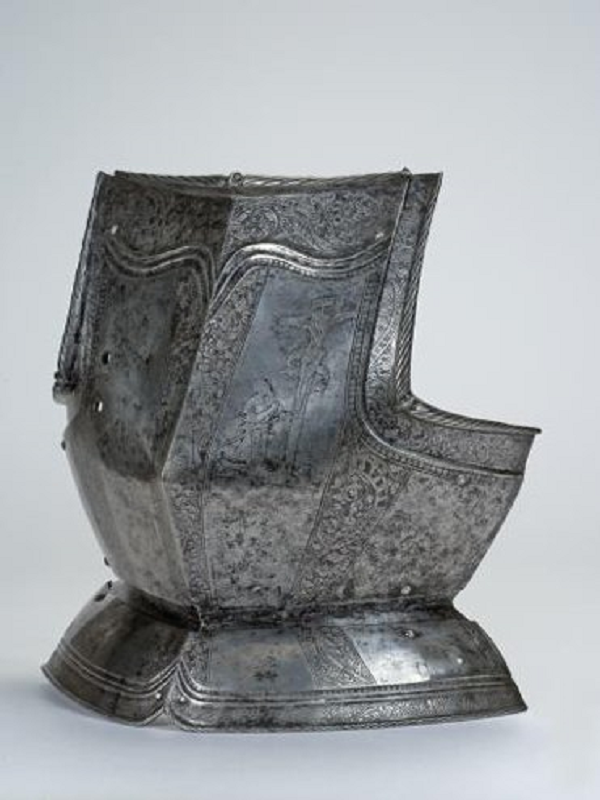

Armor of the great master you can see:
State Historical Museum, Moscow, Russian Federation.
The State Hermitage museum, Saint Petersburg, Russian Federation.
Rüstkammer, Дрезден, Dresden, Saxony, Germany.
Deutsches Historisches Museum, Berlin, Bundesrepublik Deutschland.