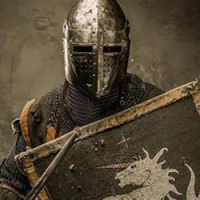
Konrad Poler (activ 1492-1500), Nuremberg, Germany.
Konrad Poler (active c. 1492–1510) was one of the most renowned German armorers of the late 15th and early 16th centuries, a master of tournament armor. He worked in Nuremberg, one of the largest European centers of arms and armor production, and became famous for creating high-quality tournament armor for the Holy Roman Emperor Maximilian I.
The first documented mention of Konrad Poler dates back to 1492. By this time, he was already in the service of Emperor Maximilian I, for whom he crafted specialized tournament suits (Stechzeug) for mounted lance combat. His work at the imperial court continued until approximately 1510.
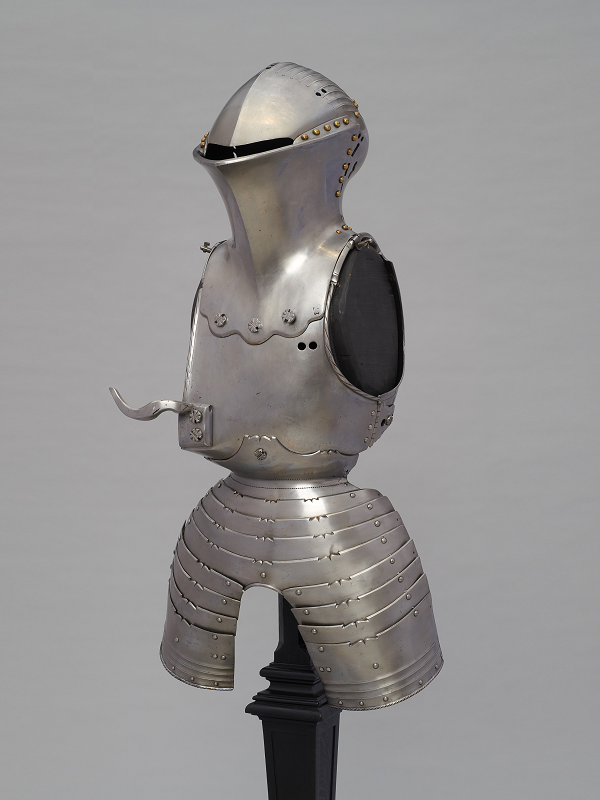
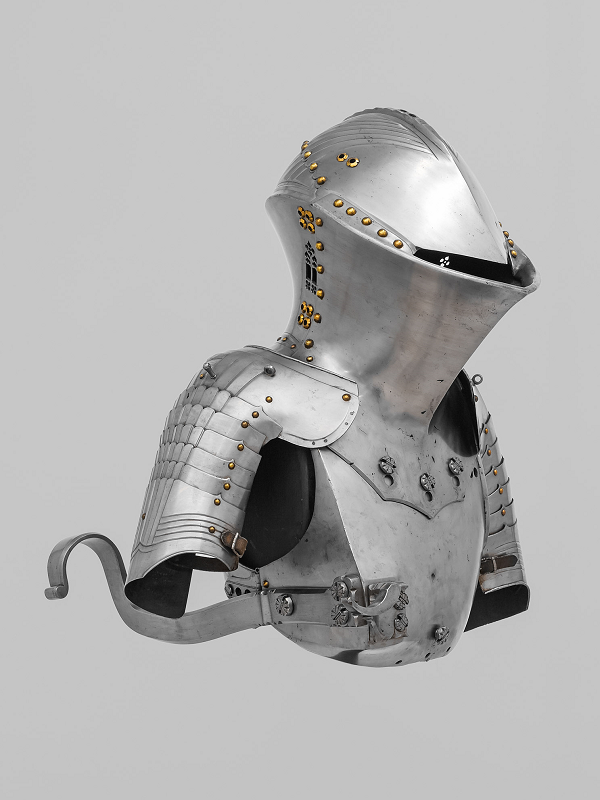
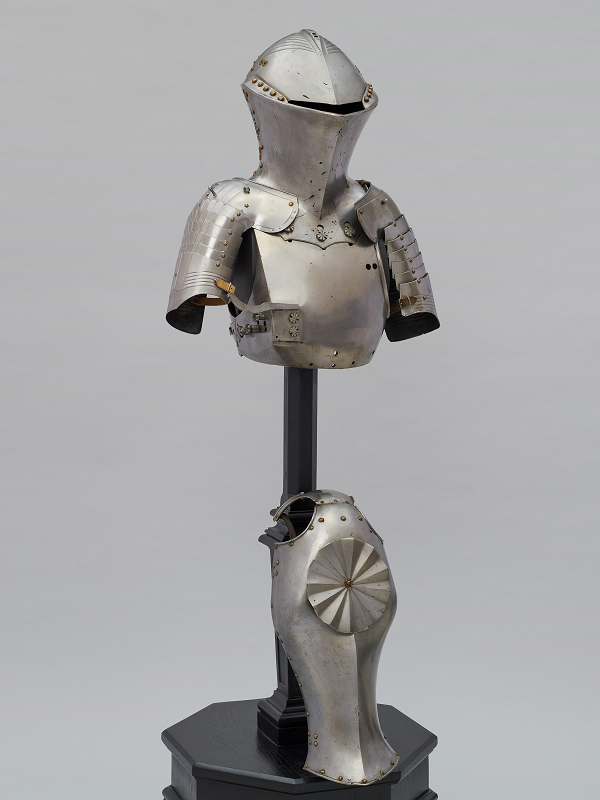
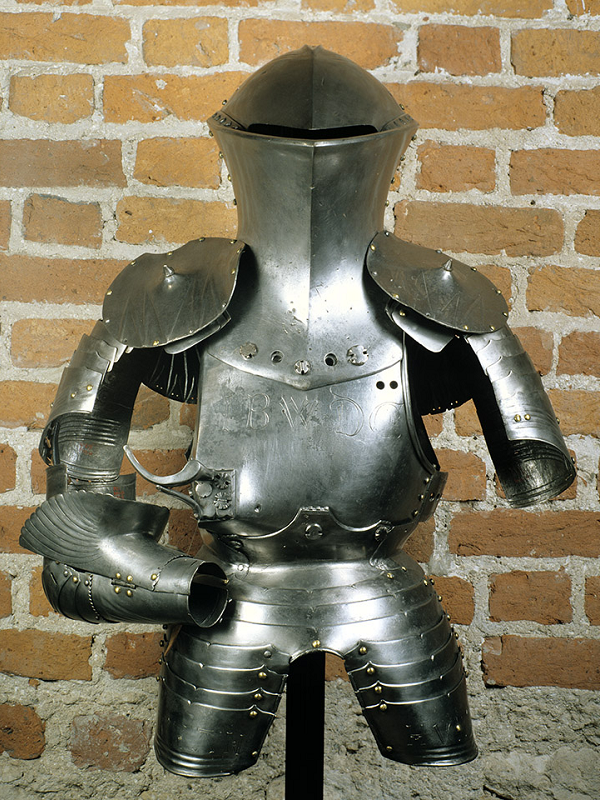
Poehler's main specialty was heavy tournament armor. Unlike combat plate, it was created exclusively for knightly tournaments and provided maximum protection for the rider during the clash of lances. The master's designs were distinguished by an extremely durable cuirass, a massive "frog" helmet (Stechhelm), a powerful spear rest, and reinforced protection for the left side of the body, which bore the brunt of the enemy's blow.
Konrad Poler's works are considered the pinnacle of late Gothic German tournament armament. His pieces combined exceptional forging quality, sophisticated ergonomics, and high reliability. Some surviving pieces bear the master's personal mark—an image of a helmet with three balls—which has led researchers to confidently attribute his works.
Several sets and individual elements of Poler's tournament armor have survived to this day. The most famous examples are housed in the Imperial Armory of the Kunsthistorisches Museum in Vienna, where tournament armor made for Maximilian I circa 1495–1510 is on display. These sets are considered benchmark examples of German Stechzeug and serve as a crucial source for the study of late medieval knightly tournaments. Researchers also associate Poler's name with a number of outstanding tournament armors, parts of which are now in museums and private collections across Europe. Their artistic quality places Konrad Poler alongside the greatest armorers of the era—the Helmschmid family and Konrad Seusenhofer.
Despite the relatively small number of surviving pieces, Konrad Poler occupies an important place in the history of European armor design. His mastery significantly influenced the development of the German school of tournament armor in the late 15th and early 16th centuries, and the armor he created remains among the most accomplished examples of armor craftsmanship from the reign of Emperor Maximilian I.
Famous customers of the master:
Emperor Maximilian I
Armor of the great master you can see:
Zamek Królewski na Wawelu, Kraków, Województwo małopolskie, Rzeczpospolita Polska.
Hofjagd- und Rüstkammer, Vienna, Austria.