
Giovanni Battista Panzeri gen. Serabaglio (1520-1591(?)), Milan, Italy.
This outstanding Milanese master armorer has only been rediscovered by art historians in recent years. Unfortunately, crucial information about his life and creative work remains missing; only a few works from his early period have survived, revealing his mastery of chasing and damascening.
The armory of the Imperial House in Vienna houses a suit of armor for a rider and horse, distinguished by its exceptionally rich and beautiful decorative ornamentation. It originally came from the collection of Archduke Ferdinand of Tyrol, and thus from the world-famous collection of Ambras Castle near Innsbruck. Previously, nothing was known about this incomparable work, save for an old watercolor depicting a rider wearing this armor and a vague entry in the inventory of the Archduke's property, which reads: "Wrought iron armor for horse and man, acquired from the merchant Serebey."
The Archduke's correspondence from February to May 1560, preserved in the Innsbruck city archives, indicates that a certain Giovanni Battista Serabaglio, in collaboration with Marco Antonio Fava, delivered a cup for him for 200 seudis. Serabaglio's letter to the Prince dated February 23 of that year notes that other items ordered from him would be put into production as quickly as possible. Although the Prince's reply of April does not specify these items, it is clear that they must have been armor and riding gear, as a detailed order for their manufacture came from the Archduke's Master of the Equerry, Alois von Lodron. He was responsible for only such items. This proves that the Serabaglio mentioned in the inventory is identical to the Serabaglio mentioned in the letters. Therefore, it only remained to determine whether we were dealing with an ordinary merchant or a master artisan himself.
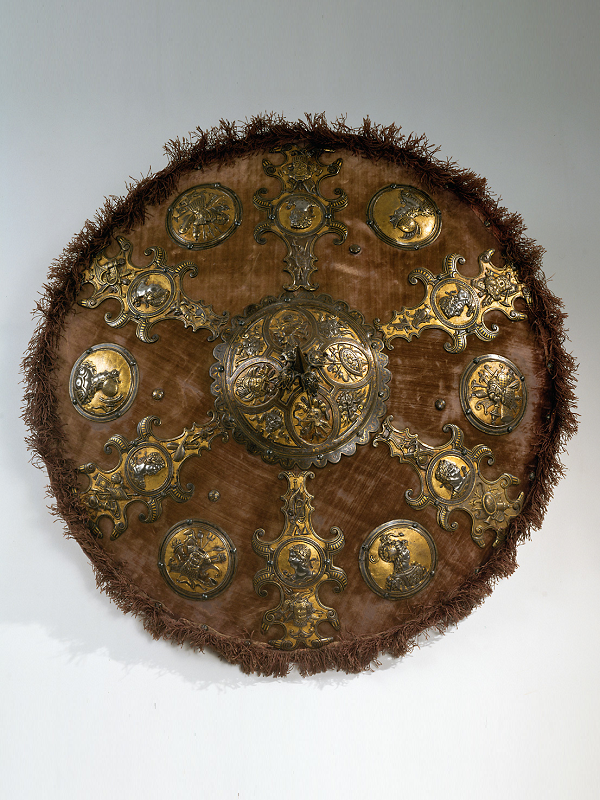
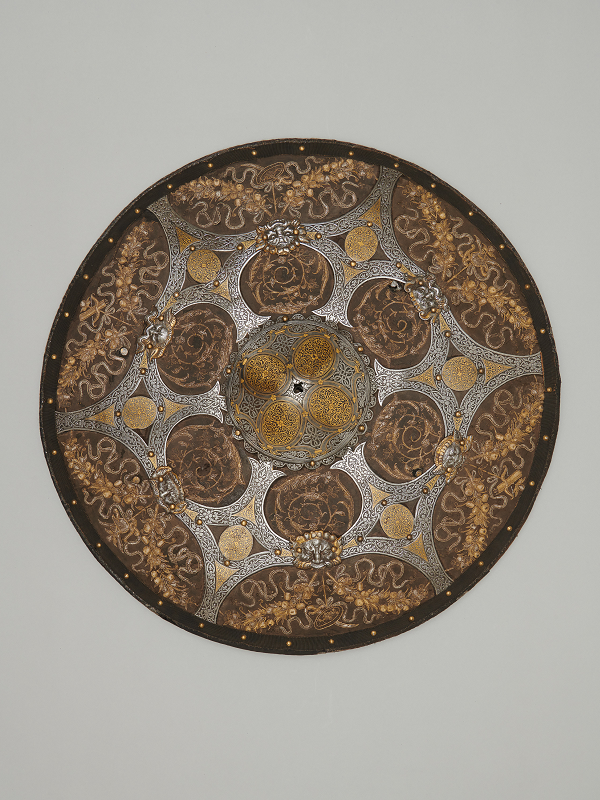
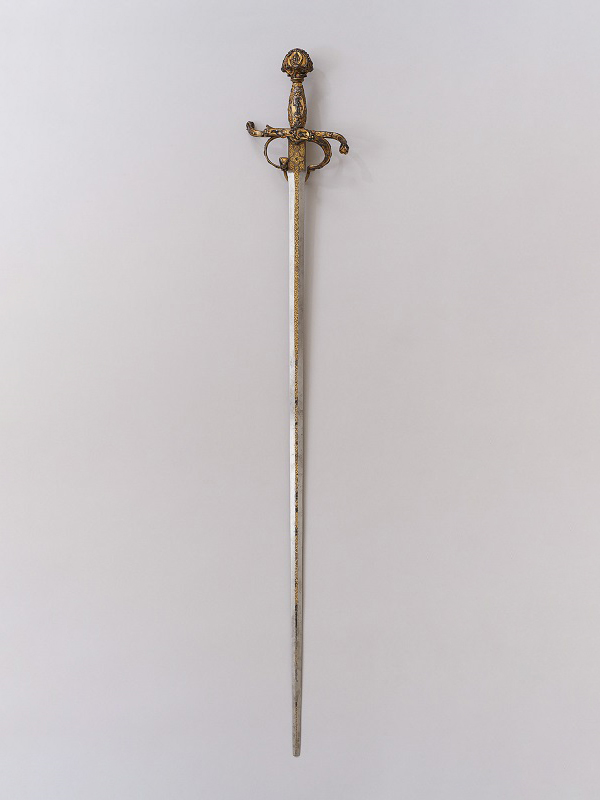
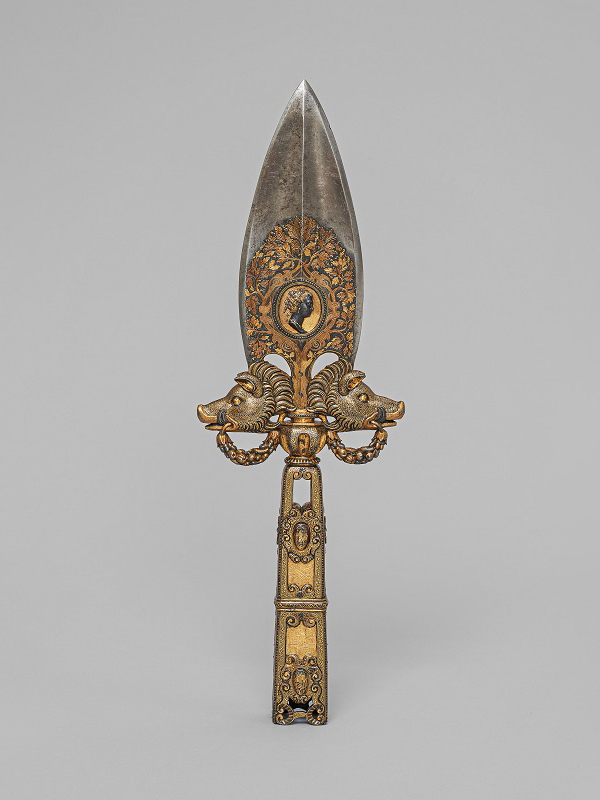
It turns out that the Serabaglio family belonged to the renowned Milanese family of artists named Busti. The renowned Agostino Busti, known as Serabaglio or Bambara, achieved fame with the creation of the magnificent tomb of Gaston de Foix, currently housed in the Milan Archaeological Museum. According to the "Annale del Fabrica del Duomo di Milano," Giovanni Busti is mentioned among the ironworkers exempted from all taxes by Maximilian Maria Sforza in 1514. However, Lomazzo clearly states that our Gianbattista was an ironworker, noting: "In the art of ironworking, Giovanni Battista Serabaglio was unique." The hallmark of this master is unknown. His works have so far been discovered only in the Imperial Armoury in Vienna, namely the so-called Milanese armour, consisting of a half-suit of armour with a round shield, a full gauntlet, a mace, a sword, a rapier, and finally, a spear for hunting boar (444, 423, 424, and 475). All pieces are forged from iron, partly gilded, and partly inlaid with gold.
The helmet and round shield depict the deeds of Hercules, and the interior is decorated with beautiful gold and floral embroidery. (448)
Source: Meister der Waffenschmiedekunst vom XIV. bis ins XVIII. Jahrhundert, Wendelin Boeheim, 1897, Berlin, 191
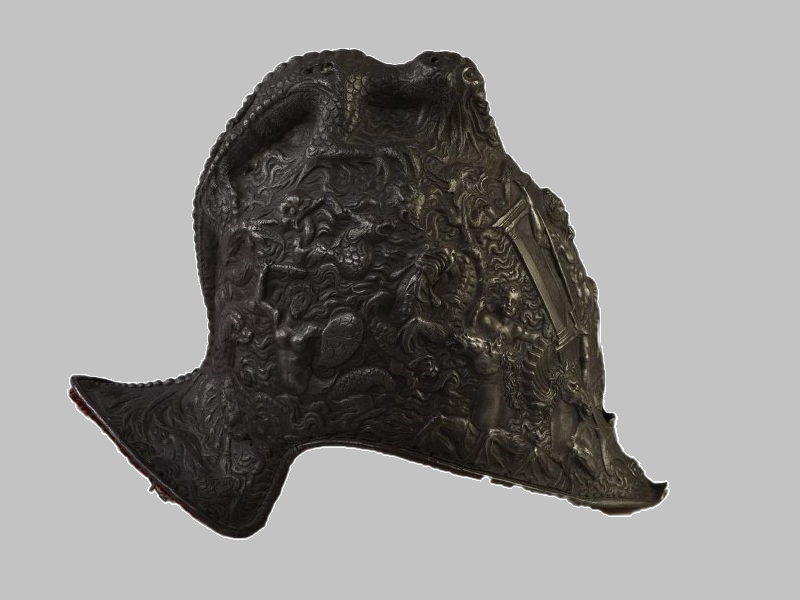
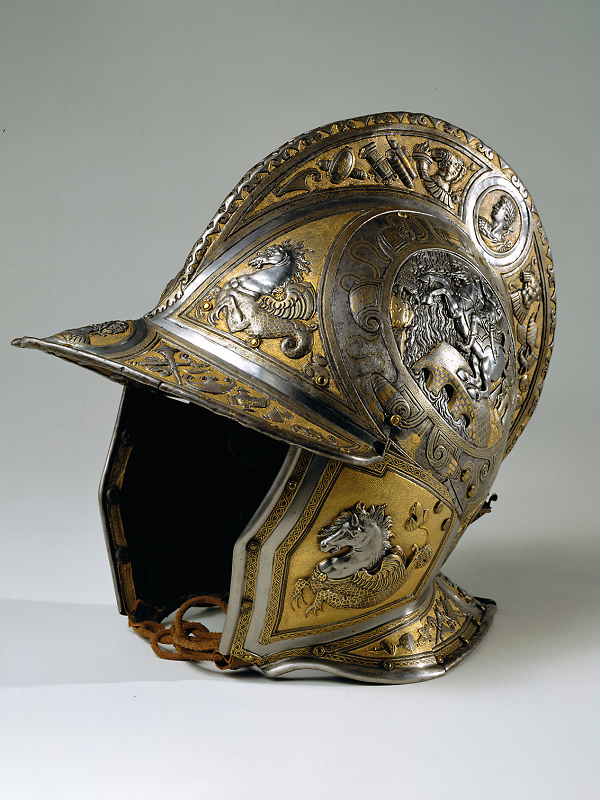
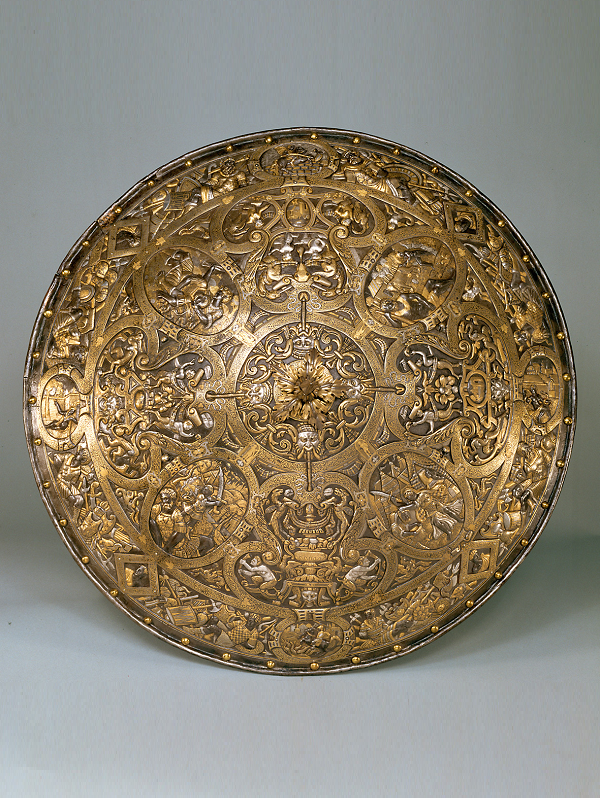
Armor of the great master you can see:
The State Hermitage museum, Saint Petersburg, Russian Federation.
Hofjagd- und Rüstkammer, Wien, Republik Österreich.