- Articles
- Weapons
- Armor
- Armor for horses
- Emperor Armor
- Chivalry
- Chivalry
- Knights castle
- Knights tournament
- The Crusades
- Knightly Orders
- Knightly saddle
- Knightly motto
- Great Knights
- Price of armor
- Children's armor
- Castles and fortresses
- Museums of armor and weapons
- Coats of arms and heraldry
- Routes and excursions
- Guides


Schweizerisches Nationalmuseum.
Schweizerisches Nationalmuseum
Tu, We, Fr-Su 10.00-17.00, Th 10.00-19.00. Weekend: Monday
Adult - 13CHF, Children's (0-16) - Free, Students - 10CHF.
www.landesmuseum.ch/de
Museumstrasse 2, Postfach 8021 Zürich, Kanton Zürich, Schweizerische Eidgenossenschaft.
47.379059, 8.540544 View map
Schweizerisches Nationalmuseum - Swiss National Museum, Zürich, Kanton Zürich, Schweizerische Eidgenossenschaft.
The 19th century is generally considered the century of nations and nation-states. While other European countries were rapidly constructing monuments, memorials, and institutions, the young state of Switzerland struggled with the idea of establishing a national museum. Such an undertaking was met with skepticism. There were also very pragmatic reasons: almost every canton had its own collections, reflecting the federal nature of the young nation-state. It was Zurich's national councilor, Salomon Voegelin, who sparked the discussion about establishing a museum in 1883, inspired by the success of the national art exhibition held at the Swiss National Exhibition in Zurich.
After a heated debate over the location, Zurich prevailed over Lucerne, Basel, and Bern in 1891. The young architect, Gustav Gull, utilized various historical architectural elements from the late Middle Ages and modern times: the Swiss National Museum was intended to be a creative union between collection, exhibition, and architecture. The connection between the museum and the school of applied arts further advances another important principle: connecting schools of applied arts with museums so that the past can serve as a model and inspiration for students' work. Today, the Zurich State Museum is considered an exceptional 19th-century museum building and a nationally significant architectural monument.
The new building by Swiss architects Christ & Gantenbein, opened in 2016, beautifully complements the Gustav Gull Wing. It houses large, flexible exhibition halls, a modern library, and an auditorium for public events.
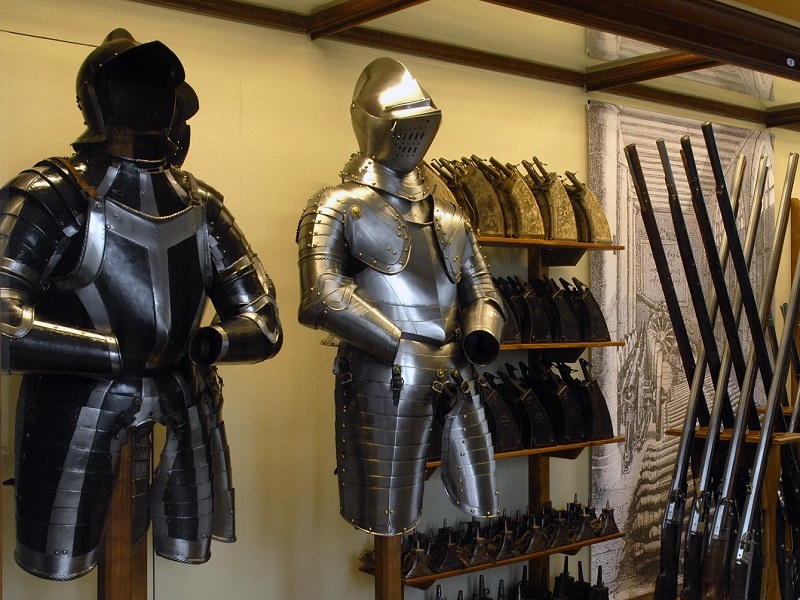
Emerging from the spacious entrance hall, visitors embarked on a chronological tour through Swiss history. Beginning with the prehistoric collection, general exhibition halls—often dedicated to a specific group of objects—interspersed with period furnishings on three floors, combining architectural fragments and period furniture. The undeniable highlight and culmination of the show, which spanned over 50 rooms, was the display of a vast armoury. The presentation of Swiss history focused on the Middle Ages and early modern periods, as the conflict-ridden emergence of the modern state in the 18th and 19th centuries was still too politically sensitive.
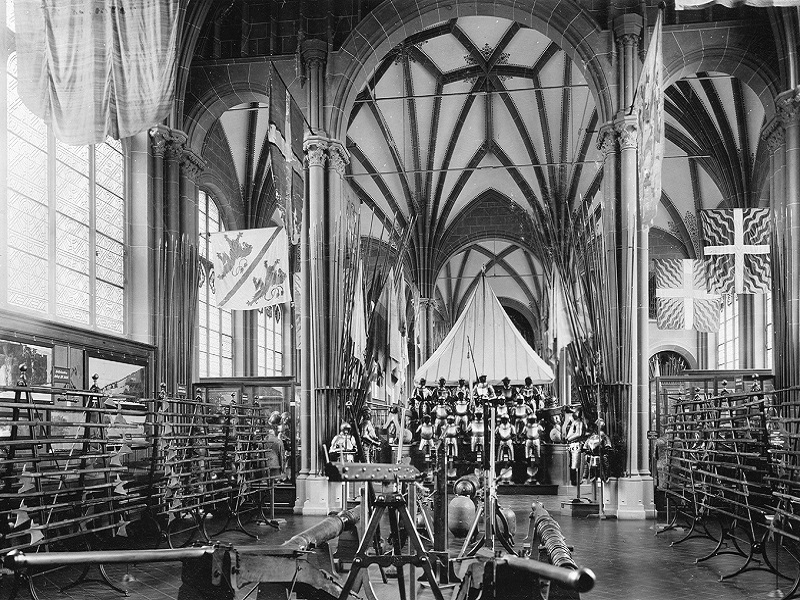
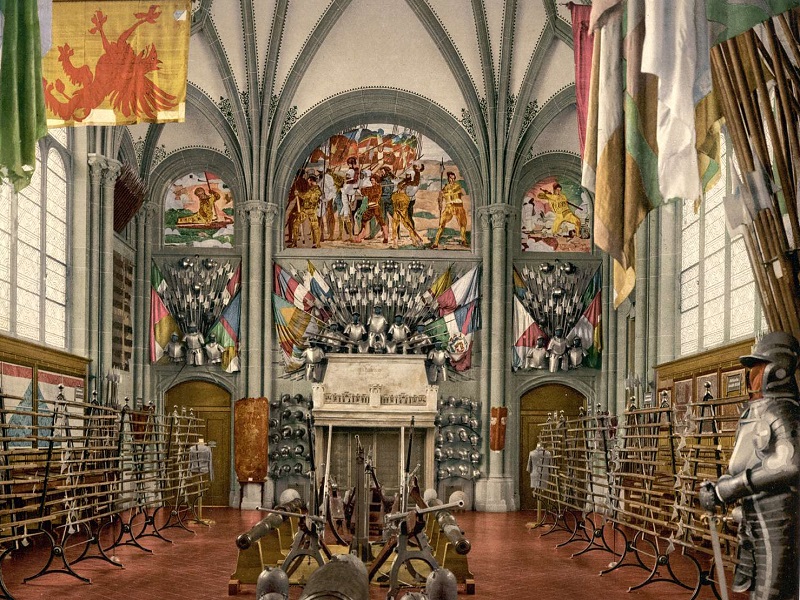
1st Floor, Room 50: Arsenal.
After several smaller rooms, the enormous armory hall, 700 square meters in size and 16 meters high, became the State Museum's crowning glory and also its main attraction. The architecture imitated a neo-Gothic cathedral and was filled with armor, flags, trophies, and weapons from the supposed "greatest political period of the Confederacy" in the 15th and 16th centuries. In a true hall of national glory, the captivated visitor was to be shown the great times of his small country.
25 nov 2025
0
0