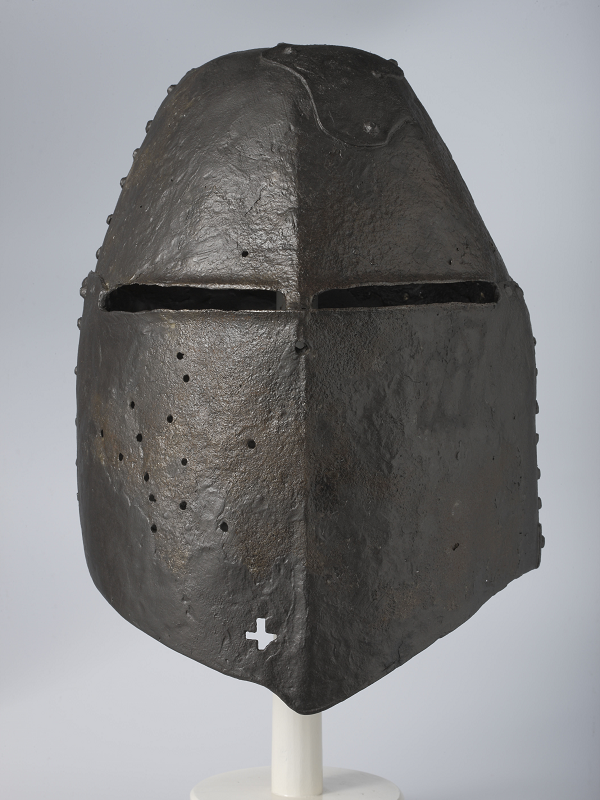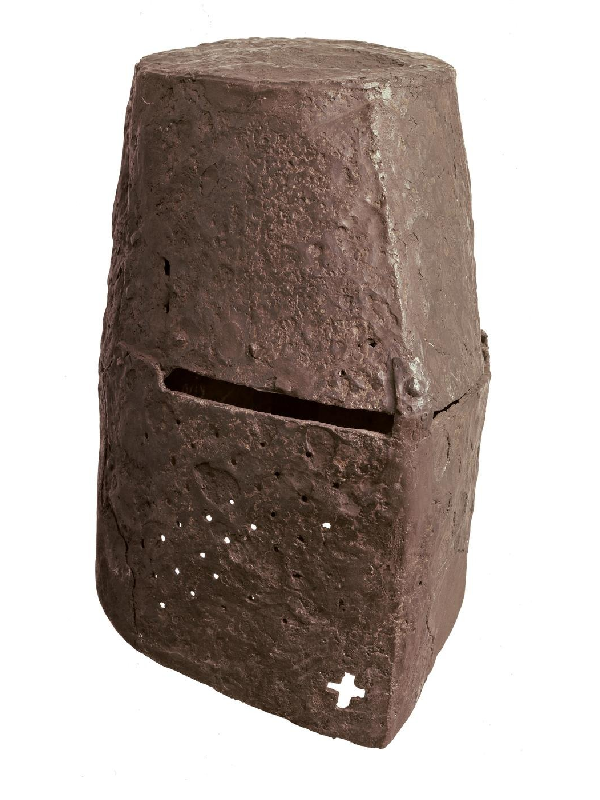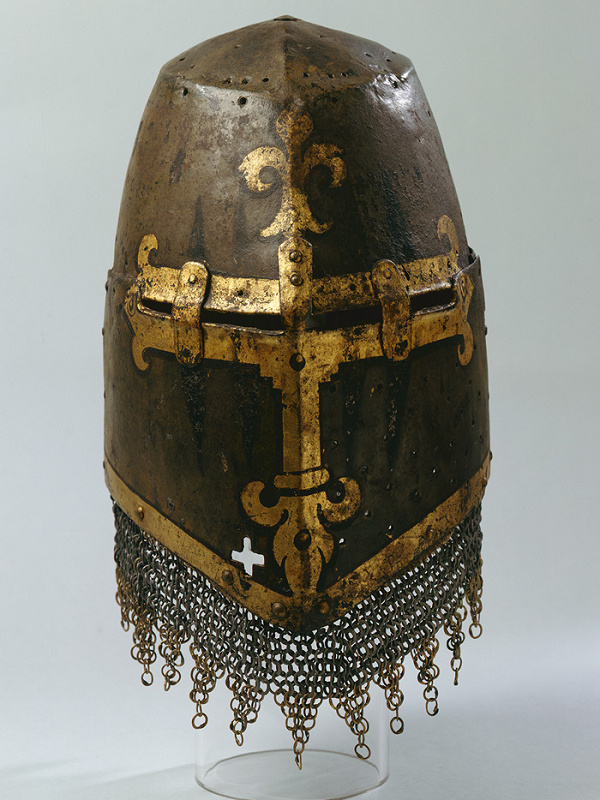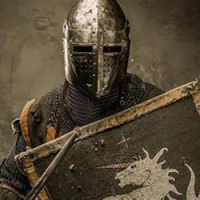



The Tophelm (Great helm, fr: Heaume, de: Topfhelm, it: Grande elmo, also known as a pot helm, bucket helm, or barrel helm) is one of the most recognizable and monumental knightly helmets of the High Middle Ages (late 12th – mid-14th centuries). Its massive cylindrical shape, completely covering the head, became a true symbol of the Crusaders and heavy knightly cavalry during the heyday of plate armor.
The tophelm was not the most comfortable or versatile helmet, but it offered maximum protection in an era when the main weapons were the sword, spear, and blows from above. It was a true "steel pot," turning the knight into a faceless, nearly invulnerable figure.
Origin and Evolution.
The tophelm emerged in the late 12th century during the Crusades as a logical development of the Norman helmet and its flat-topped variants. First, "primitive" closed helmets appeared with an extended nasal plate, which gradually evolved into a full-fledged face mask.
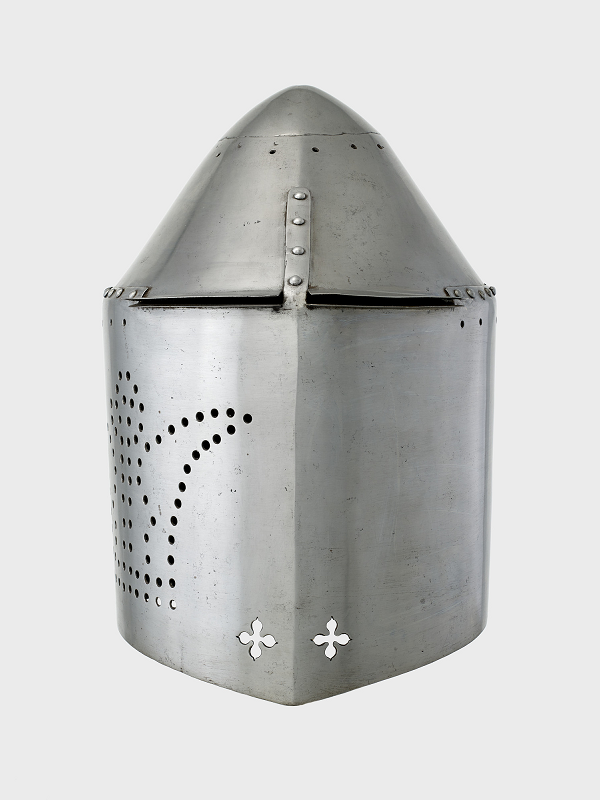
By 1210–1220, the classic tophelm had emerged: a cylindrical crown with a flat or slightly rounded top. By the mid-13th century, the helmet became more sophisticated—the top was often made slightly conical or "sugarloaf" to better deflect blows. By 1300, the tophelm reached its peak and remained in use until the mid-14th century, after which it was gradually replaced by more comfortable sallets and bascinets.
The helmet was widely used in the Battle of Bouvines (1214), the Crusades, the wars in the Holy Land, and on European battlefields. It was especially popular among English, French, and German knights.
Tophelm Construction.
A tophelm was assembled from several steel plates (usually 4-5) connected with rivets, or less commonly forged from a single sheet. Key features:
A cylindrical or slightly conical crown completely covered the head.
A flat or slightly rounded top (usually flat in English and French versions, more rounded in German ones).
Narrow horizontal eye slits (8-12 mm wide) meant that visibility was extremely limited, especially at close range.
Breathing holes were located below the eye slits or on the sides.
An elongated nape and side plates meant that the helmet reached down to the shoulders, providing neck protection.
An inner lining of felt or leather provided shock absorption.
A tophelm weighed approximately 2-4 kg (sometimes more). The helm was often worn over a cervellier (a simple steel cap) and a chainmail hood, creating multi-layered protection. The surface was polished, painted in heraldic colors, or decorated with simple engravings. Additional plates were sometimes added for tournaments.
Use in battle and tournaments.
The tophelm was ideal for heavy cavalry charges:
Maximum protection — it completely covered the head from slashing blows, arrows, and spears.
Psychological effect — the featureless steel "pot" instilled fear in the enemy.
Combination helm — usually worn over a cervellier and chainmail, providing multi-layered protection.
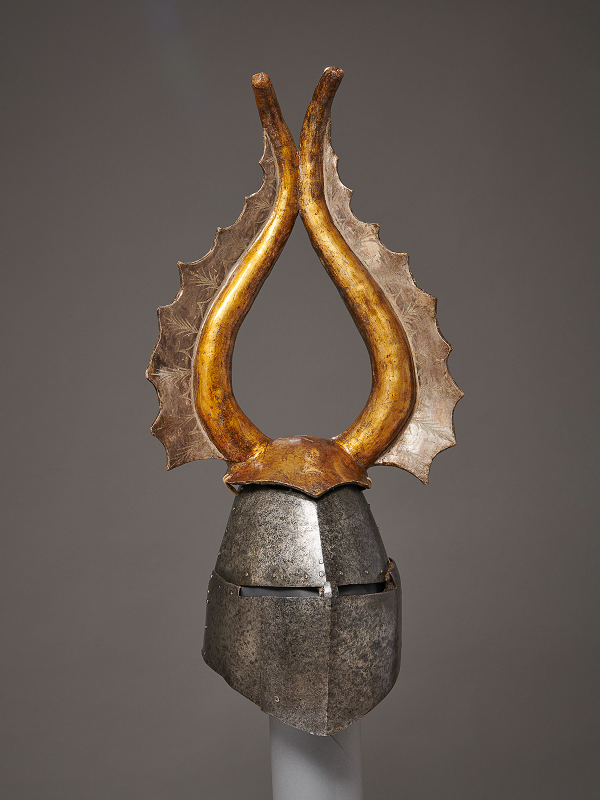
However, the helm had serious drawbacks: very limited field of view (the knight could only see straight ahead), poor ventilation (it became stuffy in hot weather), and considerable weight. Therefore, after an attack or during foot combat, it was often removed or raised (if the design allowed). The tophelm was used at tournaments before the advent of specialized "toad's head" helmets. Knights often attached heraldic crests to them—brightly colored figures made of fabric or wood—to allow spectators to distinguish competitors.
Why did the tophelm become an icon of chivalry?
A symbol of the era, this is the helmet we imagine when we think of crusaders and classical knights of the 13th century.
Maximum protection due to its simple geometry.
Evolutionary role — the tophelm became a transitional link between the open Norman helmets and the more complex closed models of the late Middle Ages.
By the mid-14th century, the tophelm began to give way to the bascinet and sallet, which were lighter, more comfortable, and provided better visibility. However, its elements influenced later tournament helmets.
Today, original tophelms are rare museum treasures. They are kept in collections throughout Europe and remain one of the most powerful visual symbols of medieval chivalry. A tophelm is more than just a helmet. It embodies the idea of absolute protection: a knight was willing to sacrifice visibility and comfort to remain invulnerable at the moment of the decisive blow. In an era when war was a personal duel of honor, this "steel pot" transformed a man into a living fortress—faceless, formidable, and nearly impenetrable. It was a reminder that a knight's true strength lay not only in skill but also in his willingness to completely envelop himself in steel for the sake of victory.