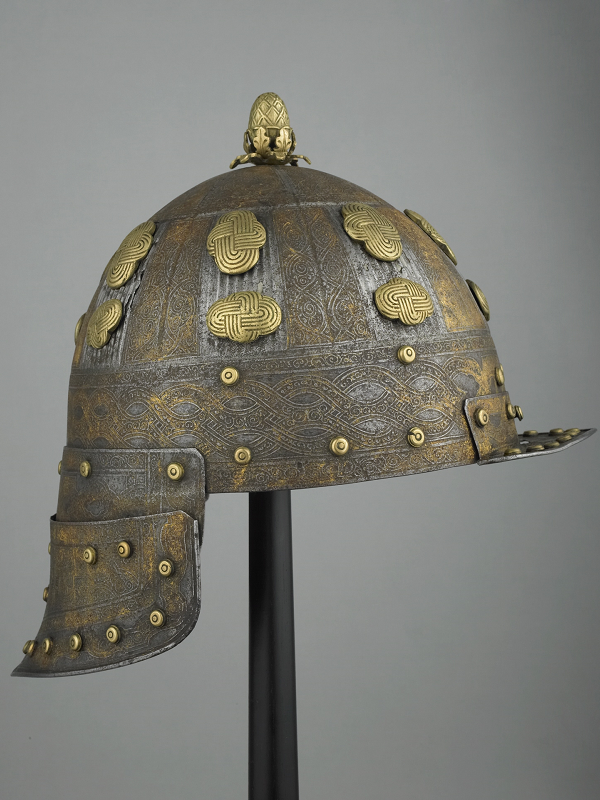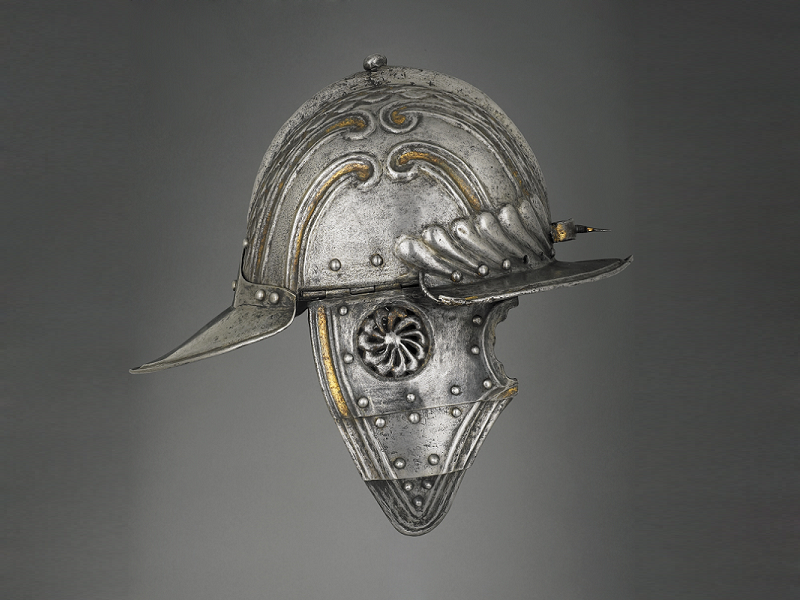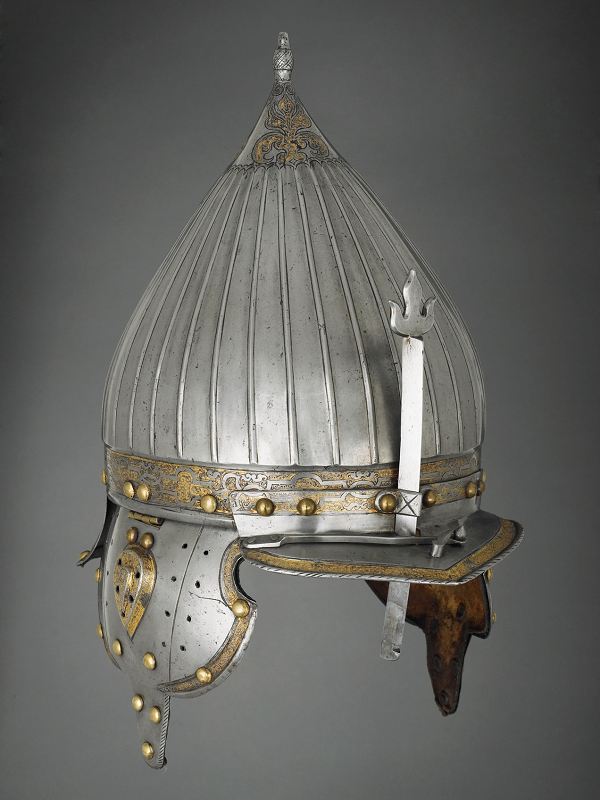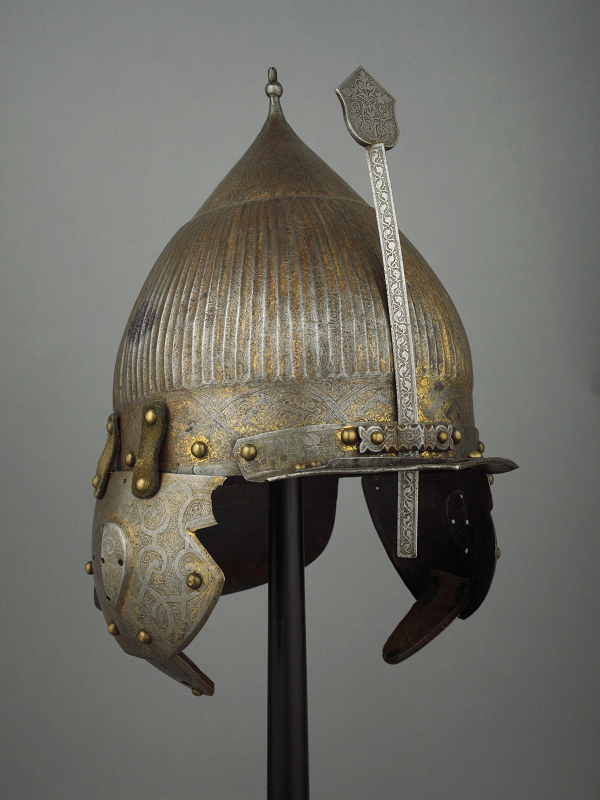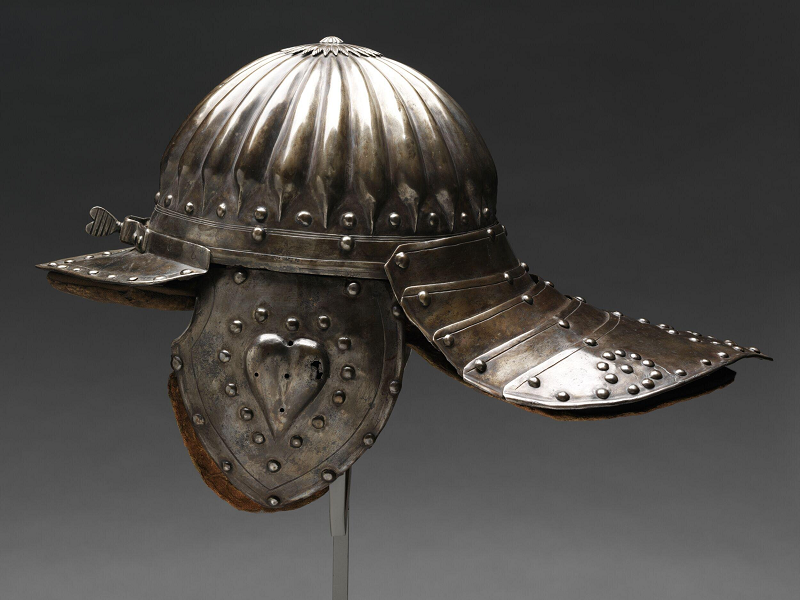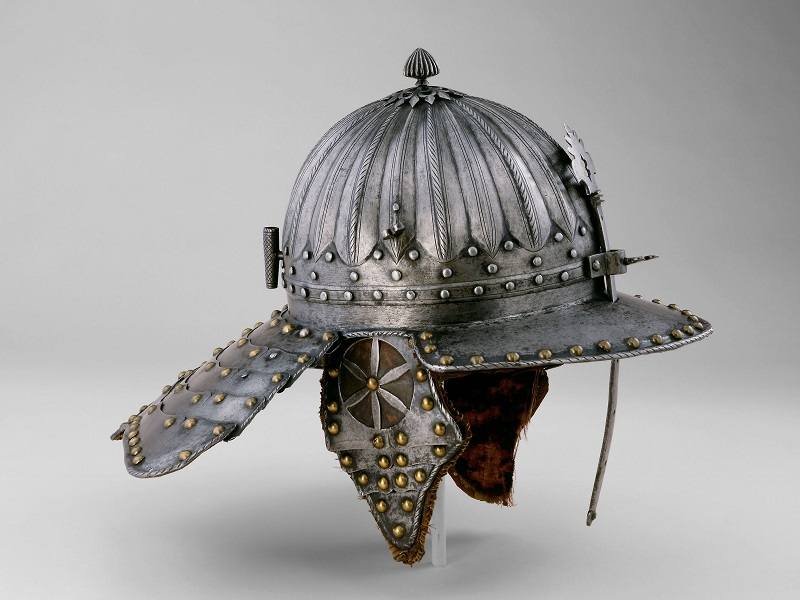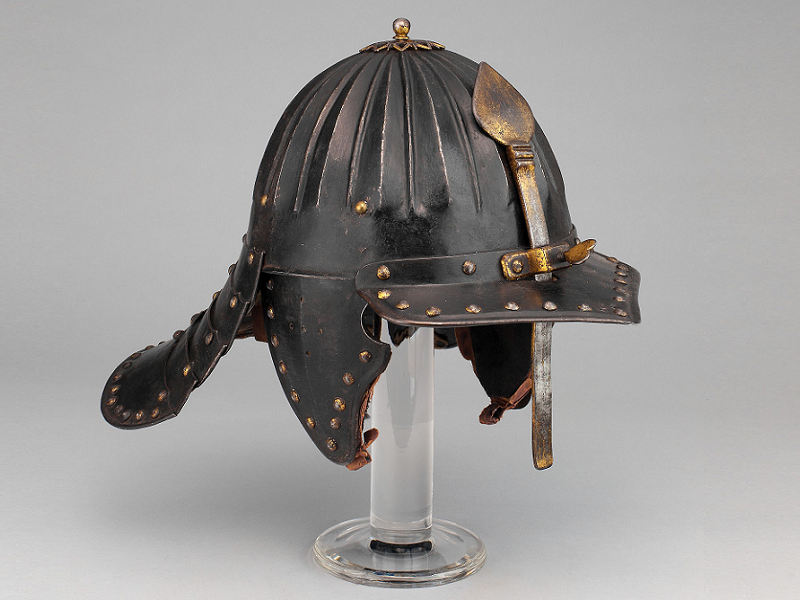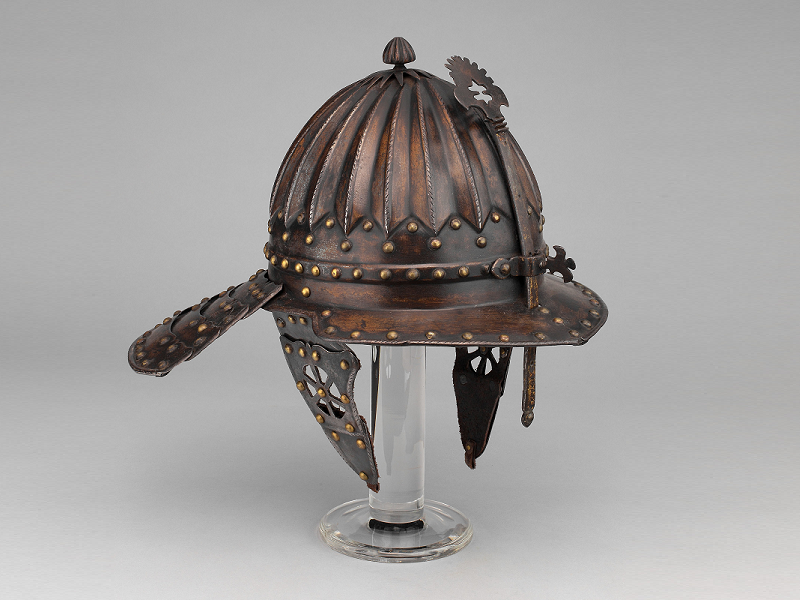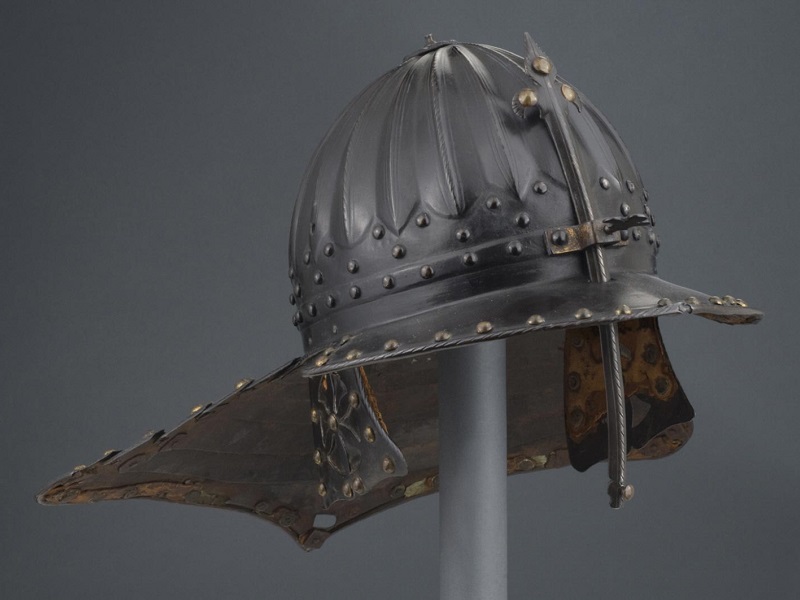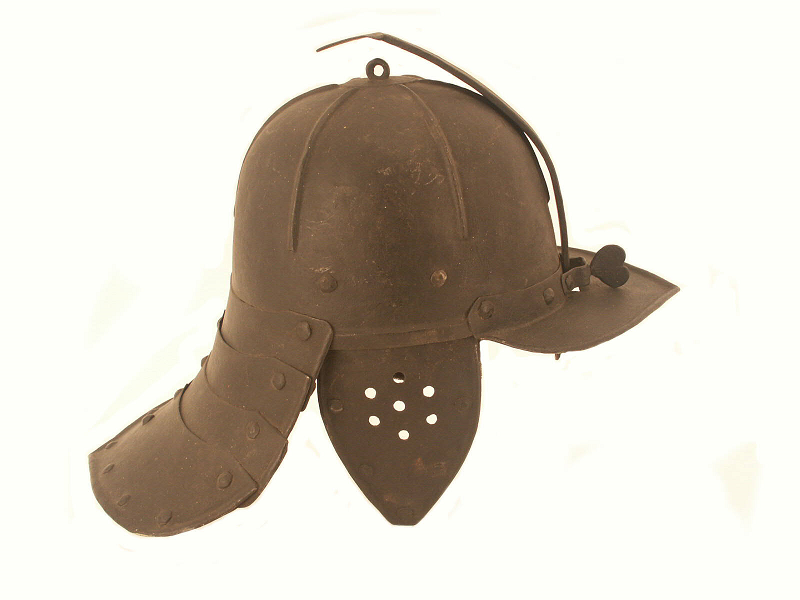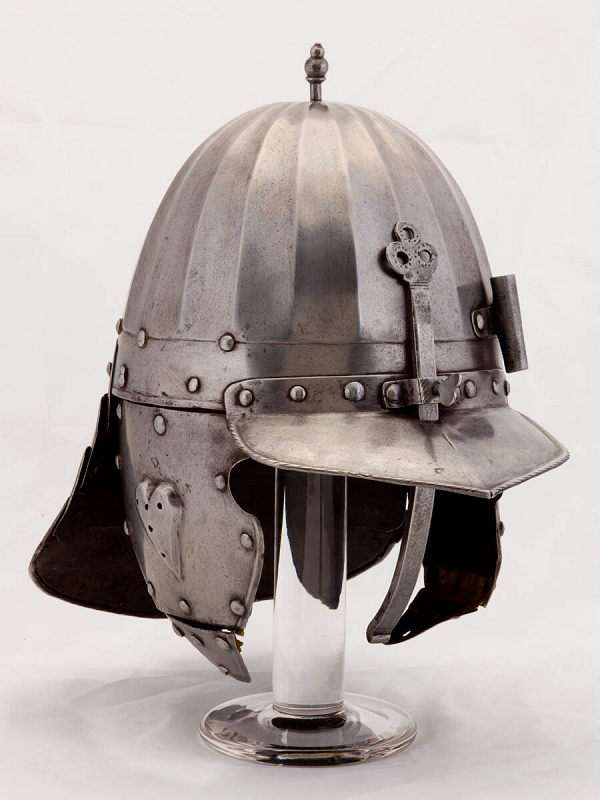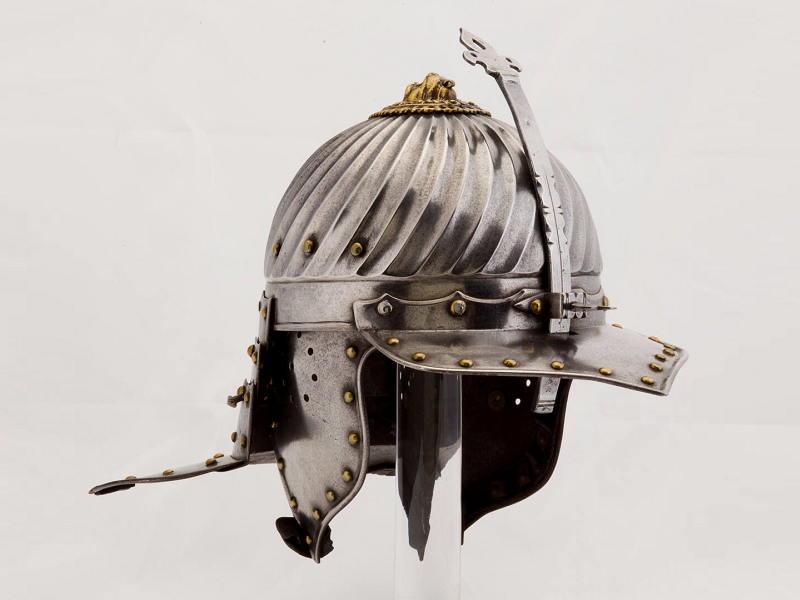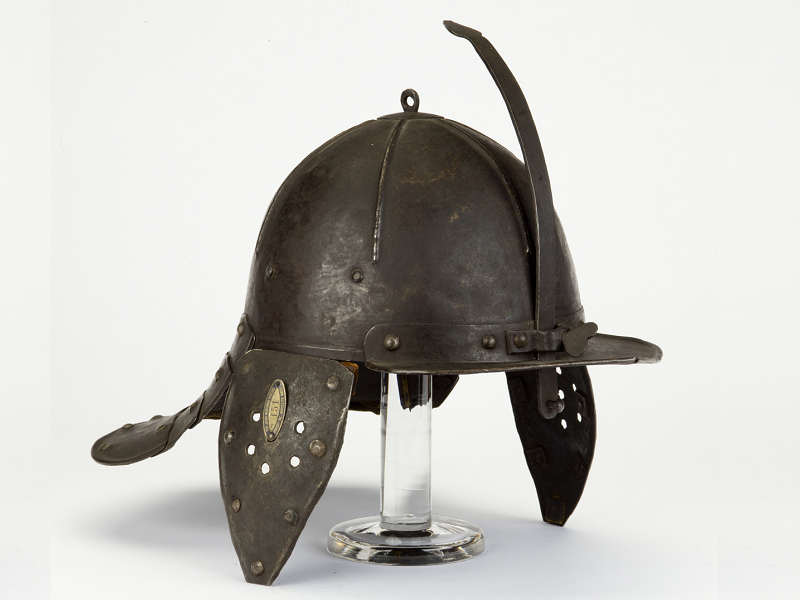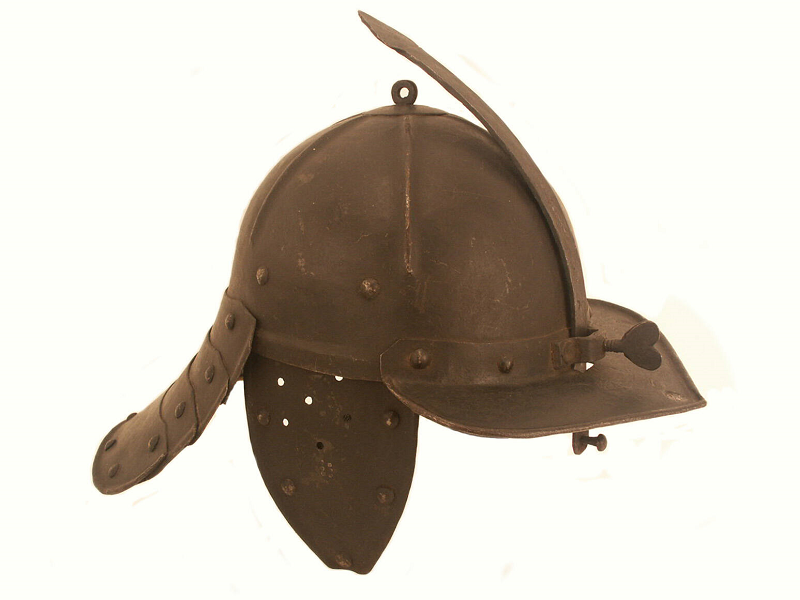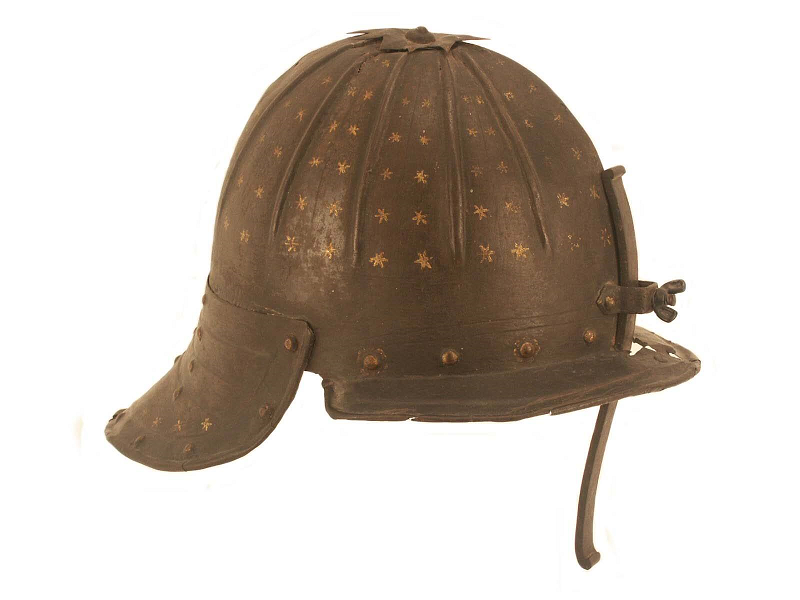
The sisak helmet (de: Zischägge, pol: szyszak, sometimes "lobster tail" or "crayfish tail") is one of the most practical and recognizable helmets of the late Renaissance and early modern periods (16th–17th centuries). It combines Eastern elegance with European functionality and became the classic headgear of light and medium cavalry, reiters, hussars, and officers during the Thirty Years' War.
The sisak helmet was not a heavy knightly "pot" like a tophelm and did not seek to completely cover the face. Instead, it offered a reasonable compromise: good protection from saber strikes, excellent visibility, and maneuverability—precisely what was needed in the era of pistol cavalry and mass-produced firearms.
Origin and Name.
The sisak originates from the Ottoman sisak helmet (çiçak meaning "flower"), which appeared in Turkey in the 16th century. The Turkish version had a sphero-conical crown and was often richly decorated. Europeans adopted the idea through Hungary, Poland, and the Balkan campaigns, adapting it to their own needs.
The German name Zischägge is a Germanized form of the Turkish word. In England, the helmet was nicknamed the "lobster-tailed pot" due to its distinctive segmented backplate, reminiscent of the crustacean's segmented shell. In Poland and Russia, it was called the sisak or erihonka (the latter from the biblical Jericho, emphasizing the Eastern influence).
The helmet spread throughout Europe by the early 17th century and became especially popular among light cavalry, dragoons, and reiters.
The construction of the sisak.
The sisak is a relatively light and open helmet with distinctly oriental features:
A hemispherical or slightly conical crown, often with a longitudinal ridge or ribs for rigidity.
A wide brim protected the eyes from sun, rain, and overhead slashes.
A sliding nasal bar was an iron strip that could be lowered to protect the nose and face. It could be locked in the desired position.
Cheek guards were large, often with cutouts for ventilation and hearing, and were hinged.
A segmented nape guard ("lobster tail") consisted of several overlapping plates that flexibly protected the neck and back of the head without restricting head movement.
Plume tubes - many examples had attachments for feathers or plumes. The metal thickness was typically 1.5–3 mm. Weighing 2–3.5 kg, the helmet was significantly lighter than closed tournament models. The surface was often blued (called a "black" sisak), polished, or decorated with etching, gilding, and heraldic motifs. Some officer versions were true works of art.
Combat Use.
The sisak was ideal for the dynamic cavalry warfare of the 17th century:
Light and medium cavalry — reiters, hussars, dragoons. The open design provided excellent visibility for pistol shooting and maneuvering.
Protection: The visor and nasal guard effectively deflected saber strikes, and the "lobster tail" protected the neck during chopping.
Comfort: The helmet was relatively lightweight, well ventilated, and did not overheat the head during long campaigns. During the Thirty Years' War and the English Civil War, the sabre helmet was worn by both ordinary cavalrymen and commanders. It was paired with a cuirass or half-plate, allowing the rider to maintain mobility.
Disadvantages: weak facial protection compared to closed helmets and vulnerability to point-blank pistol or musket shots.
Why did the sabre helmet become popular?
Practicality: the best combination of protection and mobility for modern cavalry.
Eastern influence: brought fresh ideas from the Ottoman Empire to Europe, which were perfectly suited to changing warfare tactics.
Versatility: suitable for both ordinary soldiers and officers; relatively inexpensive to produce.
Aesthetics: the menacing yet elegant appearance with the "crayfish tail" and feathers made the helmet recognizable and impressive.
By the end of the 17th century, the zischägge (sisak) began to give way to simpler helmets and hats with metal inserts, but continued to be used in some armies for a long time.
Today, the zischägge (sisak) is one of the most beloved helmets among 17th-century cavalry reenactors. Authentic examples are held in the Metropolitan Museum of Art, the Vienna Armoury Museum, and Polish and German collections. Many retain their leather lining and traces of combat use.
The zischägge is a helmet from a transitional era, when knighthood was finally transforming into professional cavalry. It did not attempt to completely conceal the warrior behind steel, like medieval "pots," but allowed him to see the enemy, breathe freely, and maneuver quickly. It embodied the pragmatic spirit of the New Age: protection should be effective, but not interfere with the soldier's primary mission—to attack and win. Eastern in origin, European in spirit, the sisak became one of the last bright symbols of the era of cold weapons in cavalry warfare.