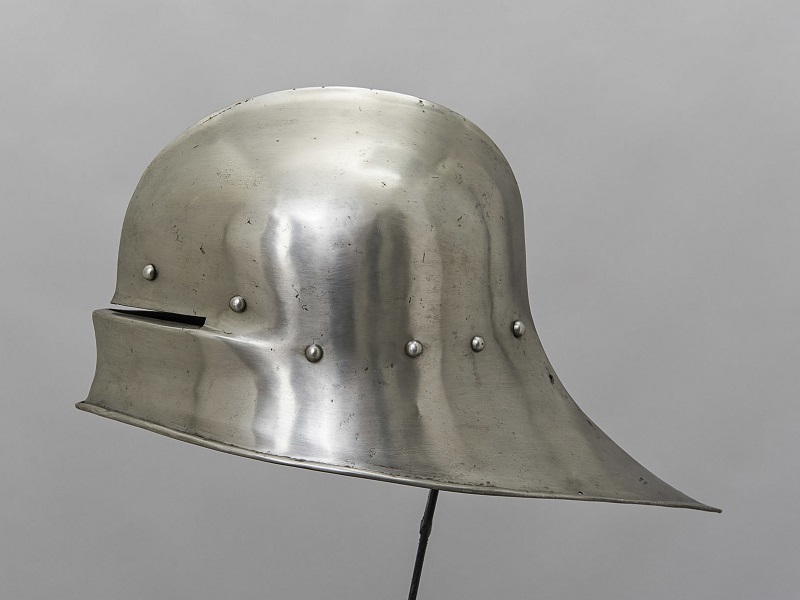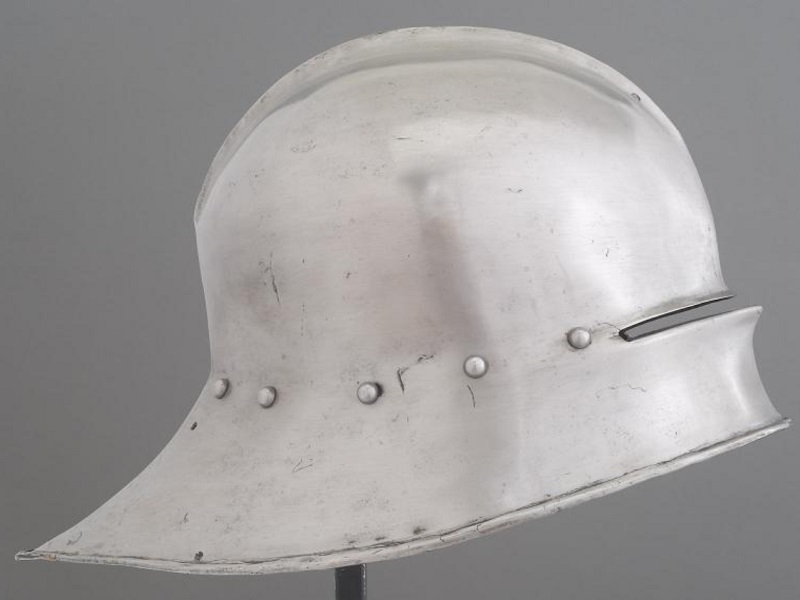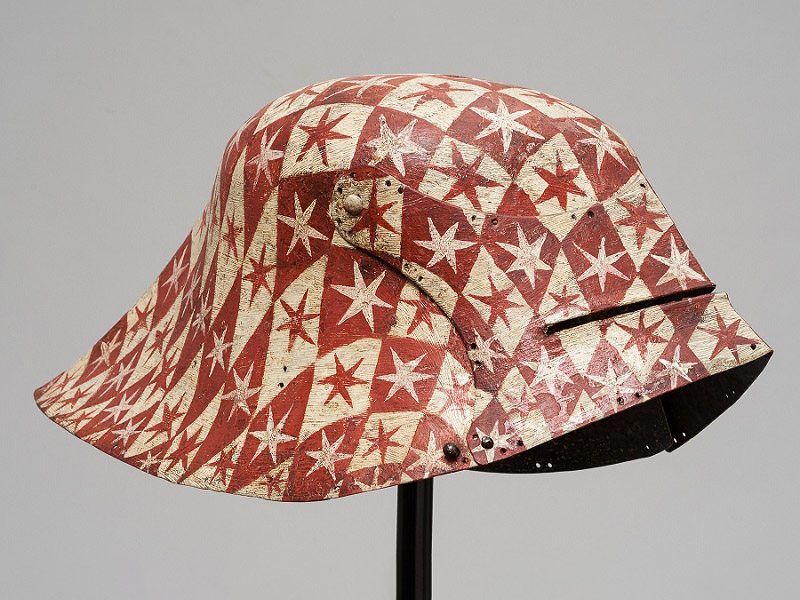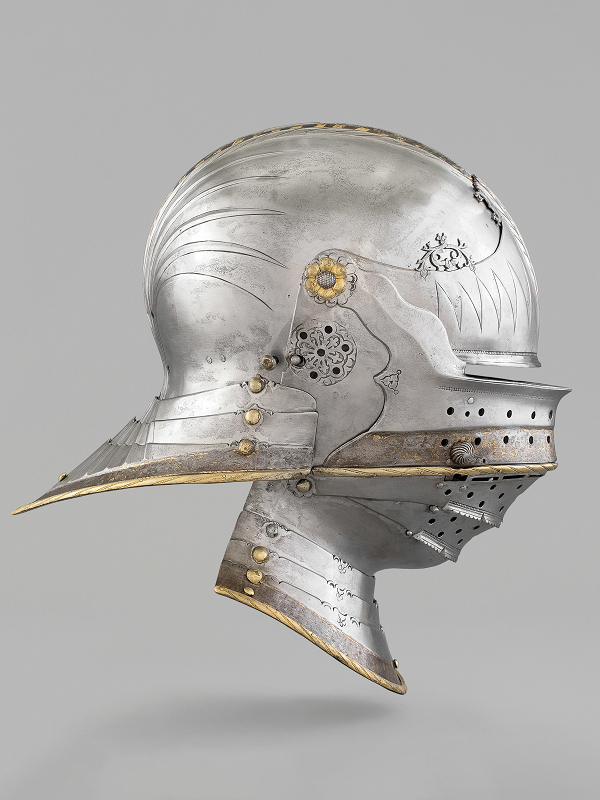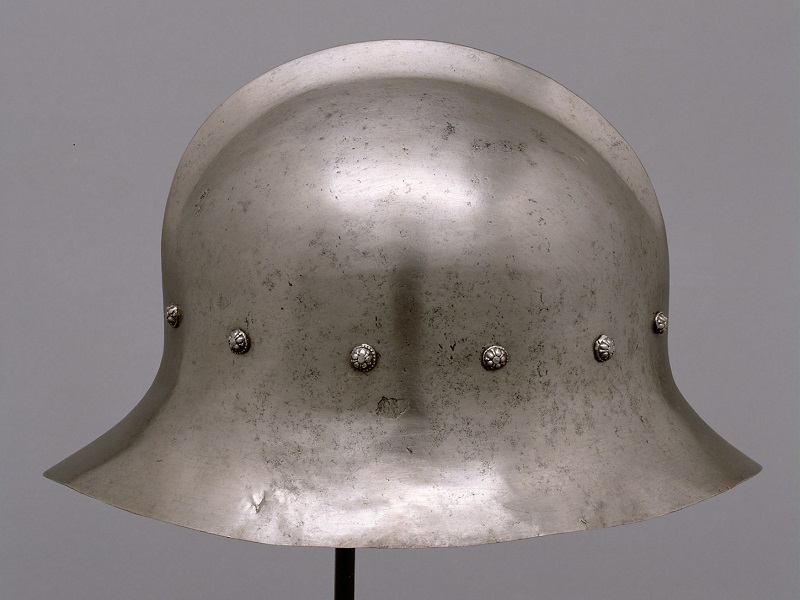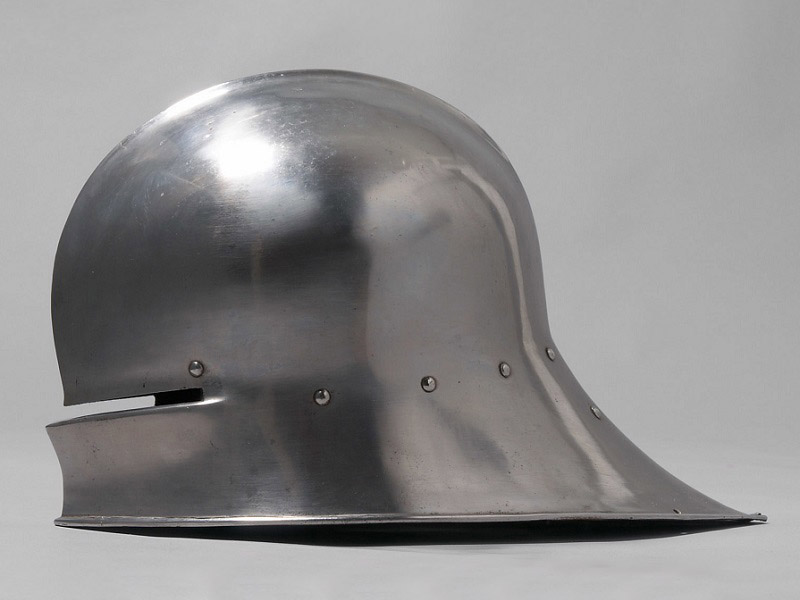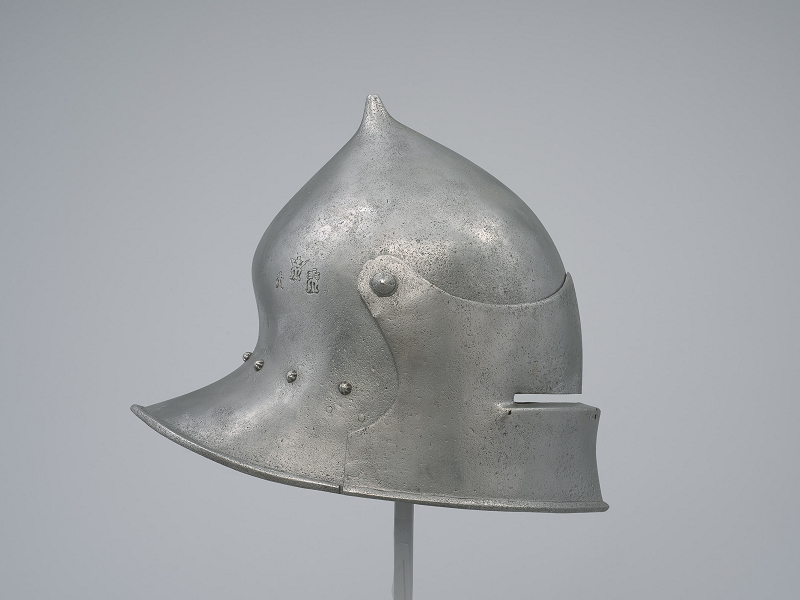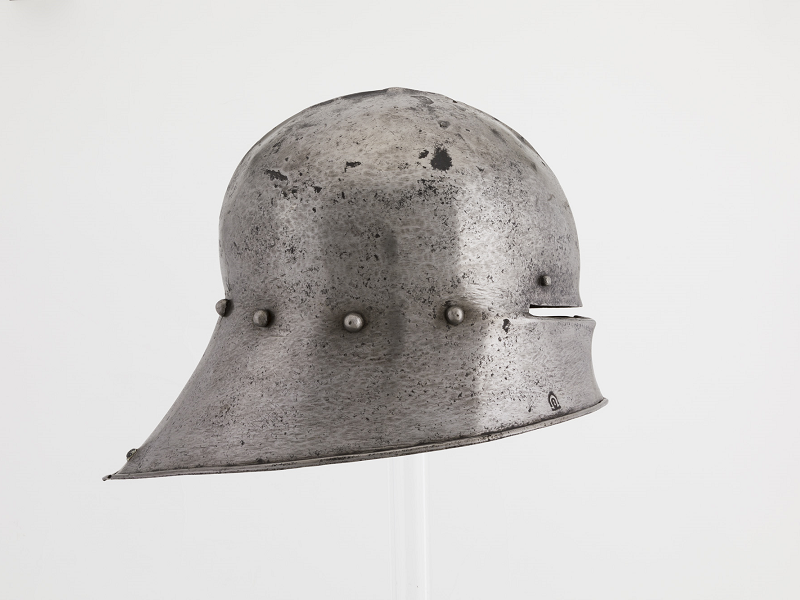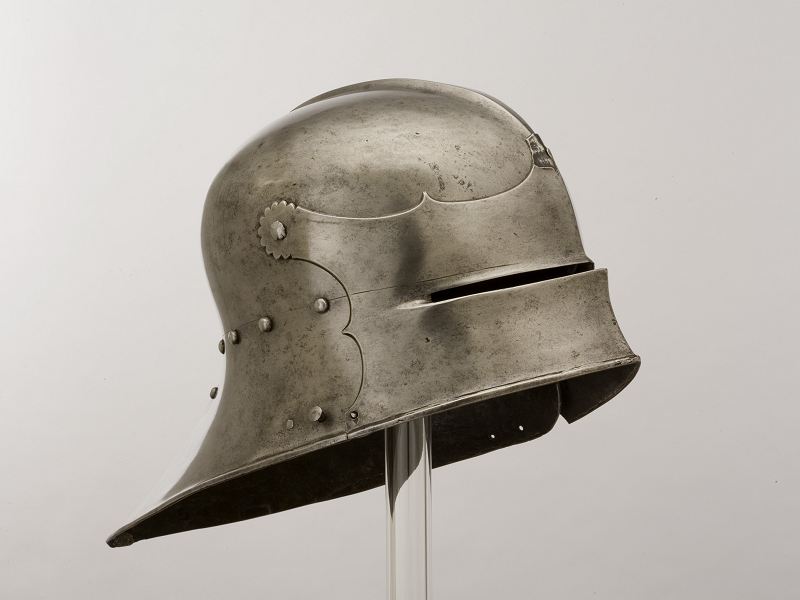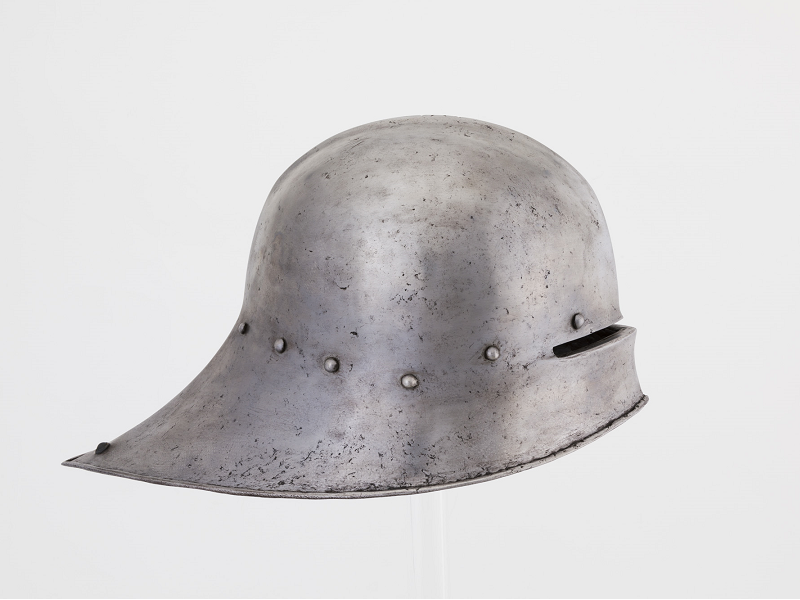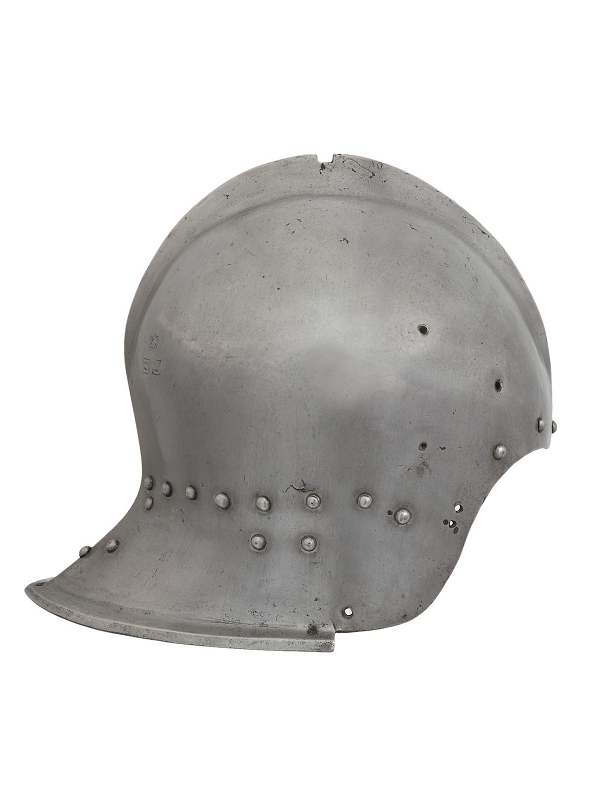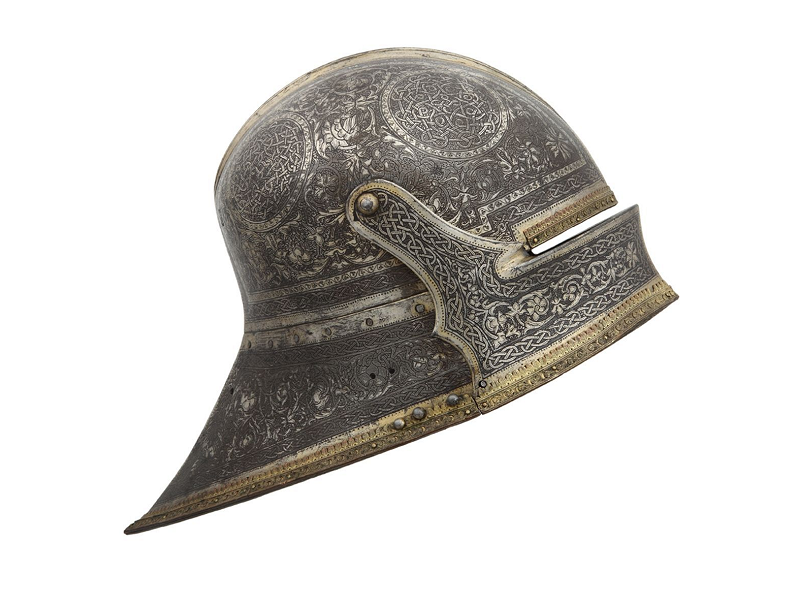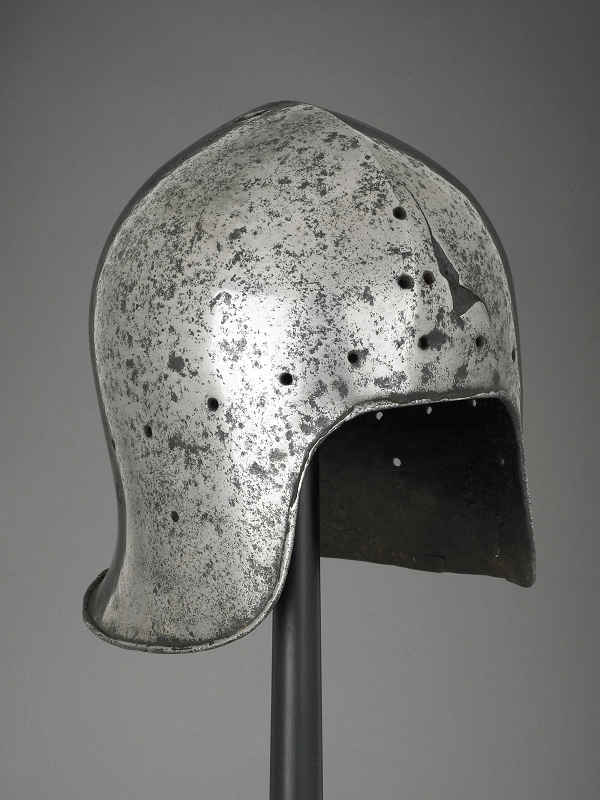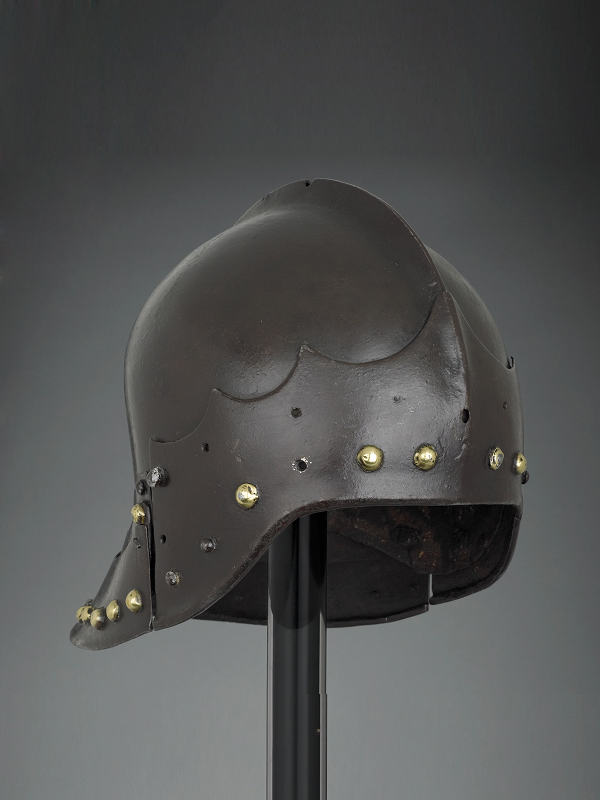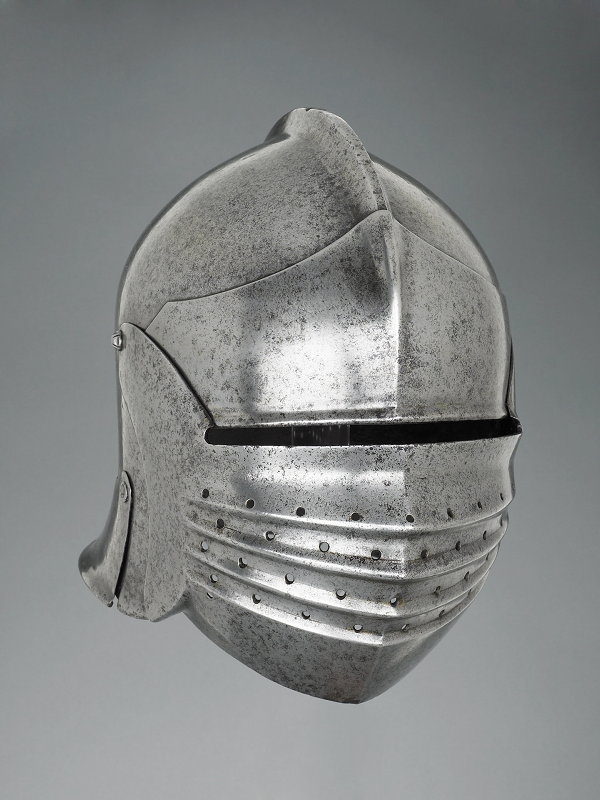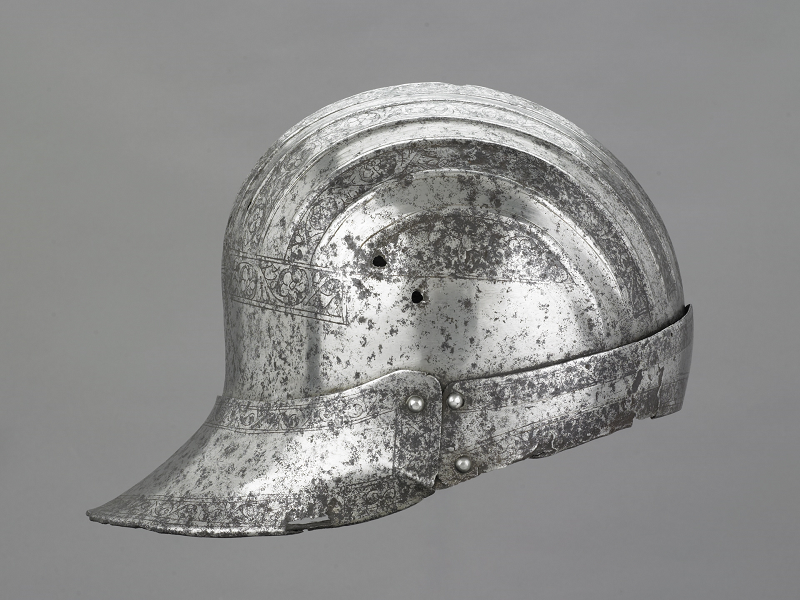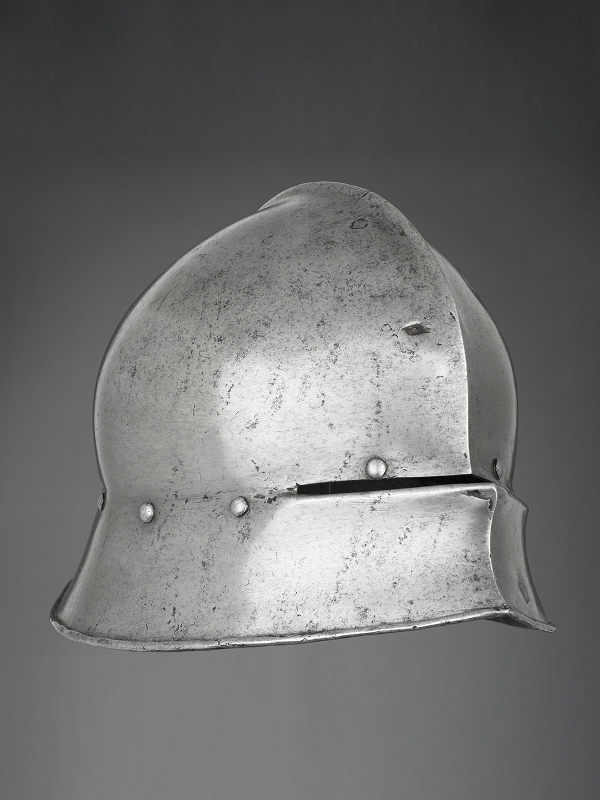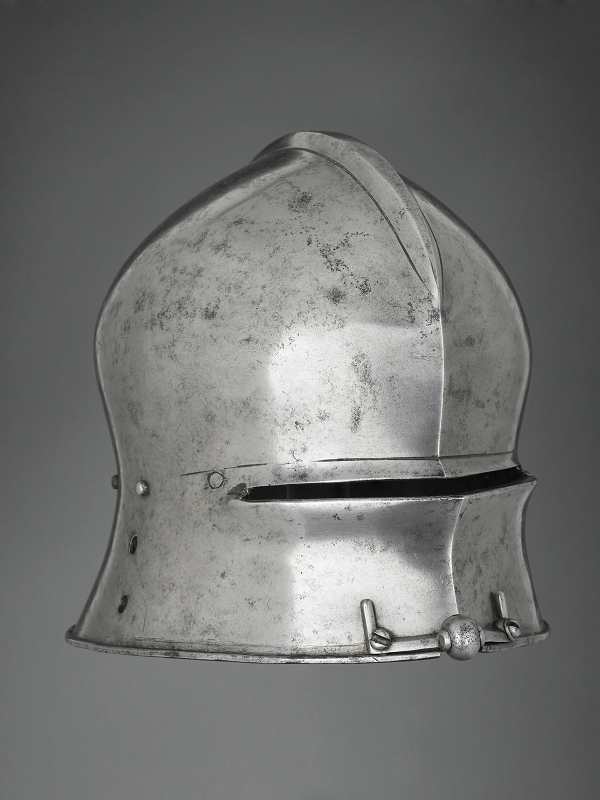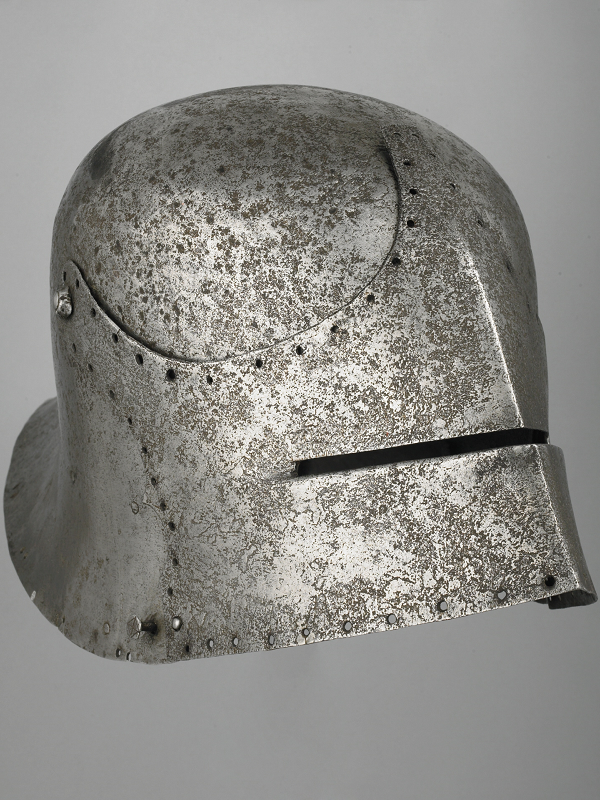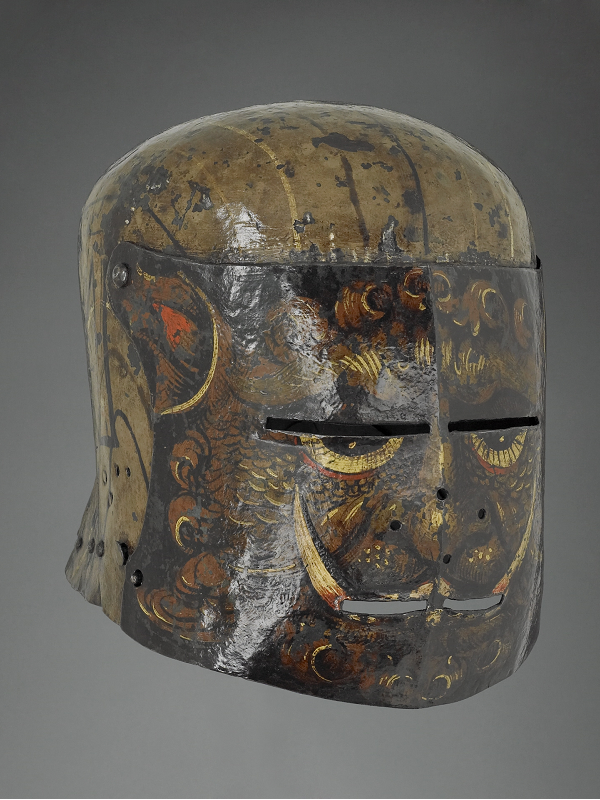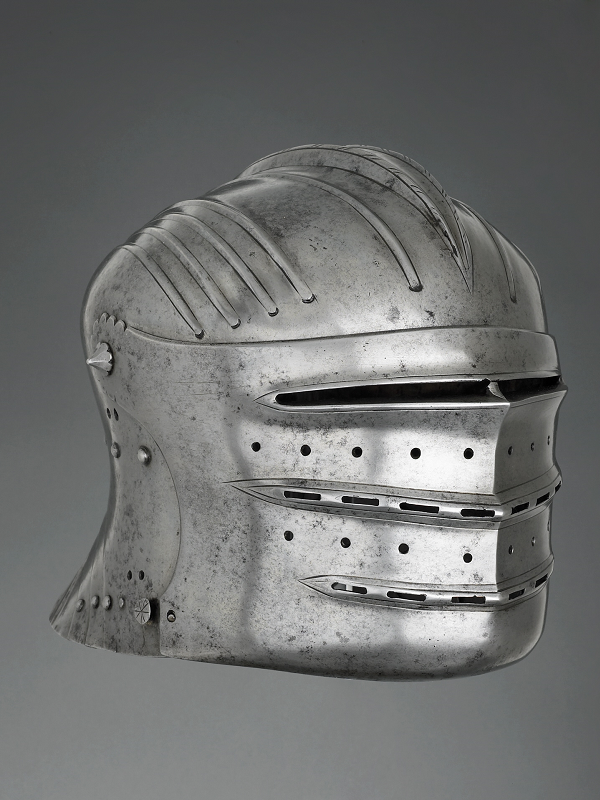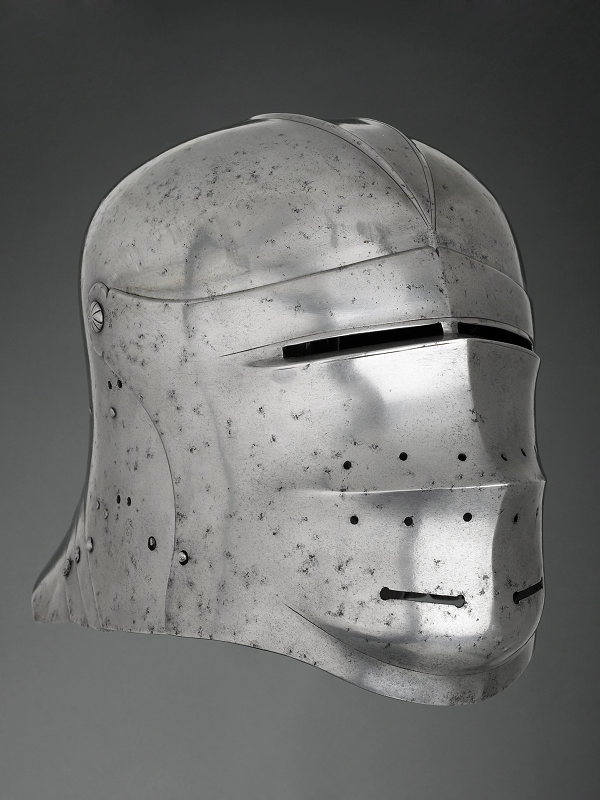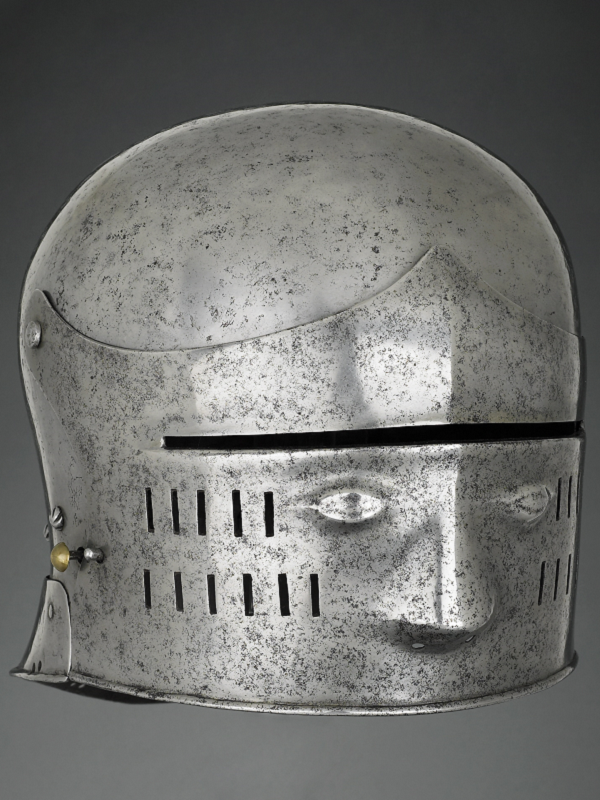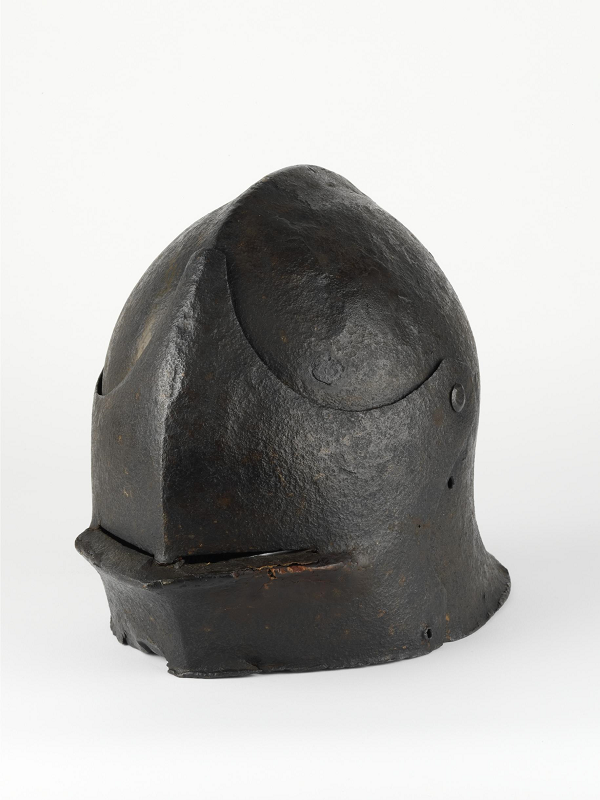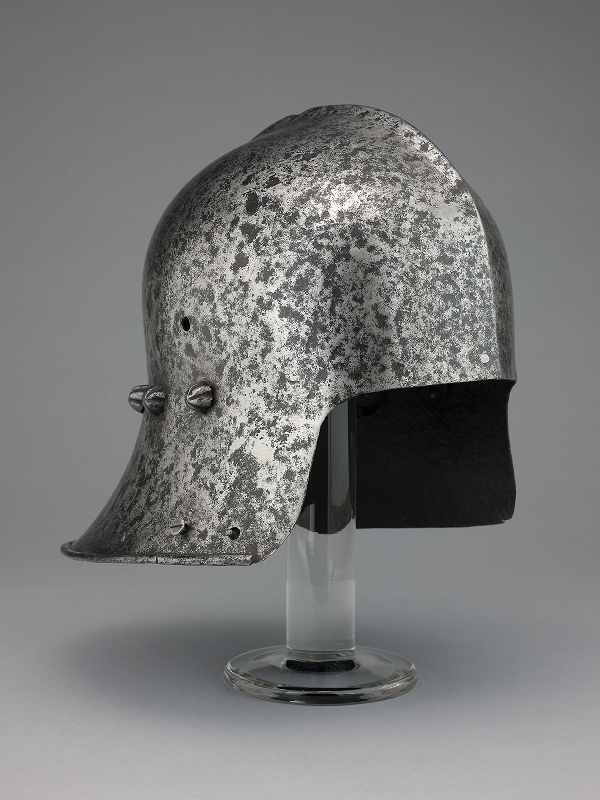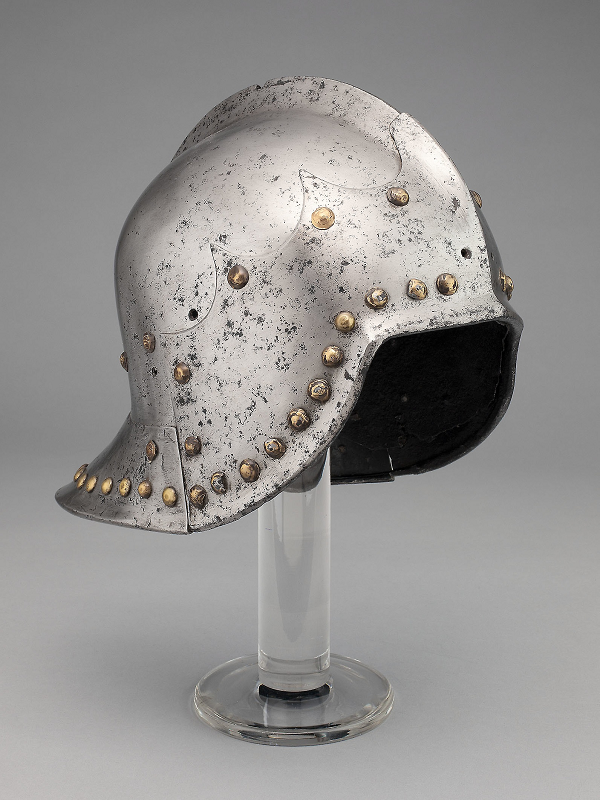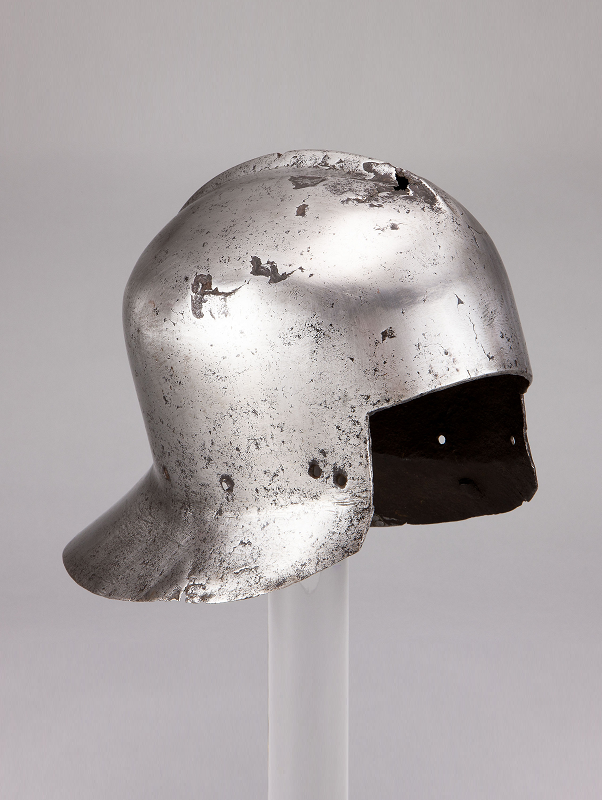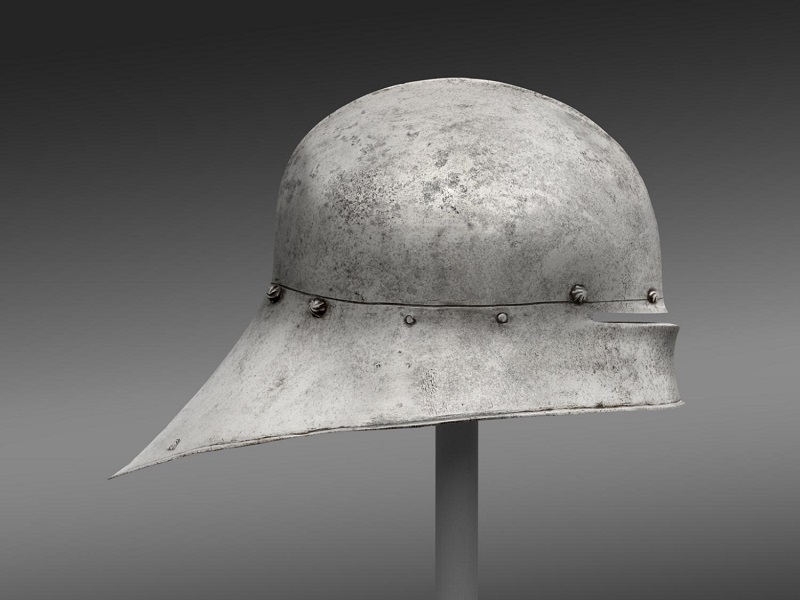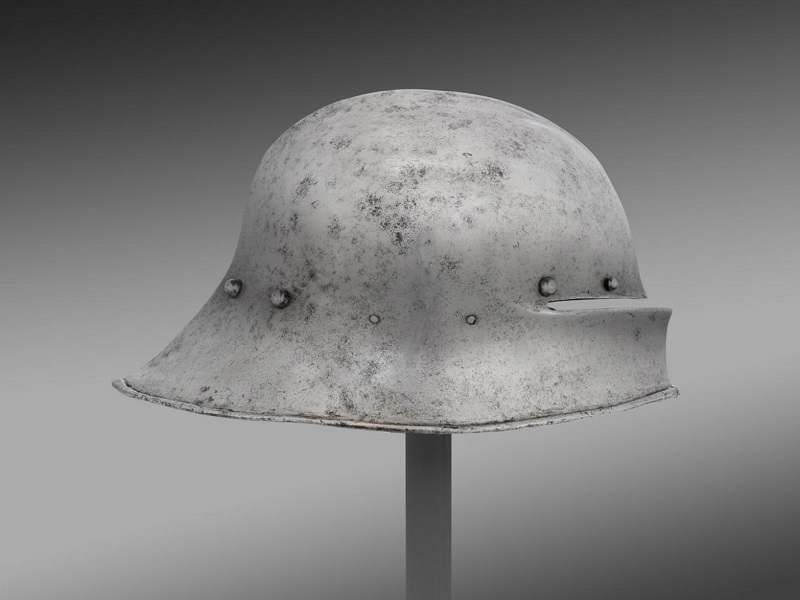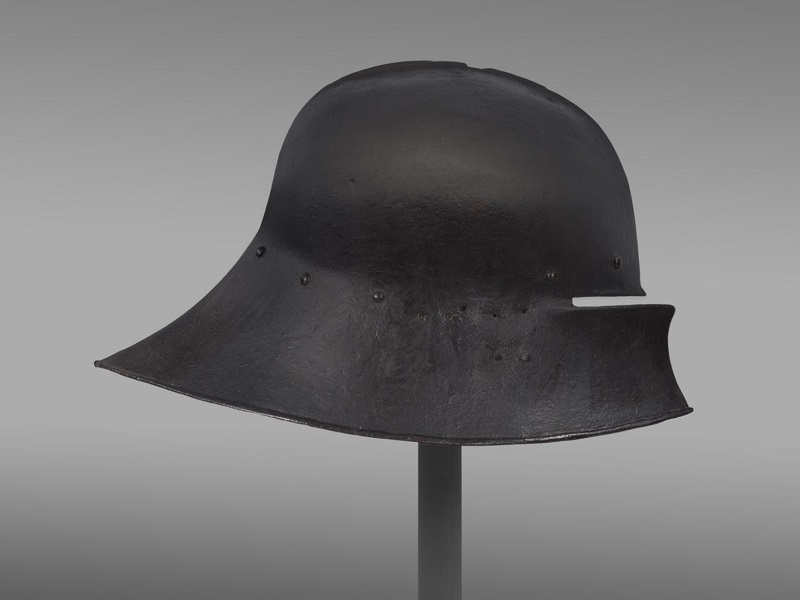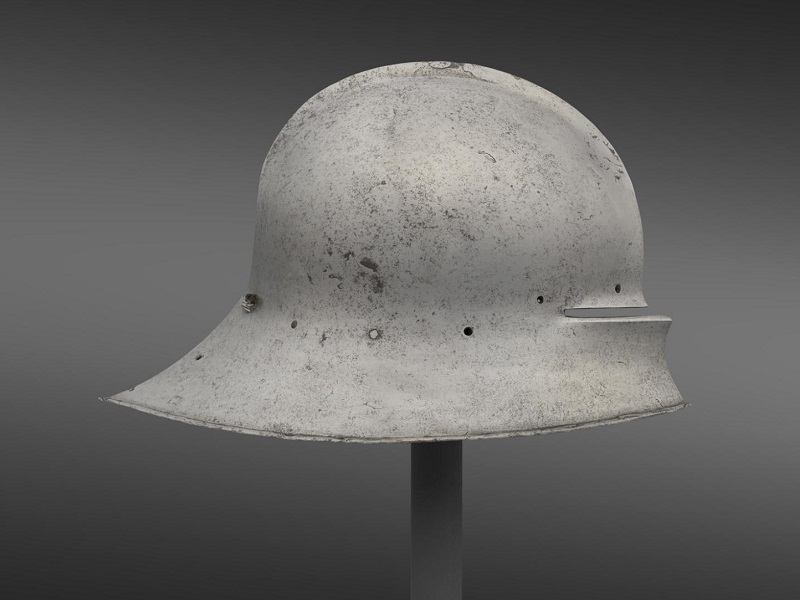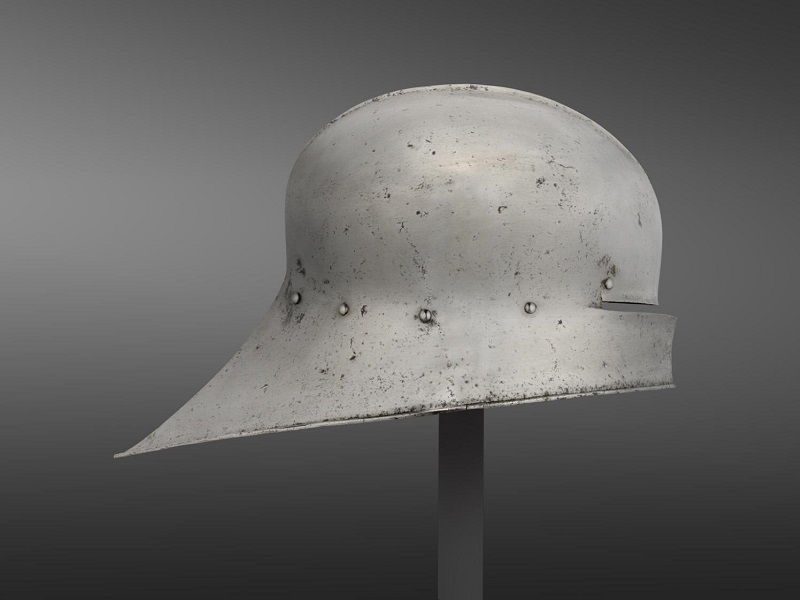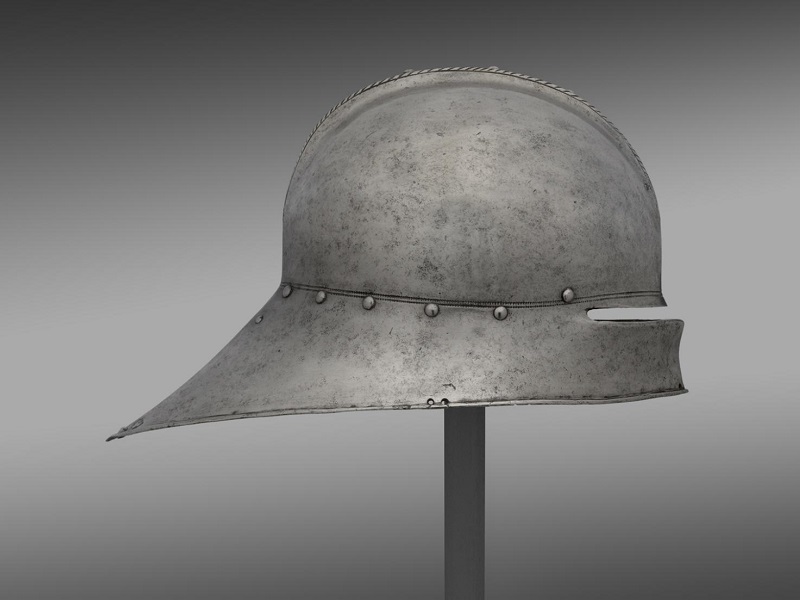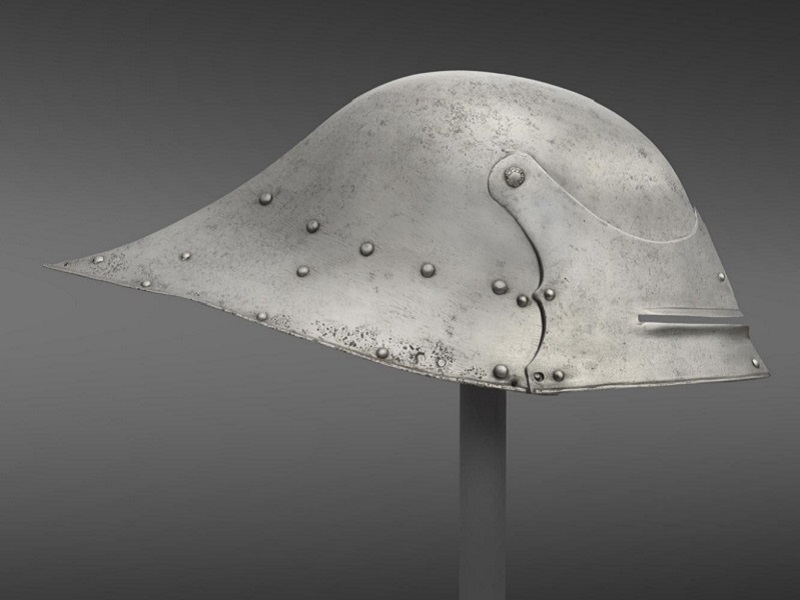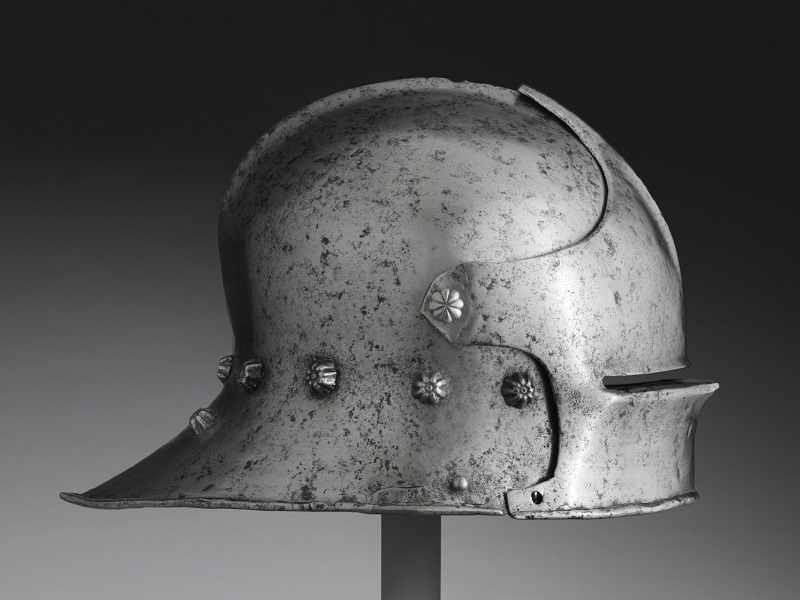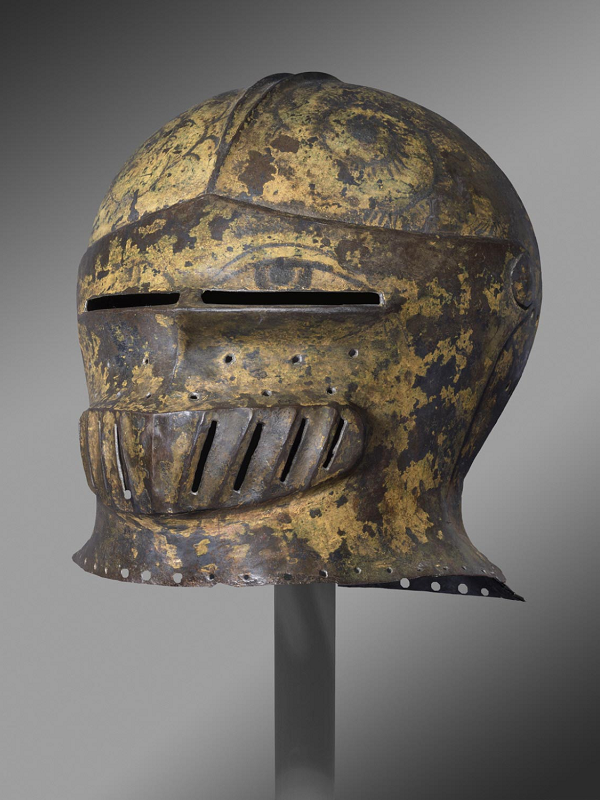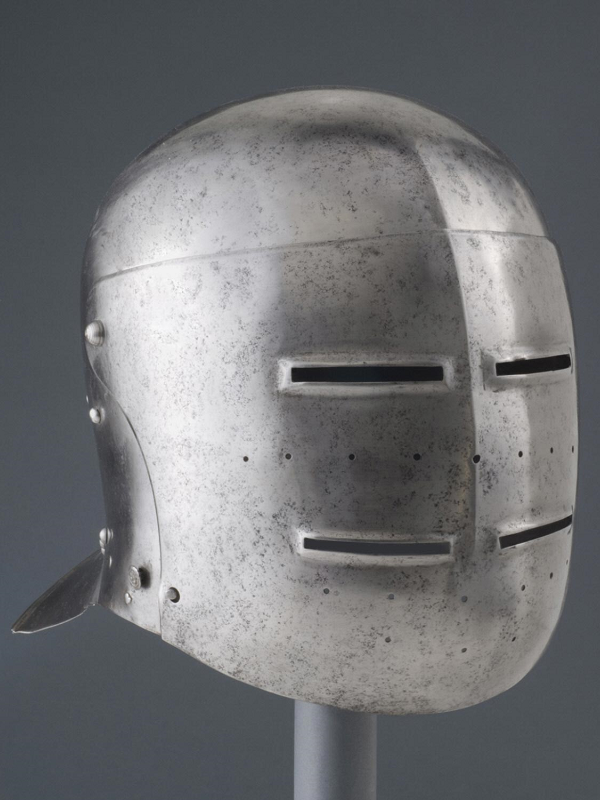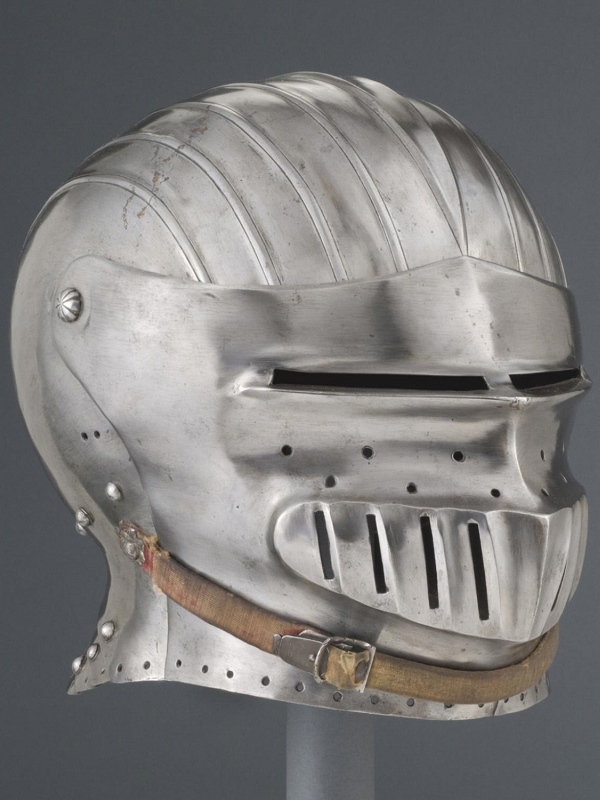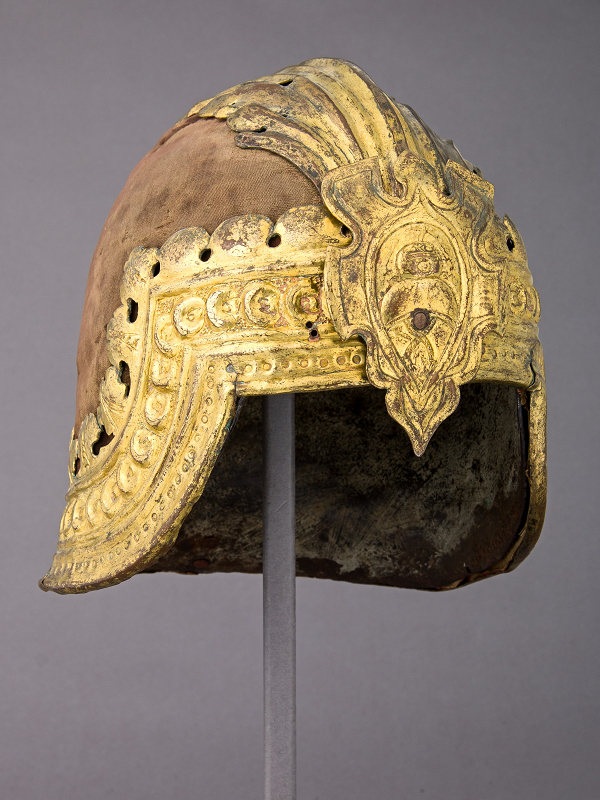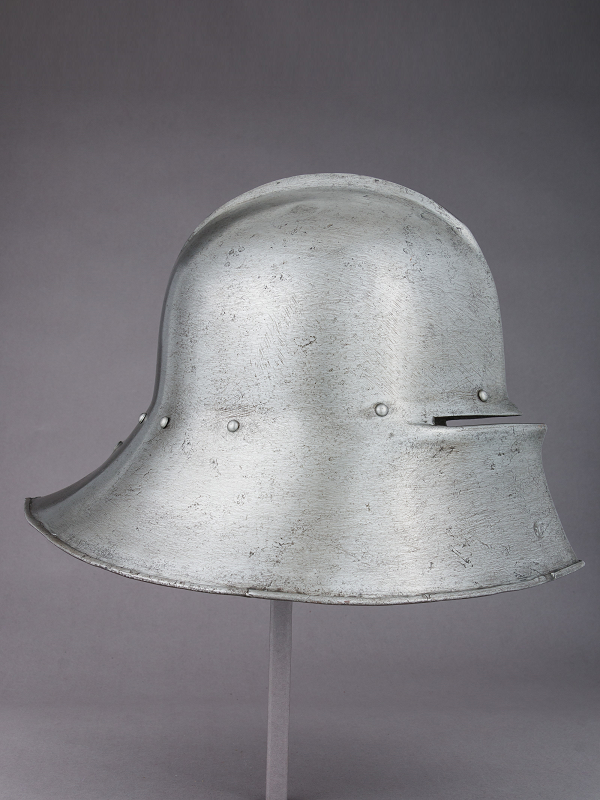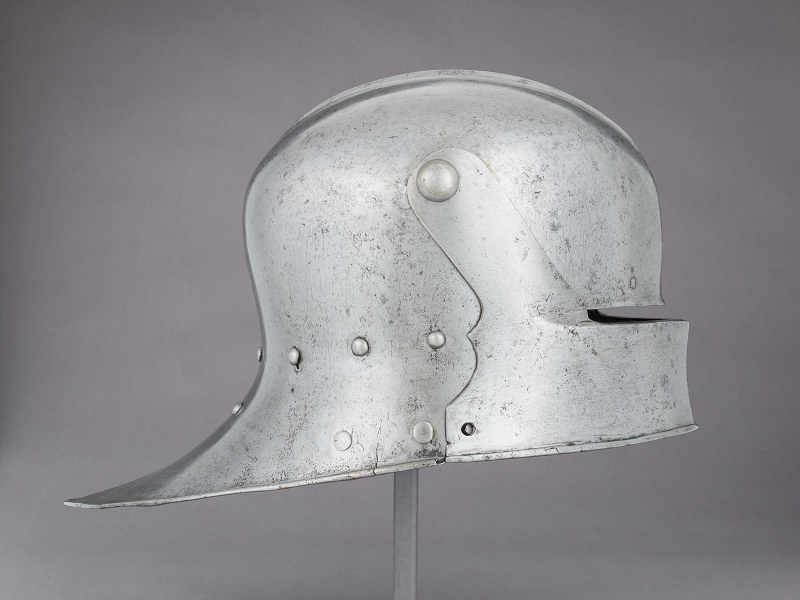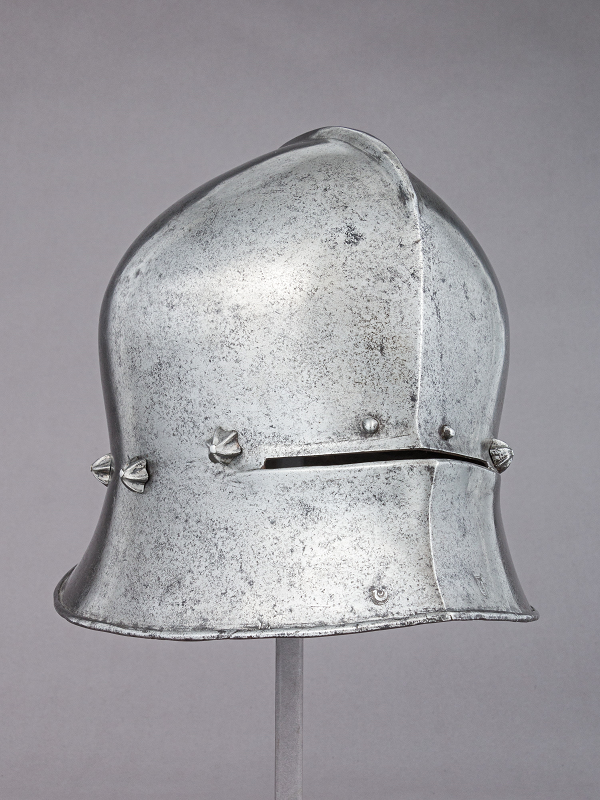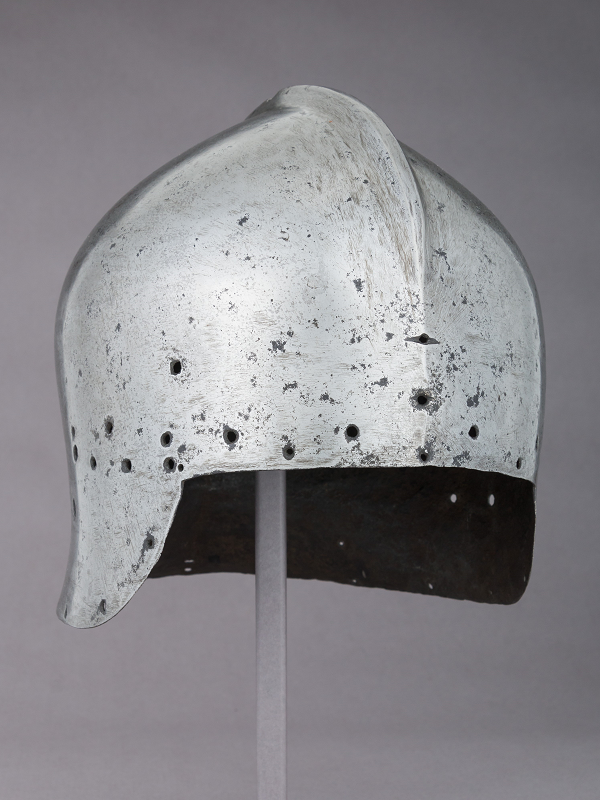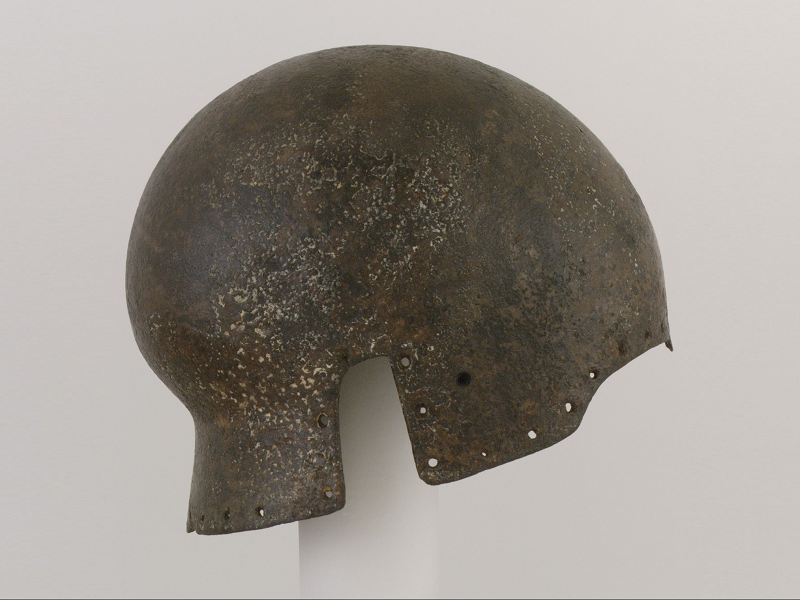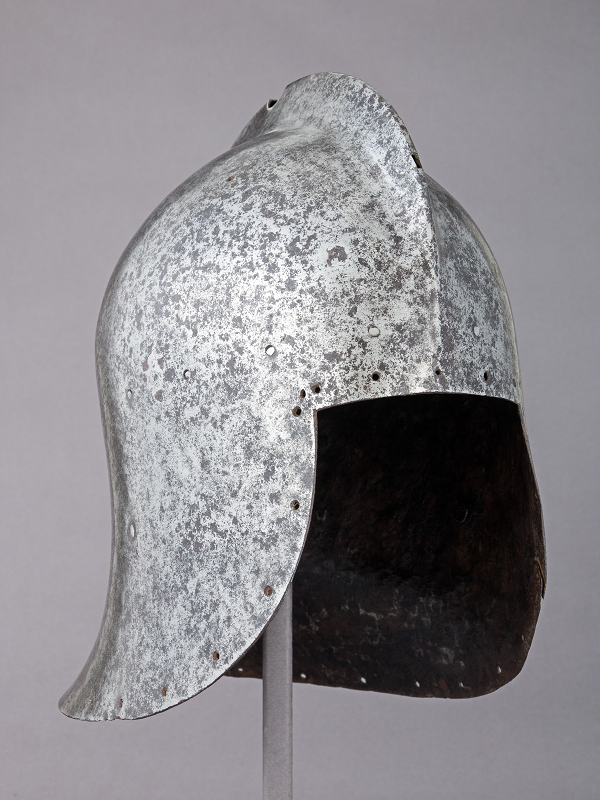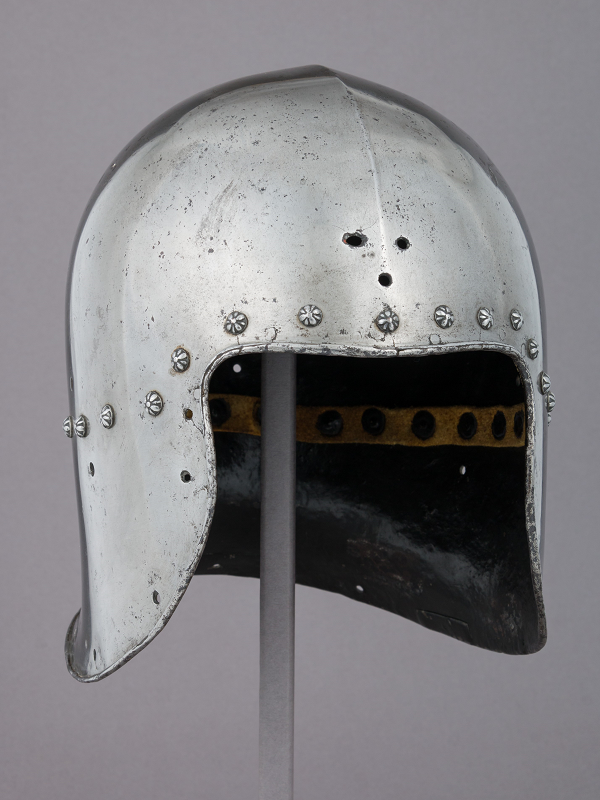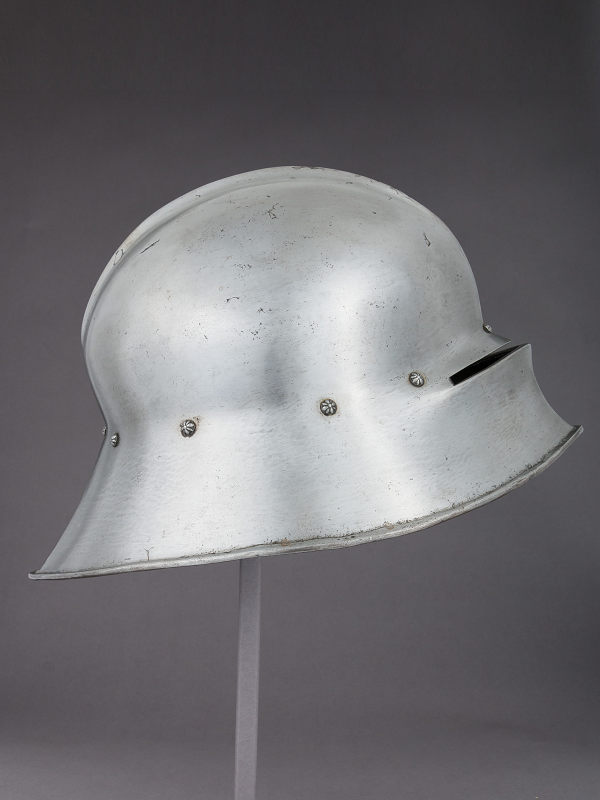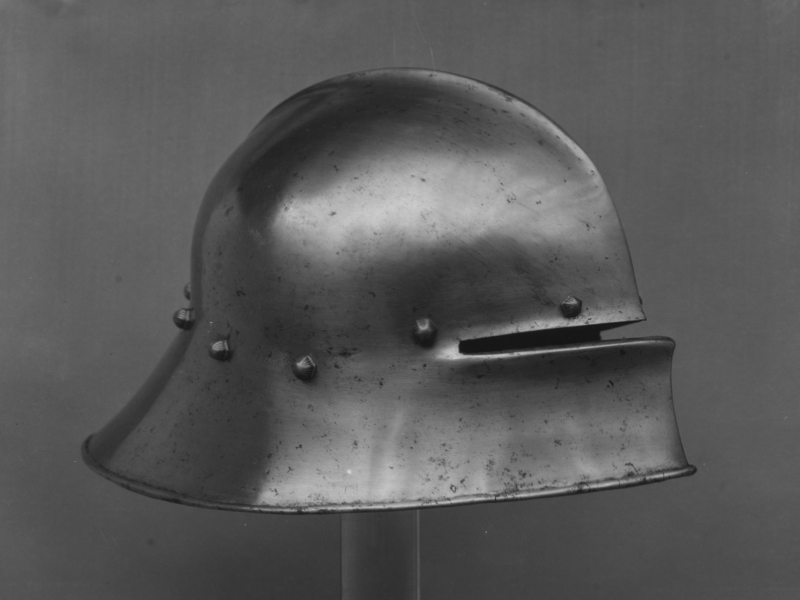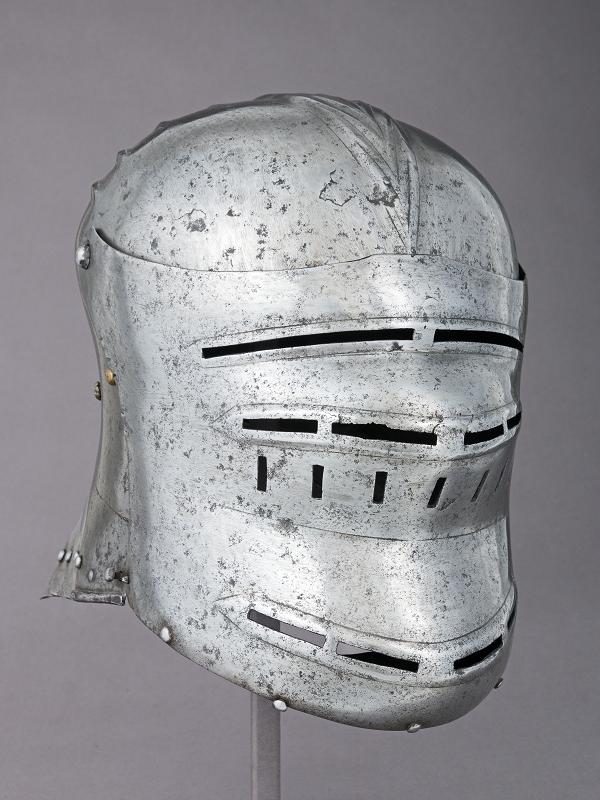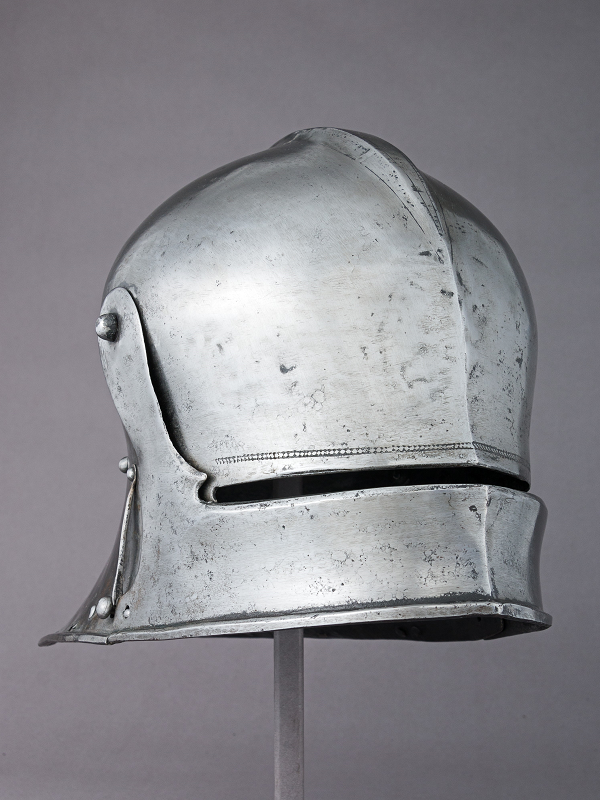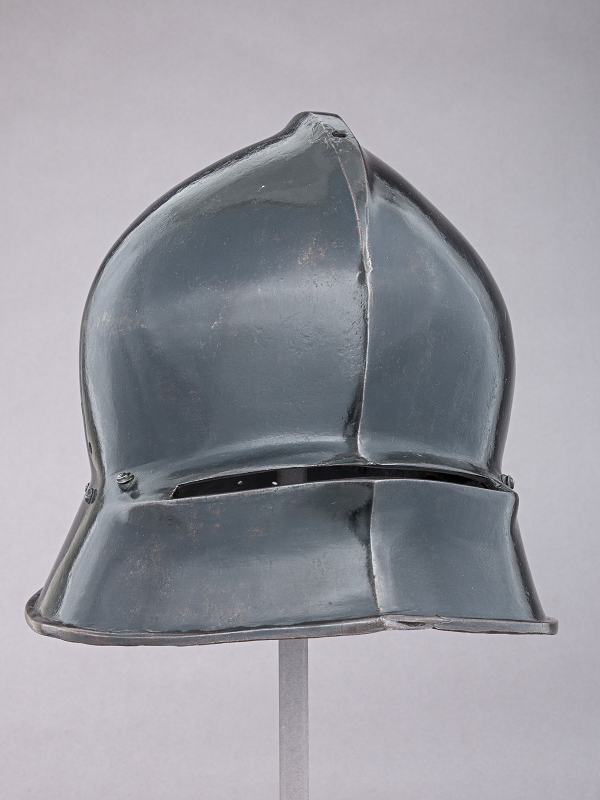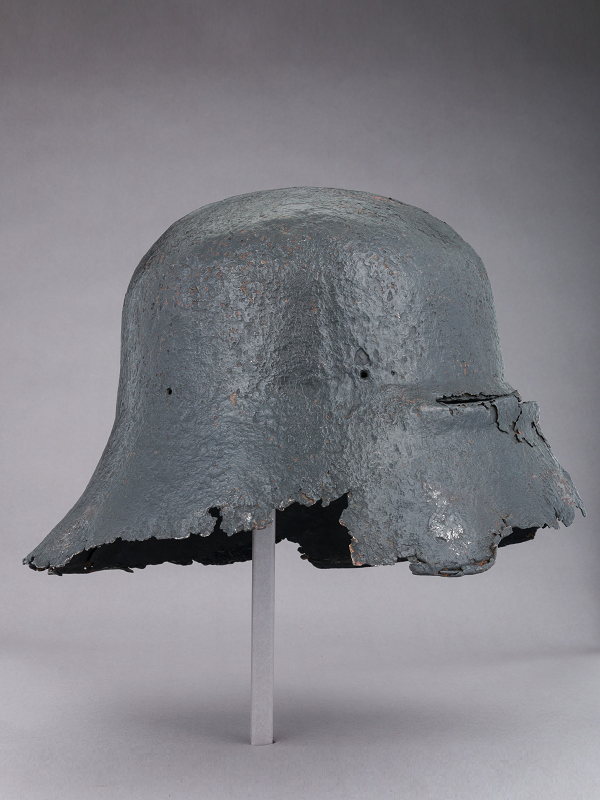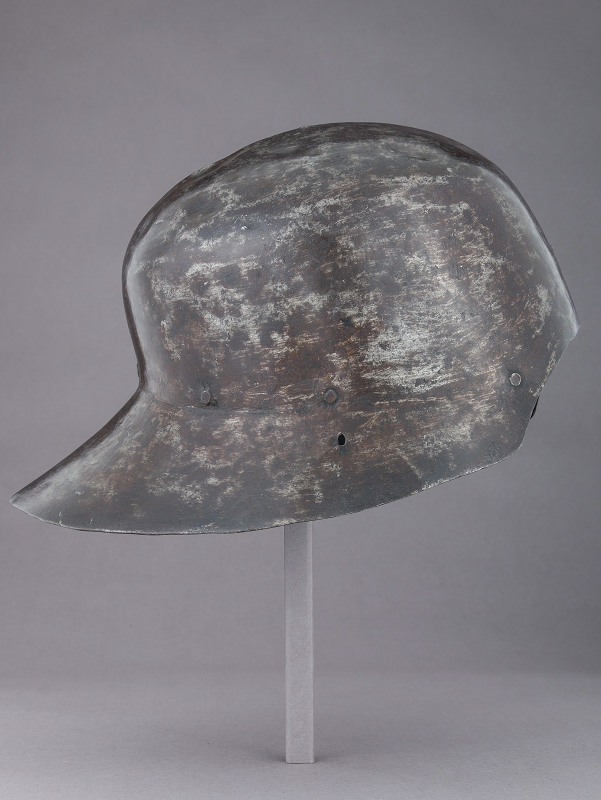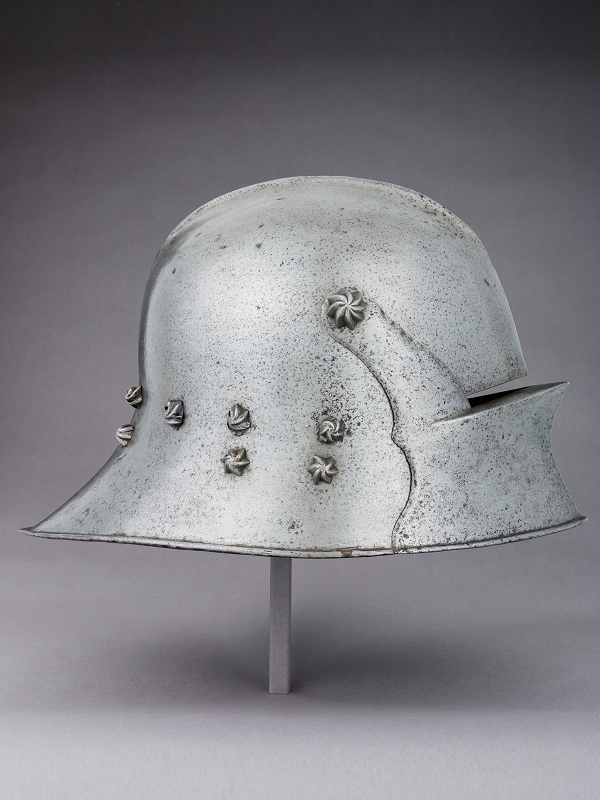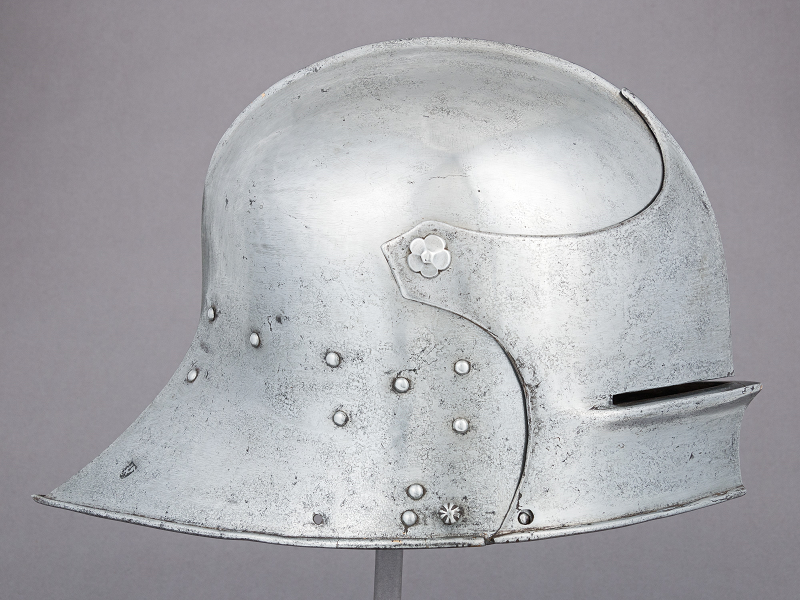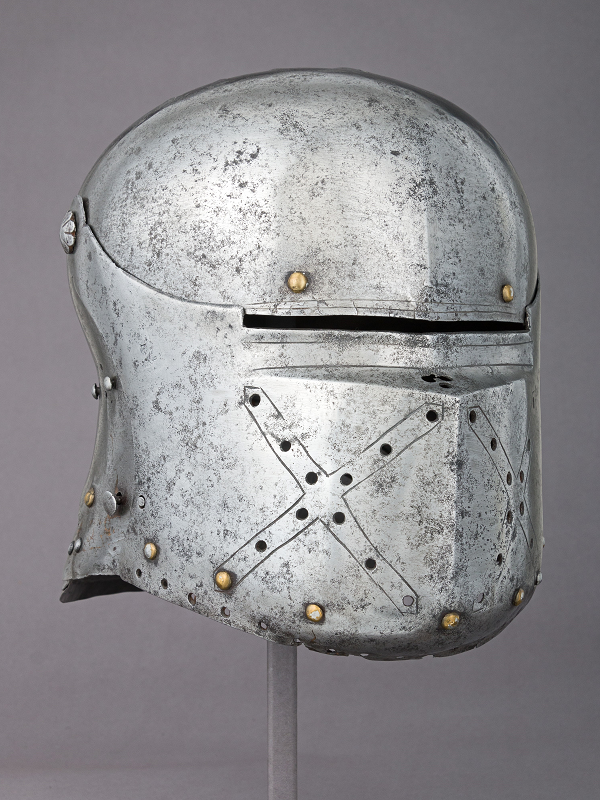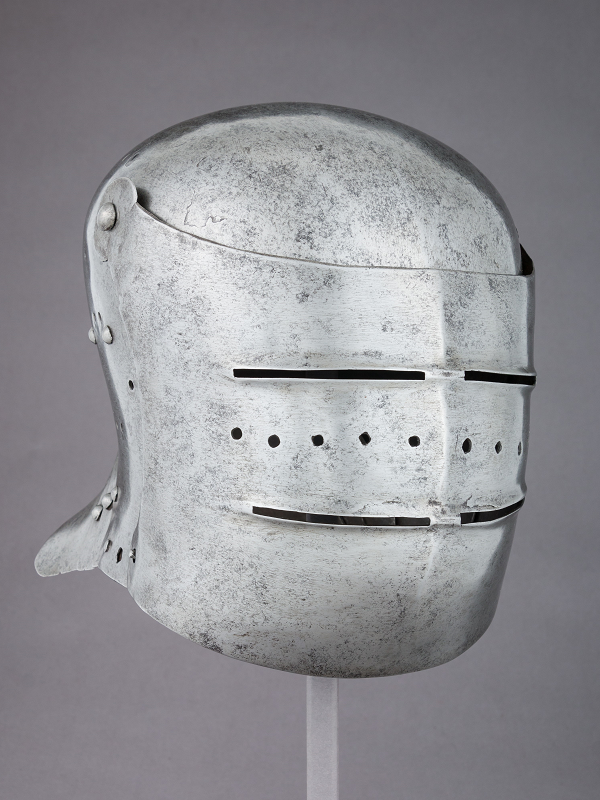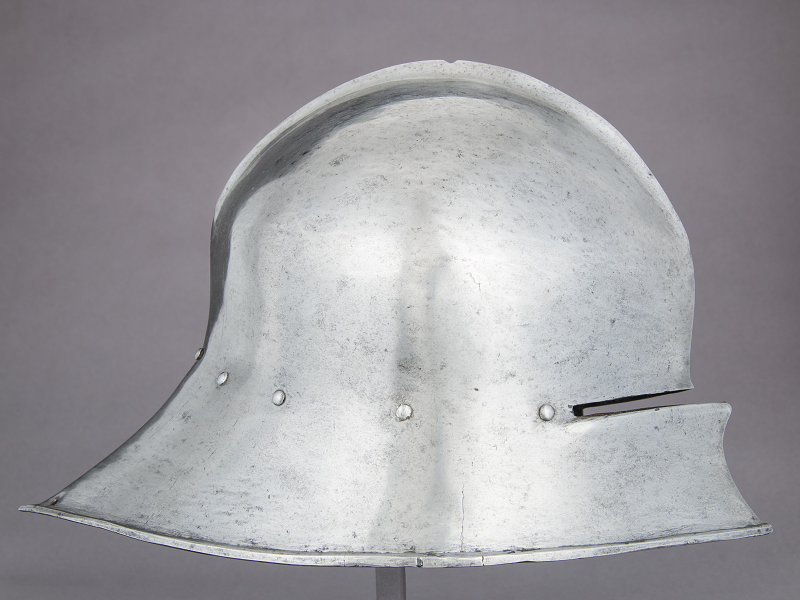


The Sallet (fr: Salade, de: Schaller, it: Celata) is one of the most elegant and functional knightly helmets of the late Middle Ages. It appeared in the late 14th and early 15th centuries and quickly became a symbol of the transitional era of Gothic armor. The sallet combined excellent protection, good visibility, and relative lightness, making it popular among both heavy cavalry and infantry.
Origin and Evolution.
The sallet descends from the bascinet, an earlier helmet with a conical or rounded crown and often a chainmail aventail. By the late 14th century, armorers began experimenting with its shape: lengthening the back for better neck and nape protection, making the crown more rounded, and adding stiff brims or visors. The first mentions of the sallet appear in Italian inventories from the early 15th century (for example, among the Gonzaga family in Mantua). From Italy, the helmet spread throughout Europe, becoming especially popular in Germany, where it became a nearly universal element of Gothic armor. By the mid-15th century, the sallet had virtually supplanted the bascinet in Western and Northern Europe, although in some regions, the armet—a more closed helmet with cheek plates—was also used.
The evolution of its form was gradual: from simple, deep "helmets" with wide brims to elegant, elongated designs with a long backplate, reminiscent of the tail or "crest of a Gothic cathedral."
Sallet Construction.
The classic sallet consisted of a single or composite steel crown 2–4 mm thick. Its main distinguishing feature was the extended backplate (especially long in German examples), which reliably protected the neck and back of the head from slashing blows from above and behind. The front portion often had a small peak or "cape," and visibility was provided through a narrow horizontal slit for the eyes or a raised visor.
Many salltes were worn with a bevor—a separate plate that protected the lower face, chin, and throat. The bevor was secured with straps or fastened to the breastplate, and the helmet could be slightly moved back for better visibility (especially convenient for infantrymen).
A typical sallet weighed 2–4 kg, making it lighter than many fully enclosed helmets. The surface was often polished to a high shine and decorated with engraving, etching, or gilding. Special reinforced versions with an integrated bevor were created for tournaments (for example, the German "rennen").
The German sallet is elongated, with a long, tail-like backplate, often with a movable visor.
The Italian sallet is rounder, more compact, sometimes with an open face or a T-shaped neckline (similar to a barbute).
The English and French sallets are intermediate forms, often with a wide brim, reminiscent of a military hat.
Tactics and Use.
The sallet was ideally suited to the realities of the 15th century—an era when crossbows, longbows, and early firearms were increasingly common on the battlefield. The narrow eye slit provided good protection from arrows, and the smooth, rounded surfaces helped deflect blows from swords, axes, and halberds.
Knights and heavy cavalrymen typically paired the sallet with full plate armor and a bevor for maximum protection. Infantrymen (including landsknechts and urban militias) often wore simpler, open versions with wide brims—they were cheaper and allowed for better orientation in formation. The helmet could be pulled back onto the back of the head for breathing and viewing over the brim—an advantage not found in fully enclosed armée or large helms. This made the sallet particularly useful for long campaigns and mixed battles.
Sallets were widely used during the Wars of the Roses in England, the Burgundian Wars, the Italian campaigns, and the wars of Maximilian I. One of the most famous examples is the luxurious tournament sallet with an integrated bevor, which belonged to Emperor Maximilian I and was created in the workshop of Lorenz Helmschmidt.
Why did the sallet become so popular?
It offered a balance of protection and mobility—better than heavy closed helmets and more comfortable than a bascinet with an aventail.
Versatility—suitable for both cavalry and infantry.
Relative ease of production—lighter and cheaper than an armée. Aesthetics—the elongated Gothic shape fit perfectly with the aesthetics of the late Middle Ages.
By the late 15th and early 16th centuries, the sallet began to give way to more closed armet and closed helmets (close helmets), especially with the spread of heavy cavalry and the refinement of tournament rules. However, its elements influenced later helmets, including the German casque (Stahlhelm) of the 20th century.
Today, the sallet is one of the most recognizable symbols of the knightly era. It often appears in historical reenactments, films, and games. Museums (the Metropolitan, the Vienna Armory Museum, and the Royal Armouries in London) house hundreds of authentic examples—from simple soldier helmets to richly decorated knightly ones.
The sallet is not just a piece of iron on the head. It is the embodiment of the engineering genius of the late Middle Ages: a helmet that allowed a warrior to see the enemy, breathe, and strike while remaining relatively protected. In an era when armor was becoming increasingly heavier, the sallet.