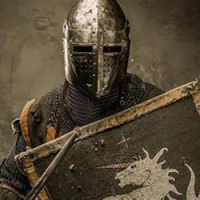
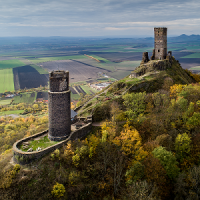
The Order of the Poor Knights of Christ and the Temple of Solomon, better known as the Knights Templar (Latin: Pauperes commilitones Christi Templique Salomonici), is one of the most striking and controversial phenomena of medieval Europe. Emerging in the context of the Crusades as a military-monastic organization, it combined the ideals of monastic asceticism with military valor and, later, significant economic and financial power. The Templars played a key role in protecting Christian pilgrims and Latin states in the Middle East, but their wealth and independence from secular authorities ultimately led to a tragic end.
The historiography of the order is extensive: from medieval chronicles (such as those of William of Tyre) to modern research, emphasizing both the military and economic aspects, as well as the mythologization of the Templar image in subsequent eras.
The purpose of this article is to systematically examine the stages of the order's formation, rise, activities, and dissolution based on available historical sources.
Foundation and Early History (early 12th century).
The Knights Templar emerged shortly after the First Crusade (1096–1099), when Jerusalem fell under Crusader control, but pilgrimage routes remained extremely vulnerable. Around 1119–1120, a group of eight or nine French knights, led by Hugues de Payens, took vows of poverty, chastity, and obedience before the Latin Patriarch of Jerusalem. Their primary task was to protect pilgrims from bandits on the roads of the Holy Land.
King Baldwin II of Jerusalem provided the knights with housing in the south wing of the royal palace, located on the site of the former Temple of Solomon (hence the name Templarii). Initially, it was a small community of warrior monks, without the formal status of an order. In 1127–1129, Hugues de Payens toured Europe to raise funds and support. This culminated in the Council of Troyes (1129), where the order received official recognition and a charter (Latin Rule) drafted with the participation of Saint Bernard of Clairvaux.
Saint Bernard, an influential Cistercian abbot, wrote the treatise De laude novae militiae ("In Praise of the New Knighthood"), in which he justified the existence of monastic warriors as a "new type of chivalry" combining spiritual and military struggle. The order's charter (initially 72 articles, later expanded) was based on the Benedictine-Cistercian tradition: knights were required to observe vows, participate in religious services, live in community, and abstain from luxury, gambling, and vows. A white cloak with a red cross became the symbol of the order. Pope Innocent II, with the bull Omne datum optimum (1139), granted the Templars significant privileges: exemption from tithes, the right to build their own chapels, and immunity from bishops (subordination only to the pope). This made the order virtually independent of local ecclesiastical and secular authorities.
Structure of the Knights Templar.
The Order of the Poor Knights of Christ and the Temple of Solomon (the Templars) possessed one of the strictest and most effective hierarchical systems among the military-monastic orders of the Middle Ages. Its organization combined monastic principles (vows of poverty, chastity, and obedience) with military discipline and administrative efficiency. The structure was regulated by the Rule of the Order (a Latin rule approved at the Council of Troyes in 1129 and repeatedly expanded to more than 600 articles by the end of the 13th century). The Rule detailed the duties, rights, punishments, and daily life of the brothers.
Classes (Ranks) of the Order's Members.
Members of the Order were divided into four main ranks:
Knights (fratres milites) – the elite of the Order. Full-fledged fighting brothers from the nobility. They wore a white cloak with a red cross and were entitled to three or four horses and squires. Knights constituted the heavy cavalry and held the highest command positions.
Chaplains (fratres capellani, priests) were the clergy of the order. They performed religious services, heard confessions of the brothers, and provided spiritual support. Chaplains had their own hierarchy and were often immune from secular authority.
Sergeants (fratres servientes, serving brothers) were the most numerous group. They included squires, warrior sergeants (light cavalry or infantry), artisans, administrators, and Turcopoles (light cavalry made up of local Christians or mercenaries). Sergeants wore black or brown cloaks with a red cross.
Servants and laborers (fratres famuli, conversi) were auxiliary personnel: peasants, artisans, shepherds, and laborers on the order's lands. They did not take full monastic vows and performed economic functions.
The total number of the order at its peak is estimated at 15,000–20,000 (including all categories), of which knights were relatively few—a few hundred in the Holy Land.
Central Hierarchy (Supreme Leadership).
At the head of the order stood the Grand Master (Magister, Grand Master). He was elected for life by a special committee of senior officials and wielded almost absolute power, although important decisions (war, peace, the admission of new brothers, the appointment of provincial commanders) were made at the Grand Chapter—a meeting of senior officials.
Key senior positions (in order of seniority):
Seneschal—Deputy Grand Master. He handled administrative and economic matters and was the custodian of the order's seal and banner (the Beauséant, a black and white banner). In the Master's absence, he assumed his duties.
Marshal — the chief military commander. He was responsible for military training, discipline, armaments, horses, and tactics. He commanded the order's forces in battle and appointed a lieutenant marshal and standard-bearer. The marshal enjoyed considerable autonomy on the battlefield.
The Grand Preceptor (or Commander) of the Kingdom of Jerusalem — effectively the treasurer of the order. He managed finances, the fleet, spoils of war, and estates in the Holy Land. He was sometimes called the "Commander of the Land of Jerusalem."
Commander of the City of Jerusalem — was responsible for the hospital, hospices, and the daily needs of the community in the capital.
Draper (Sacrist) — oversaw the uniforms, equipment, and distribution of property. According to the charter, he held a high position after the master and marshal.
Turcopolier commanded the turcopoles (light cavalry).
Other important figures included lieutenant marshal, standard-bearer, and treasurer in certain regions.
Territorial organization.
The Order was divided into provinces (or priories), governed by provincial masters or preceptors. By the late 12th–13th centuries, there were approximately 10 provinces:
In the East: Jerusalem, Antioch, Tripoli.
In Europe: France, England, Aragon, Portugal, Apulia, Hungary, and others.
The basic administrative and economic unit was the commandery (preceptory, or commandery)—a fortified estate, monastery, or castle with its surrounding lands. Commanderies were governed by commanders (preceptors). By the 13th century, there were several thousand commanderies throughout Europe and the Levant. They served as centers for recruitment, agriculture, financial operations, and logistics.
Each commandery had its own small chapter and reported to the provincial leadership, which, in turn, reported to the Grand Master.
Principles of governance and discipline.
The Chapter was a regular meeting of brothers to discuss matters, perform penance, and make decisions. The Grand Chapter met for strategic matters.
Discipline was extremely strict. The Rule provided for punishments ranging from fasting and flogging to exile or life imprisonment. Luxury, gambling, contact with women, and oaths were prohibited.
Election and accountability—even the Grand Master consulted with the Chapter; positions were often filled based on merit and experience.
Financial and military autonomy—thanks to papal privileges, the Order was immune from the jurisdiction of local bishops and kings, allowing for the efficient management of its vast assets.
The Templar structure made the Order resemble a well-organized "international corporation" and "special forces" of its time: a mobile, disciplined, and self-sufficient force capable of waging war, conducting banking operations, and governing vast territories. After the order's dissolution in 1312, its structure served as a model for other military monastic orders (the Hospitallers and the Teutons) and influenced later concepts of knightly organizations.
This system ensured the order's remarkable stability for nearly two centuries, despite constant wars and political intrigues.
Military and Economic Activity.
In the 12th and 13th centuries, the Templars emerged as a powerful military force. They participated in key battles of the Crusades, including the Battle of Hattin (1187), where they suffered a crushing defeat at the hands of Saladin, and the defense of Accra (1291), the last major Crusader stronghold in the Holy Land. The Order built and maintained castles (for example, in Palestine and Cyprus) and formed significant contingents of heavy cavalry. The knights were distinguished by their discipline and fanatical devotion: captured Templars were often executed for failing to pay ransom.
At the same time, their economic infrastructure developed. Donations of land, castles, and money from Europe allowed the Order to establish a network of commanderies (preceptories) from Scotland to Palestine. The Templars managed agriculture, trade, and crafts. Their role in the development of the medieval financial system was particularly significant.
The Order effectively created one of the first forms of international banking. Pilgrims and crusaders could deposit funds in European commanderies and receive a letter of credit (similar to a check) that would disburse the money in the Holy Land. This minimized the risks of transporting cash. The Templars provided loans (bypassing the prohibition on usury through "rental" transactions), stored the valuables of kings and nobles, and managed their property. The Temple Church in London is sometimes called "the first bank of Western Europe" or "the Western Union of the Crusades." By the end of the 13th century, the Order possessed enormous wealth, which aroused envy and suspicion.
Major Battles Involving the Knights Templar.
Major battles involving the Knights Templar (Order of the Poor Knights of the Temple of Solomon). The Templars were one of the most capable crusader forces: heavy cavalry, discipline, fanatical bravery, and the rule of "no retreat." They often led the charge, and if captured, they were almost always executed (Saladin considered them particularly dangerous).
I have highlighted the most significant battles (from the 12th to the late 13th centuries) where the Order played a key role.
1. The Battle of Montgisard (1177).
One of the most brilliant victories of the Templars.
King of Jerusalem, Baldwin IV (the Leper King, 16 years old), with a small army (about 500 Templars + several thousand infantry and knights) unexpectedly routed Saladin's enormous army (over 20,000-26,000). The Templars, under the command of Master Ode de Saint-Amand, played a decisive role in the crushing cavalry charge. Saladin barely escaped. This was one of the few battles where the Crusaders defeated a numerically superior enemy.
2. The Battle of Hattin (July 4, 1187).
The most disastrous battle in the history of the Templars and the Crusades.
Saladin lured the combined army of the Kingdom of Jerusalem (including hundreds of Templars and Hospitallers) into a waterless area near the Horns of Hattin. Heat, thirst, and Saladin's tactics (setting the grass on fire) led to complete defeat.
The Grand Master of the Templars, Gérard de Ridefort (often accused of poorly advising King Guy de Lusignan), was captured. Saladin personally executed almost all the captured Templars and Hospitallers (about 230 people)—they refused to renounce their faith.
Consequences: the fall of Jerusalem, the beginning of the Third Crusade.
3. Siege of Acre (1189–1191)—part of the Third Crusade.
The Templars actively participated in the long siege and defense, and then in the storming of the city, along with Richard the Lionheart and Philip II Augustus.
This was one of the bloodiest sieges. The Templars proved themselves to be excellent engineers and fighters under difficult conditions.
4. Battle of Arsuf (1191).
During the Third Crusade, Richard the Lionheart defeated Saladin. The Templars and Hospitallers made up a significant portion of the heavy cavalry and participated in the decisive attacks.
5. The Battle of La Forbie (Harbiyah, 1244).
One of the most severe defeats since Hattin.
The combined Crusader army (Templars, Hospitallers, Teutons, and Muslim allies) was routed by Egyptian-Khwarazmian forces. Of approximately 300–400 Templars, only 33 survived. This greatly weakened the Order's military power in the Holy Land.
6. The Battle of Mansurah (1250) — The Seventh Crusade.
During the campaign of the French King Louis IX, the Templars fought in Egypt. The battle ended in a crushing defeat for the Crusaders; many Templars were killed or captured.
7. The Siege of Acre (1291) — The Templars' last stand in the Holy Land.
The final and most symbolic battle.
The Mamluk Sultan Al-Ashraf Khalil besieged Acre, the last major Crusader stronghold. The Templars, Hospitallers, and Teutons put up a desperate defense.
The Templar Grand Master, Guillaume de Beaujeu, was killed in battle. The Templars held their fortified quarter for several days after the fall of the main part of the city, refusing to surrender. When the fortress finally fell, most of the remaining knights were killed.
The fall of Acre marked the end of the Crusader presence in the Levant. The Order moved its headquarters to Cyprus and later to Europe.
The Mamluk Sultan Al-Ashraf Khalil besieged Acre, the last major Crusader stronghold. The Templars, Hospitallers, and Teutons put up a desperate defense.
The Templar Grand Master, Guillaume de Beaujeu, was killed in battle. The Templars held their fortified quarter for several days after the fall of the main part of the city, refusing to surrender. When the fortress finally fell, most of the remaining knights were killed.
The fall of Acre marked the end of the Crusader presence in the Levant. The Order moved its headquarters to Cyprus and later to Europe.
Other notable battles and sieges:
The Siege of Ascalon (1153) – an early victory where the Templars distinguished themselves during the assault.
The Siege of Tomar (1190, Portugal) – a successful defense of a Templar fortress from Muslims on the Iberian Peninsula. The Battle of Cresson (1187) was a severe defeat for the Templars shortly before Hattin.
The Fall of Ruad (1302) was the last Templar stronghold on the coast of Syria, lost to the Mamluks.
The Templars participated in almost all the major campaigns of the Crusades (Second through Ninth), often as an elite shock unit. Their tactics—a disciplined heavy cavalry charge—were effective, but under numerical superiority and poor overall command, they resulted in enormous losses.
After 1291, the Order lost its military significance in the Holy Land and focused on finance and European affairs, which ultimately led to its defeat by Philip IV the Fair in 1307–1312.
Dissolution of the Order (1307–1312).
By the early 14th century, after the loss of the Holy Land in 1291, the Order had lost its original military mission but retained its economic strength. This made it a convenient target for the French King Philip IV the Fair, who was in dire need of funds. On October 13, 1307 (Friday the 13th—a date that has become legendary), by order of the king, all Templars in France were arrested. Charges included heresy, blasphemy, idolatry (worship of the "head of Baphomet"), sodomy, denial of Christ, and spitting on the cross during initiation.
Many confessions were extracted under torture. Grand Master Jacques de Molay initially confessed, but later recanted. Pope Clement V (a Frenchman by birth, heavily influenced by Philip) initially attempted to control the process, but ultimately, at the Council of Vienne (1311–1312), he issued the bull Vox in excelso (March 22, 1312), abolishing the order "not by decree, but by apostolic providence" due to its damaged reputation. The property was largely transferred to the Hospitallers (St. John).
In 1314, Jacques de Molay and other leaders were burned at the stake in Paris. According to legend, de Molay cursed the king and the pope before his death; both died that same year. Modern historians believe the accusations were largely fabricated: the order was not heretical, and the trial became a tool of political and financial struggle.
The Curse of the Last Grand Master of the Knights Templar, Jacques de Molay.
One of the most persistent and dramatic legends associated with the history of the Templars is the curse of Jacques de Molay, the last Grand Master of the Order. According to a popular version, on March 18, 1314 (or March 11, according to some sources), as de Molay was being burned at the stake on a small island in the Seine in Paris (Île des Juifs, near Notre Dame Cathedral), he uttered words calling his chief persecutors, the French King Philip IV the Fair and Pope Clement V, to God's judgment.
The classic formulation of the legend goes something like this:
"Before a year has passed, I will summon you to God's judgment! I curse you and your entire line to the thirteenth generation!" (or: "Philip and Clement, you will appear before God with me within a year!").
In more detailed versions, de Molay allegedly added that the Capetian house would lose the French throne. These words were allegedly overheard by the crowd and chroniclers.
Historical context of the execution.
Jacques de Molay (c. 1244/1249–1314) led the Templar Order from 1292. After the Templars were arrested in France on October 13, 1307, by order of Philip IV, he spent seven years in prison and torture. Under pressure, he initially confessed to some of the charges (heresy, renunciation of Christ, idolatry), but later repeatedly recanted them. At the final public hearing in March 1314, de Molay and the Prior of Normandy, Geoffroy de Charnay, reiterated the order's innocence.
The Royal Council sentenced them to be burned as "relapsers into heresy." The execution was public and brutal: the fire was lit slowly to prolong the agony. De Molay, according to accounts, behaved courageously, showed no fear, and continued to maintain the order's innocence.
What do the primary sources say?
The earliest and most authoritative account of the events at the stake comes from a contemporary, the French chronicler Geoffroi de Paris. He describes de Molay ascending the stake with dignity and summoning King Philip IV, Pope Clement V, and the king's advisor, Guillaume de Nogaret, to God's judgment. The Master declared that God would avenge the injustice, but he does not provide specific wording for "damnation to the 13th generation" or the precise timeframe "within a year."
Other contemporary sources (such as the Italian chronicler Ferretto of Vicenza) attribute similar words to another Templar, not de Molay himself. A contemporary eyewitness emphasized that the Master died peacefully, saying only that God would avenge the death of the innocent Templars.
Thus, the dramatic "curse" in its popular form is a later literary adaptation. A clearly formulated version appears only in the 16th century, in the Italian historian Paolo Emilio's "History of France," written for King Francis I. The legend was subsequently picked up and developed by other authors.
The "fulfillment" of the curse.
The facts are such that the legend was powerfully confirmed in the eyes of contemporaries and descendants:
Pope Clement V died on April 20, 1314 (33 days after his execution) from a serious illness (intestinal inflammation or, according to some versions, dysentery).
King Philip IV died on November 29, 1314 (eight months later) after a hunting accident: he became paralyzed and died shortly after falling from his horse.
Philip's sons—Louis X, Philip V, and Charles IV—had short reigns and died one after another without leaving male issue. In 1328, the direct line of the senior Capetians died out, and the throne passed to the Valois branch. This event was later interpreted as the full fulfillment of the curse.
During the French Revolution, the legend gained new life: when Louis XVI (a descendant of the Capetians through the Bourbon collateral line) was executed on January 21, 1793, a cry allegedly rang out from the crowd: "Jacques de Molay, you are avenged!" Although this, too, is a late romantic addition.
Historical Assessment
Modern historians (Malcolm Barber, Barbara Fraile, and others) consider the "de Molay curse" a beautiful legend, based on real events and coincidences. De Molay could indeed have spoken of God's judgment and the innocence of the order—this is consistent with the master's character and the medieval worldview. However, the colorful details ("up to the 13th generation," the precise timeframe of "a year and a day") are the product of later mythologization.
The deaths of Philip and Clement are explained quite prosaically: the Pope had been ill for a long time, and the King led an active lifestyle and could have been injured. The political consequences of the destruction of the Templars (financial crisis, weakening papal authority, the outbreak of the Hundred Years' War) created fertile ground for the myth of the "accursed kings" ("Rois maudits").
The legend of the curse played a huge role in the romanticization of the Templars. It is present in literature (from Maurice Druon's "The Accursed Kings" to Dan Brown), film, Masonic traditions, and popular culture. In the 20th and 21st centuries, it symbolized the triumph of justice over political expediency and the power of the last word of the innocently condemned.
The curse of Jacques de Molay is a classic example of how a historical event is transformed into a powerful myth. The real master died with dignity, defending the honor of the order. His possible final words about God's judgment were strengthened by time, coincidences, and the desire of posterity to see the ultimate justice in history. Today, this legend remains one of the most vivid symbols of the tragic fate of the Templars—warrior monks whose power and wealth ultimately led to their demise, and whose final words remain a source of eternal memory.
The legend lives on because it is beautiful, dramatic, and conveys the feeling that even in the darkest times of history, justice—even if delayed—still triumphs.
Castles of the Knights Templar.
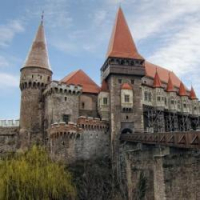
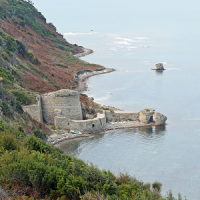
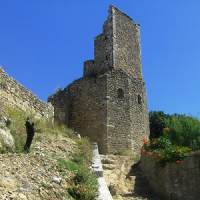
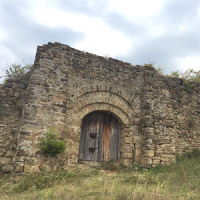
The Templar Order, as a military-monastic organization, actively built and fortified castles, which served not only as defensive strongholds but also as administrative centers (commandories), treasure hoards, hospitals, and bases for the protection of pilgrims. Templar castles were distinguished by their sophisticated engineering: double and triple walls, towers, moats, underground passages, chapels, and water cisterns. They combined European fortification traditions with the experience gained in the East (Byzantine and Arab influences).
The Templars owned thousands of fortified structures throughout Europe and the Holy Land (Outremer), but their most significant were the large fortresses in the Levant, where they played a key role in the defense of the Latin states. After the loss of the Holy Land in 1291, many eastern castles were abandoned or destroyed, while European commanderies continued to function until the Order's dissolution in 1312.
Castles in the Holy Land (Levant).
Here, the Templars erected their most powerful fortifications, often at strategic passes, along the coast, or pilgrimage routes.
Atlit (Château Pèlerin, Pilgrim Castle) was one of the most impregnable and largest Templar castles, built in 1218 on a rocky promontory south of Haifa (modern-day Israel). With double walls, it could accommodate up to 4,000 men during a siege, and was supplied by sea. It held out until 1291, becoming the last major stronghold after the fall of Acre. It was distinguished by its advanced fortifications: the outer wall allowed fire to be directed over the inner wall.
Safita (Chastel Blanc, White Castle) is located in modern-day Syria (Safita). It consists of a massive donjon (main tower) approximately 28 meters high, with a chapel, garrison quarters, and offices. It controlled the Chom Corridor between the coast and the hinterland. Built on earlier Byzantine foundations, it is better preserved than others.
Tortosa (Tartus, Antartus) is a coastal fortress in modern-day Syria. The Templars fortified it in the 12th century; it included a port and served as an important base. It was abandoned in 1291.
Other significant fortresses include: Safed, a massive fortress in Galilee; Gaza; Beaufort in Lebanon (although partly associated with other Crusaders); and the fortifications at Acre (their last stronghold in 1291). In Jerusalem, the Templars used the site of the Temple of Solomon (Al-Aqsa) as their headquarters. Krak des Chevaliers is often mentioned in connection with the Crusaders, but was primarily held by the Hospitallers, although the Templars were influential in the region.
Castles in Europe.
In Europe, Templar castles were more integrated into the commandery network: they served as agricultural, financial, and recruiting centers.
Portugal (one of the main strongholds after the dissolution of the Order):
Castelo de Tomar (Convento de Cristo) — the main residence of the Portuguese Templars from 1160, built by Gualdim Pais. It includes a rotunda (Charola church) in the Templar style, walls, and towers. After 1312, it became the center of the Order of Christ, which played a role in the Age of Discovery. UNESCO World Heritage Site.
Castel de Almourol — a picturesque castle on a rocky island in the Tagus River. Rebuilt by the Templars in the 12th century as a border fortress. A symbol of the Portuguese Reconquista. Spain:
Castillo de los Templarios – in León, granted to the Order in 1178 to protect pilgrims on their way to Santiago de Compostela. A powerful fortress with numerous towers.
Castillo de Miravet – on the Ebro River, one of the finest examples of Templar Romanesque military architecture.
Castillo de Monzón, Castillo de Peñíscola, Castillo de San Servando (Toledo), and others in Aragon and Castile. The Templars actively participated in the Reconquista.
France:
Paris Temple (Enclos du Temple) – the Order's European headquarters in the Marais. A gigantic fortress with high walls, towers, a church, and a prison. It was here in 1307 that many Templars were arrested. Only the street names remain.
Château de Gisors is often associated with the Templars, although the fortifications are older.
Other commanderies: La Rochelle, Collioure, and elsewhere.
Other regions:
Cyprus: after 1291, the headquarters moved here (Gastia, Kolossi castles).
England: Temple Church in London (not a full-fledged castle, but an important center).
In Central and Eastern Europe, traces are weaker; the only confirmed Templar castle in what is now Ukraine is Serednya Castle in Transcarpathia (12th century).
Architectural features and significance.
Templar castles typically included:
A keep or main tower.
A chapel (often round or octagonal, in imitation of the Church of the Holy Sepulchre).
Cisterns, stables, chapter halls.
Advanced elements: a concentric layout (double walls), artillery platforms (later), underground passages.
They demonstrated the economic power of the Order: construction was financed by donations and banking operations. After the dissolution, many castles passed to the Hospitallers, kings, or the Order of Christ (Portugal).
Today, the ruins and surviving fortresses (Tomar, Almourol, Safita, Ponferrada) are popular tourist attractions and monuments of medieval fortification. They illustrate the role of the Templars not only as warriors but also as engineers, administrators, and builders. Templar castles remain symbols of medieval military architecture and the romance of the Crusades. Many are open to the public and continue to reveal their secrets through excavations.
The Order's Legacy.
After their dissolution, the Templars did not disappear completely: in Portugal, the order transformed into the Order of Christ, which participated in the Age of Discovery. In other countries, former members joined the Hospitallers or returned to secular life.
In later times, the order became surrounded by myths: connections to treasures, the Holy Grail, Freemasonry, and the occult. These legends flourished during the Age of Enlightenment and Romanticism, and in the 20th and 21st centuries, they were featured in popular culture (books and films like "The Da Vinci Code"). Scholarly historiography, drawing on archival documents (including interrogation records), separates fact from fiction, emphasizing the Templars' contributions to military affairs, the logistics of the Crusades, and early forms of banking.
The Templar Order remains a symbol of the medieval ideal of the "warrior monk," and its history illustrates the tension between spiritual ideals, military necessity, and the political realities of the Middle Ages.
The Templars arose as a response to the practical needs of the Crusader states and the ecclesiastical reforms of the 12th century, but their military and economic success predetermined conflict with the growing power of the monarchy. Their history is a vivid example of how an institution created to serve an ideal can be transformed by circumstances and become a victim of its own power. Further research, particularly the analysis of financial documents and comparisons with other military-monastic orders (Hospitallers, Teutons), will allow for a deeper understanding of the Templars' role in shaping medieval Europe.
Bibliography (primary sources):
William of Tyre, Chronicon.
Bernard of Clairvaux, De laude novae militiae.
Modern research: Malcolm Barber, The New Knighthood; Jochen Burgtorf, et al.
(This article is based on a summary of historical sources and modern academic reviews. For a more detailed analysis, primary sources and specialized monographs are recommended.)
The Latin and French statutes of the Order (editions by Henri de Curzon and Judith Upton-Ward), the chronicles of William of Tyre, and modern research by Malcolm Barber and other historians.
The Chronicle of Geoffrey of Paris.
The works of Malcolm Barber ("The Trial of the Templars").
Modern research and the Vatican Archives (including the Chinon Parchment of 1308, which partially exonerates the Templars).
Grand masters of the Knights Templar:
Hugues de Payens (1118/1119-1136/1137)
Robert de Craon (1136/1137-1147/1149)
Everard des Barres (1147-1149)
Bernard de Tremelay (1149-1153)
André de Montbard (1153-1156)
Bertrand de Blanchefort (1156-1169)
Philippe de Milly (1169-1171)
Odo de Saint Amand (1171-1179)
Arnold of Torroja (1181-1184)
Gérard de Ridefort (1185-1189)
Robert de Sablé (1191-1193)
Gilbert Horal (1193-1200)
Phillipe de Plessis (1201-1208)
Guillaume de Chartres (1209-1219)
Pedro de Montaigu (1218-1232)
Armand de Périgord (1232-1244)
Richard de Bures (1244/5-1247)
Guillaume de Sonnac (1247-1250)
Renaud de Vichiers (1250-1256)
Thomas Bérard (1256-1273)
Guillaume de Beaujeu (1273-1291)
Thibaud Gaudin (1291-1292)
Jacques de Molay (1292-1314)