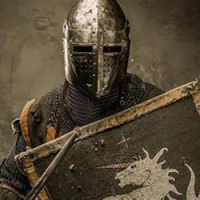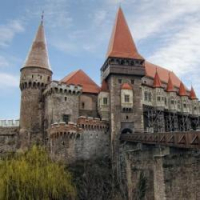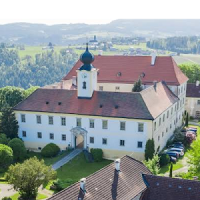
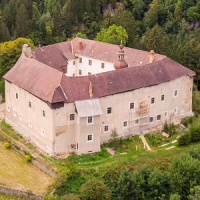
The Spanish Order of Santiago (full name: the Great Military Order of the Sword of Saint James of Compostela, Spanish: Orden Militar de Santiago) is one of the most famous and influential military-religious orders of medieval Spain. It was founded in the 12th century and named after Saint James (Santiago, the patron saint of Spain).
Foundation and goals.
The order arose around 1160–1170 during the Reconquista (the struggle of the Christian kingdoms of the Iberian Peninsula against Muslim states). Initially, it was called the Order of Cáceres (Fratres de Cáceres), after the city where the group of knights gathered. In 1171, they adopted the name Santiago, and in 1175, Pope Alexander III officially approved the order with a bull.
Main tasks:
Protecting pilgrims on the Camino de Santiago (Way of St. James) to the apostle's relics in Santiago de Compostela.
Participating in military operations against the Moors (Muslims).
Defending Christian lands and assisting in the Reconquista.
The order combined monastic and military life: the knights followed a relaxed Augustinian rule (unlike stricter orders like Calatrava). Many members were allowed to marry (unlike the Templars or Hospitallers). The first Master was Pedro Fernández de Castro. In 1174, King Alfonso VIII of Castile granted the city of Uclés (province of Cuenca) to the order, where its main residence (monastery) was located.
Symbols.
The most recognizable symbol of the order is the Cross of Santiago (Cruz de Santiago). This is a red (the heraldic color "guls") cross-shaped sword with lily-shaped terminals (fleur-de-lis) on the hilt and the ends of the crossguard.
The sword symbolizes the warrior spirit, the martyrdom of the Apostle James (he was beheaded by a sword), and the willingness to fight for the faith.
The three lilies represent "honor without spot" (honor sin mancha), purity, and moral character.
Knights wore white cloaks with this red cross on their chests. Sometimes a shell (Venus) was added—a symbol of pilgrimage.
This cross is often found in Spanish art, architecture, and heraldry.
History and Rise.
The Order quickly became a powerful force in Castile and León. By the end of the 15th century, it owned vast lands, had hundreds of thousands of members, and a significant income. The Order of Santiago actively participated in the Reconquista (the struggle of the Christian kingdoms against the Muslim states on the Iberian Peninsula) from the late 12th century. The knights of the order fought both as part of the royal armies and independently, defending borders, besieging fortresses, and participating in major field battles. They often suffered significant losses, but made a significant contribution to the Christian advance south.
Key battles and campaigns of the Order of Santiago (in chronological order):
1. Battle of Alarcos (July 19, 1195).
One of the most severe defeats of the Christians in the Reconquista. King Alfonso VIII of Castile faced the Almohad army under the command of Caliph Abu Yusuf Yaqub al-Mansur. The Knights of Santiago, led by Master Sancho Fernández de Lemos, fought in the front lines and suffered enormous losses—approximately 19 (or more) of the Order's knights perished, including the Master himself.
Following the defeat, the Almohads invaded Castile, reached Uclés (the Order's main seat), and captured many fortresses. This event was a serious blow, but it spurred the Christians to unite their forces.
2. The Battle of Las Navas de Tolosa (July 16, 1212).
The most famous and decisive battle involving the Order of Santiago. A coalition of Christians (Castile, Aragon, Navarre, and others) routed the significantly superior Almohad army of Caliph Muhammad al-Nasir.
The Knights of Santiago fought in the vanguard or center corps. Master Pedro Arias died in battle along with a large number of his fellow knights. The victory paved the way for the conquest of the Guadalquivir Valley and hastened the decline of Almohad power. It was in this battle, according to legend, that the battle cry "¡Santiago y cierra, España!" ("Santiago and forward, Spain!") was first widely heard. The battle is considered a turning point in the Reconquista.
3. Campaigns to capture fortresses and towns in the 1220s and 1230s.
Siege and capture of Cáceres: The Order originally arose in connection with the defense of this region. In 1184, the knights helped King Ferdinand II of León recapture the city, but lost it in 1196. After several unsuccessful sieges (1218, 1222–1223), Cáceres finally fell to the Christians around 1227–1229. The Order waged a long struggle for control of the city and its surroundings.
Capture of Jerez de la Frontera (1233), Úbeda, and Córdoba (1236). The Knights of Santiago actively participated in these operations under the command of King Ferdinand III the Saint.
4. The Siege of Seville (Sitio de Sevilla, 1247–1248).
One of the most striking episodes. Led by Master Pelayo Pérez Correa (the most famous and successful Master of the Order), 270 Knights of Santiago penetrated deep into the enemy's mountain positions. When night overtook them, legend has it, the Virgin Mary appeared to them, and they cried out, "Santa María, detén tu día" ("Holy Mary, stop your day"). The sun supposedly stayed behind, allowing the victory. In memory of this, the hermita (chapel) Virgen de Tentudía ("Deten-tu-día" - "Stop-your-day") was built. Master Correa played a key role in convincing Ferdinand III to lay siege to Seville, which fell in 1248. This was one of the Order's greatest successes.
5. Other significant clashes.
The Battle of Moclín (1280) – a defeat in which Master Gonzalo Ruiz Giron died from wounds received earlier at Alcaudete.
Participation in the conquests of Jaén, Córdoba, Seville, and other cities of Andalusia in the 13th century.
Later – naval expeditions against the Muslims (including in support of the Portuguese Reconquista in the Algarve) and isolated skirmishes in the 14th and 15th centuries.
After the fall of Granada in 1492, the order's military role declined sharply – it became an honorary and religious institution under the control of the crown.
The Knights of Santiago often acted in the vanguard thanks to their mobility and motivation, but paid a high price: many masters and hundreds of brothers died in battle. Their contribution is particularly noticeable in the transition from defensive to offensive warfare in the 13th century, led by figures such as Pelayo Pérez Correa.
Following the Reconquista (the fall of Granada in 1492) and the death of the last independent Grand Master, Alonso de Cárdenas, in 1493, the Catholic kings Ferdinand and Isabella annexed the order to the crown. In 1523, Pope Adrian VI finally secured the position of Grand Master for the Spanish monarch. The order lost its military independence but remained a prestigious institution of Spanish nobility.
At various times, the order was abolished (for example, during the Second Spanish Republic in 1931), but after the restoration of the monarchy (Juan Carlos I), it was revived as an honorary, religious, and noble order.
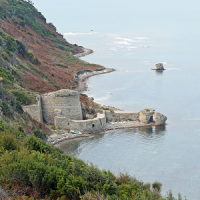
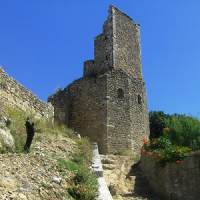
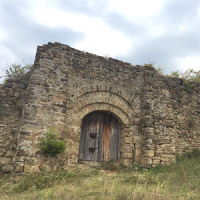
Main residences and key castles.
Castilo-Monasterio de Uclés (Cuenca Province, Castile-La Mancha):
The most important headquarters of the order. In 1174, King Alfonso VIII of Castile gave the castle and town of Uclés to Master Pedro Fernández de Castro. From 1230 (after the unification of Castile and León), the master resided here, the novitiate for knight candidates (one year and one day) was held here, and the order's archives were kept. The castle became a symbol of the order's power, and a monastic complex developed here in styles ranging from Romanesque to Baroque (it remains a major architectural ensemble). Uclés is often called the "Escorial of the Order of Santiago."
Castilo de Segura de la Sierra (Jaén Province):
An important center in the province of Castile, the residence of the commander. The castle was used to control the southern borders.
Castillo de Segura de León (Badajoz Province, Extremadura):
One of the best-preserved castles of the Order in Extremadura, it served as an administrative center.
Castelo de Palmela (Portugal):
Since 1482, it has been the headquarters of the Portuguese branch of the Order (which separated in 1290). A powerful fortress on a hill overlooking the surrounding area, it was used as a commandery and defensive point.
The castle, which overlooks the ancient Order of Santiago, is a "mirador" and is a 40-minute walk from Lisbon.
Castles in Campo de Montiel (Ciudad Real Province, Castile-La Mancha):
The Order controlled an entire network of fortresses to protect a strategic region after the Battle of Las Navas de Tolosa (1212). There is a tourist route to these castles:
Castillo de la Estrella (Montiel) – a powerful fortress on a rocky hill, dominating the landscape.
Castillo de Montizón (Villamanrique) – one of the best preserved, stands on cliffs by the Guadalen River.
Castillo de Terrinches – with an interpretation center for the Order of Santiago.
Others: Castillo de Alhambra, Castillo de Albaladejo, Torre de Puebla del Príncipe, the ruins of Eznavejor/Torres de Xoray.
Many castles were rebuilt based on Moorish fortifications.
Other significant sites:
Montánchez (Cáceres, Extremadura) – a convent and fortress.
Montalbán (Teruel, Aragon) – the commander's residence.
Castles in Jaén: Segura de la Sierra, Hornos, Torres de Albanchez, and others.
Early centers: Cáceres (founding site of the brotherhood, later lost), San Marcos in León (the first residence in León).
In Portugal, the order also owned castles such as Almada and Santiago do Cacém, but the Portuguese branch became independent.
After the Reconquista, the military role of the order faded, and many castles were converted into monasteries, residences, or fell into disrepair. Today, many sites have been restored, open to tourists, and included in itineraries (for example, in Castile-La Mancha). The Order exists as a civil order of chivalry under the patronage of the King of Spain.
Current Status.
Today, the Real Orden Militar de Santiago exists as a civil order of chivalry under the patronage of the King of Spain (Grand Master: King Philip VI). It has a limited number of knights (approximately 35-65) and focuses on tradition, charity, the preservation of historical heritage, and the defense of the Catholic faith. Membership remains honorary and is associated with nobility or special merit.
The Order of Santiago at one time gave rise to a Portuguese version (Orden de Santiago da Espada), which also exists today, but as an order of scientific, literary, and artistic merit.
The Order of Santiago left a lasting mark on the history of Spain: its cross is one of the most recognizable symbols of the Reconquista and the pilgrimage route to Compostela.
Grand Masters of the Order of Santiago:
Pedro Fernández de Castro (1170–1184)
Fernando Díaz (1184–1186)
Sancho Fernández de Lemos (1186–1195)
Gonzalo Rodríguez (1195–1203)
Gonzalo Ordóñez (1203–1204)
Suero Rodríguez (1204–1205)
Sancho Rodríguez (1205–1206)
Fernando González de Marañón (1206–1210)
Pedro Arias (1210–1212)
García González de Arauzo (1212–1217)
Martín Peláez Barragán (1217–1221)
García González de Candamio (1221–1224)
Fernán Pérez Chacín (1224–1225)
Pedro Alfonso de León (1225–1226)
Pedro González Mengo (1226–1237)
Rodrigo Íñiguez (o Yáñez) (1237–1242)
Paio Peres Correia (1242–1275)
Gonzalo Ruiz Girón (1275–1280)
Pedro Núñez (1280–1286)
Gonzalo Martel (1286)
Pedro Fernández Mata (1286–1293)
Juan Osórez (1293–1311)
Diego Muñiz (1311–1318)
García Fernández (1318–1327)
Vasco Rodríguez de Coronado (1327–1338)
Vasco López (1338)
Alonso Meléndez de Guzmán (1338–1342)
Fadrique Alfonso de Castilla (1342–1358)
Garci Álvarez de Toledo y Meneses (1359–1366)
Gonzalo Mejía de Virués (1366–1371)
Fernando Osórez (1371–1383)
Pedro Fernández Cabeza de Vaca (1383–1384)
Rodrigo González Mejía (1384)
Pedro Muñiz de Godoy y Sandoval (1384–1385)
García Fernández de Villagarcía (1385–1387)
Lorenzo I Suárez de Figueroa (1387–1409)
Enrique de Aragón (1409–1445)
Álvaro de Luna (1445–1453)
Juan II (1453)
Enrique IV de Castilla (1453–1462)
Beltrán de la Cueva (1462–1463)
Alfonso de Castilla (1463–1467)
Juan Pacheco (1467–1474)
Alonso de Cárdenas (1474-1476)
Rodrigo Manrique de Lara (1474–1476)
Fernando el Católico (1476–1477)
Alonso de Cárdenas (1477–1493)
Reyes Católicos (1493-...)