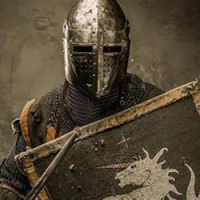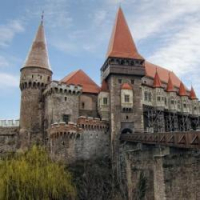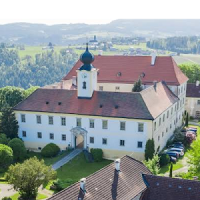
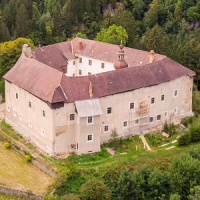

The Avis Order (Portuguese: Ordem de São Bento de Avis or Ordem Militar de Avis) is one of the oldest Portuguese orders of knighthood, originating during the Reconquista. It played a key role in the liberation of Portugal from the Moors, the establishment of an independent Portuguese state, and the Age of Discovery. The Order gave its name and coat of arms to the Avis dynasty, which ruled Portugal from 1385 to 1580—the "golden age" of Portuguese history. The Order's emblem—a green cross in flourish (fleur-de-lis cross)—is incorporated into the coat of arms of Portugal and symbolizes military discipline, loyalty, and service.
The Order is often considered the Portuguese equivalent of the Spanish Orders of Calatrava, Alcântara, and Santiago, with which it had close ties early on.
Origin and Foundation.
The order's roots date back to the mid-12th century, during the active Reconquista on the Iberian Peninsula. According to the most common version, the order arose around 1146–1147/1148 as a military brotherhood to defend the city of Évora, liberated from the Moors. Initially, the knights were called the "Brothers of Santa Maria of Évora" or "New Knights" (Nueva Militia).
The first king of Portugal, Afonso I (Alfonso Henriques), supported the brotherhood, granting it lands and fortresses. In 1162 (or 1166), the knights received the castle of Aviz (Avis) in the Alentejo region, which became their main residence and gave the order its name. The first Master (Grand Master) is considered to be Pedro Henriques (or Pedro Afonso), the illegitimate son of Afonso I, or Gonçalo Viegas.
In 1162, the order adopted the Rule of Saint Benedict (with Cistercian modifications), adapted for warriors. The knights wore a white mantle with a green cross. The order had close ties to the Cistercians and was initially considered a branch (or affiliate) of the Spanish Order of Calatrava, subject to its visitation. However, the Portuguese Masters retained considerable autonomy.
Role in the Reconquista and Medieval History.
The main task of the order was to fight the Moors on the southern borders of Portugal. The knights participated in numerous campaigns, defended fortresses, and contributed to the Christianization of reconquered territories. Like other military monastic orders, members of the Avis took vows of poverty, chastity, and obedience, combining monastic life with military service.
In the 13th century, the order strengthened its position by acquiring additional holdings. By this time, it had significant land holdings, commanderies, and income.
The Avis Order had a structure typical of military monastic orders:
Grand Master – head of the order;
Knights – the main military force;
Clergy – spiritual leadership;
Servants – auxiliary staff.
The Avis Dynasty and its Rise.
The turning point was the Peasants' Revolution of 1383–1385 and the succession crisis following the death of King Ferdinand I. The Order's Master, João I (João I, the illegitimate son of Pedro I), led the resistance to the Castilian intervention. In 1385, the Cortes of Coimbra proclaimed him King João I. Victory at the Battle of Aljubarrota (August 14, 1385), where the Knights of Avis fought under the command of Nuno Álvares Pereira, secured Portugal's independence.
Thus, the Master of the Order became king—a unique case in the history of military monastic orders. The Avis dynasty ruled Portugal for nearly 200 years. Under João I and his successors (especially Manuel I and João II), the Order actively participated in naval expeditions: the conquest of Ceuta (1415), attacks on Tangier, and African campaigns. The Knights of Avis and the Order of Christ (the successor to the Templars) became the driving force of Portuguese expansion. In the 15th century, the dispute over Calatrava's dependence on the Order ended: a bull by Pope Eugenius IV (1440) declared the Order independent. From the mid-15th century, the position of Master was often occupied by crown princes.
Evolution and Secularization.
In the late Middle Ages and the modern period, the Order gradually lost its religious character. In 1496 and 1505, the knights were released from their vows of chastity and poverty. In 1551, Pope Julius III granted the office of Master to the King in perpetuity, transforming the Order into an instrument of royal power for rewarding military and public service.
In 1789, Queen Maria I and Pope Pius VI secularized the Order, transforming it into the secular "Royal Military Order of Saint Benedict of Aviz" with three classes. After the proclamation of the Republic in 1910, the order was abolished, but was reestablished in 1917–1918 as the "Military Order of Avis"—a state award for military and civilian merit. The President of Portugal became the Grand Master. Today, the order has five classes (Grand Cross, Grand Officer, Commander, Officer, and Knight/Dame) and is awarded primarily to military personnel. The ribbon is green.
Symbolism and Heritage.
The Order's insignia is a green flourishing cross (fleur-de-lis) on a white background. It symbolizes faith, growth, and military valor. The coat of arms of the Avis dynasty included this cross, which influenced Portuguese heraldry.
The Order of Avis has left a significant mark on Portuguese culture, architecture (castles and monasteries in Alentejo), and history. It embodied the ideal of the knight-monk, who combined service to God, king, and country. Unlike the Templars or Hospitallers, the Avis retained a national character and became an instrument of state building.
Today, the Order functions as an honorary award of the Portuguese Republic, recalling the medieval roots of Portuguese statehood and the Age of Discoveries.
The Charter of the Knightly Order of Avis.
The Charter of the Knightly Order of Avis (Ordem de Avis, or Ordem Militar de São Bento de Avis) developed gradually and did not have a single document like the statutes of the Knights Templar (Regula Templi) or Hospitallers.
Early Period (12th Century).
The Order arose in the 1160s as the Militia of Évora (Milícia de Évora or Freires de Santa Maria de Évora) to defend territories reconquered from the Moors.
In 1162 (according to the traditional version) or shortly after 1176, the knights adopted the Benedictine Rule (Regra de São Bento). This is confirmed by most sources.
After aligning with the Spanish Order of Calatrava (c. 1187–1213), the order adopted the Cistercian Rule (Regra de Cister), which was stricter and better suited to military monastic life. The Cistercians (White Monks) had a strong influence on the Order of Avis: their white cloak, strict discipline, and emphasis on prayer and asceticism.
The knights of the order took three classic monastic vows:
Obedience (especially to the Master and Chapter);
Poverty (community of goods);
Chastity (celibacy).
They were obliged to:
Continuously fight against the Moors (the main military objective during the Reconquista);
Observe the monastic routine (prayers, fasts, communal meals);
Wear a white cloak with a green flourishing cross (flordelisada verde).
The internal structure was typical of military monastic orders:
Grand Master (Mestre) – elected by the chapter;
Knights (freires-cavaleiros);
Chaplains (clergy);
Serving brothers.
The main residence became the castle of Avis (after 1211), from which the order took its name.
Evolution of the statute.
The complete early text of the statute from the 12th–13th centuries has not survived in its original form. Indirect references and later compilations are known (for example, the "Regra da cavallaria e Ordem Militar de S. Bento de Avis" of 1631 and the later "Constituições").
Key changes:
13th–14th centuries – the order retained strong ties to Calatrava, but gradually gained autonomy. 1496 and 1505 — The popes released the knights from their vows of chastity and poverty (to avoid scandals). This was typical for Portuguese orders during the Age of Discovery.
1551 — The order became completely subordinate to the Portuguese Crown (the Grand Mastership was assigned to the king).
1789 — Secularization under Queen Maria I. The order became an award for military merit.
1917–1918 — Restored as the modern Military Order of Avis (Ordem Militar de Avis) — a state award of Portugal for outstanding military and state services (primarily for officers). The Grand Master is the President of the Republic.
Main features of the statute (reconstructed from sources):
Religious life: regular participation in divine services, reading of the Hours, fasting according to the Cistercian model.
Military discipline: readiness for campaigns against infidels, subordination to the Master in military matters.
Everyday life: simple clothing, prohibitions on luxury, hunting (with exceptions), gambling, and personal property (in the early period).
Admission: noble birth was required.
The Order of Avis was closely associated with the Portuguese monarchy and played a key role in the Reconquista, the Crisis of 1383–1385 (Master João became King João I), and the early African expeditions.
Major Battles of the Knightly Order of Avis.
The major battles of the Knightly Order of Avis (Ordem de Avis) are associated with two key periods in its history: the Portuguese Reconquista (12th–13th centuries) and the Crisis of 1383–1385, followed by the African expeditions.
The Order of Avis (originally the Militia of Évora or the Brothers of Santa Maria of Évora) arose in the mid-12th century as a military monastic brotherhood to fight the Moors. It received the Cistercian Rule, was closely associated with the Order of Calatrava (until the end of the 14th century), and later became independent. The knights of the order wore a white mantle with a green flourishing cross. In 1385, the Grand Master of the Order, João I, became King of Portugal and the founder of the House of Avis.
1. Battles of the Reconquista (the struggle against the Moors on the Iberian Peninsula).
The Knights of Aviz actively participated in the reconquest of territories from Muslim rulers (the Almohads and others):
Siege and capture of Seville (1248) – the knights of the order, under the command of Master Martín Fernandes, demonstrated particular bravery during this key campaign of Ferdinand III of Castile. This is one of the most striking chapters of the order's participation in the overall Reconquista.
Battle of Alarcos (1195) – Master of the order Gonçalo Viegas de Lanoso died in this crushing defeat of the Christians by the Almohads. The order suffered serious losses fighting on the side of the Castilians.
Participation in campaigns to conquer the Algarve (southern Portugal) in the 13th century, including sieges and skirmishes in the region (for example, in the campaigns of Sancho II and Afonso III). The Order helped consolidate the conquered lands.
Early actions: the defense of Évora (after its capture in 1166) and participation in other episodes of the Reconquista alongside the Templars and the Order of Santiago.
After the completion of the Portuguese Reconquista (mid-13th century), the Order's role in fighting on the peninsula diminished, but it retained its military strength.
2. The Crisis of 1383–1385 and the Battle of Aljubarrota (the Order's main battle).
This is the most famous period in the Order's history. After the death of King Ferdinand I without a direct heir, a dynastic crisis arose. Castile attempted to annex Portugal. The Grand Master of the Order, Avis João, led the resistance and was proclaimed king.
The Battle of Aljubarrota (August 14, 1385) was a decisive victory for the Portuguese. A small Portuguese army (approximately 6,000–7,000 men, including the Knights of Avis) under the command of João I and Constable Nuno Álvares Pereira routed the significantly superior Castilian forces (over 30,000, including French and other allies). The victory secured the independence of Portugal and the establishment of the Avis dynasty. The Knights of the Order of Avis played a central role; the Portuguese Aviz and the knights of the Spanish orders (including Calatrava) fought on opposite sides. This battle is often considered one of the most important in Portuguese history.
Preceding skirmishes: the Battle of Atoleiros (1384) and other border clashes, where the Portuguese, led by supporters of the Master of Avis, had already inflicted defeats on the Castilians.
After this victory, the order's formal dependence on Calatrava was effectively severed.
3. African Crusades (15th century).
With the advent of the Avis dynasty, the order participated in the first Portuguese expeditions to North Africa (a continuation of the crusading spirit):
The Capture of Ceuta (1415) was the first major overseas victory of the Portuguese under the command of João I. The Knights of Avis and the Order of Christ (the successor to the Templars) played a prominent role. This event marked the beginning of Portuguese expansion.ec0888
The Siege of Tangier (1437) was an unsuccessful campaign. Infante Fernando (brother of King Duarte I), associated with the Avis Order, was captured and died in Moroccan captivity (he was later venerated as a saint).
Thereafter, the order gradually lost its purely military character: the magisterium often passed to members of the royal family, the vows were relaxed, and in the 16th–19th centuries, it became a reward for merit (it still exists today as a Portuguese order). The Order of Avis played a key role in the establishment and defense of Portuguese independence, as well as in the transition from the Reconquista to the Age of Discovery.
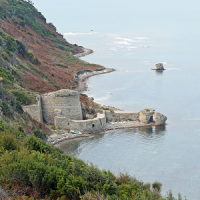
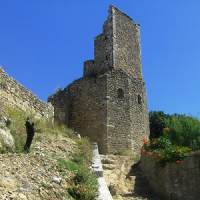
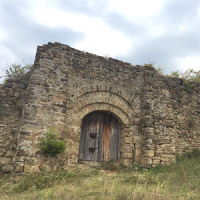
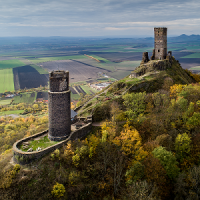
Castles of the Order of Avis:
Castelo de Avis (Avis, Portalegre District, Alentejo)
Founded around 1214 under Master Fernando Anes (Eanes). Construction continued until 1223. The castle and its fortified walls became the headquarters (sede) of the Order, where the residence was transferred from Évora.
Features: Situated on a hill, surrounded by a river and cliffs, it originally had six towers and several gates (including the Convento Tower, Santo António Tower, and São Roque Tower). Fragments of the walls and three towers remain. Nearby is the Convento de São Bento de Avis.
The castle was rebuilt several times (from the 14th to the 17th centuries), serving as a defensive structure and as the residence of the masters. Today, it is a national monument, partially integrated into the urban fabric, and open to the public.
Other major castles and fortifications of the Avis Order:
According to historical sources (including research on the Alentejo orders), the order's main fortresses in the region were:
Castelo de Marvão - one of the most significant, a strategic border fortress on a hill with panoramic views.
Castelo de Seda - in the parish of Portalegre, associated with a commando.
Castelo de Alter Pedroso (near Alter do Chão) - ruins on a hill, used for observation and refuge; the remains remain, offering excellent views.
Castel de Cabeço de Vide - a fortification in the area of the same name, part of a defensive network.
Castel de Fronteira - a border castle.
Veivos (possibly associated with the area or commando).
Also mentioned:
Castelo de Alcanede – directly listed among the Order's assets.
Castles and fortifications in the commandas: Alter Pedroso, Seda, Vide (Cabeço de Vide), Alandroal, Jerumenha (Juromenha), Coruche, Elvas, and others (many commandas had fortified houses, towers, or control over existing fortifications).
The Order was also involved in the defense of Évora (where it arose to protect the city) and exerted influence over other points in Alentejo, such as Sousel, Vila Viçosa, and Mora. The network of castles and commandas formed a powerful "potentate" in northeastern Alentejo, complementing the defenses of other orders (the Knights Templar/Order of Christ in the north and in the Tagus Valley, and Santiago in the south).
Masters of the Military Monastic Order of Avis:
Early Period (12th–14th centuries, before the Avis dynasty):
Gonçalo Viegas de Lanhoso — First Master, c. 1175/1176 – July 18, 1195 (died in the Battle of Alarcos).
Pelágio — c. 1200.
Fernando Anes — 1201–1227.
Fernando Rodrigues Monteiro — 1227–1237 (moved his seat to Avis c. 1223–1224).
Martim Fernandes (Martin Fernandes) – August 22, 1238 – 1264 (participated in the siege of Seville in 1248).
João Portariva (João Portariva) – mentioned without firm evidence.
Pedro Afonso (Pedro Afonso) – 1268–1269 (sometimes considered one of the earliest, an illegitimate son of Afonso I).
Fernando Soares (Fernando Soares) – mentioned without precise dates.
João Fernandes (João Fernandes) – around 1280 (according to some lists, 8th or 9th).
Gil Peres (Gil Peres) – confirmed in 1330 (visited by Archbishop Gonçalo Pereira).
Afonso Mendes (Afonso Mendes) — mentioned around 1334.
Garcia Peres do Casal (Garcia Peres do Casal) — mentioned in the early 14th century.
Gil Martins (Gil Martins) — master during the period of the founding of the Order of Christ (c. 1319–1330), sometimes simultaneously associated with Avis.
Martim de Avelar (Martin de Avelar) — died around 1363/1364.
The Crisis Period and the Avis Dynasty (14th–15th centuries).
João I of Portugal (João I, Mestre de Avis) — 1364–1385 (illegitimate son of King Pedro I, appointed at age 7). In 1385, he was elected King of Portugal after the victory at Aljubarrota, founding the Avis Dynasty. After this, he remained nominally associated with the Order.
After the election of João I as king:
Fernando Rodrigues de Sequeira (Sequeira, sometimes Rodrigo of Sequirol) – 1387 (elected by the chapter) – 1433 (last elected master, confirmed by the pope in 1389/1390; a loyal supporter of João I).
From 1433, the mastership effectively passed to members of the royal family (administrators/governors):
Fernando, o Infante Santo (Fernando, Infante Santo, 1402–1443) – son of João I, master from 1434, died in captivity in Fez after an unsuccessful campaign against Tangier (1437). Blessed in the Catholic Church.
Pedro de Portugal, Duque de Coimbra (Pedro, Duke of Coimbra, nephew of João I) — after 1443/1446 to 1466 (son of the regent Pedro, spent a period of exile).
Further successors followed (the exact successors vary in sources; family members, including future kings, were often appointed).
Late period (15th–16th centuries and accession to the crown).
The magistracy (or administration) of the order was increasingly occupied by princes of the blood:
João II de Portugal (João II) — as a prince and later king.
Jorge de Lencastre (illegitimate son of João II) — administrator in the late 15th – early 16th centuries.
In 1551, Pope Julius III attached the Grand Mastership of the Order to the Portuguese Crown in perpetuity. From that point on, the Kings of Portugal (of the Avis, then Philippine, and Braganza dynasties) themselves became Grand Masters (or administrators). From 1834 to 1894, the Order was secularized and converted into a state award.
From the 19th and 20th centuries to the present day, the Grand Master (Grão-Mestre) of the Order (now the Military Order of Avis) has been the President of Portugal (as head of state).
Sources:
Portuguese Wikipedia and English Wikipedia (Military Order of Aviz).
Catholic Encyclopedia (Order of Aviz).
Historical works on the Reconquista and the Avis dynasty.