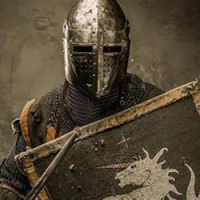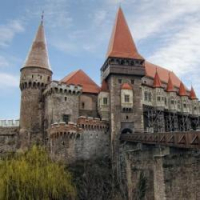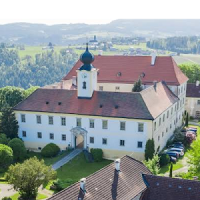
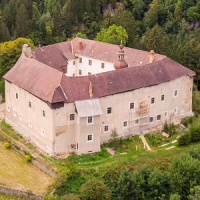
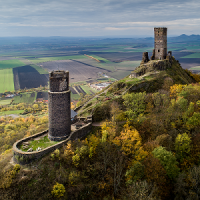
The Order of Alcántara is one of the most ancient and unique of the spiritual-chivalric orders in Spain, often overshadowed by its more famous "brothers" like Calatrava or Santiago. Nevertheless, its history is full of dramatic twists and turns, from a humble border brotherhood to a powerful organization that guarded the western borders of the Reconquista for centuries.
Born on the Border: From Hermit to Knights.
The order arose in the mid-12th century in the Kingdom of León, in the harsh and dangerous Extremadura—a region where Christian lands bordered the Almoravids and Almohads. According to tradition, it all began with a hermit named Julián (San Julián de Pereiro), who lived near Salamanca. On his advice, a group of knights, among whom the brothers Suero Fernández Barrientos and Gómez were prominent, built a fortress to defend against the Moors. Initially, the brotherhood was called the Order of San Julián del Pereiro (named after the fortress).
In 1176–1177, the order received official recognition. King Ferdinand II of León granted it privileges, and Pope Alexander III, by bull of December 29, 1177, elevated it to the status of a spiritual knightly order, establishing the Benedictine Rule (later adapted to the Cistercian tradition). The knights pledged to wage "eternal war" against the infidels and defend the Christian faith.
Movement to Alcántara and its flourishing.
A turning point came in 1218. King Alfonso IX of León gave the order the strategically important city of Alcántara on the Tagus River (the name derives from the Arabic "al-qantara" meaning bridge). The city, with its famous Roman bridge, became the new headquarters. The Knights of San Julián adopted a new name—the Order of Alcántara. For a time, they entered into a close alliance with the more powerful Castilian Order of Calatrava: they adopted the Cistercian Rule, the white cloak, and the right of inspection from the Master of Calatrava. Their symbolism was also partially unified—the green cross of Alcántara (a Greek cross with flared arms, often decorated with lilies) differed from the red cross of Calatrava. However, complete subordination did not occur: the Leonese retained their independence and rapidly grew in influence.
In the 13th and 14th centuries, the order actively participated in the Reconquista, defending the southern and western borders of the Christian kingdoms. The knights captured castles, lands, and trophies, receiving generous donations from kings and nobles. By the peak of its power, the order owned dozens of commanderies, castles, and villages—by some estimates, up to 37 commanderies and 53 settlements. Their numbers could reach tens of thousands (including vassals and servants), and their annual income amounted to tens of thousands of ducats.
Internal Turmoil and the Decline of the Ideal.
Like other military orders, the Alcántara Order was not immune to internal conflicts. When the external enemy retreated, the knights began to fight among themselves for the post of Master. In 1318, a veritable civil war erupted within the fortress of Alcántara itself: Master Ruy Vaz was besieged by his own knights, and even the Master of Calatrava and the king participated in the conflict.
The Black Death of the 14th century, a change in military tactics (artillery and infantry made heavy cavalry less effective), and the secularization of the Order precipitated the crisis. The knights became increasingly embroiled in the internal politics of Castile and León. During the civil war between Pedro the Cruel and Henry of Trastámara, the Order split into warring factions. In the 15th century, kings began to actively interfere in the election of masters. In 1409, an eight-year-old boy from the royal family became master—a striking example of how the order was becoming an instrument of royal power. In 1492, Pope Alexander VI granted the mastership to Ferdinand the Catholic for life, and in 1523, Charles V finally annexed the order (along with Calatrava and Santiago) to the crown.
From sword to award.
In 1540, the pope permitted the Knights of Alcántara to marry, which completely destroyed the monastic character of the order. It became an honorary corporation and a source of royal grants to the nobility. The French occupation of 1808 confiscated its assets, and the subsequent revolutions of the 19th century virtually eliminated its material base.
Today, the Order of Alcántara exists as an honorary dynastic award of the Spanish Crown. The Grand Master is formally the King of Spain (Felipe VI). The Order maintains a spiritual slant: its members are called to defend the Catholic faith, engage in charitable work, and preserve historical heritage. It is one of the four Spanish military orders (along with Santiago, Calatrava, and Montesa).
What made Alcántara special?
The green cross was a rare color among the Spanish orders (Calatrava's was red, and Santiago's was red in the shape of a sword). This distinguished the Alcántara Order visually and symbolically.
Leónist identity: unlike the Castilian Calatrava, the order was closely connected to the Kingdom of León and the western border.
Strategic location: control of the bridge over the Tagus River provided a tremendous tactical advantage.
Flexibility: the order began as a small border brotherhood, but managed to integrate into the Cistercian tradition and survive the storms of the Reconquista.
The Alcántara Order is a striking example of how monastic asceticism, military valor, and feudal politics were combined in the Middle Ages. Born from a desire to defend the faith and land from "infidels," he rose from the stern border knights to a royal honor, leaving his mark on the architecture of Extremadura, the chronicles of the Reconquista, and the heraldry of Spain.
His story reminds us that even the noblest ideals of the Middle Ages inevitably clashed with human weakness, power, and time. But it was orders like the Alcántara that helped the Christian kingdoms of the Iberian Peninsula endure and unite into a unified Spain.
The Rule of the Knightly Order of Alcántara.
The Rule of the Knightly Order of Alcántara (Regla de la Orden de Alcántara) represents one of the most interesting examples of the adaptation of monastic tradition to the conditions of constant border warfare on the Iberian Peninsula.
Origin and Development of the Rule.
The order began as a small religious-military brotherhood of San Julián del Pereiro (c. 1156–1176). Initially, it was given the Rule of Saint Benedict (Regla de San Benito). Pope Alexander III, by bull of December 29, 1177, officially elevated the brotherhood to the status of a spiritual-knightly order and confirmed the Benedictine Rule.
Soon (c. 1183, under Pope Lucius III), the order adopted the stricter Cistercian version of the Rule (Regla del Císter). This occurred under the influence of the Cistercian monk Ordoño (or Amanda in some sources), who became the knights' spiritual director. The Cistercian redaction was chosen because the Order of Calatrava (the older and more influential) already followed it, and Alcántara temporarily entered into a close alliance with Calatrava (c. 1183–1218). The Knights of Alcántara temporarily adopted the white cloak, the right of inspection by the Master of Calatrava, and a partially unified symbolism.
After acquiring the fortress of Alcántara in 1218 and gaining greater independence, the order retained its Cistercian foundation but gradually developed its own statutes (definiciones or estatutos), which supplemented the basic statutes. These statutes regulated military service, the management of commanderies, discipline, and internal hierarchy. Important collections of such definitions date back to the 14th–16th centuries (for example, the definitions of 1306 and later).
Basic principles of the Rule.
The Rule of the Order of Alcántara combined classical monastic vows with military obligations. Knights-professors (freires caballeros) swore three traditional monastic vows:
Poverty (pobreza);
Obedience (obediencia) – primarily to the Master of the Order and, in the early period, to the Master of Calatrava;
Chastity (castidad) – until 1540, when Pope Paul III's bull permitted knights to marry ("Bula del casar").
Key features of life according to the Rule:
Prayer and worship – daily celebration of the Hours (liturgy), reading of the Holy Scriptures. When knights weren't on campaign, they lived almost like monks in convents.
Lents were strict Cistercian fasts. According to some sources, knights fasted four days a week (Wednesday, Friday, Saturday, and sometimes additional days). On fast days, food was minimal, often only bread and water or vegetables.
Sleep: Many knights slept fully clothed and with shoes (or barely clothed), ready to rise immediately upon alarm. This was typical of military orders.
Silence: at certain hours and in the refectory, as in Cistercian monasteries.
Labor: a combination of military training, border protection, and economic activity (management of commandery lands).
When the order wasn't actively engaged in military operations (during truces), knights were required to lead an almost entirely monastic life: remaining in convent, observing the rule of silence, participating in religious services, and performing physical labor.
Military Component.
The Order's charter established the defense of the Christian faith and perpetual war against the Moors (guerra perpetua contra los moros) as the primary goal. Knights were required to:
Be always prepared for campaign;
Maintain their weapons, armor, and horses in good condition;
Participate in joint campaigns with other orders and the royal army;
Defend and repopulate (repoblar) conquered lands.
Unlike purely contemplative monks, the Knights of Alcántara considered war their primary "obedience" and a form of service to God.
Structure and Governance.
The Master (Maestre) was the lifelong head of the Order, elected by the "Thirteen" (los Trece—a council of 13 of the most worthy knights).
The Prior of the Convent of Alcántara was an important spiritual figure.
Commanders (Comendadores) governed individual commanderies (encomiendas), which were the basic administrative and economic units.
Chapter (Capítulo General) was the general assembly where important decisions were made and statutes were approved.
The order was divided into knights-professors (fully vowed) and clerics (priests who served the churches and hospitals). Over time, "sergeants" and vassals also emerged.
Differences from other orders.
Compared to the Templars or Hospitallers, the Alcántara Rule was considered relatively lenient (suave). It allowed greater flexibility between monastic and military life. Unlike the Order of Santiago (which had a more "secular" connotation), the Alcántara more closely preserved Cistercian asceticism. A green cross (cruz flordelisada verde) on a white cloak distinguished the Alcántara order from the red cross of Calatrava. Evolution of the Rule.
12th–13th centuries — the strict Cistercian period, with an emphasis on asceticism and war.
14th–15th centuries — the emergence of detailed "definiciones" regulating the management of vast landholdings, discipline, and punishments for violations.
1540 — the permission to marry significantly changed the character of the order, making it more aristocratic.
From the 16th to the 19th centuries, the order gradually evolved into an honorary corporation under the control of the crown.
Today, the modern Order of Alcántara (under the Grand Mastership of the King of Spain) maintains the spiritual and chivalric traditions, but as a dynastic and charitable organization. It emphasizes fidelity to the Catholic faith, the protection of Christian values, and the preservation of historical heritage.
The Statutes of the Order of Alcántara are a striking example of how the medieval Church managed to combine the ideal of monastic perfection with the harsh realities of the Reconquista. Knights in white cloaks with a green cross did more than simply fight—they saw their service as an extension of prayer and a path to salvation on the borders of Christendom. The full text of the early statutes has come down to us in fragments (mainly through papal bulls and later compilaciones), but their spirit – asceticism, discipline, willingness to sacrifice and selfless devotion to the faith – remains the key to understanding this unique Spanish order.
Major battles involving the Order of Alcántara.
The Order, which originated as a border brotherhood, actively participated in the Reconquista, the defense of the western borders, conflicts with Portugal, and the internal wars of Castile. Its role often involved not decisive field battles (like those of Calatrava or Santiago), but the systematic conquest and settlement of Extremadura, as well as the defense of fortresses.
13th century: Reconquista and consolidation of positions.
Battle of Las Navas de Tolosa (July 16, 1212).
The Order (also known as San Julián del Pereiro) participated in one of the most important battles of the Reconquista on the side of the Christian kingdoms against the Almohads. Although Calatrava and Santiago played the main roles, the Knights of Alcántara contributed to the overall victory, which paved the way for the rapid advance of the Christians southward.
Conquest of Alcántara (1213–1214).
King Alfonso IX of León recaptured the strategically important city and bridge over the Tagus from the Moors. The fortress was initially handed over to the Order of Calatrava, but in 1218 it was given to the Knights of San Julian, marking the beginning of the Order's flourishing under its new name—the Order of Alcántara.
Conquest of Valencia de Alcántara (1220–1221).
One of the first significant independent victories of the Knights of Alcántara. They captured an important border fortress, which later became one of the Order's strongholds.
La Serena Campaign (1231–1259).
The Order carried out a large-scale operation to conquer and settle the vast region of La Serena (province of Badajoz). Key captures:
Magacela (1231, later officially transferred to the Order by Ferdinand III)
Zalamea de la Serena (repopulation)
Benquerencia, Esparragal, and other points.
This campaign transformed the Order into a major landowner in eastern Extremadura.
Other important actions:
Participation in the conquest of Cáceres, Trujillo, Medellín, and Badajoz.
Battle of Ciudad Rodrigo – victory over the Almohads.
14th–15th centuries: Border wars and internal conflicts.
Battle of Arganal (against the Portuguese).
The Order fought against Portuguese forces in border skirmishes, defending Leonese and Castilian interests.
Storm of Almeida Castle.
The Knights of Alcántara participated alongside the Order of Santiago in the successful assault on this important Portuguese fortress.
The Castilian Civil War (1350–1369).
The Order split during the conflict between Pedro the Cruel and Enrique de Trastámara. The knights fought on opposite sides, leading to internal clashes (including the siege of Alcántara Castle itself in 1318, although this had occurred earlier). In 1365, the Order's Master, Gutierrez Gomez, died in Toledo.
War with Portugal and the Battle of Aljubarrota (1385).
The Order participated in the Castilian campaign against Portugal. The Battle of Aljubarrota ended in a heavy defeat for the Castilians, but demonstrated the Alcántara knights' involvement in major international conflicts.
Late Period: War of Granada (1482–1492).
The Order of Alcántara took an active part in almost all the campaigns of the Granada War, the final phase of the Reconquista. The knights, under the command of their masters (including a young master who personally participated in the battles), fought in:
The 1485 campaign (the capture of Ronda and Serranía);
The Siege of Vélez-Málaga (1487), where the master and knights demonstrated exceptional bravery;
The Siege of Málaga;
The devastating raids on the Vega of Granada;
The final siege and capture of Granada in 1492.
This was the order's last major military undertaking as an independent fighting force.
Other conflicts.
Clashes with the Templars (before their dissolution in 1312) over castles and lands (Portezuelo, Alconchel, etc.).
Participation in minor border wars with Portugal during the 14th and 15th centuries.
Internal strife over the position of Master of the Order, sometimes escalating into full-blown sieges (for example, in 1318 in Alcántara).
Summary of the Order's role in the wars.
The Knights of Alcántara were not a "shock force" like Calatrava in great field battles, but they excelled at the tasks of border warfare:
Defending and holding fortresses;
Repopulating (resettling) conquered lands;
Control of vast territories of Extremadura.
Their contribution to the Reconquista consisted of gradually "nibbling" territory from the Moors and creating a strong Christian infrastructure in the western peninsula. After 1492, the Order gradually lost its military significance and became an honorary aristocratic corporation under the control of the Crown.
Castles of the Knightly Order of Alcántara: Outposts of the Reconquista in Extremadura.
At the height of its power (13th–15th centuries), the Order held 37 commanderies (encomiendas) and controlled up to 53 castles and fortified settlements. Many of these were captured from the Moors or ceded by kings after successful campaigns. The castles served not only as military strongholds but also as administrative centers, economic bases, and monastic communities (influenced by the Cistercian Rule).
The main fortress is the Castle (and Convent) of Alcántara.
The most important castle of the Order is the Castillo de Alcántara in the city of the same name in the province of Cáceres.
In 1213, King Alfonso IX of León recaptured from the Moors a strategically important point with a famous Roman bridge across the Tagus. The fortress was initially given to the Order of Calatrava, but they declined due to its remoteness. In 1218, it was given to the Knights of San Julian, who made Alcántara their main residence (Casa Central) and changed the name of the order.
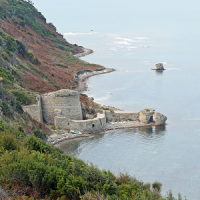
Originally, a Muslim alcázar (citadel) stood here. The Knights of Alcántara gradually rebuilt it. In the 15th and 16th centuries, part of the fortifications was converted into the Convent of San Benito (Convento de San Benito), of which some vestigios remain. Later, a new artillery castle, adapted for firearms, was built. Today, ruins and traces of reconstruction remain of the medieval fortress, but the site remains a symbol of the order.cadc19
The most important castles and fortresses of the order. Here are the most significant castles directly associated with the Order of Alcántara (mainly in the modern province of Cáceres and Badajoz, Extremadura):
Castillo de Eljas (Eljas) is one of the most picturesque. Acquired by the Order in 1302, it is well preserved, with strong walls and towers. Located in the Sierra de Gata region, it controlled the border with Portugal.
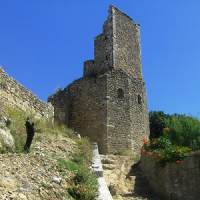
Castillo de Trevejo is an impressive cliff fortress in the same mountainous region. One of the most photographed castles of the Order, it dates back to the late Middle Ages, with granite walls characteristic of the region.
Castillo de Portezuelo is a strategic point near Alcántara. The Order acquired it after a legal dispute with the Templars.
Castillo de Santibáñez el Alto is an important fortress in the western part of the Order's domains, helping to control the roads towards Portugal. Castillo de Herrera del Duque is located in Badajoz and served as the center of one of the commanderies.
Castillo de Almorchón is a fortress in the La Serena region, used to control the southern territories.
Castillo de Piedrabuena (in San Vicente de Alcántara, Badajoz) was built by the Order on the ruins of the Muslim castle of Mojafar. Since the 14th century, it has been the center of an important encomienda. Parts from the 14th–16th centuries survive after numerous reconstructions.
Castillo de Valencia de Alcántara is a powerful border fortress. The Order captured it in 1220–1221. It was later rebuilt several times due to wars with Portugal. Its current appearance mainly dates from the 16th–18th centuries, but its foundation is medieval. Today, it has been restored and is open to visitors as a center of the region's identity. Castillo de Brozas (Castillo de la Orden de Alcántara) is located in the center of the settlement of Brozas (Cáceres). Elements from the Middle Ages to the 18th century remain, including bastions adapted for artillery. It was the center of one of the main commanderies.
Other mentioned fortresses and settlements:
Castillo de Alconchel (acquired after the dissolution of the Knights Templar in 1312)
Peñafiel (Zarza la Mayor)
Castles in the La Serena region (southern Extremadura), where the order actively participated in the reconquest of lands.
In Andalusia, the order had smaller holdings: temporarily Morón, Cote, and Arahal (later exchanged).
Architectural features and the role of castles.
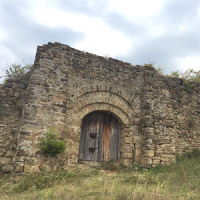
The castles of Alcántara are typical of Extremaduran military architecture: granite and slate, powerful walls, round or square towers, and adaptation to the terrain (many stand on hills or cliffs). Over time, many evolved from purely military fortresses to combined complexes: castle + convent + church + outbuildings.
They served several functions:
Military – protecting the border from the Moors and later from the Portuguese.
Repopulation – the order founded or settled villages around the castles, distributing land.
Economic – commanderies owned land, pastures, and mills, generating significant income.
Religious – many had chapels or small monasteries attached.
The fate of the castles after the decline of the order.
After the annexation of the Magistracy to the Crown (1523) and especially after the 19th century (confiscations under Napoleon, liberal reforms, and depreciation), most of the castles lost their military significance. Some were abandoned, others were converted into palaces or agricultural use, while some (like Valencia de Alcántara or Brozas) were better preserved and are now tourist attractions.
Heritage Today.
The castles of the Order of Alcántara are scattered across the most beautiful corners of Extremadura—from the rocky hills of the Sierra de Gata to the plains of La Serena. They recall the harsh era of frontier warfare, when knights in white cloaks with a green cross (fleurdelisé) not only fought but also created a new Christian infrastructure on the reconquered lands. Traveling through these places, you can literally touch the history of the Reconquista: from the majestic Roman bridge at Alcántara to secluded mountain fortresses like Trevejo or Eljas, where time seems to stand still.
If you're planning a route "in the footsteps of the Order of Alcántara," start in Alcántara itself, then visit Eljas, Trevejo, Valencia de Alcántara, and Piedrabuena. This is one of the most authentic and less touristy medieval routes in Spain.
The Order of Alcántara left behind not only a heraldry cross but also a legacy of stone, which still preserves the memory of the knights who defended the "bridge" between Christendom and the borders of Islam.
Grand Master of the Alcantara Order:
Gómez (c.1175–1200)
Benito Suárez (1200–1216)
Nuño Fernández (1218–1219)
García Sánchez (1219–1227)
Arias Pérez (1227–1234)
Pedro Ibáñez (1234–1254)
García Fernández (1254–1284)
Fernando Páez (1284–1292)
Fernando Pérez Gallego (1292–1298)
Gonzalo Pérez (1298–1316)
Rodrigo Vázquez (1316–1318)
Suero Pérez (1318–1335)
Rodrigo Pérez (1335–1337)
Gonzalo Martínez de Oviedo (1337–1340)
Nuño Chamizo (1340–1343)
Pedro Alfonso Pantoja (1343–1345)
Pedro Yáñez de Campo (1345)
Fernando Pérez Ponce de León (1346–1355)
Diego Gutiérrez de Cevallos (1355)
Suero Martínez (1356–1363)
Gutierre Gómez de Toledo (1362–1365)
Martín López de Córdoba (1365–1367)
Pedro Muñiz Godoy (1367)
Melén Suárez (1369–1370)
Rodrigo Díaz de la Vega (1370–1375)
Diego Martínez (1376–1383)
Diego Gómez Barroso (1383–1384)
Gonzalo Núñez Guzmán (1384–1385)
Martín Yáñez de Barbudo (1385–1394)
Fernando Rodríguez Villalobos (1394–1408)
Infante Sancho of Aragon (died 1416)\Sancho de Aragón (1408–1416)
Juan de Sotomayor (1416–1432)
Gutierre de Sotomayor (1432–1454)
Gómez de Cáceres y Solís (1458–1473)
Alonso de Monroy (1473–1477)
Francisco de Solís (1474–1475), elect
Juan de Zúñiga y Pimentel (1477–1494)