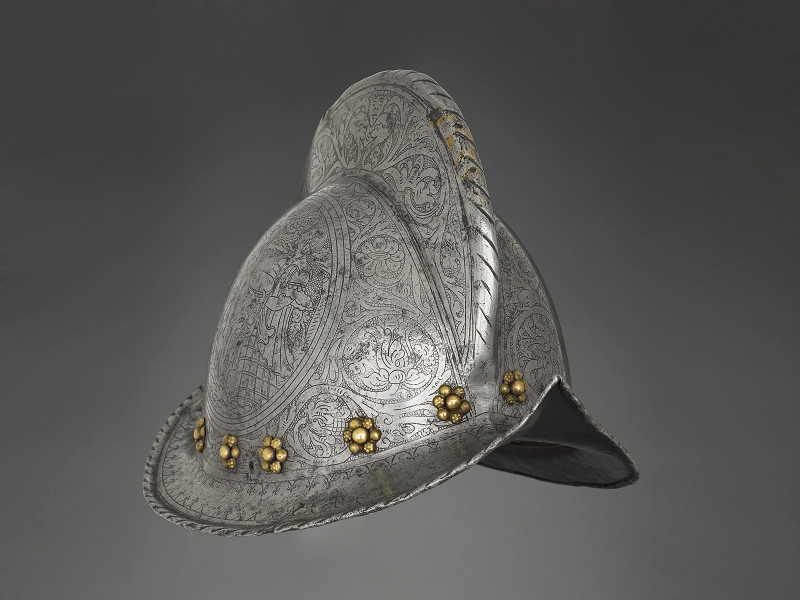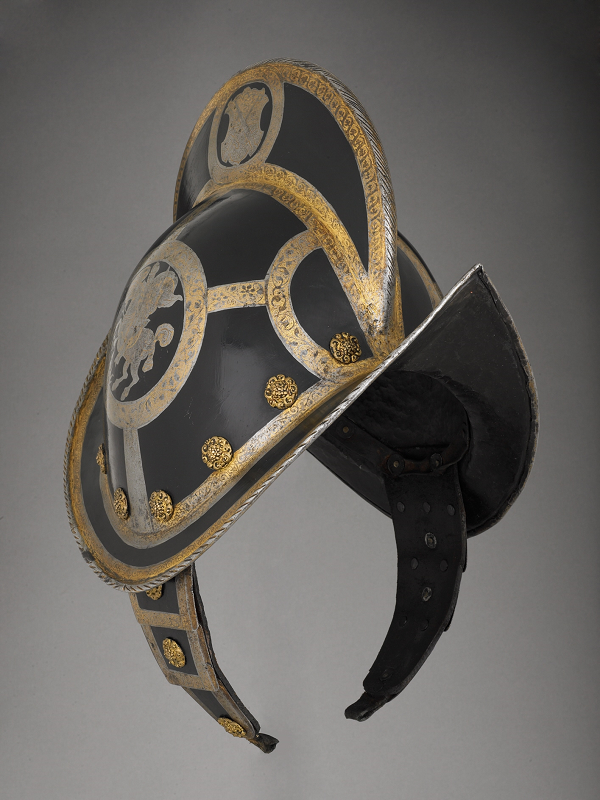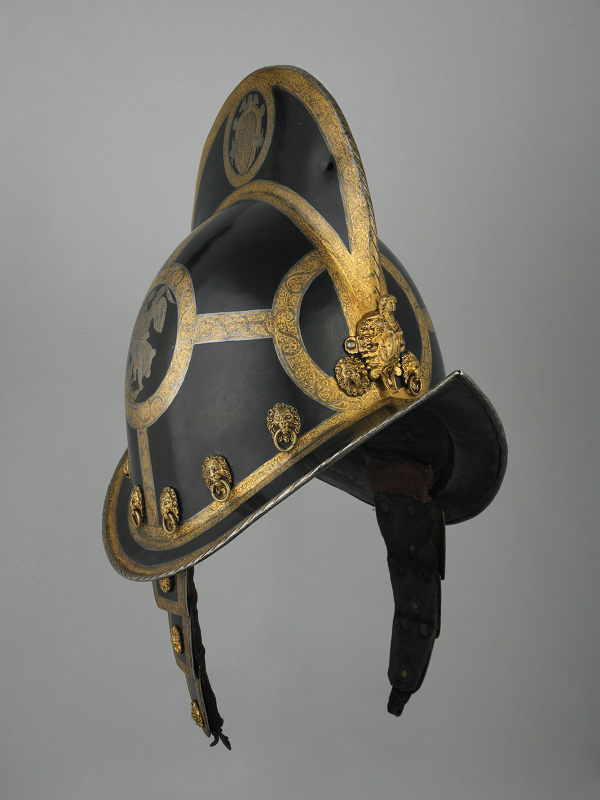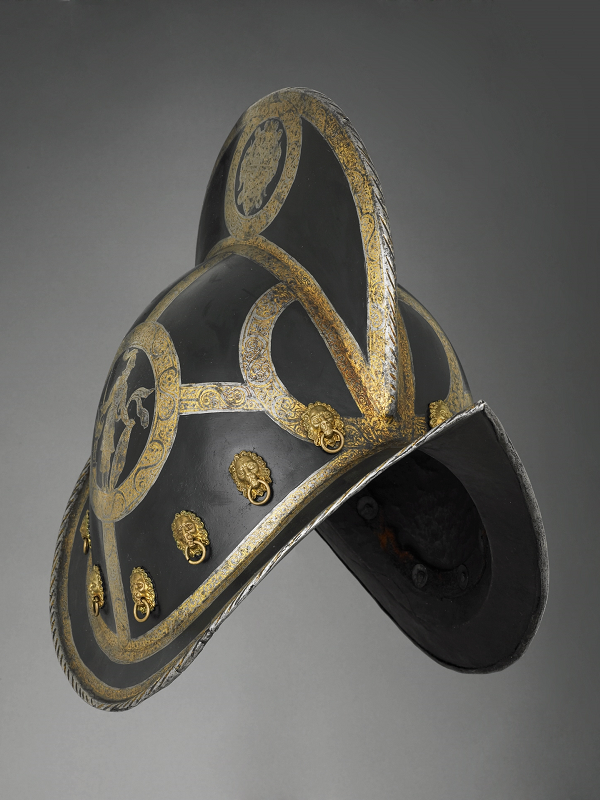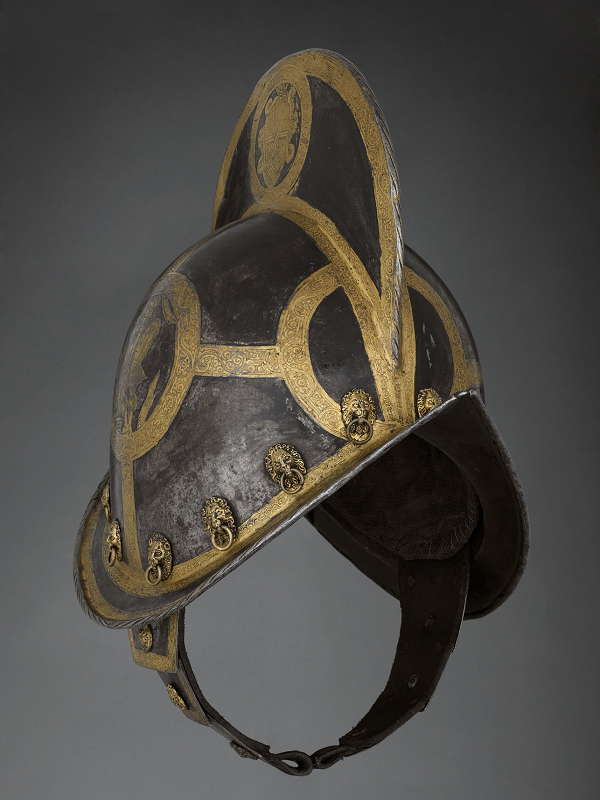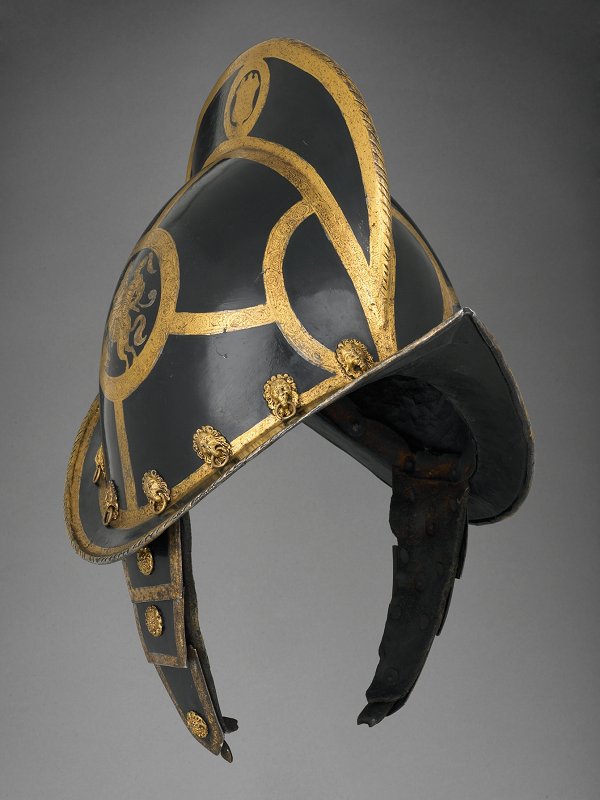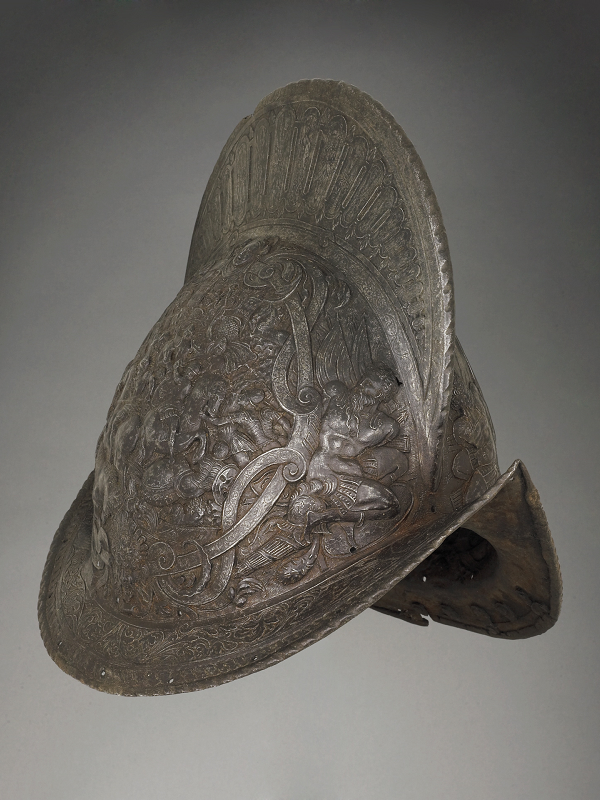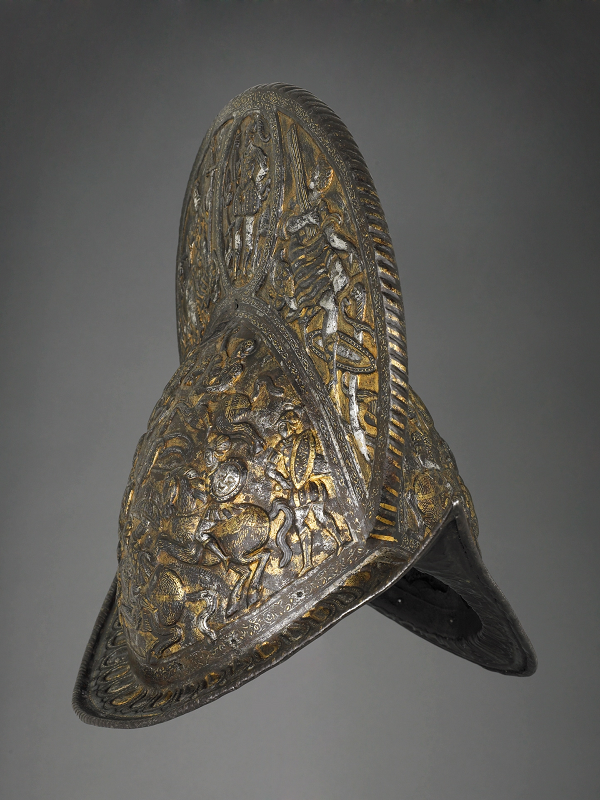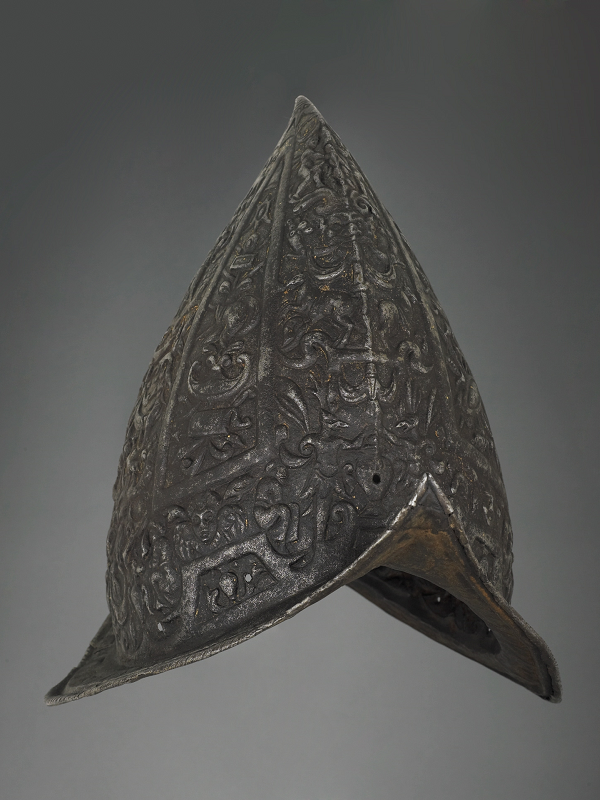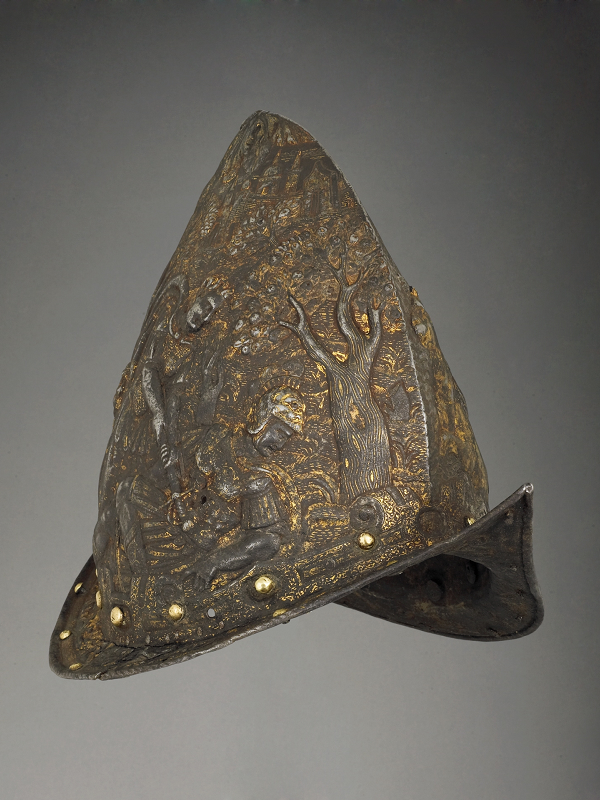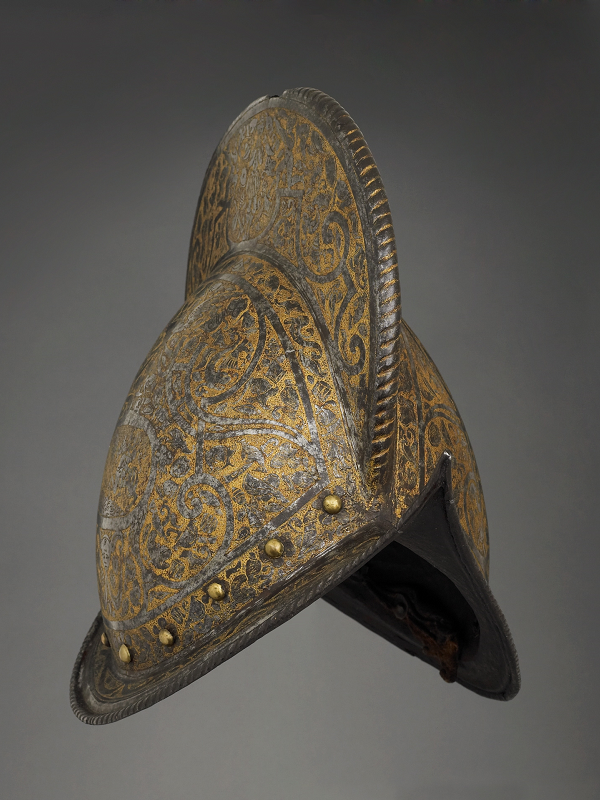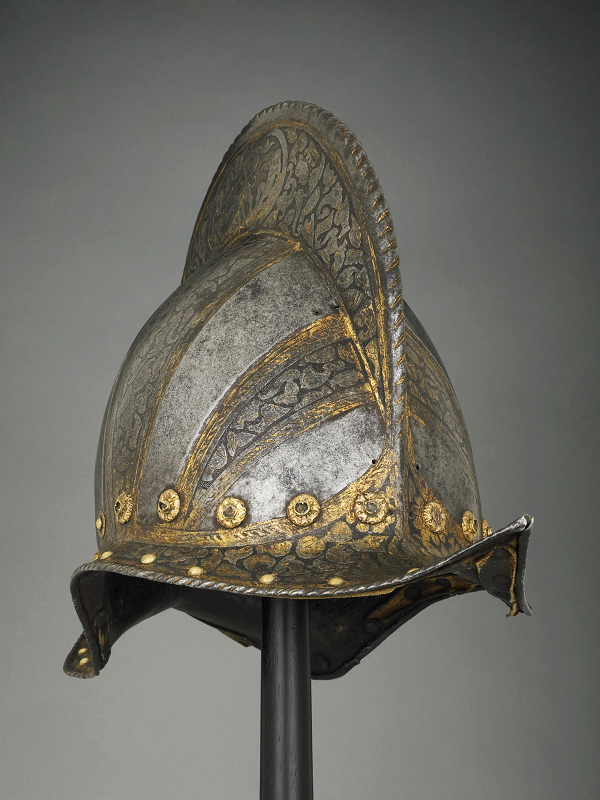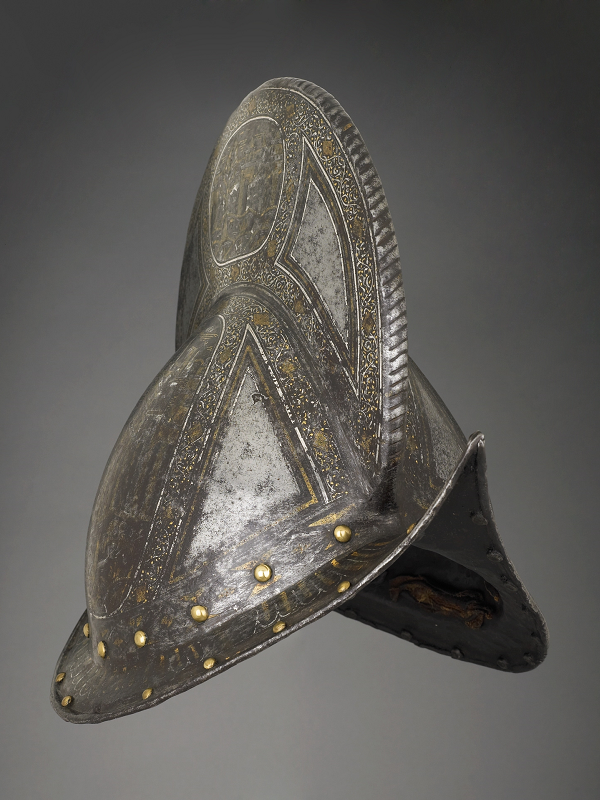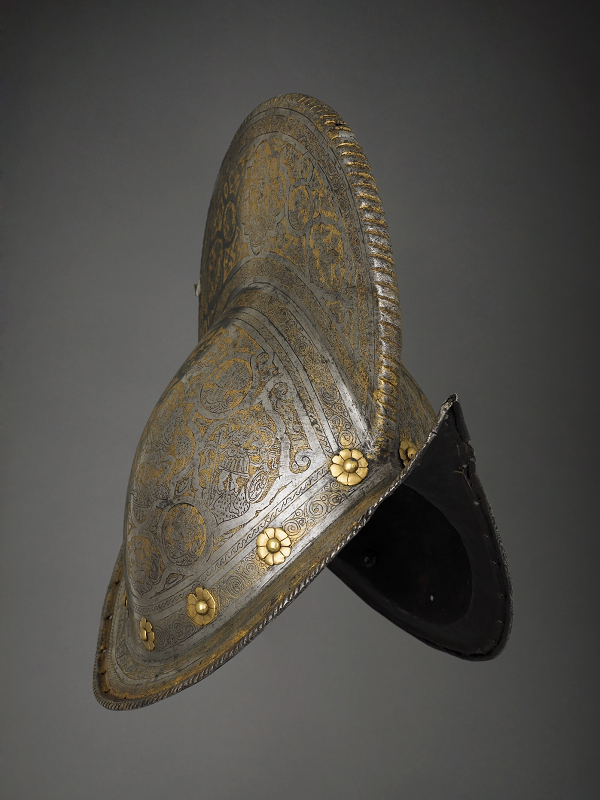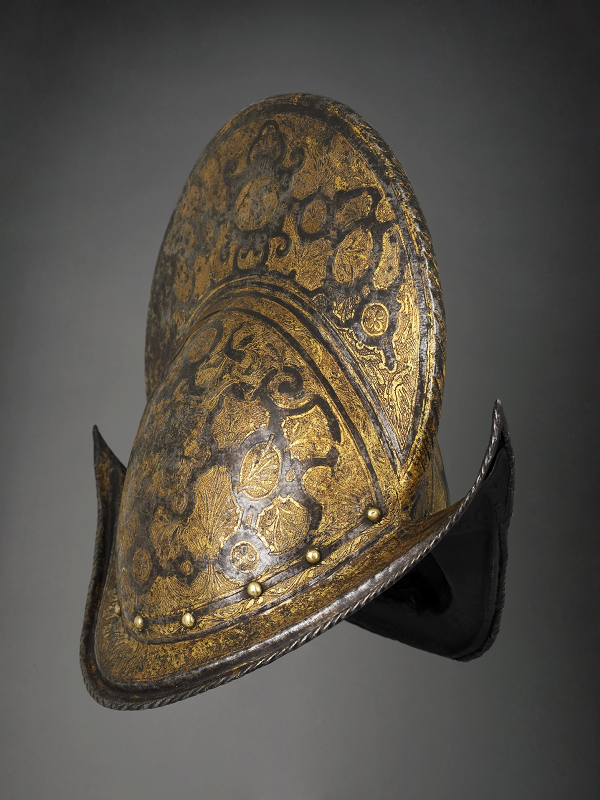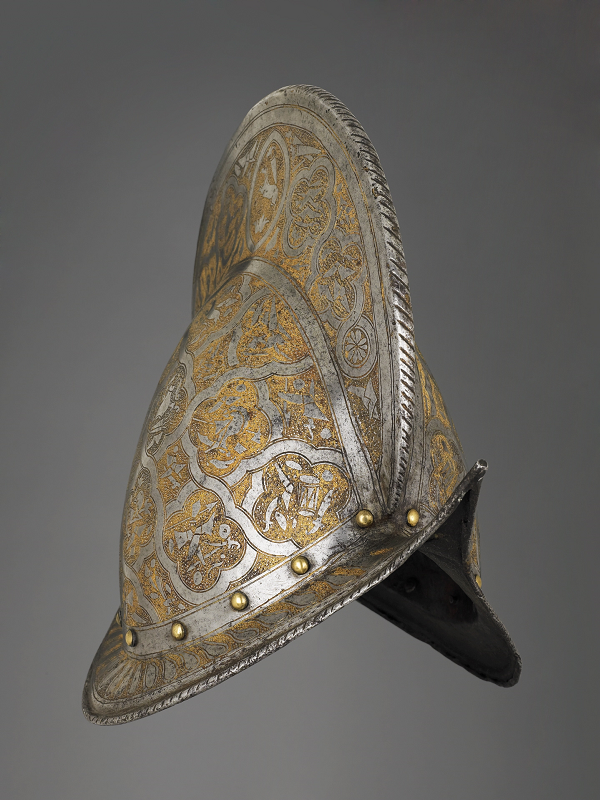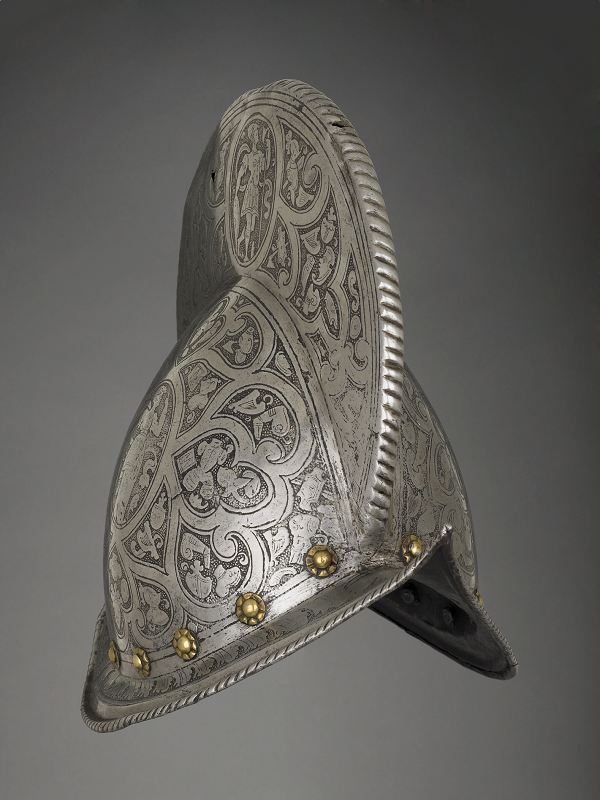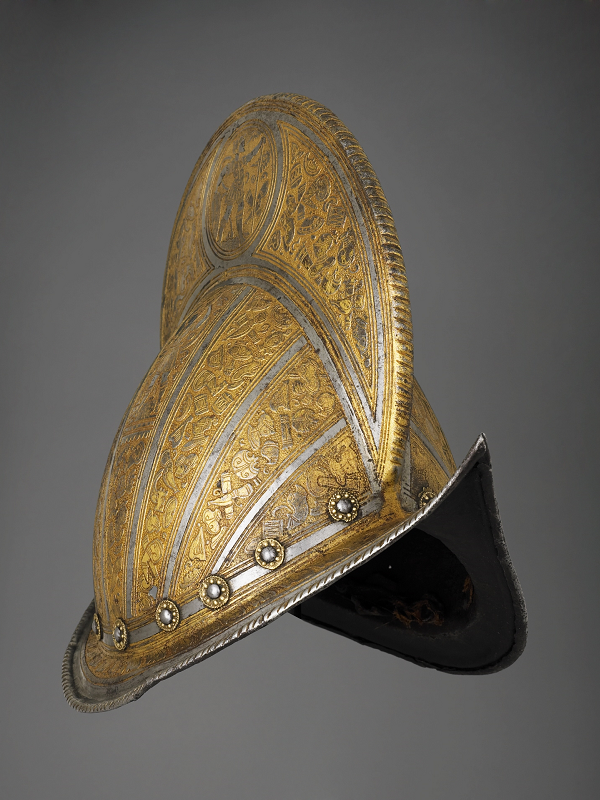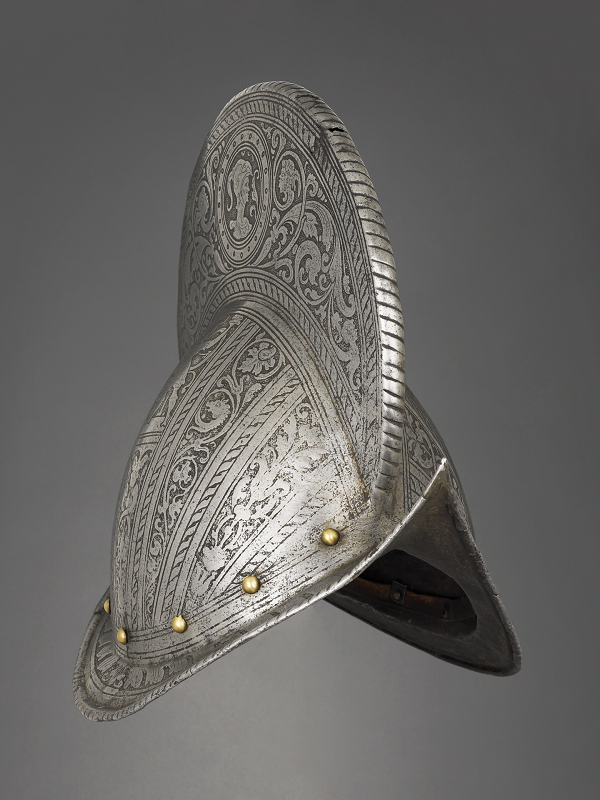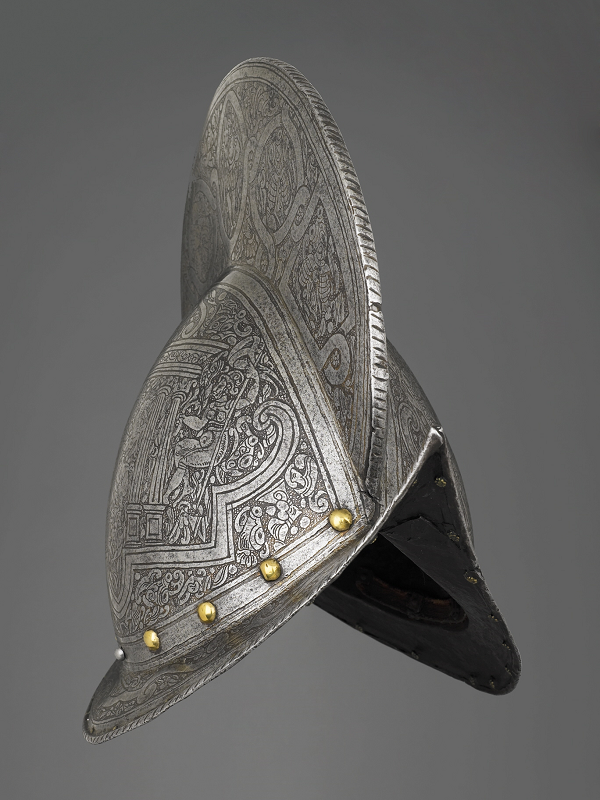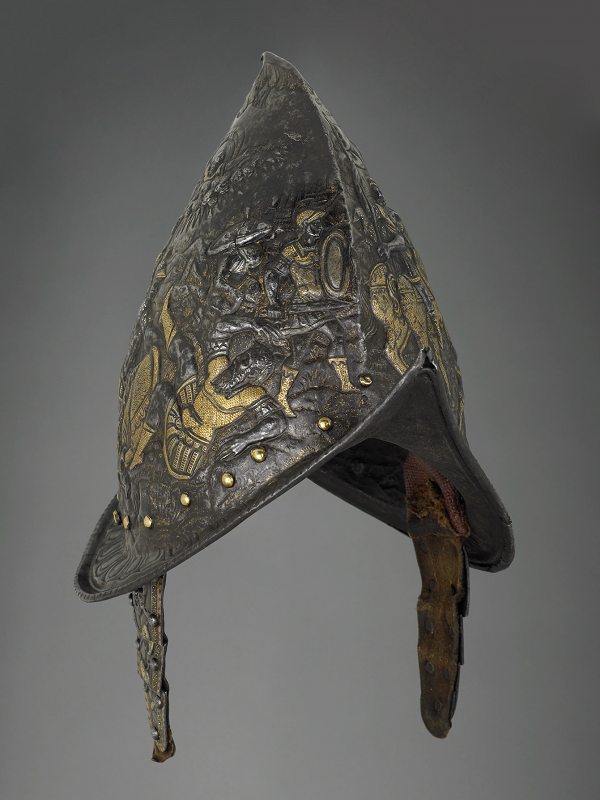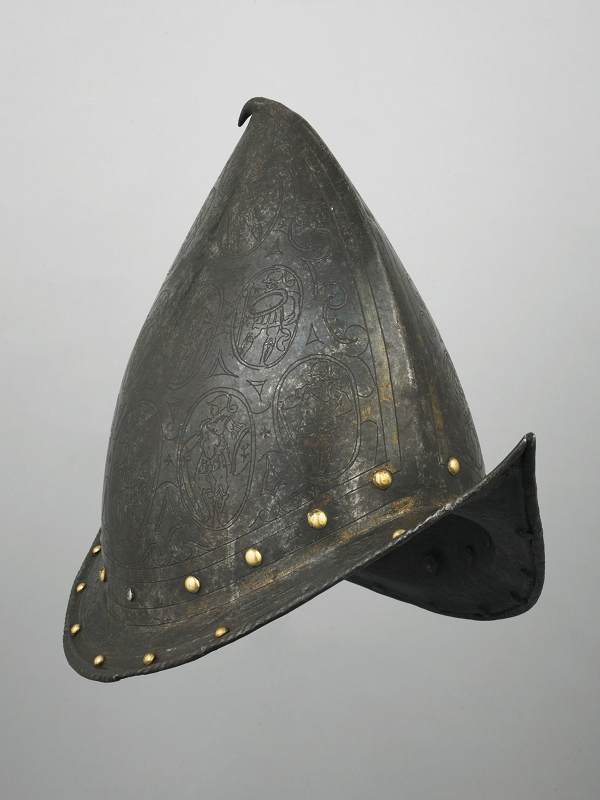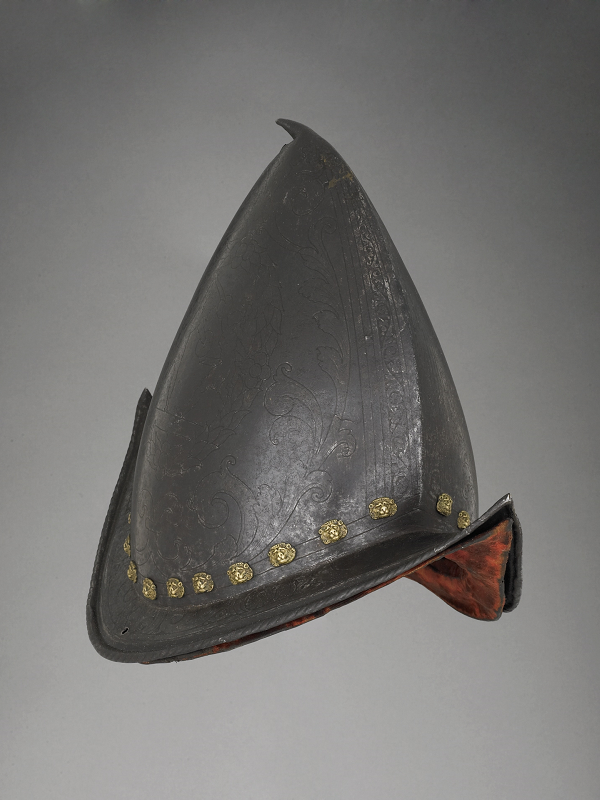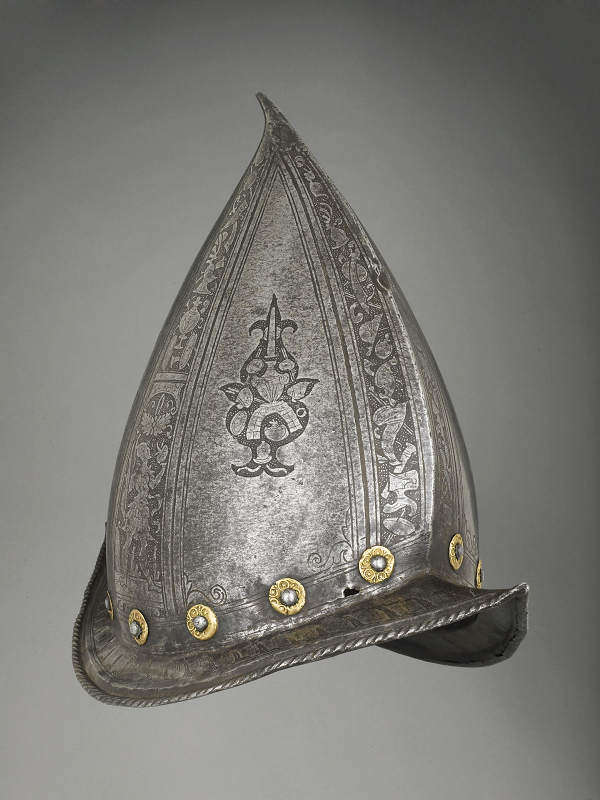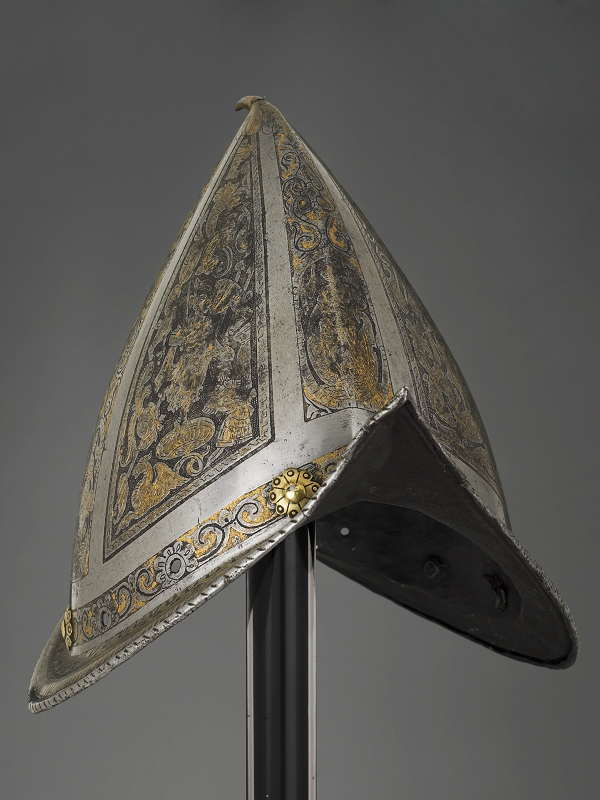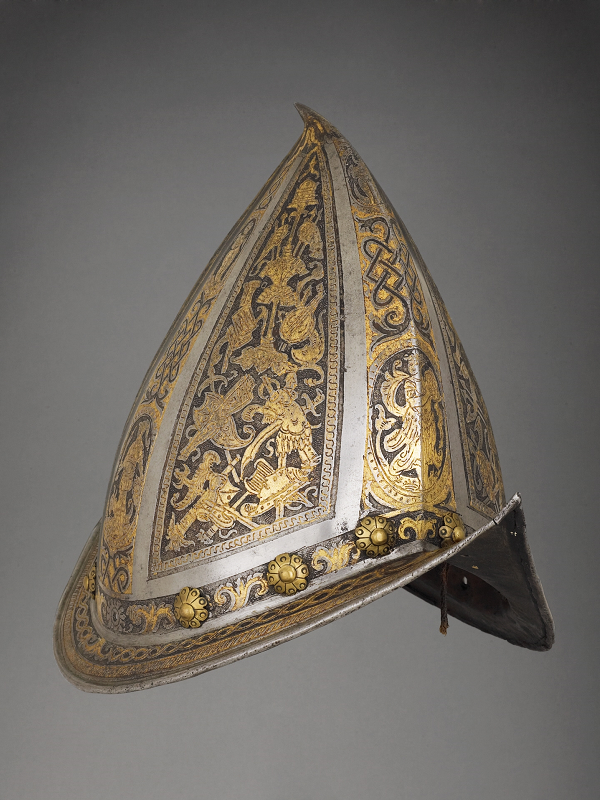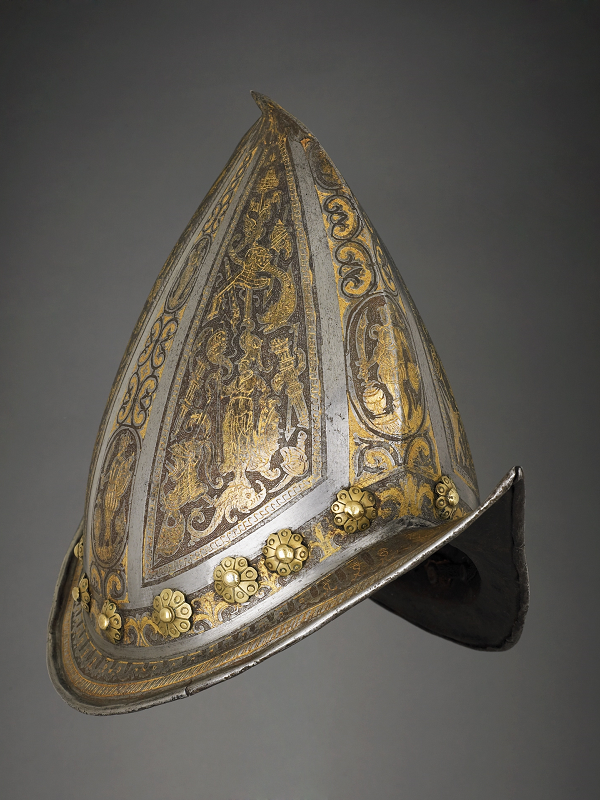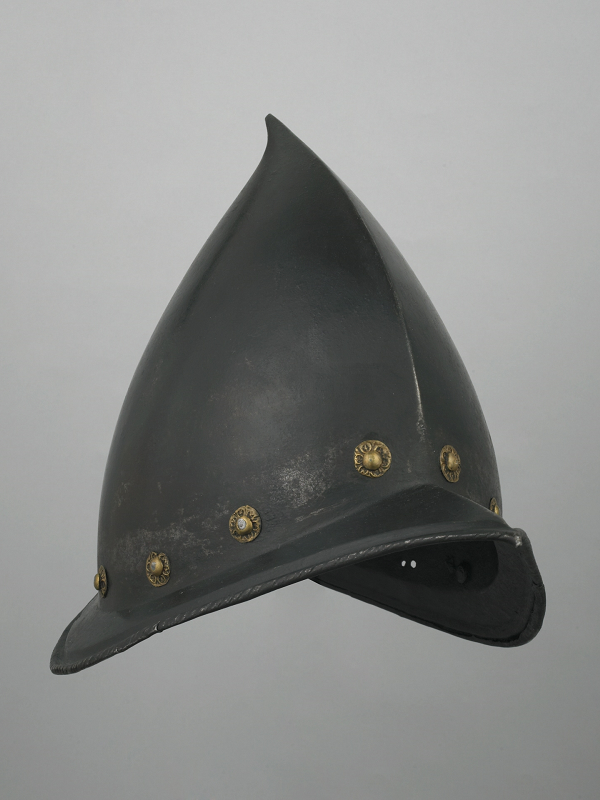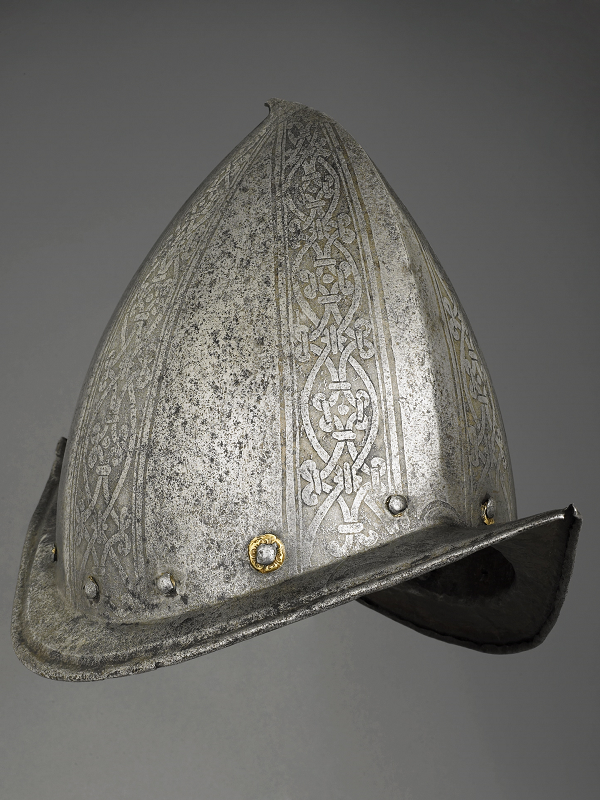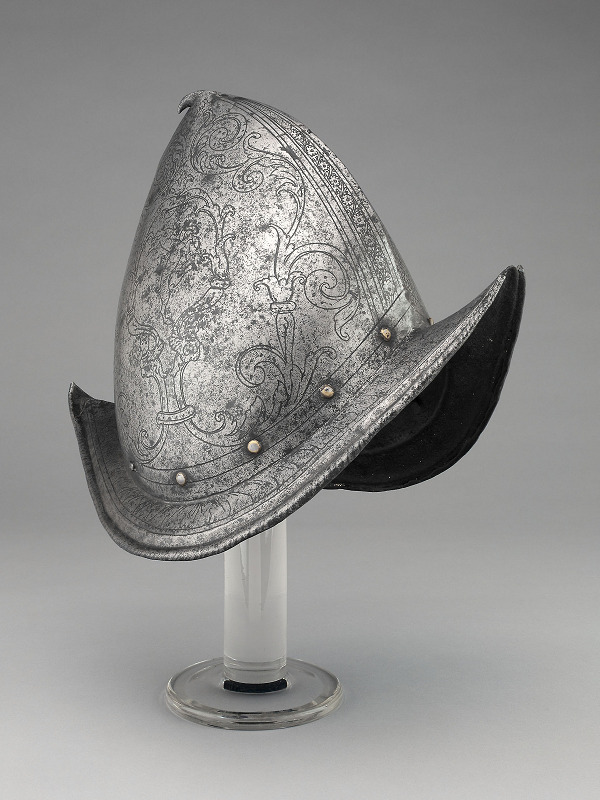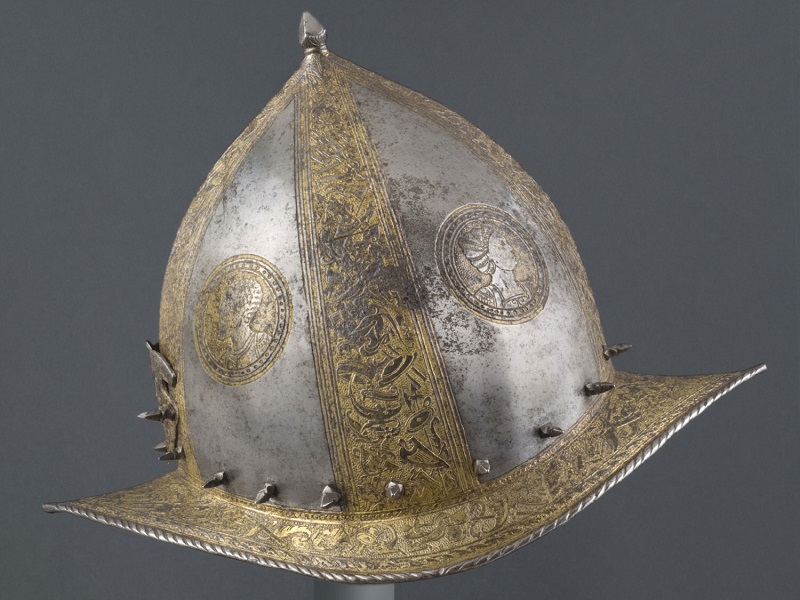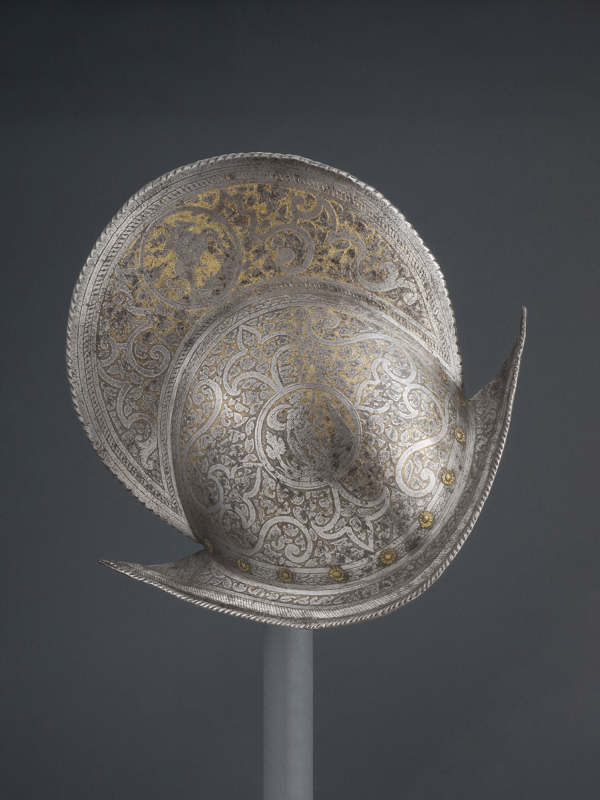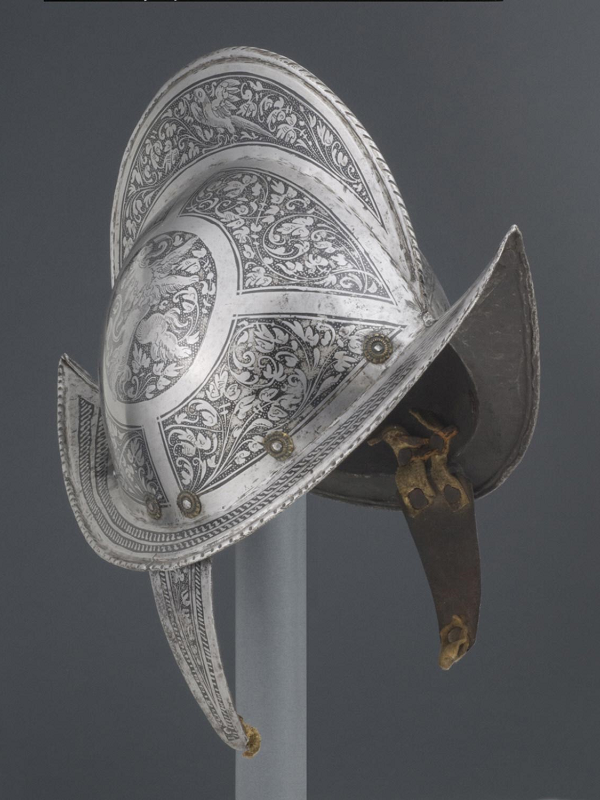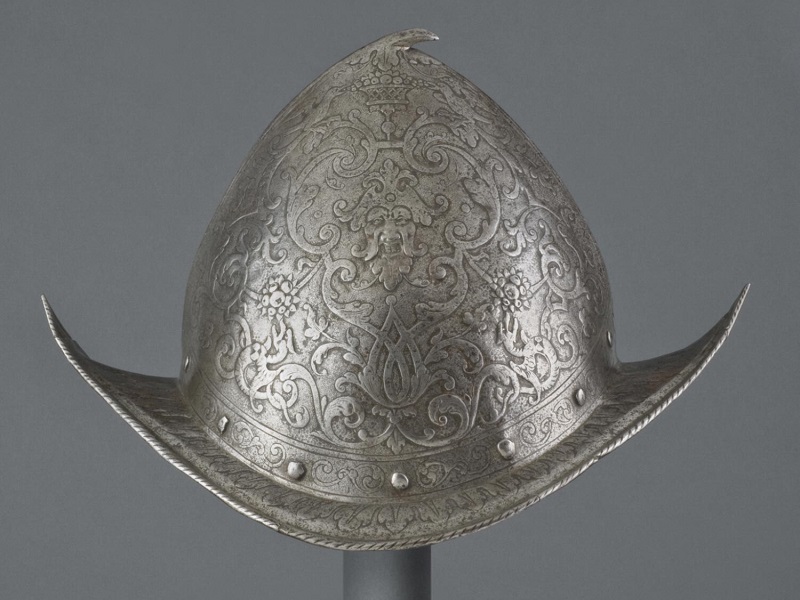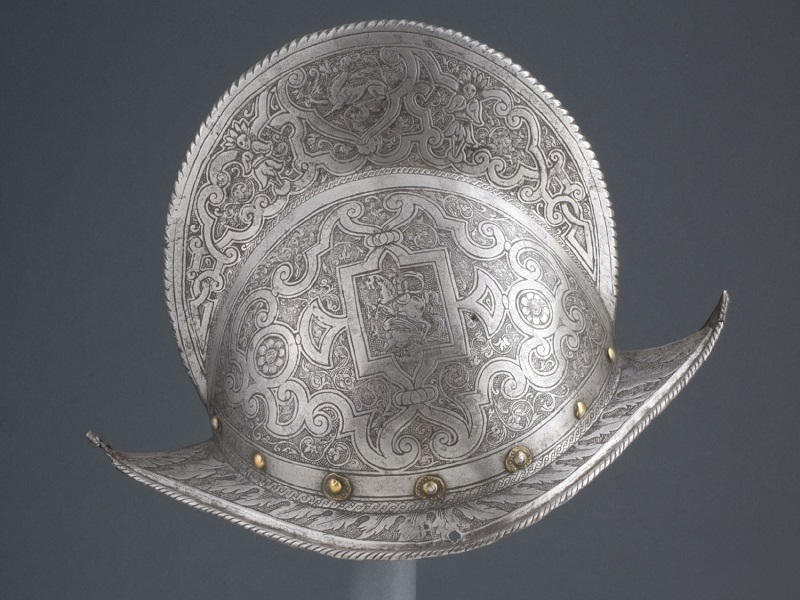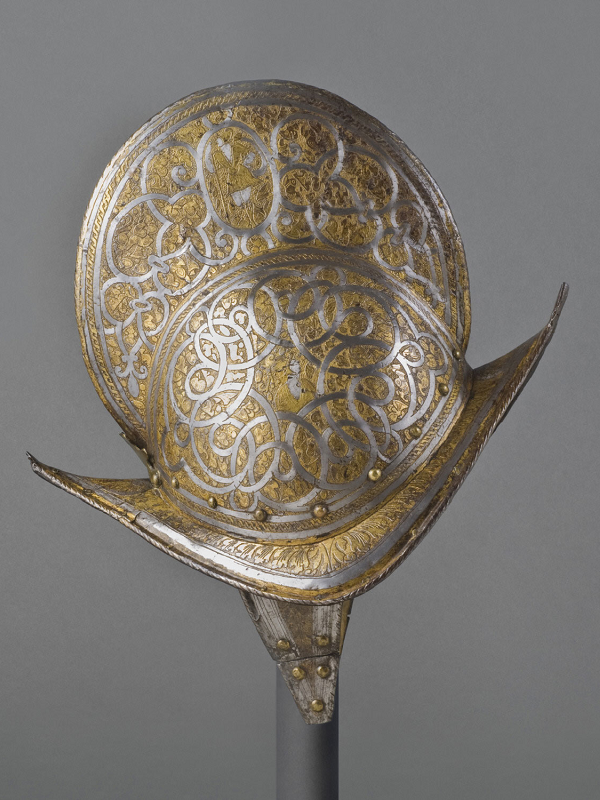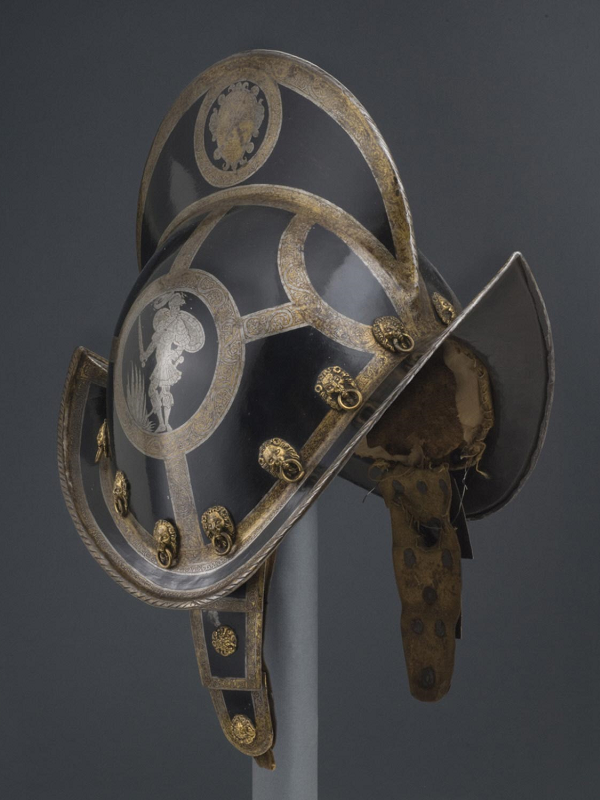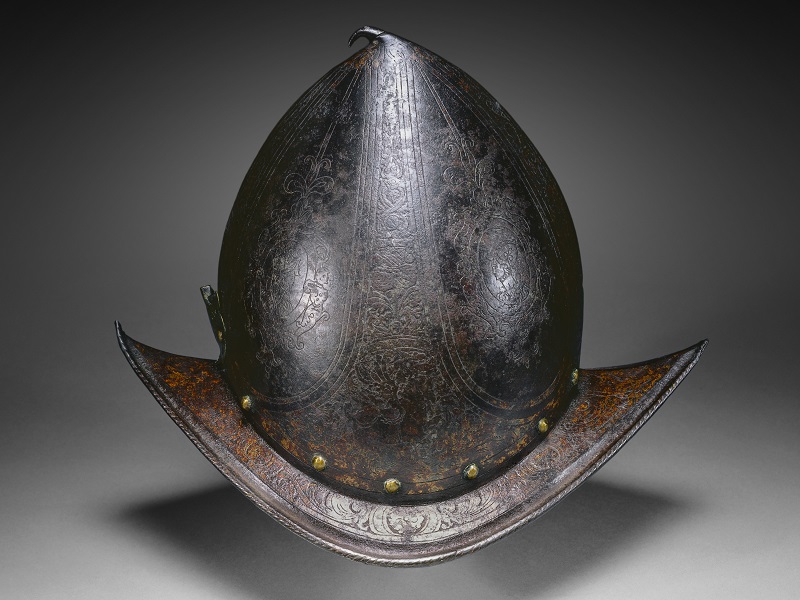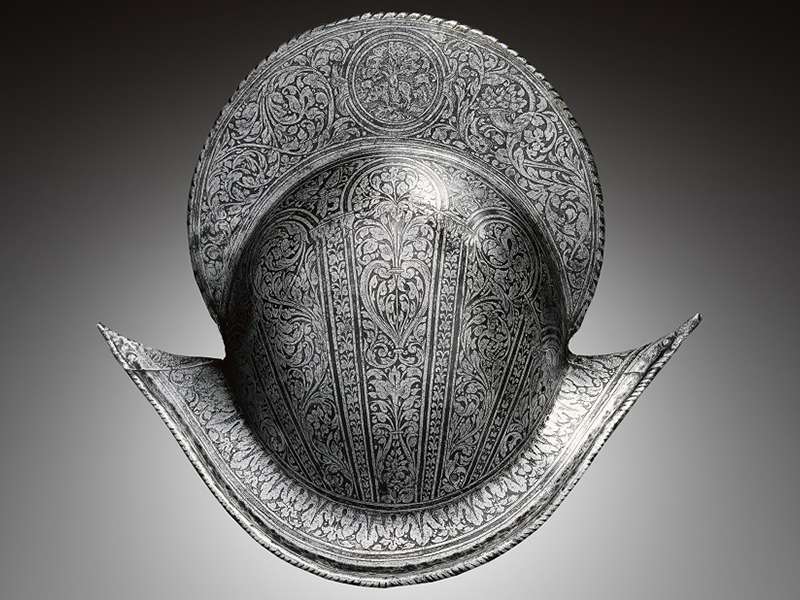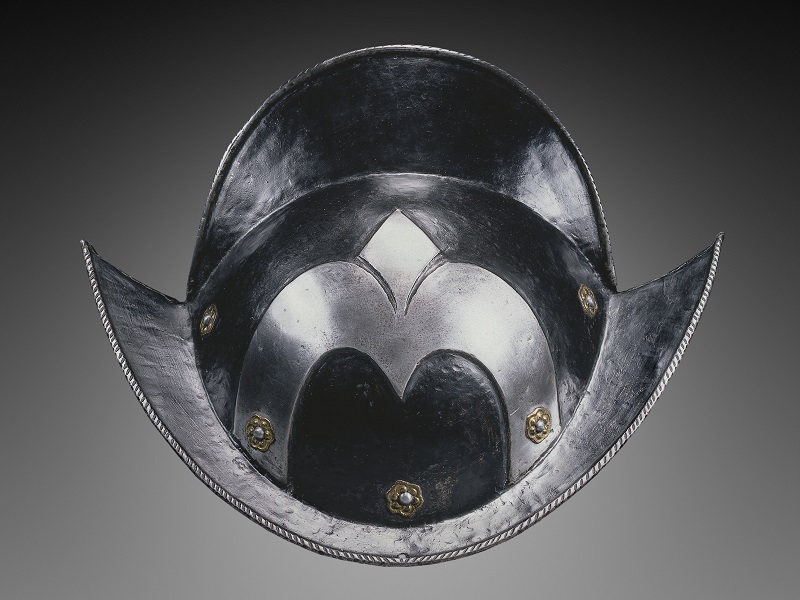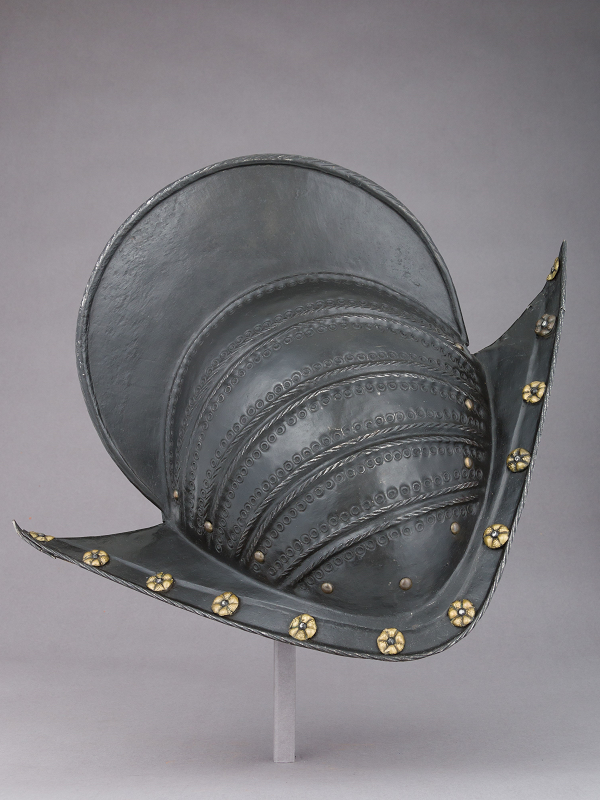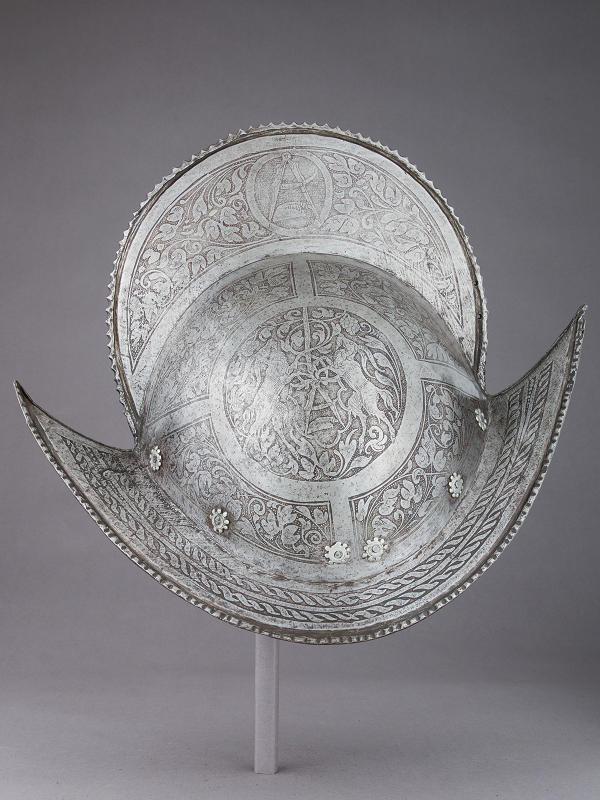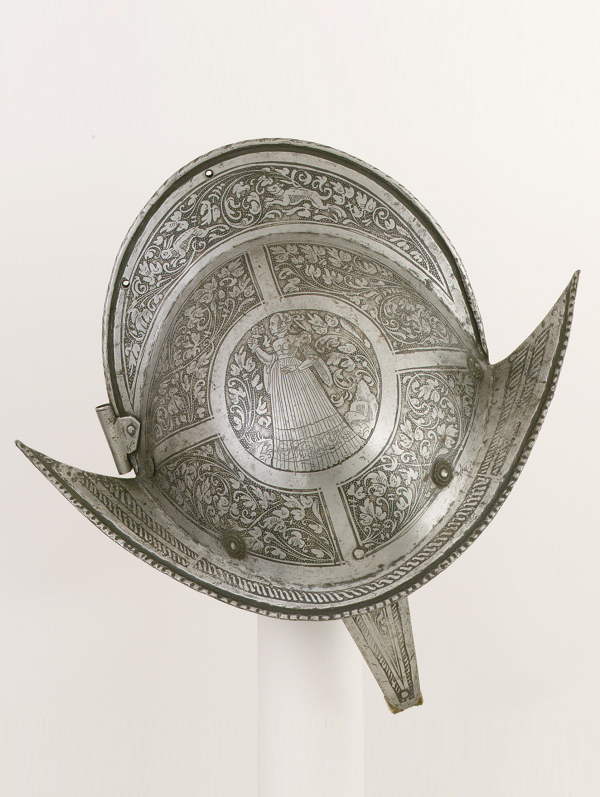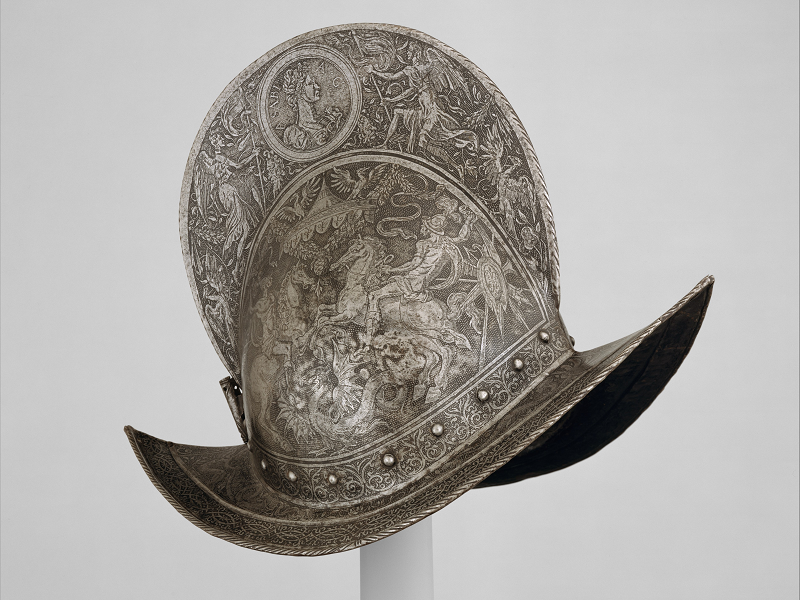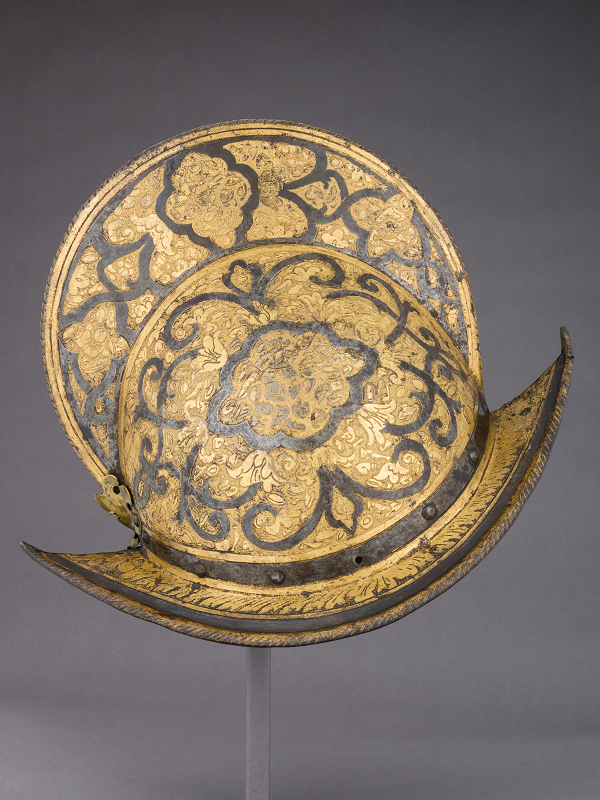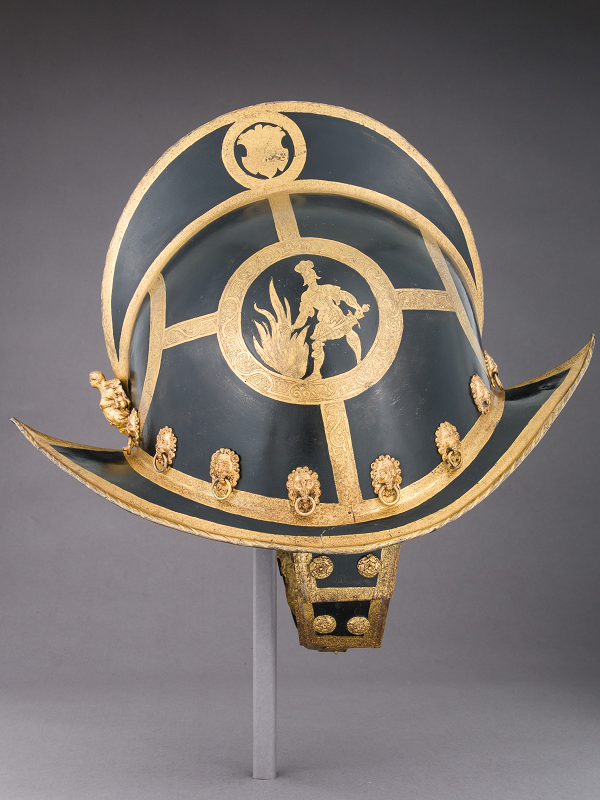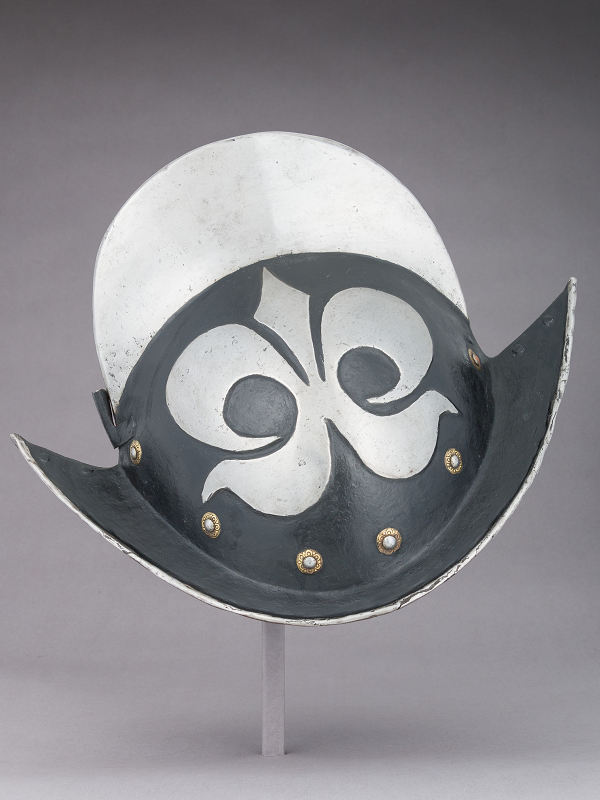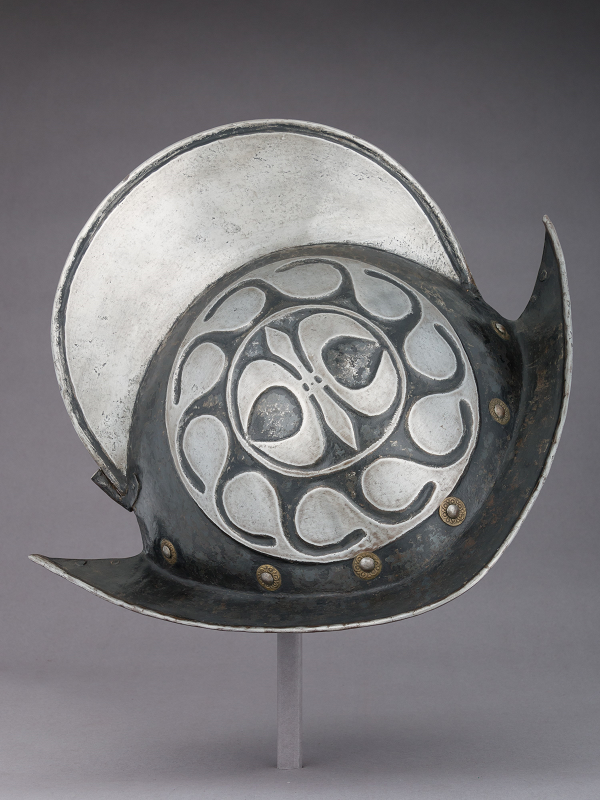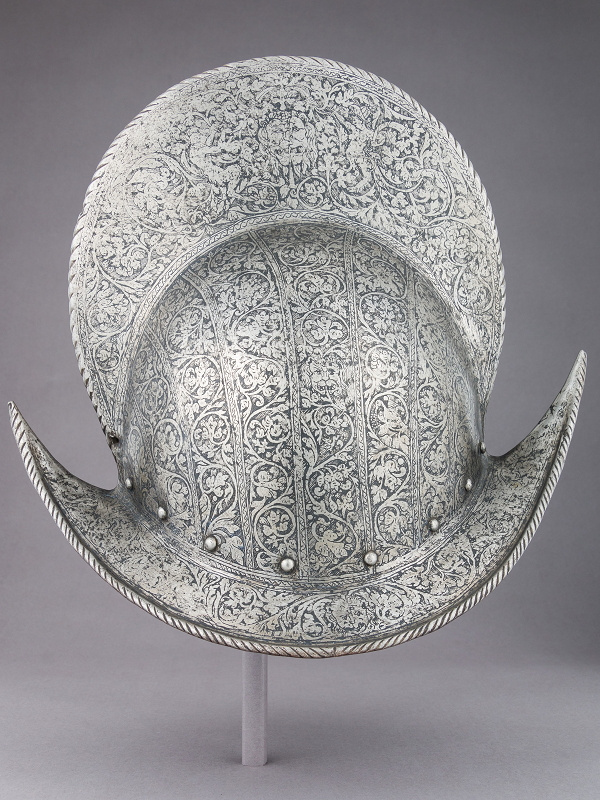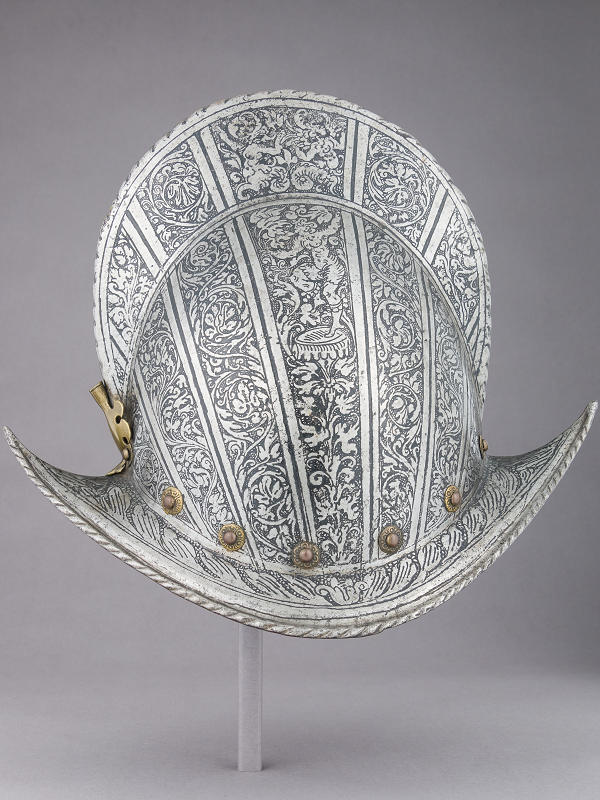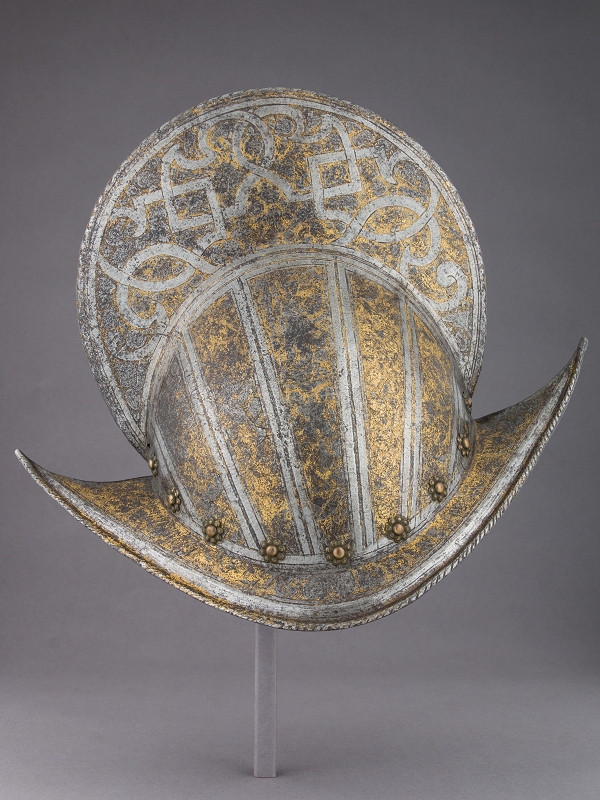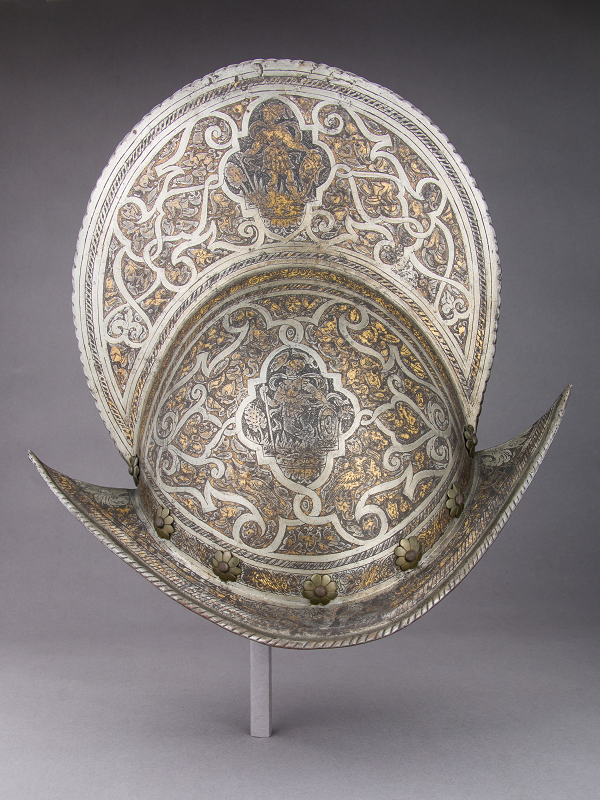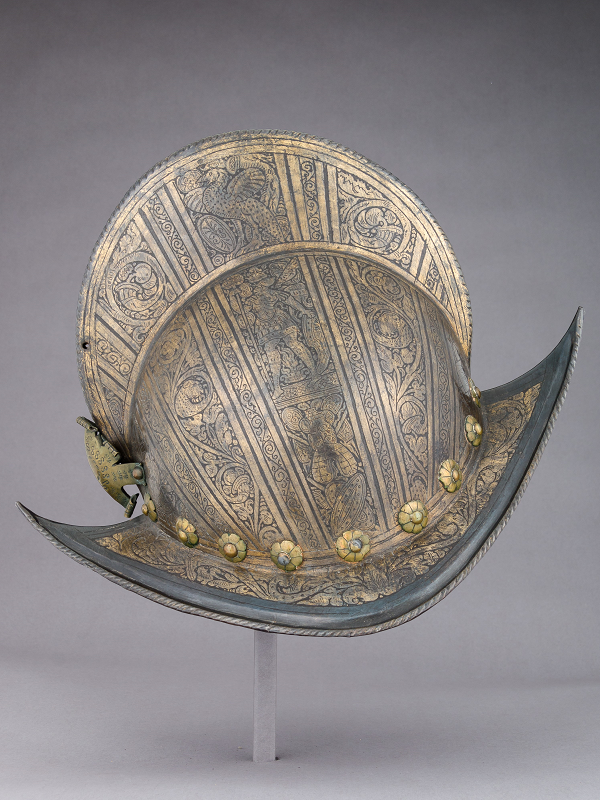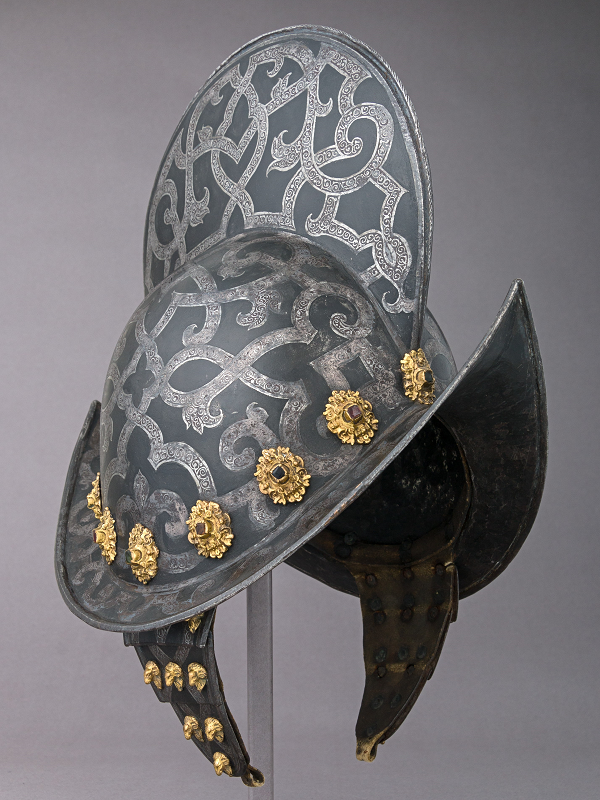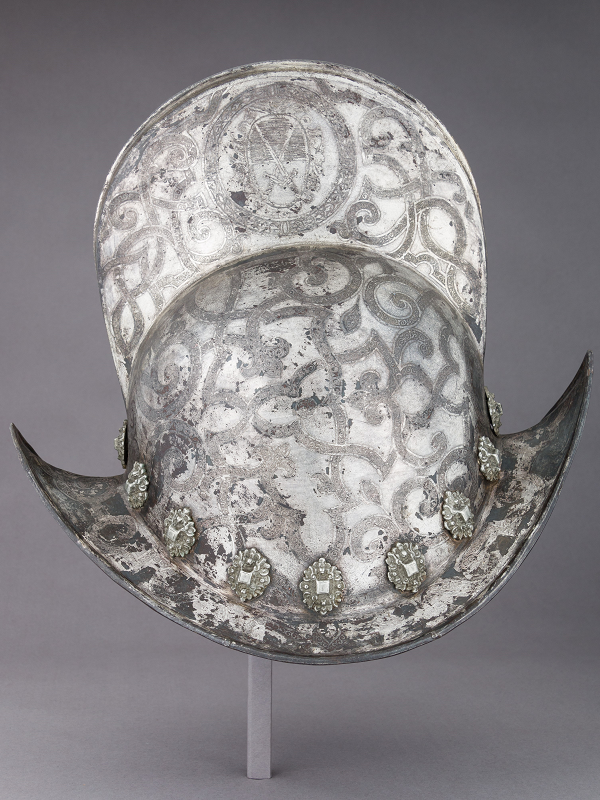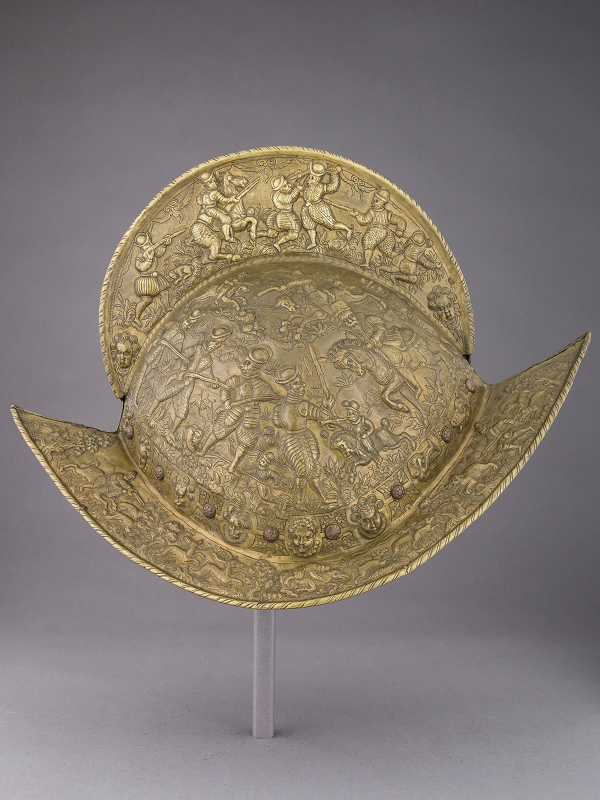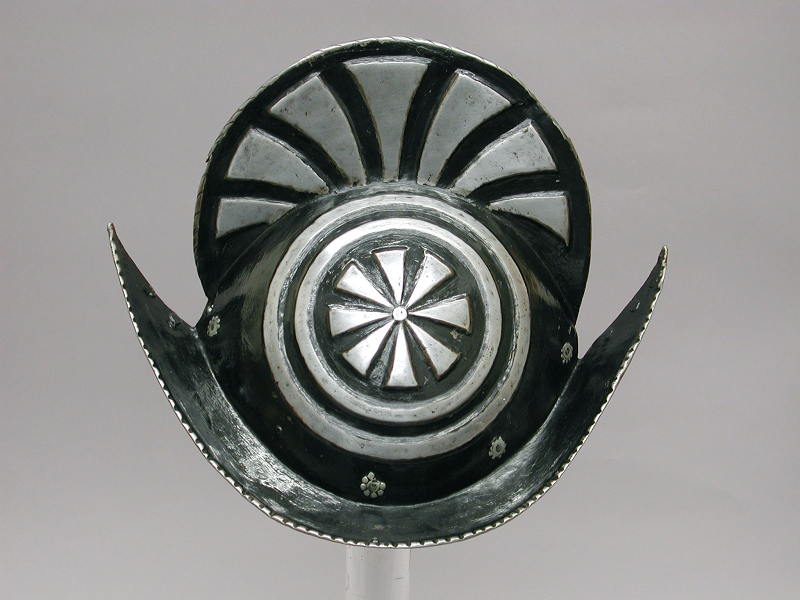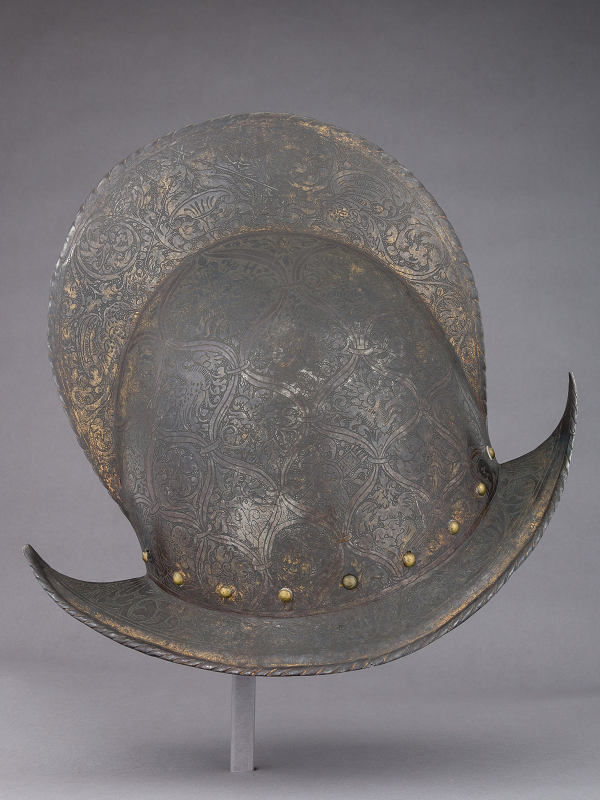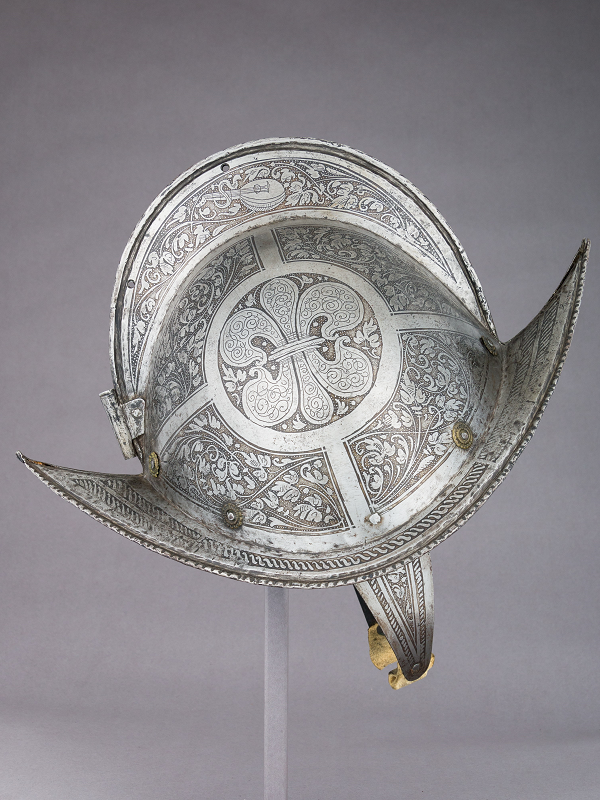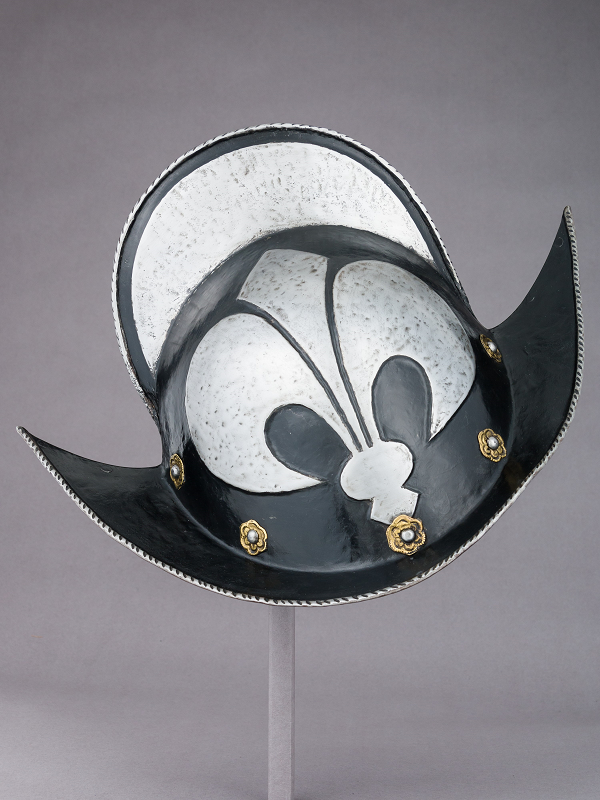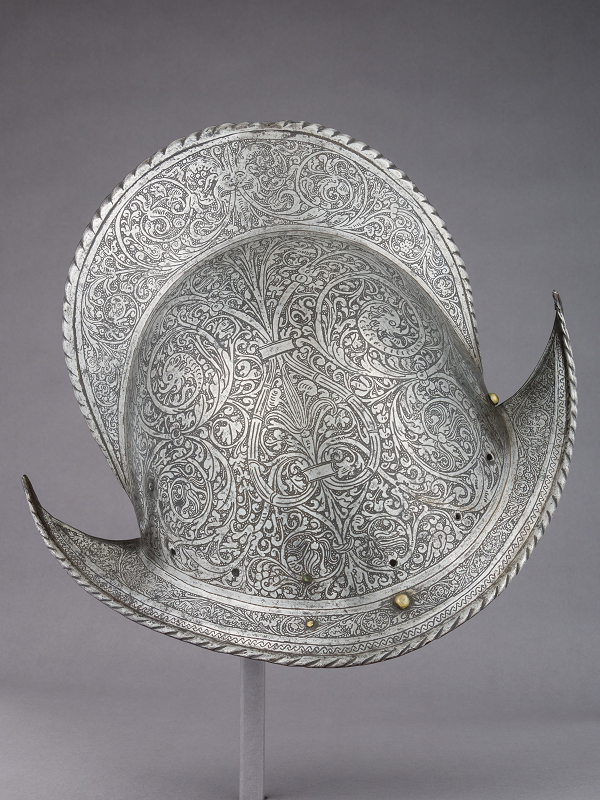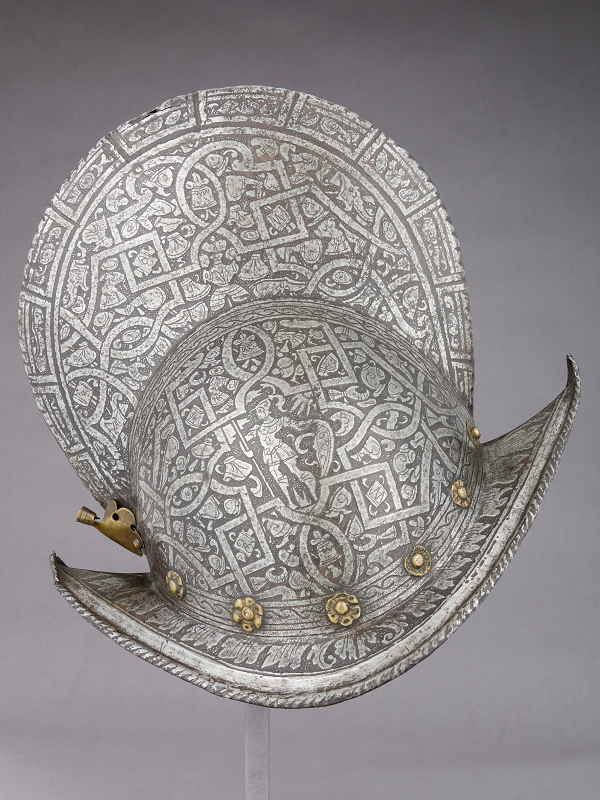


The Morion (fr. Morion, span. Morrión) is one of the most recognizable and romanticized helmets of the Renaissance. With its distinctive shape, high crest, and wide, curved brim, it became a true symbol of the Spanish conquistadors, landsknechts, and soldiers of the European armies of the 16th and early 17th centuries.
Unlike the fully enclosed knightly helmets of the previous era, the morion was lightweight, open, and highly practical—ideal for infantry and light cavalry in an era when firearms were increasingly playing a role on the battlefield.
Origin and Historical Context.
The morion emerged in the mid-16th century as a development of earlier open helmets, such as the cabasset and later versions of the sallet. The name likely derives from the Spanish morrión (from morro, meaning "round protrusion" or "head").
The helmet quickly spread across Europe thanks to the Spanish army, which was one of the most powerful in the world at the time. Spanish tercios (infantry units), conquistadors in the New World, and German landsknechts made extensive use of the morion. It symbolized the transition from heavy knightly cavalry to professional infantry armed with pikes, arquebuses, and muskets.
Its popularity peaked between 1550 and 1620. The morion was worn by both ordinary soldiers and officers. Richly decorated examples became a status symbol, being presented to commanders and kings.
Morion Construction.
The classic morion was forged from one or more sheets of steel. Key distinguishing features:
A high longitudinal comb (comb) — ranging from low and rounded to very high and sharp, sometimes with decorative slits.
Wide brim (brim) — curved sharply upward at the front and back, providing protection from rain, sun, and overhead slashes.
An open face — without a visor, offering good ventilation and visibility.
The butt plate and side panels blend smoothly into the brim, often with holes for attaching a liner or straps.
The metal thickness was typically 1.5–3 mm. Weighing between 1.5 and 3 kg, the helmet was significantly lighter than closed knightly models. The surface was often polished, inked, or decorated with etching, gold or silver inlay, coats of arms, and mythological scenes.
There were two main types:
The Spanish morion — with a high ridge and a strongly curved brim (the most famous variant).
The German/European morion — sometimes more rounded or with additional reinforcements.
Use and Advantages.
The morion was ideal for Renaissance infantrymen. The wide brim protected from sun and rain during long marches, the high crest added visual height and intimidation, and the open face allowed for free breathing, giving commands, and aiming the arquebus.
The helmet was worn with a cuirass, pauldrons, and often chainmail elements. The conquistadors of Cortés and Pizarro crossed oceans and fought in the jungles and mountains of America wearing precisely such helmets. In Europe, the morion became part of the uniform of Spanish tercios and German mercenaries.
Advantages:
Excellent ventilation and visibility.
Lightweight and comfortable for long campaigns.
Good protection against slashing blows and arrows (the brim deflected the blows).
Relatively inexpensive to produce.
Disadvantages: Weak face and neck protection compared to closed helmets. Therefore, by the late 16th century, it was often supplemented with steel collars or worn with a burgoniote.
Why did the morion become an icon of the era?
The morion embodied the spirit of the Renaissance: practicality, aesthetics, and martial pride. Its high-crested silhouette is instantly recognizable—it appears in thousands of paintings, films, and computer games as a symbol of the Spanish Golden Age and the conquest of the Americas.
By the early 17th century, the morion began to give way to simpler, more comfortable helmets (such as the cabassette and late burgoniot), but it did not disappear completely. Its elements even influenced some colonial and ceremonial headdresses.
Today, the morion is one of the most popular helmets among reenactors and collectors. Original examples are housed in the Metropolitan Museum of Art, the Army Museum in Madrid, the Vienna Armoury Museum, and many other collections. Richly decorated ceremonial morions are considered true works of armory art.
The morion is more than just a 16th-century soldier's helmet. It symbolized a transitional era, when the Middle Ages finally gave way to the Modern Age: the Age of Gunpowder, the Great Geographical Discoveries, and professional armies. It combined the rugged practicality of the infantryman with the proud aesthetics of the conquistador, who crossed the ocean in search of gold and glory under the high crest of a steel helmet.